
Abdul El-Sayed: Michigan Senate Win, Senator-Elect Status and Public Role
Understand El-Sayed’s reported Michigan Senate win, distinguish election from service and certification, and assess future health-policy claims.
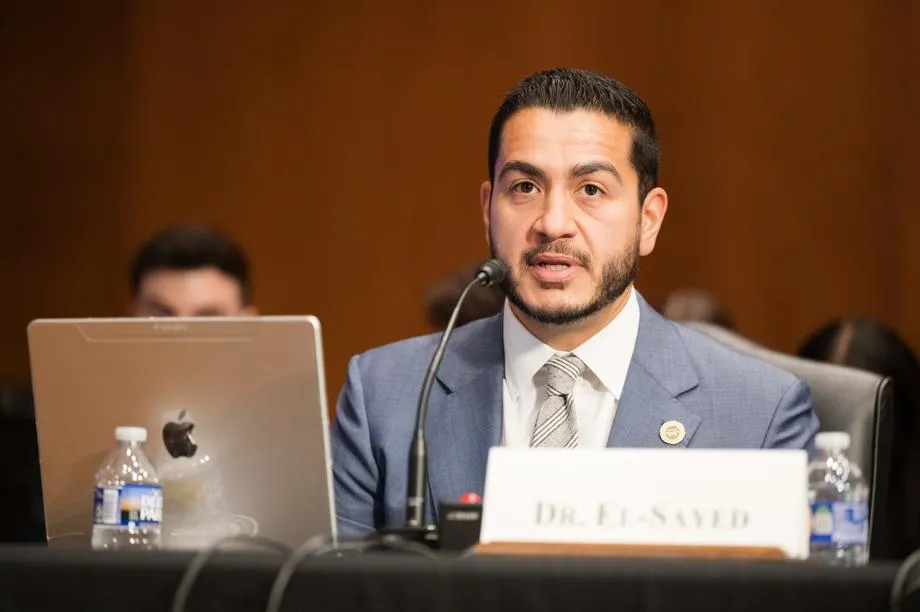
Abdul El-Sayed is Michigan's reported United States senator-elect after defeating Republican Mike Rogers in the November 2026 election. Associated Press reporting describes the result as a historic first for a Muslim elected to the US Senate. Senator-elect is the important term: winning an election is distinct from beginning service in the incoming Congress.
This profile explains that distinction and the institution he is due to join. It also offers a practical way to read health-policy claims associated with a public-health background, distinguish proposals from enacted measures, and follow the transition without confusing campaign statements, news projections and official records.
What is the confirmed election development?
Post-election reporting identifies El-Sayed as the winner of Michigan's open Senate race against Rogers. This article records that reported outcome as checked on 6 November 2026. It does not present an independently inspected certified vote total, a completed oath of office or a list of committee assignments for the incoming Congress.
| Field | What readers should distinguish |
|---|---|
| Person | Abdul El-Sayed |
| Election | Michigan US Senate race |
| Reported status | Senator-elect |
| Opponent in the reported result | Mike Rogers |
| Institution | Federal United States Senate |
| Different institution | Michigan's state legislature |
| Numbers not asserted here | Final certified margin and turnout |
The missing numerical claims are intentional. A race can be called while vote counting and certification processes continue. Repeating a reported winner does not require inventing a final percentage. Readers who need a certified figure should consult the relevant election authority's completed record rather than assume that an early news total is final.
Why senator-elect is more precise than senator today
The suffix elect describes an incoming officeholder between an election and the beginning of the relevant service. It helps readers understand why a victory speech can coexist with an official directory that still lists the outgoing member. The directory and the election report may be describing different dates rather than contradicting each other.
For the incoming federal Congress, the constitutional term boundary is in January. Do not use a November photograph or a campaign announcement as proof that an oath has already been taken. The term, the opening of Congress and the actual oath record are connected but distinguishable events, each with its own evidence.
That distinction is useful when discussing policy. An incoming member can announce priorities and prepare staff, but an announcement is not the same record as a vote cast in office. A profile should not credit or blame the person for a future roll call that has not occurred.
Michigan's US Senate seat is not a state-senate district
A US senator represents a state in the federal Senate. A state senator serves in a state's own legislature. Both titles contain senator, but they refer to different institutions, electorates and responsibilities. The Michigan result covered here concerns the federal chamber, not a numbered district in the Michigan state senate.
This difference also helps interpret other election stories. An Illinois state-senate victory should not be listed beside this race as another US Senate seat. Geography alone does not identify the chamber. Read the full office name and the election heading before combining results into a table or making a claim about control of Congress.
For students, draw two boxes labelled federal and state. Put the United States Senate and House in the first, and a state's legislature in the second. Then attach each candidate to the appropriate box using the actual office sought. It is a simple exercise that prevents a surprisingly common news-reading mistake.
What does a United States senator do?
The Senate participates in federal legislation, oversight and other constitutional responsibilities. A senator works within a chamber, committees and a broader lawmaking process rather than acting as a one-person executive. Winning a seat gives an individual a role in that institution; it does not give unilateral authority to implement every campaign promise.
The Senate's official powers guide explains that it considers legislation, nominations and treaties through established procedures. Those functions should not be merged into a generic claim that a senator controls the government. A vote on a nomination and a vote on a bill are different kinds of action, with different records to inspect.
When assessing a new member later, look for the specific action: introduced a bill, supported an amendment, joined a hearing or cast a recorded vote. Precise verbs make accountability possible. Saying only that a politician fixed or blocked an issue often hides the actual stage of the process.
Public-health experience and a legislative role
Reporting identifies El-Sayed with a public-health background. That background can help explain why health policy appears in coverage of his career, but professional experience is not itself a legislative outcome. A knowledgeable proposal still needs to be assessed for its mechanism, funding, implementation and evidence rather than accepted solely because of its author's credentials.
It is also important not to treat a political profile as medical advice. A discussion of population health, insurance or service access is not a personal diagnosis. An article about a candidate's background should not tell a reader to change treatment or infer an individual's medical needs from a national policy argument.
The useful educational question is how expertise enters public decision-making. A specialist may identify a problem and explain trade-offs, while legislators and agencies still have separate responsibilities. Evidence can inform a proposal without making the policy choice automatic. That is a more realistic picture than expecting one professional biography to resolve every disagreement.

A February 2025 photograph of Abdul El-Sayed, shown for identification rather than as an image of the November 2026 election result.
How to read a health-policy promise carefully
Start by identifying the promised change. Is it about eligibility, the cost paid by a patient, a provider payment, a public programme or a research investment? Those are different mechanisms. A slogan about making care affordable can conceal important distinctions unless the proposal says who pays, who qualifies and when the change would begin.
Next separate a numerical target from an enacted entitlement. A campaign may aim to reduce a cost, but the figure is not a guaranteed bill for every household. Read the defined population, assumptions and funding method. This is a general analytical checklist, not an assertion that El-Sayed has adopted a particular policy described in these examples.
Finally ask what institution would implement the change. A federal bill, a state programme and a local service may have different routes. Assigning every health-related decision to a senator creates unrealistic expectations. Good analysis identifies the responsible body before judging whether the proposed action could produce the claimed result.
A classroom exercise in percentages and policy claims
Suppose a fictional programme serves 1,000 people and a proposal says it would add 200 eligible participants. The increase is 20 percent relative to the original group. That does not establish the proportion of all residents served, because the total population is a different denominator. Always ask what the percentage is a percentage of.
Now suppose the programme's budget rises from an invented 10 million units to 12 million. The increase is also 20 percent, but that does not automatically mean spending per participant changes. If both the budget and participation rise proportionately, the simple average can stay the same. Real policy analysis would need more detailed cost information.
These are arithmetic examples, not El-Sayed proposals or Michigan budget figures. Their purpose is to teach a reusable skill: distinguish total spending, spending per participant and the share of a population reached. Many confusing political claims become clearer once the denominator and reference year are visible.
A race call, a concession and certification are different
A news organisation may call a race after assessing the available evidence. A losing candidate may concede. An election authority conducts its own official processes. These events can support a developing account, but they are not interchangeable documents. A concession is not the authority's certification, and a news projection should not be labelled a certified canvass.
This does not mean a reported winner must be ignored until every later administrative step finishes. It means the language should match the evidence. Reported winner, senator-elect and certified result communicate different levels or stages of the record. The reader deserves to know which one an article has actually established.
Avoid suggesting fraud merely because a total changes during counting. New batches of lawful results can alter an interim margin. A specific allegation requires specific evidence, not just a difference between two screenshots taken hours apart. A neutral election profile should explain the reporting stage without speculating about misconduct.
Why the historic representation claim needs a defined scope
The reported milestone concerns election to the United States Senate. It does not say that El-Sayed is the first Muslim to serve anywhere in American public life, the first Muslim in Congress as a whole or the first elected official with a public-health background. Broadening the institution changes the claim.
Representation can be discussed respectfully without reducing a person to religion or ancestry. An election profile should also explain the office and public record. Readers can recognise a milestone while continuing to examine policies, votes and performance using the same standards applied to other officeholders.
Avoid treating voters who share an identity as a single political bloc. Individuals have different priorities and reasons for voting. An article can describe a publicly reported first without claiming to know why every member of a community supported or opposed a candidate. That distinction keeps reporting informative rather than stereotyped.
What records will matter after the transition?
The official Senate directory, committee announcements, legislative records and roll-call votes will answer different questions about service. A profile should be updated from those records when events occur. Committee membership should not be guessed from professional background, and an interview about priorities should not be treated as an actual appointment.
For legislation, save the bill number and the version being discussed. A proposal can change between introduction and passage. Comparing a campaign statement with a final measure requires attention to that sequence. Otherwise a writer may praise or criticise a provision that was removed before the vote under discussion.
For oversight, distinguish asking a question at a hearing from proving an allegation. Hearings can surface evidence, but an assertion by a participant is not automatically an established finding. The same careful separation of claim, evidence and outcome applies throughout a public official's career, not only during an election.
Questions about Abdul El-Sayed's reported win
Is this the Michigan state senate?
No. The race covered here is for a Michigan seat in the United States Senate. State and federal chambers are different institutions. The complete office name should remain attached to the result, especially when sharing it alongside stories about other candidates whose races involve state legislatures.
Does this article supply the final certified vote margin?
No. It reports the winner identified by post-election coverage and keeps the certification distinction explicit. A precise final margin should be taken from the completed official election record. No missing percentage has been filled in from an estimate or an unrelated race.
Does a public-health background settle policy debates?
No. It can provide relevant experience, but proposals still need evidence, costs, implementation details and scrutiny. The examples here explain how to ask those questions without endorsing a candidate or prescribing a medical decision. Public accountability depends on records, not credentials alone.
Read more news and civics explainers or use class resources to practise source comparison and percentages. The accurate short description at this review date is Michigan US senator-elect Abdul El-Sayed, with future service and legislative actions requiring their own records.
For a short civics assignment, write the same development in three forms: a factual headline, a dated timeline entry and a question for future follow-up. The headline should identify the incoming office. The timeline should preserve the election stage. The follow-up question should ask for evidence that does not yet exist, such as a future committee assignment. This separates today's established development from tomorrow's research without filling the gap with a prediction.
Sources
- Source: AP reporting on El-Sayed's Senate victory
- Source: AP post-election senator-elect interview
- Source: United States Senate powers and procedures
- Source: National Archives, constitutional amendments including the Twentieth
Image credits: cover: U.S. Senate Committee on Health, Education, Labor and Pensions, source, Public domain. Resized and converted to WebP. inline: Kenneth C. Zirkel, source, CC BY-SA 4.0. Resized and converted to WebP.
Found an error or an outdated detail? Report a correction with the article URL and original source.