
Adrian Hamilton-Manns Takes Charge as PIA CEO: Appointment Explained
Read the confirmed Adrian Hamilton-Manns PIA appointment, his earlier airline background and what the CEO change does not yet prove about service.
Adrian Hamilton-Manns became Pakistan International Airlines' chief executive on 2 November 2026, according to the airline's appointment announcement reported that day. He succeeds Air Vice Marshal Amir Hayat. The announcement introduces an experienced airline executive and describes goals for PIA's transformation; it does not establish that those goals have already been achieved.
For readers searching Adrian Hamilton-Manns PIA CEO, the useful questions are who has been appointed, what his earlier aviation background includes and how to distinguish a management announcement from a verified improvement in the passenger service. This article answers those without inventing a new route, fare or performance result.
The appointment in brief
| Question | Reviewed information |
|---|---|
| Who is the new PIA CEO? | Adrian Hamilton-Manns |
| When did he assume office? | 2 November 2026, according to the reported airline statement |
| Who was the outgoing CEO? | Air Vice Marshal Amir Hayat |
| What background does the announcement highlight? | More than thirty years of professional experience and earlier airline leadership |
| Does the appointment confirm new passenger policies? | Not by itself |
The date matters because an older company profile may continue showing an earlier role after an appointment changes. A source can be genuine and still describe a previous period. Compare the date of the employment information before treating different job titles as a contradiction.
Name spelling also varies in searches. Hamilton-Manns may appear with a hyphen, spaces or initials, but those variations should not produce several duplicate biographies for the same person. The appointment, employer and timeline identify the individual more reliably than punctuation alone.
What is known about his aviation background?
The reviewed reporting describes Hamilton-Manns as a New Zealand national with previous leadership at SalamAir and FlyArystan, alongside other airline roles. PIA's statement emphasises experience managing airlines and its expectations for the next stage of the business.
An Air Astana management announcement from April 2024 also identifies him as FlyArystan's outgoing CEO. That historical company record helps anchor the earlier role independently of a short new-appointment biography. It should be read as a dated event rather than a current claim that he still leads the same airline.
This profile does not add an unverified degree, personal address, salary or family story. Public professional history is enough to explain the appointment. A biography becomes less trustworthy when attractive but unsupported personal details are added to make it seem more complete.
What does a chief executive do?
A chief executive leads a company's management within its governance arrangements. In an airline, the business involves operations, finance, people, commercial planning and coordination across specialist functions. That broad responsibility should not be confused with personally making every technical decision on an aircraft.
An airline also operates within regulatory requirements and the work of qualified aviation professionals. A change in executive leadership does not replace those responsibilities. A public article should avoid implying that one individual's appointment automatically approves a route, certifies an aircraft or changes another authority's decision.
For students of business, this is a useful distinction between management accountability and specialised operational tasks. A CEO can set direction and oversee execution, while the details still require the appropriate teams, controls and external approvals.
What does “transformation” mean in an announcement?
It usually signals an intended programme of change, but the word alone does not tell a reader exactly what has been completed. A company might be discussing commercial performance, service, organisation or investment. The announcement's specific commitments need to be read separately from its broad optimistic language.
PIA's statement expresses expectations about service standards and sustainable profitability. Those are goals attributed to the airline, not results independently established by this article. Describing them as already delivered on the day of appointment would move from reporting into unsupported promotion.
The useful follow-up is measurable evidence over an identified period. If a later report claims an improvement, ask what changed, compared with which baseline and according to which record. A strong adjective cannot answer those questions by itself.
Does a new CEO mean a new owner?
No. Executive management and ownership are different categories. An appointment identifies who is taking a management role; an ownership transaction identifies changes in the shares or control of the business. One event should not silently stand in for the other.
This is particularly important when a company is already undergoing a wider restructuring. A headline about the latest management appointment can appear beside older reports about investment or privatisation. Check the dates and the actual event described before combining them into one story.
This article does not calculate a company valuation or announce a fresh sale. The subject is the November chief-executive appointment and its context. Questions about the precise ownership structure require the relevant current corporate and transaction records.
What would count as evidence of better service?
Start by defining the service being measured. Departure punctuality, cancellation frequency, customer-response time and baggage handling are different dimensions. An improvement in one does not automatically establish that all the others have improved too.
The measurement period also matters. A busy holiday week and a quieter period can create different operating conditions. A useful comparison states its scope and method so the reader can judge whether the same kind of activity is being compared.
This article does not publish invented before-and-after percentages. It explains what a future claim would need to show. A reader can welcome a stated objective while waiting for evidence about execution, without treating the absence of immediate data as proof of either success or failure.
Why load factor is not the same as profit
An airline can discuss how full its aircraft are using a seat-occupancy measure. Profit concerns financial results after the relevant revenues and costs are considered. The two can be related, but they are not interchangeable labels for the same figure.
For a simplified business illustration, selling many seats does not tell us the fares collected, operating costs or other financial items. A fuller aircraft could contribute differently to financial results depending on those inputs. Without them, a confident profit claim would be unsupported.
No actual PIA financial outcome is calculated here. The distinction helps readers avoid a common mistake when evaluating later transformation headlines: choosing one operational number and treating it as proof of every financial objective.

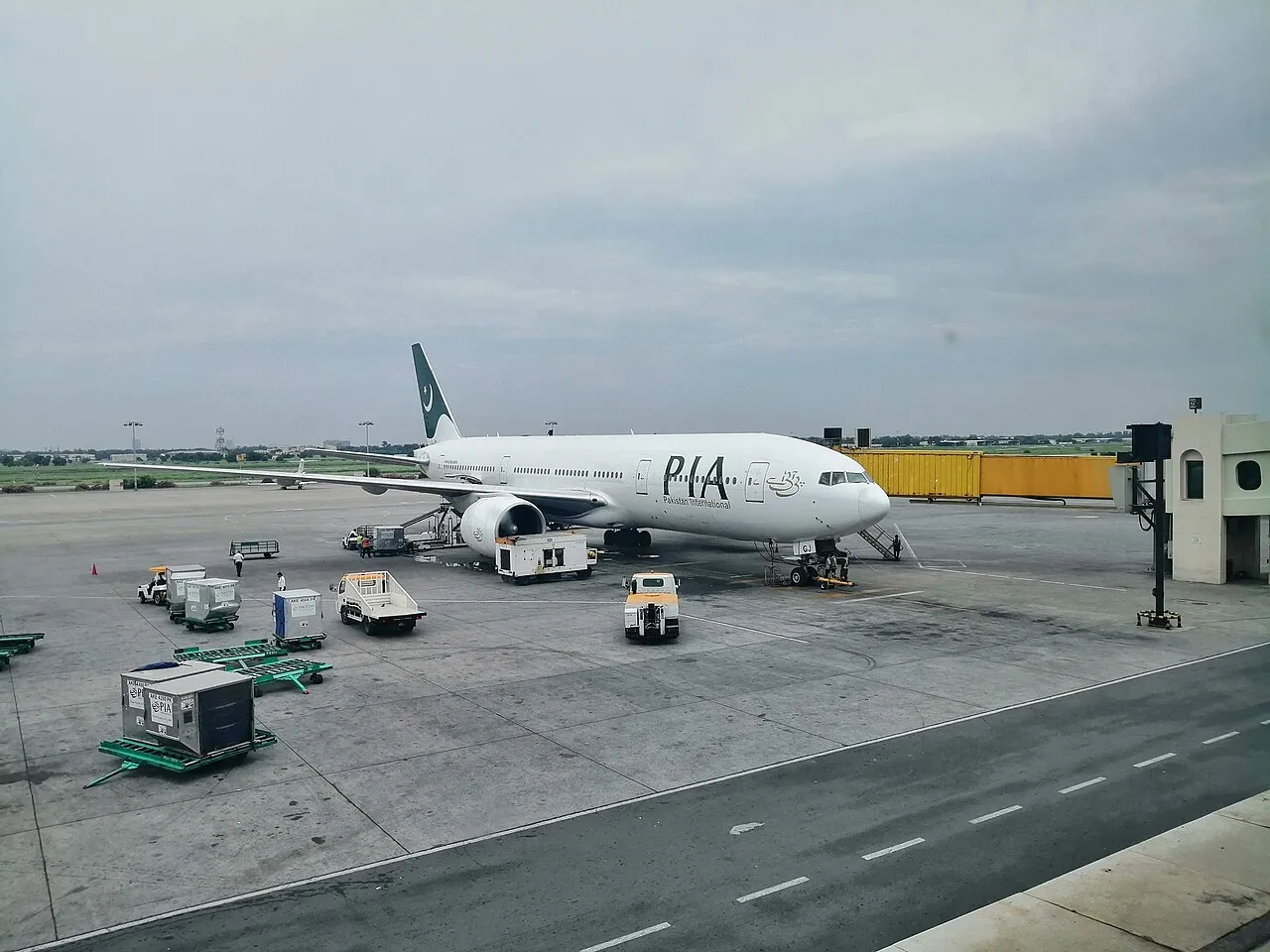
Historical airport context, not evidence of a service improvement, current flight assignment or new management project.
How should a route announcement be checked?
A route proposal, an announced schedule and a flight that actually operates are separate stages. Each needs its own evidence. A leadership appointment should not be used to invent a destination list or suggest that bookings are already available for an unannounced service.
If you are checking travel arrangements, use the airline's official booking and flight-information channels for the specific date and route. A news report can explain a business development without being the current authority for your flight's departure time or availability.
The same distinction applies to a photograph. An image of a PIA aircraft at an airport may be historical or taken during a different service. It cannot establish that a new route has launched, or that the pictured aircraft is assigned to your booking.
What should an existing passenger do differently?
The appointment alone is not a reason to assume your booking has changed. Check your actual reservation and official flight information for any specific update. Changes to a fare, schedule or service need their own notice or applicable terms rather than a conclusion drawn from corporate news.
Avoid messages claiming that you must pay an immediate “new management” fee through an unfamiliar link. Verify any unexpected payment or document request through a known airline contact route. A real executive's name and a genuine news headline can be copied into a deceptive message.
This is general verification guidance, not an assessment of an individual ticket's legal terms. For a particular booking, the relevant carrier information and authorised support route are the places to confirm the actual arrangement.
Why the earlier FlyArystan record needs its date
A historical management release establishes who held a role at that time and what change was announced then. It does not automatically establish the exact duration of every later appointment. Career timelines should be built from dated events rather than guessed transitions.
For example, an announcement of an intention to leave and a later person's start date can refer to different moments. Combining them into an exact end date without supporting evidence can introduce a subtle but avoidable error into a biography.
This article uses the older company record to confirm the prior professional connection. It does not claim to reconstruct every month of employment or explain private reasons for later decisions beyond what an appropriate source actually records.
How to read claims about an executive's track record
Ask what the claim measures and who is making it. A company's welcome statement may describe an executive positively, while an independent assessment would need the underlying results and context. Attribution lets the reader distinguish those two kinds of statement.
“Experienced in airline leadership” and “guaranteed to restore profitability” are not equivalent. The first can describe documented roles. The second predicts an outcome influenced by many factors beyond a biography, and should not be presented as a fact established by an appointment.
Readers can evaluate future reports using the same questions: what is the period, what is the metric and where is the evidence? That approach avoids both automatic praise and unsupported personal criticism.
What has not been confirmed by this news?
The reviewed appointment does not itself confirm a new aircraft order, a complete fleet plan, an across-the-board fare reduction or the date of every future service improvement. Those developments would need separate announcements and, where relevant, evidence of implementation.
Nor does it establish an individual's private motive or a detailed internal disagreement. Public management changes can prompt speculation, but repeating that speculation does not make a professional profile more informative. The verified event is sufficient to report without adding a personal drama.
Keeping these boundaries clear benefits readers looking for practical information. They can identify what changed on 2 November and what still needs a separate check, instead of leaving with a list of invented promises attached to the new CEO's name.
Questions about Adrian Hamilton-Manns and PIA
Who is PIA's new CEO in the November announcement?
Adrian Hamilton-Manns is the appointee named in PIA's statement reported on 2 November 2026. The reporting says he assumed office that day. This is a dated appointment record, not a claim that the title can never change later.
Who did he replace?
The airline's statement thanked outgoing chief executive Air Vice Marshal Amir Hayat. The appointment should be read as a management transition. This article does not infer unreported circumstances about the outgoing executive from the fact that a successor was announced.
Did he previously lead another airline?
Yes. The reviewed professional background includes prior airline leadership, and Air Astana's April 2024 management release identifies his earlier FlyArystan role. Keep that historical reference separate from his current PIA appointment rather than describing both as simultaneous jobs.
Has PIA's transformation already been completed?
That is not established by the appointment announcement. The airline expresses goals and expectations. A claim about completed improvement would require evidence about the relevant operations or financial results over a stated period, not just the arrival of a new executive.
Is this page an official PIA booking service?
No. It is an independently written news explanation using the sources below. Use the airline's own current channels for reservations, flight status and support. Do not submit booking references, identity documents or payment information to a general article page.
What to watch after the appointment
The next meaningful developments will be specific, attributable actions and results: an announced service change, a published operating measure or a clearly defined financial outcome. Each should be evaluated on its own evidence rather than assumed from a broad transformation message.
For related background, see our aviation and technology articles and study resources. The professional appointment is significant enough to explain plainly: a new chief executive took office, an earlier airline career informs the profile and future achievements still need to be demonstrated. Review date: 3 November 2026.
Sources
- Arab News: PIA appoints Adrian Hamilton-Manns, 2 November 2026, including the embedded PIA statement, for the appointment, start date, outgoing executive and attributed company expectations.
- Aviation Week: PIA picks Hamilton-Manns as CEO, for independently reported confirmation of the announcement. Only the publicly available text was reviewed.
- Air Astana: FlyArystan management change, 25 April 2024, for the historical professional role, as indexed in the company's release. The full PDF was not retrievable during the later direct check, so no additional unseen detail is inferred.
Image credits: cover: Ahmed Basit (Pakistan), source, CC BY-SA 4.0. Resized and converted to WebP. inline: Swerveut at en.wikipedia, source, Public domain. Resized and converted to WebP.
Found an error or an outdated detail? Report a correction with the article URL and original source.