
AI for Students: Check Answers, Practise Code and Learn Better
Use AI for focused explanations and practice, then check the result. Original Python, arithmetic and JSON examples show how to learn rather than copy.

AI can help a student explore an idea, practise a question or inspect a piece of code. The useful question is not whether a response sounds intelligent. It is whether the response helps you understand something you can explain and check yourself. A polished answer can still contain a wrong calculation, unsupported claim or unsuitable solution.
This guide gives you a repeatable way to use AI for study without turning every task into copying. The exercises use fictional data and small original examples. They do not promise that a particular model is always right, permanently free or a replacement for a teacher.
What should you ask AI to do during a study session?
Choose a task you can evaluate. “Explain this term using one small example” is easier to assess than “Teach me everything about computers.” A narrow request leaves room to inspect the explanation, ask a follow-up and try the idea yourself before moving to another topic.
Suppose you are learning variables. Ask for an explanation of storing a value, then write your own two-line example. You should be able to identify the variable name, stored value and operation. If you cannot do that, a longer answer is unlikely to fix the missing understanding by itself.
Ask for a hint before a complete solution when practising. A hint preserves the problem-solving step you need to learn. You can request the full explanation afterwards and compare it with your attempt, including the point where your reasoning changed direction.
Keep the teacher's task instructions nearby. If an exercise is meant to practise variables, an advanced solution using techniques you have not studied may be inappropriate even if it runs. Ask for a solution using only the concepts allowed in the assignment, then check whether the response actually follows that restriction.
Why does a confident answer still need checking?
Confidence is a writing style, not a verification method. A model can put a false statement into the same fluent format as a correct one. Your checking method should therefore depend on the kind of claim being made rather than how reassuring the paragraph sounds.
For a calculation, work through the arithmetic. For a statement about an examination deadline, inspect the issuing board's current notice. For code, run suitable examples and examine the result. For a quotation, locate the original wording instead of assuming that quotation marks prove authenticity.
Make the checking step specific. “I searched online” does not explain whether you found the relevant authority or another page repeating the same claim. Record the actual source, what it establishes and any important condition attached to it.
NIST describes its AI Risk Management Framework as a voluntary approach to managing AI-related risks and incorporating trustworthiness into the design, use and evaluation of AI systems. For a student, the practical lesson is to decide how you will evaluate an answer before relying on it. This article's classroom routine is our own teaching approach, not a claim of NIST certification.
How can you test an AI explanation with a small example?
Use numbers simple enough to inspect mentally. Imagine that an AI explains a shopping total with three notebooks costing 80 rupees each. The original exercise total is 240 rupees. If the response gives a different number, you have identified a concrete problem without needing a complicated benchmark.
Now change one input yourself. Four notebooks at the same fictional price cost 320 rupees. Ask what should change in the calculation and why. A useful explanation connects the new quantity to the multiplication rather than merely producing a replacement answer.
Finally, explain the example without looking at the response. If you remember only “240” but cannot explain the multiplication, you have memorized an output. The goal is to understand the relationship so that a new quantity does not require another full explanation.
The prices in this exercise are invented teaching values, not market quotations. Keeping that label visible prevents a harmless arithmetic example from becoming a misleading claim about current prices.
What is a better way to use AI for programming practice?
Start by predicting what a short program will do. Then run it and compare the output with your prediction. Ask AI about the precise point of disagreement. This produces a more useful conversation than pasting a large program and accepting a complete replacement that you cannot explain.
Consider this original Python example:
price = 80
quantity = 3
total = price * quantity
quantity = 4
print(total)
The output is 240. Changing quantity does not rerun the earlier multiplication. The name total still refers to the result assigned before the later change. To calculate the new total, execute the multiplication again after changing the quantity.
price = 80
quantity = 3
total = price * quantity
quantity = 4
total = price * quantity
print(total)
This version prints 320. A useful AI explanation should identify the order of execution and the second assignment. A response saying only “Python updates variables automatically” would fail to explain the observed difference.
Test both versions in the Python learning track and describe the difference in your own words. If an explanation uses a concept you have not learned, ask for a simpler account grounded in the lines that are actually present.
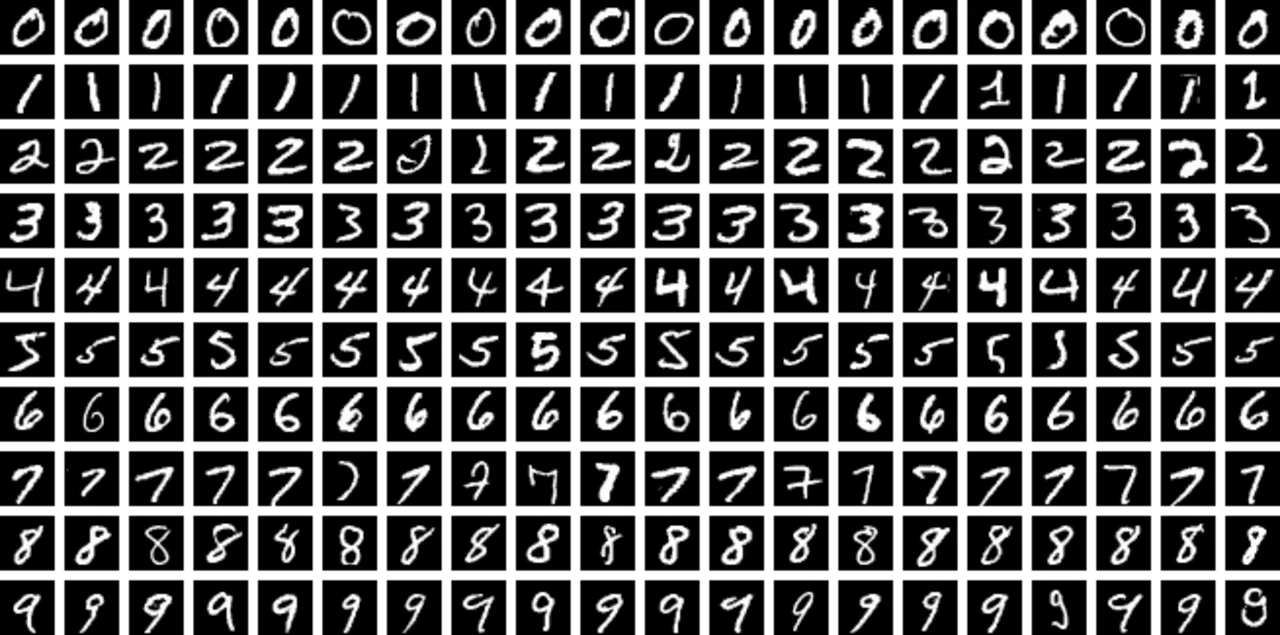
Handwritten digit samples from MNIST illustrate a different AI task: recognizing patterns in images. They are not an accuracy benchmark for a chatbot.
Does valid JSON mean the answer inside it is correct?
No. A response can have a valid data structure while containing unsuitable values. Google documents structured outputs for generating responses that follow a supplied JSON Schema. That is useful for predictable fields, but the application still needs to check whether the values make sense for the task.
Imagine a multiple-choice question stored as an object with a question, four options and an answer index. The object can be well-formed while repeating the same option twice, pointing to the wrong answer or explaining a different question. Syntax validation and educational review are different checks.
Here is a small fictional example of the distinction:
{
  "question": "What is 3 multiplied by 4?",
  "options": ["7", "12", "12", "14"],
  "correctIndex": 1
}
The JSON parses, but two options are identical. Before using it in a test, the author should replace the duplicate, confirm that exactly one answer is correct and add an explanation that teaches the multiplication. A successful parser does not perform those editorial decisions for you.
This matters whenever AI helps create worksheets, flashcards or quizzes. Treat the generated structure as material to inspect, not as proof that the question bank is ready for learners.
How should you ask for help without giving away private information?
Remove details that are unnecessary for the learning task. An explanation of a spreadsheet formula usually does not require real student names, identity numbers, account passwords or an entire private attendance sheet. Replace such details with fictional labels before asking the question.
For example, use “Student A” and a small invented mark rather than pasting a class list. If the problem concerns a form layout, describe the relevant fields instead of uploading completed forms containing personal information. The smaller example often makes the technical issue easier to understand as well.
Do not paste API keys or login tokens into a prompt to ask why a program fails. You can show the shape of the code with a placeholder and describe the error after removing sensitive details. Access credentials are not needed for a general explanation of how an authorization header is constructed.
If you are unsure whether you are allowed to share a document, ask its owner or teacher first. A convenient upload button is not evidence that every document is appropriate to upload.
Can AI-generated MCQs improve revision?
They can provide practice material when the questions are reviewed and tied to the topic you are studying. Quantity alone is a poor target. Ten questions exposing different misunderstandings can be more useful than a hundred near-duplicates testing the same remembered phrase.
Before attempting a set, identify its scope. Does it cover one chapter, a particular concept or a complete course? After answering, examine why each wrong option is wrong. A score tells you what happened on that attempt; the explanations help you decide what to study next.
Try changing an example after solving it. If the original question uses three items, practise with four. If it asks for an output, change one input and predict again. This makes it harder to confuse memorized answer positions with understanding.
Our class resources and programming courses are organized around learning material rather than a promise that every generated question will be correct. Use the available topic context when interpreting a practice result.
How can you tell whether an answer helped you learn?
Use a short exit task. Close the answer and write a two-sentence explanation, solve a changed example or identify the mistake in a small program. Choose an activity that requires using the idea rather than recognizing the same wording again.
For the notebook exercise, a suitable exit task is to calculate five notebooks at the fictional price and explain the multiplication. For the Python example, move an assignment and predict the new output. For the JSON example, identify one structural check and one content check.
If you cannot finish the task, return to the smallest unclear step. Ask a focused follow-up such as “Why did the earlier value stay unchanged?” That is more productive than requesting another complete chapter covering the same material at greater length.
What is a practical five-step routine for studying with AI?
- Name the topic. Write what you are trying to understand and which concepts the task allows.
- Attempt something first. Make a prediction, solve one step or describe your current understanding.
- Ask a focused question. Request the missing explanation rather than an unrestricted replacement answer.
- Check the response. Use arithmetic, a running example, a current primary source or the teacher's instructions as appropriate.
- Transfer the idea. Solve a changed example without copying the response.
Keep a small record of recurring mistakes. “I forgot that the calculation ran before the value changed” is useful revision information. “AI gave a long answer” says little about what you understood.
A productive session ends with something you can now do more reliably. The length of the conversation and the elegance of the generated text are secondary to that result.
Sources
Source 1: AI risk management framework
Source 2: structured outputs documentation
Checked 1 November 2026. Study routines, code, arithmetic and quiz examples are original teaching illustrations. No model pricing, availability or guaranteed accuracy is asserted.
Image credits: cover: PurchY0, source, CC BY-SA 3.0. Resized and converted to WebP. inline: Suvanjanprasai, source, CC BY-SA 4.0. Resized and converted to WebP.
Found an error or an outdated detail? Report a correction with the article URL and original source.