
Alexander Zverev: Olympic Gold, Two 2026 Majors and Tennis Score Reading
Read Zverev’s Olympic gold and verified Roland-Garros and US Open titles in 2026, with a career timeline and clear explanations of tennis scores.
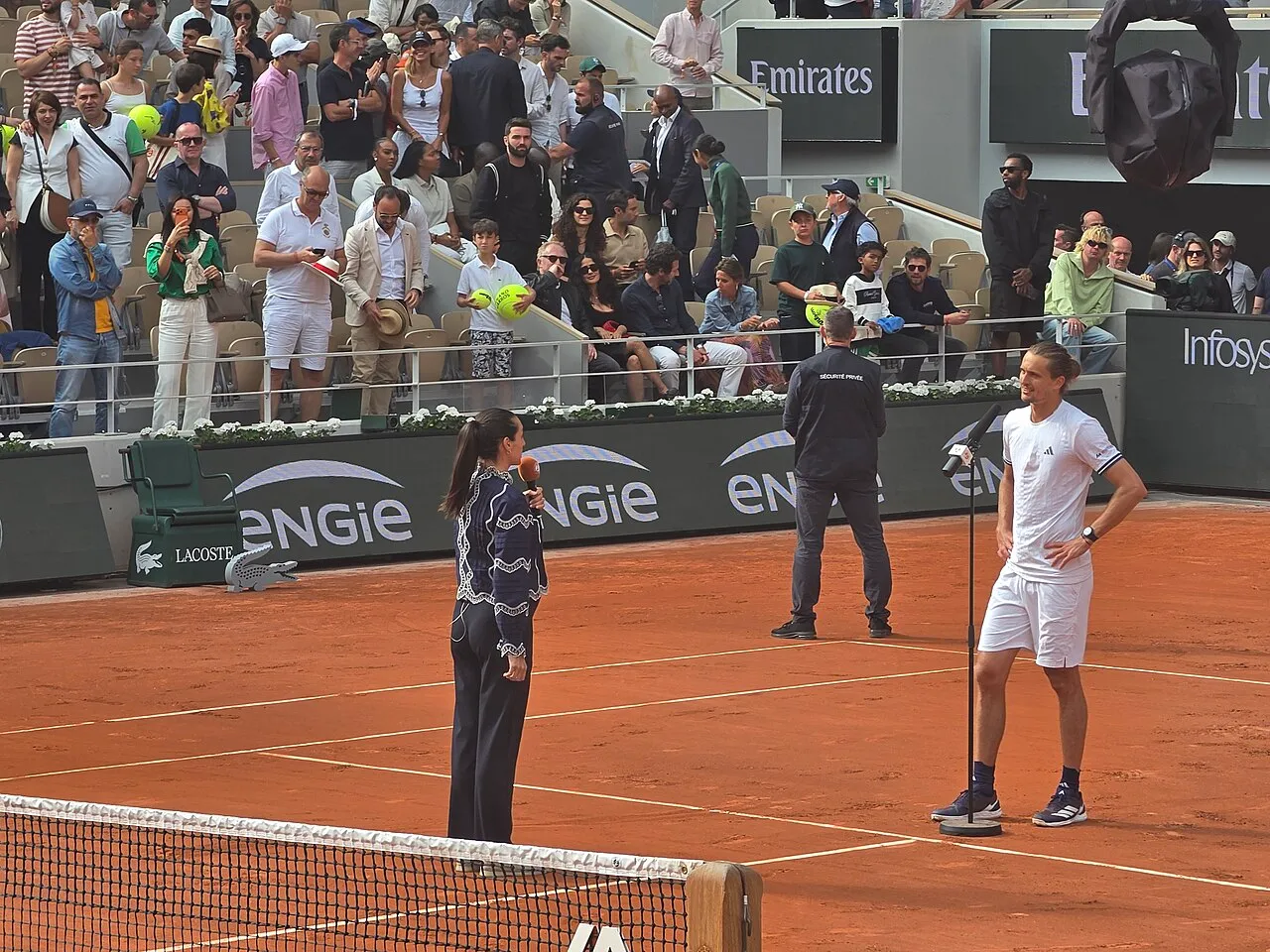
Alexander Zverev's career includes Olympic singles gold and, by the review date of 6 November 2026, major titles at Roland-Garros and the US Open in 2026. A profile that still describes him as never having won a major would therefore be outdated. The ATP and US Open's official reports confirm the two championship results.
This guide follows the verified progression from earlier major finals to those titles and explains how to read the tennis records. It does not publish a live ranking, invent an upcoming fixture or treat a historical photograph as a current result. Career milestones and original scoring exercises are clearly separated.
What are the key milestones in Zverev's career?
Zverev represents Germany in the official ATP record. His major milestones discussed here include the 2020 US Open final, Olympic gold in Tokyo in 2021, further major finals in 2024 and 2025, and the two 2026 major titles. These events belong to different competitions and should retain their own labels.
| Event | Established result discussed here |
|---|---|
| US Open 2020 | Finalist, losing to Dominic Thiem |
| Tokyo Olympics, held in 2021 | Men's singles gold |
| Roland-Garros 2024 | Finalist, losing to Carlos Alcaraz |
| Australian Open 2025 | Finalist, losing to Jannik Sinner |
| Roland-Garros 2026 | Champion, defeating Flavio Cobolli |
| US Open 2026 | Champion, defeating Ben Shelton |
The timeline shows a progression without pretending that the outcome was predetermined. Reaching a final and winning a final are distinct achievements. A clear career profile acknowledges both, rather than rewriting earlier results after later success.
What happened in the 2020 US Open final?
The ATP's biography records Zverev reaching his first major final at the 2020 US Open, where he lost to Dominic Thiem after holding a two-set lead. That is a historical result, not a statement about every later final. It belongs on the timeline as a separate competitive event.
A two-set lead describes the match state at one stage. The final result records the completed match. Those facts can coexist without contradiction. Understanding the difference helps explain why an early lead should not be presented as though the title had already been won.
For a classroom score-reading exercise, stop a fictional match after two sets and ask whether the winner is established under a stated best-of-five format. The answer depends on the required number of sets. This teaches the logic of the result without attributing invented tactical decisions or emotions to the real players.
Why is the Tokyo Olympic gold a distinct achievement?
The ATP's Tokyo final report records Zverev defeating Karen Khachanov 6-3, 6-1 to win Olympic men's singles gold in 2021. The event belonged to the Tokyo 2020 Games, which took place in 2021. Preserve both the event name and the calendar timing when building a career table.
An Olympic gold medal is not another name for a Grand Slam title. The competitions have different identities and entry structures. A player can hold the Olympic title while the question of major championships remains a separate record, as the chronology of Zverev's career demonstrates.
For a useful comparison, place Olympic achievements and major-tournament achievements in different columns. The broader career can contain both without combining them into a misleading total called Grand Slams. Respecting the category gives each result its proper significance.
How did the 2024 and 2025 finals fit the timeline?
Official ATP coverage of the 2026 breakthrough identifies the earlier final defeats to Alcaraz at Roland-Garros in 2024 and Sinner at the Australian Open in 2025. These entries show repeated appearances at the final stage of major tournaments before the first major title was secured.
Avoid describing a finalist as the champion simply because they came close or won several earlier rounds. At the same time, do not erase the achievement of reaching the final. A tournament's final classification and a narrative assessment of the campaign answer related but different questions.
Students can use the sequence to practise chronological reasoning. Put the event year, tournament and result in separate fields, then sort by date. This catches a common error in profiles: assigning a later championship to an earlier final or presenting the same tournament name as though every year's result were identical.
What did Zverev win at Roland-Garros in 2026?
The ATP's official final report records Zverev defeating Flavio Cobolli 6-1, 4-6, 6-4, 6-7(5), 6-1 to win his first major title. It was a five-set final. The result should not be shortened into straight sets, even though the first and final set margins look decisive.
The score also provides a lesson in reading a match's structure. Zverev won the first, third and fifth sets, while Cobolli won the second and fourth. A reader can reconstruct that sequence from the listed games without inventing what was said between points or why a particular tactical decision was made.
The official report establishes the champion, opponent and score. More detailed explanations of momentum require match evidence. A polished article should not fill the space between those facts with assumed injuries, private motivations or a fictional description of a point that the source does not document.
What happened at the 2026 US Open?
The US Open's official report records Zverev beating Ben Shelton 6-3, 7-6(2), 5-7, 6-2 in the men's singles final. It identifies the victory as his second Grand Slam title of the year. This is why a current profile needs to include both the Paris breakthrough and the later New York title.
The score shows a four-set match. Zverev won the first two sets, lost the third and won the fourth. It is a different match from the five-set Roland-Garros final and should not inherit that final's opponent, score or setting merely because both were championship victories in 2026.
For readers checking a summary, compare event, opponent and score as a three-part test. If one part belongs to another tournament, the summary needs correction. This is a simple way to catch sports-content errors that survive when only the player's name and the word champion are checked.
How should a tennis set score be interpreted?
A set score records games, while a match score lists the completed sets under the applicable format. The numbers therefore have levels. A 6-3 set is not a six-match-to-three-match result, and a four-set final does not mean the winner won four separate tournaments.
Take the documented 2026 US Open final as an example of reading the sequence. The first 6-3 is one set, the 7-6 is another, and the later 5-7 belongs to a set won by Shelton. Keep the order before trying to explain how the overall match was decided.
Rules and formats can differ by competition, so consult the relevant event's regulations for a current question. A career profile can explain a historical result in its own context without pretending that one remembered scoring arrangement applies automatically to every future tournament or age group.
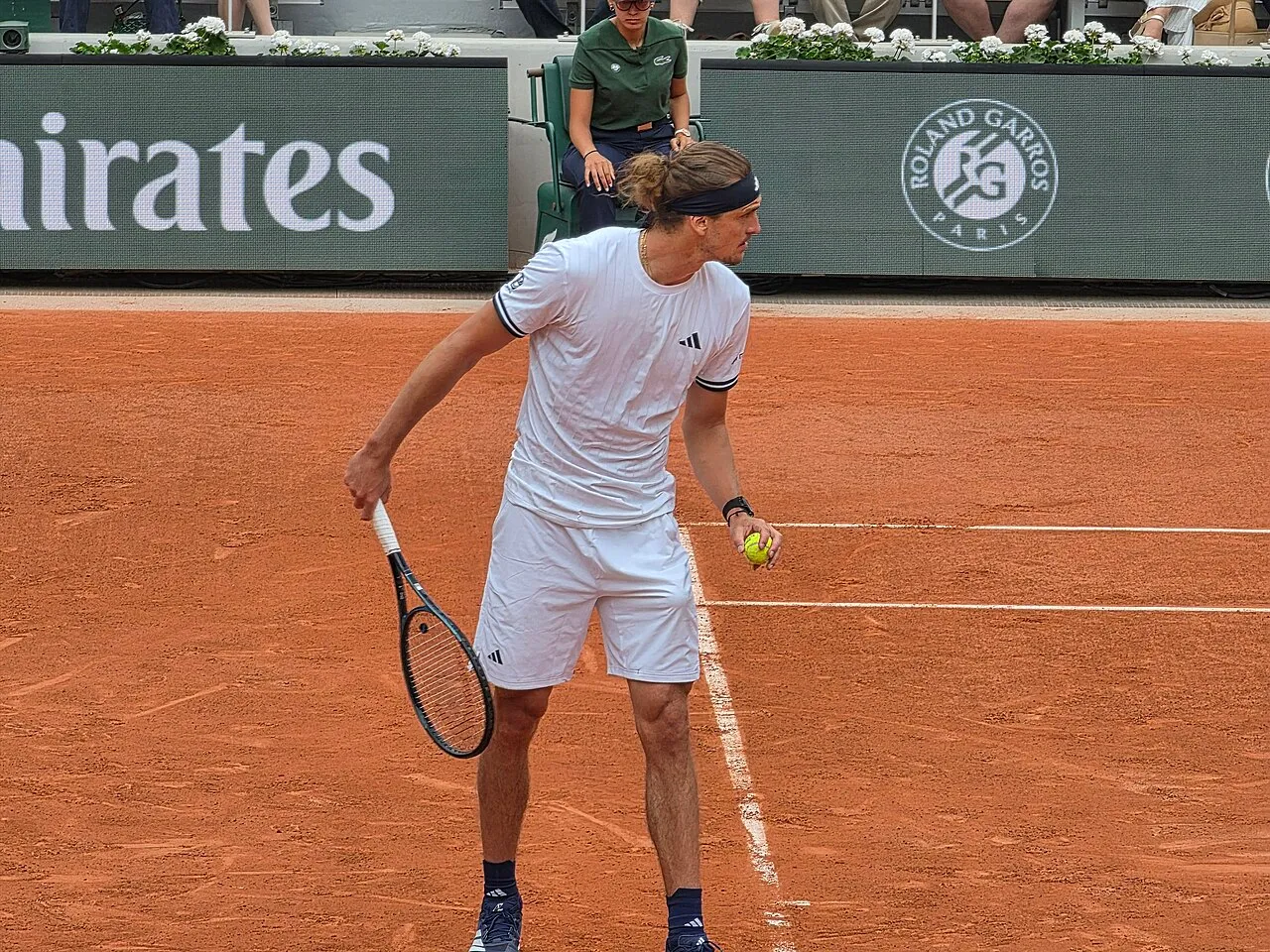
A second credited image from the Zverev versus de Jong match at Roland-Garros 2026, used as tournament context rather than a US Open photograph.
What do the numbers in parentheses mean?
In familiar tennis score notation, a parenthetical number beside a 7-6 or 6-7 set gives additional tiebreak information. It is not another set. Readers should use the competition's score presentation and rules to interpret the detail rather than treating the punctuation as a decorative part of the result.
For an invented example, a set ends 7-6 and is accompanied by a tiebreak score. The set contributes one set win to the match, not an extra win for the tiebreak itself. Confusing the levels would count the same competitive outcome twice.
The parenthetical notation in Zverev's two 2026 final scores should therefore remain attached to its set. Removing it can still leave the set winner understandable, but changing or moving it to another set would alter the historical record. Accurate copying is the first step before any analysis.
Why do surface and tournament context matter?
Roland-Garros is associated with clay courts, while the US Open is played on hard courts. These settings are part of the tournament context. They can inform analysis, but a broad statement about surface should not replace observation of how two players actually competed in a particular match.
For a classroom exercise, imagine the same two fictional players in two different conditions. Ask which information would be needed to compare the encounters fairly: date, format, conditions and the actual record are useful starting fields. The exercise does not predict what Zverev would do in a hypothetical future matchup.
Avoid unsupported absolutes such as a player always wins on one surface or cannot succeed on another. A career record consists of specific results, while a tactical interpretation needs its own evidence. Precise language leaves room for the sport's variation without becoming empty or uninformative.
How should serve statistics be read?
Aces, double faults, first-serve percentages and points won on serve measure different things. A large ace count does not by itself establish the winner of a match. A player can produce many direct service winners while other parts of the contest determine the result.
Use an invented service record with sixty first serves in play from one hundred attempts. The first-serve-in percentage is sixty percent in that model. Points won on those serves would require another count. Dividing one statistic by the wrong denominator can produce a confident-looking number with the wrong meaning.
These figures are fictional and are not Zverev's statistics from either 2026 final. For a real analysis, open the official match statistics and keep the event and player filter visible. A biography should not turn a general observation about serving into a fabricated match-specific percentage.
Is a ranking the same as a major title?
A ranking reflects results under a defined points system and date. A major title records winning a particular championship. The two are connected within the sport, but one does not automatically supply the other. A champion's current ranking must still be checked against the appropriate official list.
This profile documents the titles without stating an unchecked live ranking. If a reader asks where Zverev is ranked today, the correct next source is the current ATP ranking, with its date and category. An older screenshot cannot be assumed to remain current after later events.
For a learning exercise, separate peak ranking, current ranking and tournament result into three columns. Each needs its own source and time boundary. Keeping those fields distinct prevents a familiar biography error in which a career-best position is presented indefinitely as the player's current position.
How can photographs avoid creating a false update?
A photograph from a previous Roland-Garros appearance can illustrate Zverev on clay without being a picture of the 2026 trophy ceremony. Its caption should preserve the supported date or setting. A photograph's upload time alone does not establish when the pictured event happened.
The same applies to images showing a serve or a practice session. They can explain the player and sporting context but cannot prove a new match result, injury or selection decision. Readers deserve to know whether an image documents the specific event or simply illustrates the career.
The credited pictures here are used with those limits. They are not described as live images from a current tournament. Accurate visual context supports the article's factual timeline rather than quietly making stronger claims than its sources can justify.
A practical timeline and score-reading activity
Build the six-row timeline near the start of this article, then place the two 2026 final scores on separate cards. Ask a learner to match each card to the event and opponent. This requires attention to the actual record rather than relying only on the player's name or the word final.
Next, identify the number of sets each finalist won. In Paris the winning sequence spans five sets; in New York it spans four. Explain the difference without assuming that a shorter match was automatically easier or that the final score reveals every important moment of the contest.
Students can use study resources for tables and programming courses to build a fictional tennis-result display. Show the tournament, year and format clearly. An interface that omits those fields can encourage readers to compare incompatible results even when its numbers are copied correctly.
Questions readers commonly ask
Had Zverev won a Grand Slam by November 2026? Yes. The official sources confirm Roland-Garros and US Open titles in 2026. A profile still saying he has never won a major is outdated for the review date used here.
Is Olympic gold included in that two-major total? No. The Tokyo Olympic title is a separate achievement. It belongs in the broader career record but not in a count of Grand Slam championships. Distinguishing categories gives each achievement an accurate description.
Does this guide give his next opponent or current ranking? No. Those are changing records that require current ATP and tournament information. This article explains verified milestones and result-reading rather than presenting a biography as a live draw or scoreboard.
Sources
- ATP: Alexander Zverev biography
- ATP: Tokyo Olympic gold in 2021
- ATP: Roland-Garros 2026 final report
- US Open: Zverev versus Shelton, 2026 men's final
Image credits: cover: Like tears in rain, source, CC BY-SA 4.0. Resized and converted to WebP. inline: Like tears in rain, source, CC BY-SA 4.0. Resized and converted to WebP.
Found an error or an outdated detail? Report a correction with the article URL and original source.