
Arda Güler: Official Profile, Creative Play and Football Statistics Explained
Explore Arda Güler’s official profile and learn how space, receiving, passing risk, assists and per-90 samples shape a careful creative-play review.
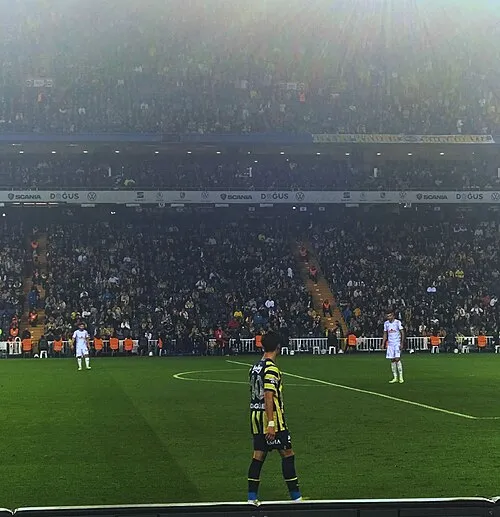
Arda Güler is a Turkish footballer whose official Real Madrid profile records his birth date as 25 February 2005 and his club debut against Arandina on 6 January 2024. The club's introductory account identifies Ankara as his birthplace and provides a dated starting point for understanding the move to Madrid.
This guide was checked on 13 November 2026. It combines a verified profile with an original explanation of creative midfield play, passing options and the limits of common football statistics. It does not announce an unverified contract extension, predict the next lineup or reproduce private coaching instructions.
Güler also scored for Türkiye in the 12 November match against Belgium, according to the Turkish federation's report. That event belongs to a national-team fixture. It should not be added to a club goals total as though the two records were one competition.
A short verified profile
Real Madrid's official player page gives the identity and club context, while the club's original introduction provides the dated arrival background. Use those sources for basic facts rather than an unrelated fan page claiming private information.
The club debut entry identifies a specific opponent and date. It does not mean every earlier squad appearance or training session counted as a competitive match. A player can join an organisation before making a first appearance in the relevant competition.
This article does not freeze a current appearance total that may change after later fixtures. For a live statistical snapshot, use the official profile and preserve its date and competition scope. The learning concepts below are intended to remain useful as the record grows.
Creative play starts before the final pass
A pass is easier to understand when the reader notices the space before the ball arrives. A receiver's position, a defender's movement and a teammate's run can change which options are available. The final touch is one part of a wider sequence.
When watching public footage, pause before the action and describe the visible options. Then compare them with the choice made. Do not claim that a player saw every possible route or intended an exact outcome unless the evidence supports that interpretation.
This is an observation activity, not an account of Güler's private thought process. A profile can help readers learn how to watch a creative role without pretending to read the player's mind from a highlight.
Receiving position changes the next action
The position in which a player receives can affect how quickly they can pass, carry or turn. A teammate facing pressure may need a different angle of support from one who has space. These relationships help explain why movement before receiving matters.
For a paper exercise, draw a player with the ball, two teammates and one defender. Move a receiver a short distance and note which passing line opens or closes. The exercise concerns space and angle, not a guaranteed scoring move.
Keep the example fictional. It is not a reconstruction of a Madrid attack. That distinction allows a simple diagram to teach a useful idea without inventing a real match event or claiming a coach ordered the exact pattern.
Scanning is not visible in every camera view
Looking around before receiving can provide information about pressure and options. However, a television camera may not show every head movement or what the player could actually see. Avoid making a firm claim from an angle that leaves those details unclear.
Describe the evidence you have. A visible glance is an observation; certainty about everything the player noticed is another claim. Good analysis separates the two rather than turning a familiar coaching term into an unsupported explanation.
For a learner, review a short sequence and note where the camera limits the conclusion. Recognising that limit is useful. It prevents a polished interpretation from becoming stronger than the footage on which it rests.
Passing risk needs context
A safe pass and an ambitious forward pass can serve different purposes. A completion percentage alone does not explain the difficulty or value of every attempt. It tells us how many recorded passes were completed under the provider's definition.
Imagine a fictional player completing nine of ten short passes and another completing six of ten more difficult attempts. The first has the higher completion rate. That number alone does not establish which set better served the team in the particular match.
The lesson is not that errors should be ignored. It is that assessment needs the task and event context. A comparison becomes more useful when it identifies what the player was trying to do through evidence rather than assuming all attempts were equally difficult.
A chance created is not a guaranteed goal
A pass can lead to an opportunity without producing a goal. Finishing, defending and the exact situation still affect the outcome. Describing a creative player only by final goals can therefore omit useful actions that ended differently.
At the same time, do not invent an exact number of chances created from memory. Use a defined event record and preserve the provider's label. Different statistics can have different definitions, even when their names sound similar.
For a student note, describe one verified sequence in plain language before adding a rate or total. A clear event description can make a concept understandable without requiring a decorative dashboard of unverified numbers.
Assists have a defined scope
An assist statistic depends on the competition or provider's definition. It is not simply every pass that happened before a goal. Keep the source and competition attached to the number, especially when comparing club and national-team records.
Do not assume a pass was an official assist because a highlight edit places it near the scoring action. Check the event record. A useful pass can still be discussed without assigning an official statistical label that has not been verified.
This guide avoids publishing an unchecked current assist total. The role explanation is separate from a live count. For a current figure, consult the relevant official record and note exactly which matches it includes.
Club and national-team football are different records
Güler's club appearances and his Türkiye appearances belong to separate categories. The TFF report of his goal against Belgium establishes an international event, not a Real Madrid goal. A career summary should not mix the totals without a clearly defined combined scope.
The match report also identifies Türkiye's 2–1 defeat. A player's goal and a team's result are different facts that can both be true. Scoring does not prove every other part of the performance was successful, just as a defeat does not erase the goal.
For your own log, give club and country separate sections. Include the date, opponent and competition in each row. This structure helps prevent a real achievement from being placed in the wrong table when the same player appears in several contexts.
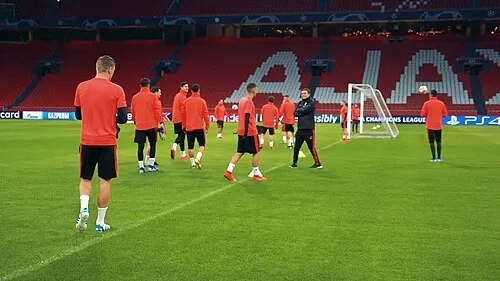
Archive Real Madrid training in Amsterdam in 2019, before Güler joined the club. This is general club context and does not depict him.
Position labels do not describe every moment
A broad label such as midfielder or attacker is useful, but players can occupy different spaces during one match. A starting position is not a promise that the player remains at one fixed point throughout the game.
When analysing a sequence, describe the visible area and immediate task. Do not infer a permanent role change from a single clip in which the player receives wide or drops deeper. A wider pattern needs a meaningful sample and a reliable match context.
This avoids two opposite mistakes: treating the lineup graphic as a complete map of every action, and treating one action as proof that the graphic was meaningless. Both are partial views that need to be read for the question they answer.
Off-ball work is part of the role
A player can contribute without touching the ball by offering a passing route, moving a defender or helping the team maintain its shape. Some of that can be visible in footage, while a standard score list may not record it.
Be careful with claims about unseen movement. A camera following the ball may exclude other players, so it cannot establish everything happening elsewhere. A useful account acknowledges the view rather than inventing a complete team pattern outside the frame.
For an exercise, watch a continuous passage where the player stays visible. Record changes in position and the options they seem to offer. Mark interpretations as interpretations, especially when the final action does not prove the exact intention behind an earlier run.
Minutes matter when comparing totals
A player with many starts and a player used for short substitute appearances may have different opportunities to accumulate events. A raw total should therefore be read with minutes and role where those inputs are available.
For a fictional example, two goals in 180 minutes and two goals in 900 minutes share a total but not the same rate per minute. That difference is useful, yet the smaller sample also carries more uncertainty. A rate is not automatically a complete ranking.
Do not invent minutes to make a comparison possible. If the verified input is missing, leave the calculation out. A transparent limit is better than an exact-looking per-90 figure built on an assumed denominator.
Per-90 rates and small samples
A per-90 rate scales an event count to ninety minutes. For a fictional two assists in 180 minutes, the rate is one per ninety. The formula does not guarantee one assist in the next full match; it summarises the chosen sample.
A short appearance with one event can create a very high scaled rate. That is a reason to show the minutes, not to hide them below a dramatic headline. Readers need the denominator to assess how much evidence supports the comparison.
This guide does not provide an unverified Güler per-90 figure. It teaches the method so readers can interpret a properly sourced table. The actual record needs current minutes, events and a clear competition scope.
A highlight is selected evidence
Highlights can show skill clearly, but they are chosen moments. They may omit ordinary passes, defensive phases and unsuccessful attempts. A collection of successful actions does not establish the frequency of success across the whole match or season.
Use highlights to identify a specific action, then consult wider footage or event records for broader claims. The two forms of evidence can complement each other if their limits remain clear. Neither should be asked to answer every question alone.
For young readers, this is also a useful media lesson. An edited sequence can be accurate in what it shows while incomplete as a sample. Recognising that distinction helps avoid both blind praise and unfair criticism based on a few selected moments.
Transfer and contract claims need fresh sources
A dated club introduction establishes what was announced at that time. It does not confirm every later extension, salary or transfer rumour. Those are specific current claims requiring their own official evidence.
This article does not repeat an unverified future contract term merely because it appeared in a search result. Nor does it speculate about a player's private relationships or finances. Those details are unnecessary for explaining the verified sporting profile and the creative role.
When sharing news, keep the announcement date visible. A genuine old arrival story can become misleading if presented as a new transfer. The year is part of the information readers need to understand what actually changed.
A practical creative-play worksheet
Choose one short public sequence. Record the starting positions, visible pressure, available passing options, action and result. Add a separate column for uncertainty. This makes it harder to confuse a plausible interpretation with something the footage directly shows.
Then ask what one additional source would help. A full match view might clarify movement, while an event record might confirm an assist label. The question should guide the source choice rather than collecting statistics simply because they are available.
Keep the exercise narrow. Explaining one action well is a good learning outcome. It does not need to become a claim that a few seconds settle a player's whole career or place them permanently above every other creative midfielder.
What readers should retain
Güler's official club profile provides a verified identity and dated career starting points. His role offers a useful way to study space, receiving, passing risk and the limits of common statistics. Club and national-team records should remain separate.
More football and educational guides are available here. For current totals or team news, use the relevant official record. For learning, define the question, preserve the sample and distinguish visible action from inferred intent.
A thoughtful review can be engaging without private speculation or exaggerated certainty. Start with one well-documented sequence, explain what it shows and leave unsupported claims out. That is a stronger basis for understanding creative play than a long list of unlabeled numbers.
Common questions
Which official profile is used here?
The guide uses Real Madrid's player page and original introduction, alongside the TFF report for the dated national-team goal. It does not treat a fan page as proof of a new contract or selection.
Does a high pass completion rate settle creative quality?
No single rate captures every task. Difficulty, role, sample and match context matter. Use a defined event record and explain what the statistic measures before turning it into a broader judgment.
Are the per-90 examples Güler's current figures?
No. They are fictional exercises explaining the calculation and the effect of a small sample. A current real figure requires verified minutes, events, date and competition scope.
Sources
- Real Madrid: Arda Güler official player profile
- Real Madrid: original player introduction
- TFF: Türkiye–Belgium report, 12 November 2026
Image credits: cover: Mintone97, source, CC BY-SA 4.0. Resized and converted to WebP. inline: Real Madrid, source, CC BY 3.0. Resized and converted to WebP.
Found an error or an outdated detail? Report a correction with the article URL and original source.