
Argentina vs Uruguay 1-2: November 2026 Friendly Result
Uruguay beat Argentina 2-1 at La Bombonera after a Balerdi own goal and a Maximiliano Araújo strike. Read the verified timeline.
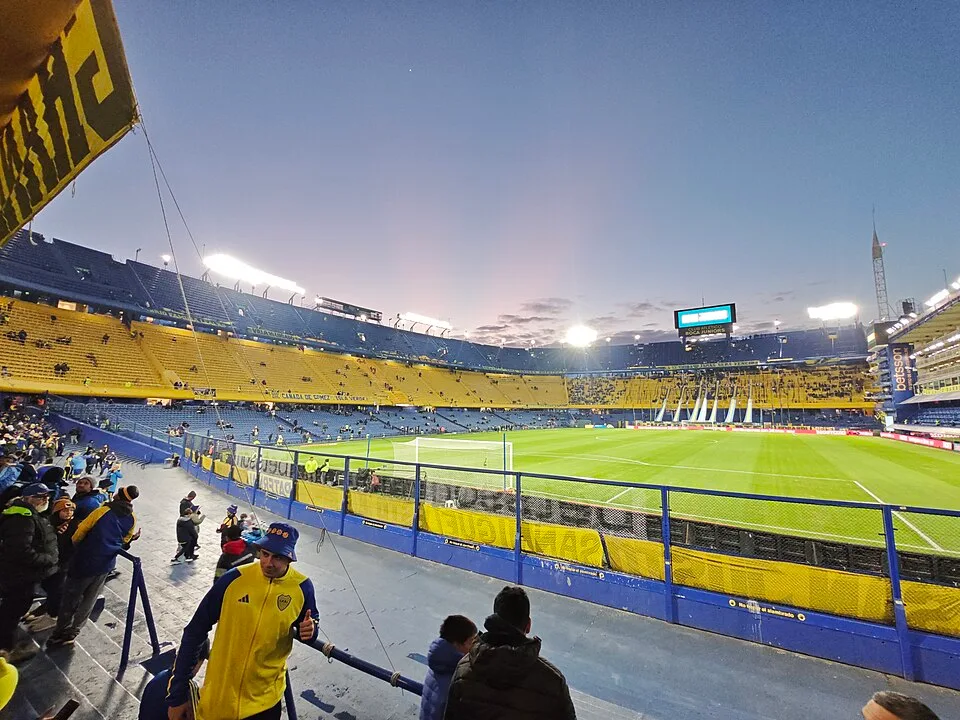
Argentina 1-2 Uruguay: the November 2026 friendly in Buenos Aires
Uruguay beat Argentina 2-1 in a men's international friendly at La Bombonera in Buenos Aires on Friday 13 November 2026. The Uruguayan Football Association's match record gives the score, local date, kick-off time and scorers. Argentina's football association separately confirms the result and identifies the three goals as a Leonardo Balerdi own goal, a Maximiliano Araújo strike and a Julián Álvarez reply. Readers in Pakistan saw the trend on 14 November because the match began at 20:00 in Argentina, after midnight in Pakistan. The fixture date on the official record remains 13 November.
That date distinction is important. A search for 'Argentina vs Uruguay 14 November' can point to the same game in another time zone, while a match archive records the local Buenos Aires date. It would be wrong to invent a second match or move the stadium event to the next day. This article uses the official local date and explains why the trend appeared the following day in Pakistan.
Result, scorers and venue
| Match item | Verified detail |
|---|---|
| Fixture | Argentina 1-2 Uruguay |
| Type | Men's senior international friendly |
| Local date | 13 November 2026 |
| Kick-off | 20:00 in Buenos Aires |
| Stadium | La Bombonera, Buenos Aires, Argentina |
| First half | 0-0 |
| Uruguay's first goal | Leonardo Balerdi own goal, 48' |
| Uruguay's second goal | Maximiliano Araújo, 53' |
| Argentina goal | Julián Álvarez, 73' |
The Uruguayan association's match page lists the events at 48, 53 and 73 minutes. Argentina's report expresses the same second-half sequence as three, eight and 28 minutes after the restart. The two descriptions are compatible: they count from different starting points. The final scoreboard is Argentina one, Uruguay two. An own goal is credited to Uruguay's team total but not to an Uruguayan scorer.
Why the first goal is recorded as an own goal
The first score change came after half-time, and the official AUF record labels it 'OG' beside Argentina defender Leonardo Balerdi. That label matters. A quick summary might claim that an Uruguay forward opened the scoring, but both federations identify a Balerdi own goal. The goal gave Uruguay the lead without adding a goal to any Uruguayan player's personal tally.
Own goals often cause confusion in scorecards. The team receiving the benefit is awarded a goal in the match score, while the player who last put the ball into his own net is named in the event description. The AUF card's 48th-minute entry therefore answers two different questions: Uruguay went ahead, and Balerdi was the player associated with the own goal. It does not identify the whole preceding attacking move, so this account does not invent one.
The first half had ended 0-0. That makes the second-half opening especially important: the stalemate ended quickly after the interval, then changed again just five minutes later. The score at 48 minutes was Argentina 0, Uruguay 1. A reader who only sees the final 1-2 may miss how tightly the decisive events were clustered after half-time.
Maximiliano Araújo doubles Uruguay's lead
At 53 minutes, Maximiliano Araújo scored Uruguay's second goal. The AUF match record and AFA recap agree on his name and the order of events. With the earlier own goal already on the board, Uruguay were 2-0 ahead. The score remained reversible because more than half an hour of regular time was left, but Argentina now needed two goals merely to draw.
Araújo was one of Uruguay's starters according to the official team sheet, alongside Darwin Núñez and Giorgian De Arrascaeta in the attacking group. A line-up helps establish who was on the pitch, but it should not be stretched into claims about unseen assists or a precise formation. The federation summaries do not provide a detailed passing diagram for Araújo's finish. The verified fact is his goal at 53 minutes.
Uruguay's coach on the AUF page is Diego Forlán. Argentina's is Lionel Scaloni. Those coaching names give context to the selections without proving why either team made a particular tactical decision. A post-match article should separate documented substitutions from speculation about their motivation. The team sheets and substitution lists allow a more grounded reading.
Julián Álvarez brings Argentina back to 2-1
Argentina reduced the deficit in the 73rd minute through Julián Álvarez. The AFA report calls it the 28th minute of the second half. That is the third and final goal in the official record. The scoreboard became Argentina 1, Uruguay 2, leaving Argentina a route to an equaliser. The federations' published accounts do not list a later goal, so the match ended 2-1 to Uruguay.
Álvarez had started for Argentina. The team sheet also lists Nico Paz, Thiago Almada, Enzo Fernández and Alexis Mac Allister among the starters. Naming them here is useful for readers checking whether a circulated line-up belongs to this fixture. It is not a claim that all of them scored or assisted. The only Argentina scorer in the official match card is Álvarez.
The timing of Argentina's reply is also a reminder to distinguish momentum from outcome. A goal with about seventeen minutes of normal time remaining can create late pressure, but it is not an equaliser. Uruguay had built a two-goal advantage and conceded once. The final margin was one goal. Describing the result as a draw because Argentina 'came back' would be inaccurate; Argentina narrowed the deficit but did not remove it.
Line-ups and selection context
Uruguay began with Cristopher Fiermarín in goal. Its listed defence included Guillermo Varela, Ronald Araújo, Mathías Olivera and Joaquín Piquerez. Lucas Torreira and Rodrigo Bentancur appeared in the midfield group, with Agustín Canobbio, De Arrascaeta, Maximiliano Araújo and Núñez also on the official starter list. This is a factual list, not an assertion that the side played in one rigid shape for the entire game.
Argentina's team sheet lists Gerónimo Rulli as goalkeeper, with Gonzalo Montiel, Balerdi, Lisandro Martínez and Facundo Medina behind a midfield that included Enzo Fernández, Mac Allister and Exequiel Palacios. Nico Paz, Álvarez and Almada completed the listed starting eleven. Names can vary by display convention: the Uruguay page lists shirt numbers while the AFA recap groups the players differently. Their shared match, result and scorer information agrees.
Some recognizable players were on the bench rather than in the starting eleven. The AUF page lists Federico Valverde among Uruguay's substitutes and records him entering in the 58th minute. Argentina introduced Matías Soulé at the start of the second half for Palacios and Gianluca Prestianni for Almada later. These are match-sheet details, useful for checking coverage that wrongly labels a substitute as a starter. They do not prove a player caused a goal just because the substitution happened beforehand.
The federation pages also list multiple late changes. Argentina's Agustín Giay and Román Vega came on in the closing period, and Uruguay replaced several attacking and midfield players. A friendly offers teams a chance to use the squad, but this article does not infer a training plan from the substitution list. The exact sporting purpose would require a coach's statement. The observable record is that the changes occurred and the 2-1 score survived them.
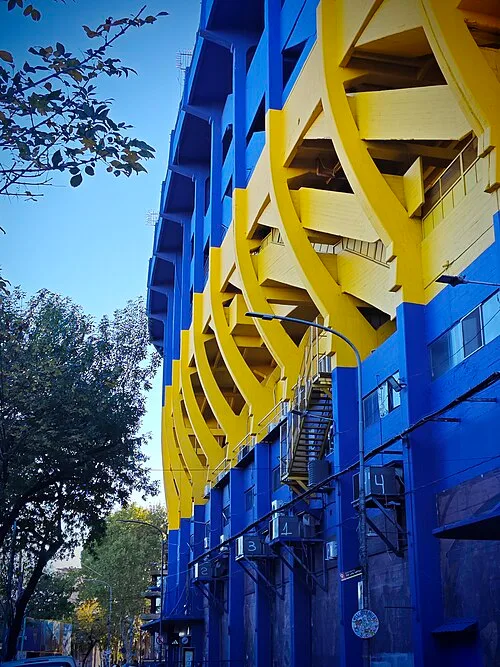
Match date in Argentina and Pakistan
The official AUF fixture lists kick-off at 20:00 local time on 13 November. Buenos Aires is eight hours behind Pakistan Standard Time during November, so that start falls at 04:00 on 14 November in Pakistan. The game and its post-match discussion could therefore trend in Pakistan on 14 November without any conflict in the match date. This is why both dates may appear in searches and why this page places the local official date in its headline and match table.
Time zones create a similar issue in international cricket, football and other events. A source published after midnight in one country can cover a match that began on the previous calendar day elsewhere. The remedy is to say whether a date is the venue's local date, a viewer's local date, or a publication date. The AUF record is explicit about its local kick-off. That is more reliable than treating a search-trend timestamp as a fixture date.
In practical terms, a Pakistan reader looking for a '14 November Argentina Uruguay score' should still open the 13 November fixture. The teams, 1-2 result and La Bombonera venue identify it. A separate article on the same teams from another year or another tournament would have a different competition label, date and scorer list. Search terms are a starting point; the completed association record settles the identity of the match.
Is this a World Cup qualifier?
No. The AUF page labels this fixture an 'Amistoso', a friendly. It is separate from the teams' 2025 and 2023 World Cup qualifying meetings shown in the association's head-to-head list. The official page includes those older results lower down, so readers should not mistake a historical match in the list for the 2026 top-line fixture. The 13 November game is a friendly with a final score of Argentina 1-2 Uruguay.
Calling a game a qualifier would imply points in a qualification table; the associations do not label this fixture that way. A friendly can still be competitive and widely watched, but its formal status should be reported accurately. A headline that says 'Argentina eliminated' would also be wrong. The loss did not eliminate Argentina from a tournament. It was one completed match in the November international window.
The AFA article says Argentina were scheduled to face Costa Rica in Córdoba on 17 November. AUF listed Uruguay's next friendly against the Dominican Republic in Maldonado on the same date. These are scheduled next steps, not results. A later report should check whether the matches took place and what happened; this 13 November recap does not assume their outcomes.
Reading the score without inventing more detail
The most useful chronology is short but exact: 0-0 at half-time, own goal at 48, Araújo goal at 53, Álvarez goal at 73, Uruguay win 2-1. That sequence explains both the margin and the order of the goals. It also prevents a common error: treating the second Uruguay score as if it were the opening goal simply because it has a named Uruguayan scorer.
The official event list does not contain possession figures, shot counts or expected-goal values in the lines used for this report. Those numbers are therefore omitted rather than invented. If a reader wants to evaluate each side's chance creation, a separately verified statistical feed or full-match footage would be needed. The association accounts support the scoreline, line-ups, substitutions and identified scorers; they do not support every possible tactical conclusion.
Likewise, the Uruguay page's head-to-head statistics describe many historical meetings and may change as new fixtures are added. A historical total is not needed to understand this result. The article focuses on the match at La Bombonera, the three goal events and the distinction between its local date and the date of the Pakistan trend. That makes the page useful even after the trend disappears.
Common questions
Who won Argentina vs Uruguay in November 2026?
Uruguay won 2-1 at La Bombonera in Buenos Aires. The match was a men's international friendly played on 13 November local time.
Who scored Uruguay's goals?
Uruguay's first goal was a Leonardo Balerdi own goal in the 48th minute. Maximiliano Araújo scored Uruguay's second in the 53rd. An own goal counts for Uruguay on the team scoreboard, not as a personal goal for an Uruguay player.
Who scored for Argentina?
Julián Álvarez scored in the 73rd minute. It reduced Uruguay's lead from two goals to one; it did not equalise.
Why did Pakistan searches say 14 November?
The official match was played at 20:00 in Buenos Aires on 13 November. That was early morning on 14 November in Pakistan, so searches and trend reports there could use the next calendar date.
Was Lionel Messi in the official starting eleven?
No. His name does not appear in either association's starting eleven for this fixture. This article does not infer a reason for that absence from a match sheet alone.
What was the half-time score?
It was 0-0. All three goals in the AUF and AFA accounts came in the second half.
Sources
- Uruguayan Football Association: completed Argentina vs Uruguay match record
- Argentine Football Association: Argentina 1-2 Uruguay recap
- AUF: November international-window schedule
Image credits: Cover by Dibumartinez23, CC0 1.0; resized and converted to WebP. Inline by Dibumartinez23, CC BY-SA 4.0; resized and converted to WebP. Both are archive venue images, not photographs of this friendly.
Checked on 14 November 2026. The local date, score and goal events were compared between the two national associations. No unverified statistics or later results are presented as facts.
Found an error or an outdated detail? Report a correction with the article URL and original source.