
Axar Patel: Orthodox Spin, Batting Opportunity and the All-Round Role
Understand Axar Patel’s all-round role through orthodox spin, batting position, workloads and clear examples of economy, average and strike rate.
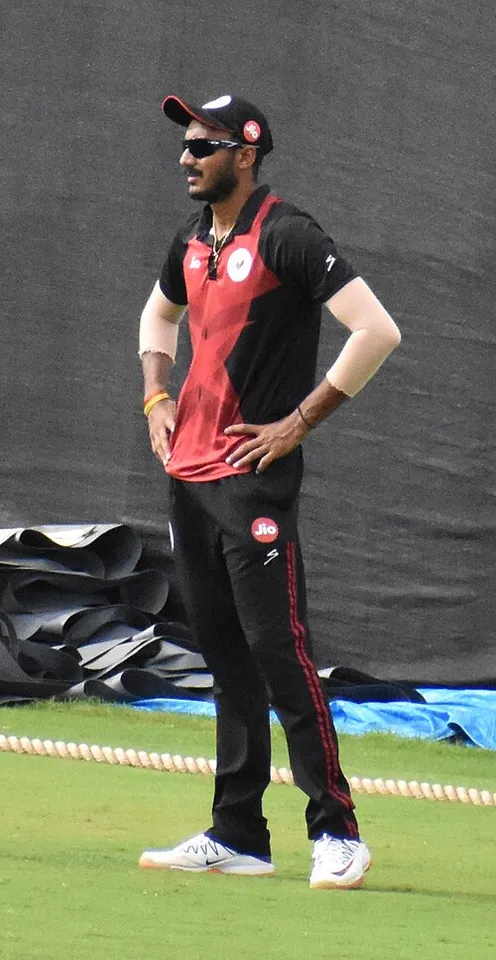
Axar Patel is an Indian all-rounder associated with left-handed batting and left-arm orthodox spin. His official club profile provides a starting point for checking the player, while a useful assessment of the role needs batting position, bowling workload and match context rather than one headline figure.
This guide was checked on 13 November 2026. It explains how to read an all-round contribution and how orthodox spin differs from other bowling categories. The numerical examples are fictional learning exercises, not invented Axar innings or spells.
The article does not announce a new appointment, injury or selection. Those are current matters that require their own dated official sources. A long-term profile can remain useful without pretending to be a live scorecard or a private account of a player's training.
Start with the role, not a label of perfection
An all-rounder can contribute through batting and bowling, but that does not mean every match requires equal output in both. The team's balance and the actual opportunity influence the role. A batting position and number of overs provide more useful context than the title alone.
For a learner, write down what the player was asked to do in the specific match. If the evidence does not establish the team plan, describe the visible workload instead of claiming to know private instructions. A useful account can be precise without inventing intent.
This distinction protects the player record as well as the analysis. An unused bowling option is not automatically a failed spell, and a lower-order batter may have fewer balls available. Opportunity and outcome should both remain visible.
Left-arm orthodox is a specific category
Orthodox spin and wrist spin are different broad bowling methods. Two bowlers using the same arm can therefore present different types of delivery. Identifying the arm alone is not enough to explain the category.
The category also does not guarantee the movement of every ball. Surface, release, pace and other conditions matter to the observed result. Avoid promising that a particular style must turn a fixed amount whenever it is used.
Draw the wicket and batter before describing movement. Words such as into or away need a viewpoint. A path relative to a right-handed batter can be described differently when the batter is left-handed, even though the ball has not changed its physical direction.
Control involves more than low speed
A slow bowler can vary pace and trajectory while still trying to place the ball where the situation requires. The broad word spin does not mean every delivery is slow in the same way or that pace is irrelevant to the challenge.
For an observation exercise, compare two consecutive deliveries and note only visible differences. Look at landing point, flight and the batter's response. If the camera angle does not show the release clearly, leave the detailed grip explanation unresolved.
The point is to build better questions, not to copy a professional action from a few seconds of video. A beginner can learn the language and logic of the role while keeping physical technique within an appropriate coaching setting.
The field and delivery belong together
A field changes the available scoring space. A delivery directed toward one area can have a different purpose when that area is covered. Discussing the ball without the field can therefore omit an important part of the situation.
On paper, place a few fielders around a simple ground and identify open spaces. Move one fielder and explain which option changes. The exercise is about the relationship between space and choice, not a guarantee of what a batter will do.
Do not turn a visible field into proof of a secret plan. A placement can support several possible intentions. A detailed claim about the captain's or bowler's reasoning needs an attributed source or enough evidence to be presented carefully as interpretation.
A spell's task can change
Containing runs and taking wickets are related but different aims. A bowler may face a situation where the batting side needs quick runs, or one where the fielding side urgently needs a breakthrough. The same return can have a different meaning in those contexts.
This does not make statistics optional. It makes their scope important. Record the actual figures first, then explain the task using evidence from the match. Avoid deciding that every low economy rate proves success or every expensive over proves the whole spell failed.
For a review note, separate the outcome from the explanation. Runs and wickets can be confirmed by the scorecard; the purpose of a particular field or delivery may be less certain. Both categories can be discussed without pretending they have equal evidential strength.
Economy rate in plain language
Economy is runs conceded per over. A fictional return of 28 from four completed overs has an economy of seven. It does not mean each over cost seven runs. The same total can come from very different sequences.
Imagine costs of three, five, eight and twelve. The full-spell rate remains seven, while the pattern changes across the spell. A summary should not use the average to invent what happened in the last over.
For incomplete overs, convert to legal balls. Three overs and four balls equal 22 legal balls. A correct formula needs that unit rather than treating 3.4 as an ordinary decimal. Write the conversion before using a calculator or spreadsheet.
Wickets and run cost need separate attention
A fictional three wickets for thirty gives a bowling average of ten runs per wicket for that spell. If the spell used thirty legal balls, its strike rate is ten balls per wicket. The numbers match here by chance; the units still describe different things.
Economy uses a third relationship, runs per over. Keep all three labels when comparing returns. An unlabeled value of ten could otherwise be read as an average, a strike rate or even an unrelated score.
These examples are not Axar's performances. They teach the calculation. Actual figures should come from a dated scorecard with the relevant format, period and workload retained beside them.
Batting position changes the available task
A player arriving near the end of an innings may face fewer balls than a top-order batter. That affects the opportunity to build a large personal score. A small total can still require context before being assessed fairly.
Imagine a fictional batter arriving with ten balls left and making eighteen. Compare that with another arriving with twenty overs available. Their raw runs are not enough to establish who handled the task better because the starting situations differ.
The lesson is not that every short innings must be praised. It is that the review should ask a clear question. A lower-order contribution, a recovery innings and a long top-order score can serve different team needs.

Archive India–West Indies Test at Delhi’s Feroz Shah Kotla ground. It is venue context, not a current Axar Patel performance.
Left-handed batting changes the view
The side from which a batter plays affects how field positions and movement are described. Keep that viewpoint clear rather than assuming that a phrase used for a right-hander can be copied unchanged for a left-hander.
For a simple field exercise, draw a batter and mark the two broad sides of the ground. Reverse the stance and discuss which descriptions change. The aim is to understand the language of the game, not to predict that one handedness automatically beats a particular bowler.
Matchups can be relevant, but they require actual evidence and context. A broad claim that a left-hander must score freely against a named type of bowler is stronger than the category alone can support.
A batting rate is not a complete innings
Strike rate is runs divided by balls faced, multiplied by 100. A fictional 24 from sixteen balls gives 150. The number describes pace, not the full match value of the innings or the quality of every shot.
The same score can arise through different combinations of boundaries and running. Without the detailed record, do not reconstruct the sequence. Correct arithmetic does not create missing event evidence.
When studying an actual innings, add the target, wickets and point of entry where verified. Those details help explain the task. Keep any missing information separate instead of assuming every comparison took place under equal conditions.
Why team balance matters
A player able to bat and bowl can affect how a team distributes roles. That is a structural point, not proof that one particular selection is always correct. The side's needs and the conditions still matter.
For a paper exercise, make an imaginary eleven with clear batting and bowling roles. Then change one position and ask what workload another player must cover. This helps explain balance without claiming access to an actual selector's reasoning.
Avoid adding personal runs and wickets into one number unless a stated model defines how to convert them. Fantasy points can do that under their own rules, but those points are not a universal measure of real match value.
Fielding adds another layer
Catches and run-outs can appear in a standard record, while other fielding actions may need footage or a more detailed data source. A useful account should not ignore the field simply because batting and bowling receive the largest headings.
At the same time, an exact estimate of runs saved needs a method. A visible stop can be described without claiming certainty about what would otherwise have happened. Keep the event separate from the counterfactual estimate.
For a student note, record one verified action and explain its immediate result. That is often more useful than a grand claim about the whole performance unsupported by a complete fielding record.
Club and international records are different
A club profile can establish identity and the club context, but it should not replace an official international scorecard for a national-team claim. The same player can have different roles and records across teams.
Before comparing figures, match the format, competition and period. A domestic T20 rate and a Test rate may share a familiar statistic name while describing different tasks. Combining them without labels can make a table look complete while reducing its meaning.
This guide avoids a frozen current career total for that reason. Use the current official record for a numerical snapshot and keep its date. The explanations here are intended to remain useful as new matches change the totals.
Selection news needs a separate check
A player page is not a confirmed playing eleven. Current selection, leadership and availability require a dated official announcement. Interest in a name does not establish which news event caused the search trend.
Do not infer a new injury or a new appointment from an old profile or a social caption. Those are specific claims about a real person. If the relevant current source is missing, leave the status unconfirmed rather than fill the gap.
The same care applies to private financial details. They are not needed to explain a cricket role, and a profile should not invent them as decoration. Useful sporting context can carry the article without unsupported personal claims.
A balanced review exercise
Invent a player who makes fifteen from eight balls and later bowls four overs for 24 with one wicket. Describe the two contributions separately. Then add a fictional match target and ask how the situation changes the assessment.
Next change the bowling workload while preserving the runs and wickets. Recalculate the rate from the underlying totals. The exercise shows why an all-round assessment needs more than a collection of attractive isolated numbers.
Keep the example fictional. It is not a hidden report of an Axar match. A teaching activity can use simple figures while respecting the accuracy of the actual record.
What readers should retain
Axar's all-round role is best understood through separate batting, bowling and fielding questions. Left-arm orthodox is a specific category, not a promise about every ball. Match task and opportunity matter alongside the recorded figures.
More cricket and educational guides are available here. For current performances, use the relevant official scorecard. For learning, state the unit, scope and assumption before making a comparison.
One clear match review can teach more than a long list of unlabeled totals. Record what is known, explain the calculation and leave uncertain intent as a question. That approach gives readers a useful way to judge an all-round contribution for themselves.
Common questions
Is left-arm orthodox the same as wrist spin?
They are different broad categories. Identify both the bowling arm and the spin method. The style label alone does not establish exactly how a particular delivery will behave.
Can runs and wickets be added directly?
They measure different events. A stated fantasy or analytical model may assign points, but that is not a universal cricket unit. Describe the contributions and their match context rather than inventing a combined total.
Are the example performances real?
No. They are fictional exercises for understanding rates, roles and opportunity. They should not be added to Axar's actual record or shared as current match figures.
Sources
Image credits: cover: Dee03, source, CC BY-SA 4.0. Resized and converted to WebP. inline: Vineetmbbs, source, CC BY-SA 3.0. Resized and converted to WebP.
Found an error or an outdated detail? Report a correction with the article URL and original source.