
Bank Basics in Pakistan: Accounts, Budgets and Safe Payments
Explore Bank Basics in Pakistan with clear explanations, worked examples, source checks and practical questions for independent student learning.

A bank is a financial institution that can provide services such as holding deposits, processing payments and offering credit, depending on its authorisation and products. For a beginner, the most useful starting point is not a list of promotional offers. It is understanding the difference between your balance, a payment, a fee and money that has been borrowed and must be repaid.
This general financial-literacy guide was checked on 2 November 2026 using Pakistani educational and consumer-awareness sources. It does not recommend a particular bank, account or loan. Actual eligibility, charges, protection and product terms must be checked with the relevant institution and current official documents. All amounts below are fictional classroom examples, not advertised rates or personal financial advice.
What does a bank account record?
An account records transactions and a resulting balance under the product's terms. Money coming in and money going out change that record. A visible balance is not a history of every decision that produced it, and a transaction list needs dates and descriptions to become understandable. Begin by learning the labels rather than relying only on the largest number on the screen.
Imagine an original account with Rs 2,000 at the start of a day. A deposit of Rs 500 increases the recorded amount to Rs 2,500. A payment of Rs 300 then reduces it to Rs 2,200, before any other relevant item. The example teaches a running balance; it does not represent a bank statement or guarantee how a particular product displays pending entries.
Ask what each row means: a deposit, withdrawal, transfer, fee or correction. If an entry is unfamiliar, use the institution's official support route rather than guessing from an abbreviated description. A clear transaction record is the foundation for checking whether the displayed result matches the activity you expected.
How is a deposit different from income?
A deposit describes money entering an account; income describes a source of money in an economic or personal-budget context. A transfer from your own cash or another account can be a deposit without being new earnings. Keeping those ideas separate prevents a budget from counting the same money twice.
For an original example, a learner moves Rs 1,000 from a cash envelope into a bank account. Their bank balance rises, but their combined cash-plus-bank holdings have not increased by Rs 1,000. The location changed. If a spreadsheet records both the original earnings and the later transfer as new income, it overstates the total resources.
Create two columns, cash and account, and a separate total. Transfer an amount between the first two columns and observe that the total stays unchanged. This simple exercise teaches why a financial record needs a clear boundary: are you tracking one account, all personal money or a whole household budget?
What is the difference between saving and borrowing?
Saving concerns retaining resources for later use, while borrowing creates an obligation under agreed terms. A credit limit is not the same thing as money you have earned. The fact that an application allows a payment does not, by itself, tell you whether the payment uses your existing balance or creates debt.
Use a fictional example with Rs 3,000 saved and Rs 2,000 borrowed. The learner can see Rs 5,000 in available cash after receipt, but still owes the borrowed amount under the agreement. Ignoring the obligation would make the position look stronger than it is. Real borrowing may involve additional costs and conditions that this simplified example does not model.
When reading any credit product, identify the amount borrowed, repayment schedule, total charges and consequences described in the current terms. This article does not supply a universal rate or advise that borrowing is appropriate for a particular reader. Understanding the obligation comes before comparing promotional language.
How can students build a simple budget?
A budget is a plan connecting expected resources with intended spending and saving over a stated period. The period matters: a weekly amount cannot be compared directly with a monthly expense without conversion. Pakistan's financial-literacy programmes include budgeting and saving because those basic skills help people understand choices before making them.
For an original weekly classroom budget, suppose a fictional learner has Rs 1,200. Planned transport costs Rs 400, meals Rs 450 and printing Rs 150. The planned total is Rs 1,000, leaving Rs 200 unallocated. This is arithmetic, not a recommendation about what real students should spend or a claim about current prices.
Now increase printing to Rs 250. The remaining amount becomes Rs 100. Ask which assumption changed and whether the plan still fits. A useful budget can be revised when information changes. It should not hide a shortfall by renaming spending or pretending that an expected amount has already arrived.
Why distinguish a plan from an actual transaction?
A plan describes what you expect or intend; a transaction records what actually occurred. Both can be useful, but mixing them makes it difficult to know your position. Mark an expected payment as expected until it has been confirmed. Similarly, a planned purchase should not disappear from the plan merely because it has not yet happened.
Imagine an original school-project budget expecting Rs 2,000 in contributions. Only Rs 1,500 has arrived. A team that spends as though all Rs 2,000 is available may create a problem even if the expectation was reasonable. Put expected and received amounts in separate fields so that the difference remains visible.
The same approach applies to a bank application's pending entries. Read the institution's explanation of available and current balances rather than assuming that every displayed figure means the same thing. Product-specific definitions can matter. A general guide should teach the question to ask, not invent one display rule for all banks.
How should you read fees and charges?
A fee needs an amount, a trigger and a period or unit. A charge per transaction is different from a monthly charge, and a waived charge may depend on conditions. Check the institution's current schedule and the product's terms. Do not assume that an old screenshot or a friend's account has the same conditions as the product you are considering.
For arithmetic practice only, a fictional service charging Rs 20 per qualifying transaction would charge Rs 100 for five such transactions. A fictional monthly fee of Rs 100 produces the same number for that month but follows a different rule. Those two products are not identical merely because one example gives equal totals.
Include the denominator when comparing. “Rs 100” is incomplete without saying whether it applies once, monthly, annually or under a particular event. A clear comparison sheet names the source, date, conditions and unit. It does not need an invented “best bank” ranking to be useful.
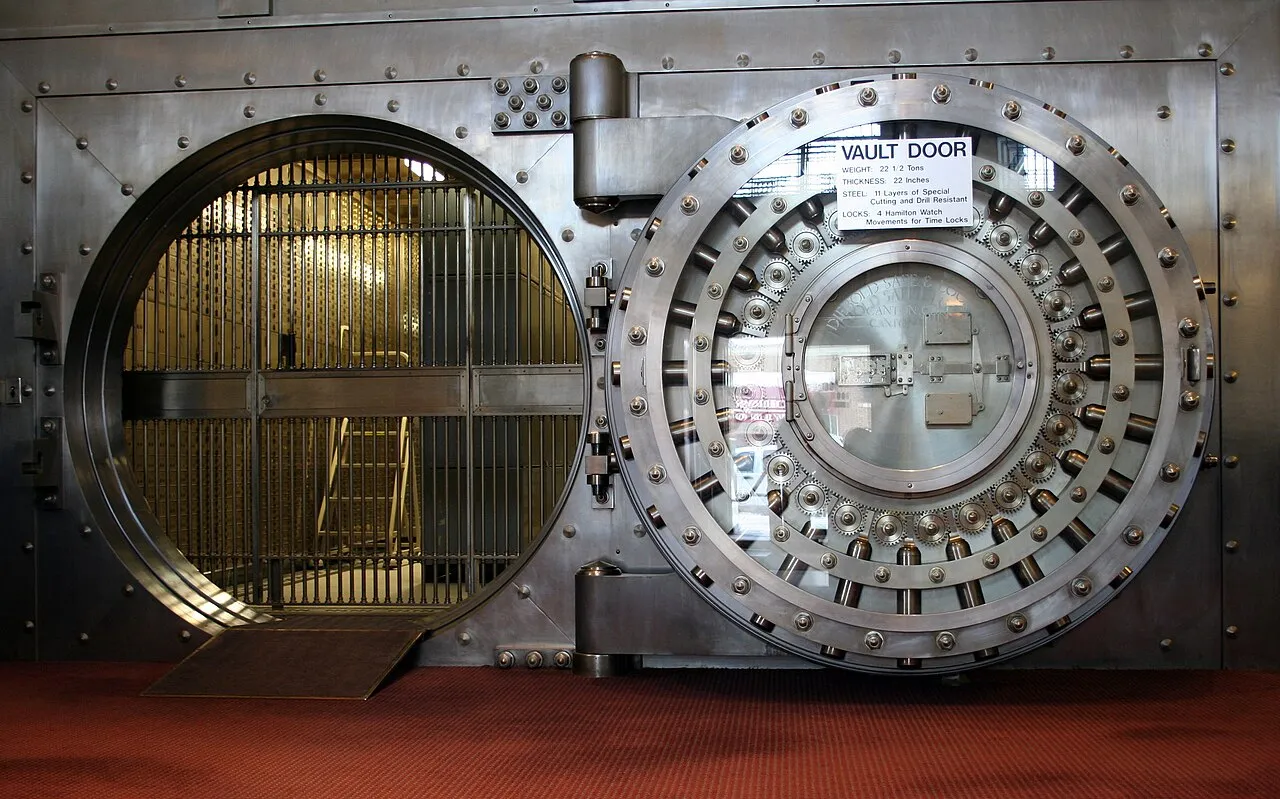
Historical banking illustration from a different country, not a Pakistani bank facility.
What is a payment reference useful for?
A transaction reference helps identify a particular payment or request when checking records or contacting support. It is not the same as a password or a guarantee that a screenshot is genuine. Confirm the actual account record and status through official channels when a payment matters, especially before sending the same amount again.
Consider an original example in which a transfer screen does not finish loading. The sender should not assume success or failure solely from the animation. They need to check the institution's transaction history and follow its guidance. Repeatedly submitting a payment without checking can create confusion if more than one request is processed.
For a classroom exercise, create fictional references A101 and A102 with dates, amounts and statuses. Ask which record is completed and which is pending. Keep those statuses distinct. A system that shows a pending request as a completed payment misleads the user even if the amount and recipient are correct.
What information should remain private?
Passwords, PINs, transaction PINs, OTPs and card security codes should not be given to unsolicited callers or message senders. Pakistani banks' fraud-awareness guidance specifically warns against requests for these credentials through calls, messages, emails or links. A caller displaying a familiar-looking name or claiming to represent an institution is not sufficient verification.
If a message creates urgency, pause and use contact details obtained independently from the institution's official app, website or your card. Do not rely on a phone number supplied by the suspicious message. A genuine-looking logo and a confident voice do not establish that the requester is authorised to receive sensitive information.
For an original classroom scenario, a fictional caller promises to unblock an account if the student reads an OTP aloud. The useful response is to stop sharing information and verify through official support. The exercise does not need real credentials, a real account or an actual transfer to teach the risk.
What if an unfamiliar transaction appears?
Check the record through the official service and contact the institution promptly using its published reporting route. Follow its instructions for securing the affected account or card. Keep relevant references and dates, but do not post unredacted statements or sensitive identity information in a public comment section while seeking help.
This article does not promise that every disputed transaction will be reversed or prescribe a legal outcome. Resolution depends on the facts, applicable requirements and the institution's process. The practical point is to report the issue through the appropriate route and preserve an accurate record rather than continuing a conversation with an unverified caller.
An original incident log can include when the issue was noticed, the transaction reference, the official support channel used and the response received. Do not include passwords, PINs or OTPs in the log. A useful record helps explain the problem without creating another source of credential exposure.
Is an account number the same as authentication?
An identifier tells a system which account or record is involved; authentication helps establish permission to act. Those are different functions. Knowing a label should not be treated as permission to make a payment. A properly designed learning activity separates identification from the secret or approval used to authorise an action.
For an original analogy, a classroom register lists a student's name, but that name alone should not authorise another person to change the student's records. In the same way, a payment system needs more than a visible label to justify a sensitive action. The exact controls depend on the real service and should not be guessed from the screen design.
Do not use this article as a reason to share complete financial details publicly. Even information that is not itself a password can become sensitive in combination. Share only what an official process genuinely requires, through the channel that process specifies, and redact unnecessary information when discussing a problem elsewhere.
How can a spreadsheet help without becoming misleading?
A simple sheet can record date, description, money in, money out and running balance. Begin with fictional data while learning. Use consistent units and define whether transfers between your own holdings count as internal movements. A sheet becomes unreliable if a blank amount silently becomes zero or if an expected payment is entered as received.
For an original reconciliation exercise, start with Rs 2,500, add Rs 700 and subtract Rs 450 and Rs 150. The calculated balance is Rs 2,600. If a fictional statement shows Rs 2,580, the difference is Rs 20. The task is to investigate the missing or misrecorded item, not immediately assume fraud or alter the sheet to force agreement.
Check arithmetic before drawing a conclusion, then check descriptions and dates. A difference can have several causes. The educational habit is systematic comparison. It is more useful than choosing a dramatic explanation before confirming what the records actually show.
What should a beginner remember?
Understand the product before relying on it. Keep balance, income, transfer, fee and debt separate in your notes. Read current official terms for specific charges and eligibility. Protect credentials, verify unexpected requests independently and use the institution's published support process when a transaction or account issue needs attention.
For further learning, explore our practical numerical guides. You do not need a real account to practise a budget or reconcile fictional records. Begin with clear labels and simple amounts, then carry those habits into real documents. A bank becomes easier to understand when the language and arithmetic are clear before any product decision is made.
Sources
- State Bank of Pakistan: financial-literacy programme context, for the educational focus on budgeting, savings and financial understanding.
- SBP financial-literacy educational material, for general banking and fraud-awareness context.
- Bank Alfalah: fraud-risk awareness, for credential-sharing warnings and official-channel verification.
- MCB: consumer fraud-awareness guidance, for additional consumer-education context. All amounts and account records in this guide are fictional, not product offers or personalised financial advice.
Image credits: cover: Zahid Akhtar, source, CC BY-SA 4.0. Resized and converted to WebP. inline: Jonathunder, source, CC BY-SA 3.0. Resized and converted to WebP.
Found an error or an outdated detail? Report a correction with the article URL and original source.