
Barack Obama: Education, Presidency and Understanding Public Records
Explore Barack Obama’s education, presidency and public record. Learn how election dates, laws, speeches and historical sources differ.
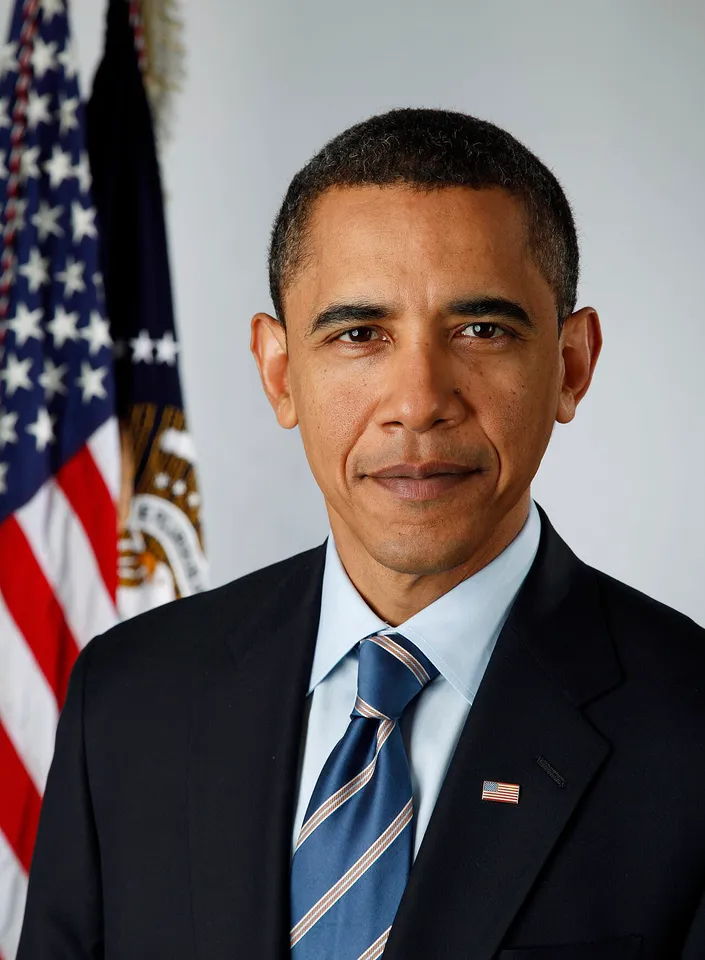
Barack Obama was the 44th president of the United States. His first inauguration took place on 20 January 2009, following his victory in the November 2008 election. His presidency ended in January 2017. For a student, the useful story is not only a list of dates: it is also a way to understand education, public office, elections, government records and the difference between a political promise and a documented action.
This guide follows the presidential library's public biography and other primary records. It describes historical milestones rather than treating Obama as the current president or inventing a new appointment. The timeline is followed by explanations and small learning exercises that help readers interpret political biographies more carefully.
Who is Barack Obama?
Barack H. Obama II was born on 4 August 1961 in Honolulu, Hawaii. The presidential library records his childhood in Hawaii and Indonesia, his later education and his move into community organising and public service. These stages belong to different periods and should not be compressed into the claim that he moved directly from university into the presidency.
His public career included service in the Illinois State Senate and the United States Senate before the presidency. The two senates are different institutions. Preserving their full names is a simple but important improvement over a biography that repeatedly says only that someone became a senator.
| Milestone | Date or period |
|---|---|
| Birth in Honolulu | 4 August 1961 |
| Columbia University degree | 1983 |
| Harvard Law School graduation | 1991 |
| Election to Illinois State Senate | 1996 |
| Election to US Senate | November 2004 |
| First presidential election victory | November 2008 |
| First presidential inauguration | 20 January 2009 |
Education was one stage of a longer development
The library biography describes study at Occidental College before a transfer to Columbia University, where Obama completed a political-science degree. It later records his legal education at Harvard. This sequence demonstrates why an education timeline should identify both an institution and the qualification or stage associated with it.
Attending one institution and graduating from another are not contradictory statements when a transfer occurred. A short biography can create confusion by omitting that transition. A careful reader looks for the sequence rather than assuming that every named university awarded the same degree.
For a classroom exercise, draw separate boxes for attendance, transfer and graduation. Put the dated evidence beside the correct box. The method works for many biographies and avoids changing a person's actual educational record simply to make the story shorter.
Community organising preceded national office
After earlier work in New York, Obama moved to Chicago in 1985 for community-organising work. The library describes work with communities and local organisations before his later legal and political career. This is a distinct form of experience rather than an elected government office.
The distinction matters because several kinds of public activity can appear in one biography. Employment, voluntary involvement, professional work and elected service do not carry identical responsibilities. Naming the activity accurately helps explain what someone was doing at that stage.
Students can make a two-column timeline: one column for the role and another for the institution or organisation. That prevents a job title from being silently converted into a government position and makes the development of a career easier to follow.
Legal education and public work should remain dated
The presidential library records Obama's graduation from Harvard Law School in 1991 and his later work in Chicago. It also identifies his election as president of the Harvard Law Review. Those are specific educational and professional milestones, not evidence that every later political decision followed automatically from one university experience.
A biography becomes more useful when it explains sequence without inventing causation. An earlier qualification can be relevant to later work, but the reader still needs evidence for a claim about why a particular policy or decision happened.
Try this writing exercise: describe a documented event in one sentence, then describe a possible interpretation in another. Label the interpretation clearly. This keeps the known record visible and stops a plausible story from being presented as an established fact about private motives.
Illinois State Senate and US Senate are different
Obama was elected to the Illinois State Senate in 1996 and to the United States Senate in 2004. One concerns a state legislature; the other is part of the federal legislature. A biography that preserves those labels helps readers understand the change in institutional level.
An invented example illustrates the problem: two people are both called senators, but one serves in a state institution and the other in a national institution. Combining their offices into one career list without the jurisdiction would conceal an important difference.
When checking a public profile, record office, jurisdiction, election year and service period separately. The same habit is useful when distinguishing a state representative, a member of the US House and a member of the US Senate. Similar titles do not mean identical offices.
The 2008 election and 2009 inauguration are separate events
Obama's first presidential election victory came in November 2008, while his first inauguration was in January 2009. Those dates describe different stages. Winning an election and beginning the relevant term should not be treated as if they occurred at the same moment.
This distinction explains why biographies can correctly use both years. It also helps students read transition coverage: an incoming officeholder and a serving officeholder can have different descriptions even when the election outcome is already known.
Make a fictional election timeline with voting, a reported outcome and an inauguration. Identify which source establishes each stage. A news headline about the first event should not automatically be used as proof that the last has already happened.
What the number 44 means
Obama is described as the 44th president. That ordinal is part of the historical presidential sequence, not his age at the time and not a count of years he served. Readers unfamiliar with the convention can easily mistake a prominent number for a different measure.
The general learning point is to attach a label to every number. An ordinal position, a calendar year, an age and an election percentage can all appear in the same paragraph while answering different questions. Removing the labels makes a biography harder to understand.
For practice, take five numbers from the timeline and write the unit or meaning beside each. This small exercise builds the same care needed when reading examination results, sports records or financial reports.
The 2009 Nobel Peace Prize belongs to a dated record
Obama received the Nobel Peace Prize in 2009. The Nobel record and his official acceptance remarks establish the award and its historical context. An award should retain its name and year rather than becoming a vague statement that every later action received the same endorsement.
An honour and an assessment of a complete presidency are different things. A reader can recognise the documented award while still examining policies, outcomes and public debate through the relevant evidence. The award does not remove the need for historical analysis.
When writing about honours, separate awarding body, category, award year and presentation event. This prevents a ceremony date from being confused with the year attached to an award, a mistake that can also occur in film and sports biographies.
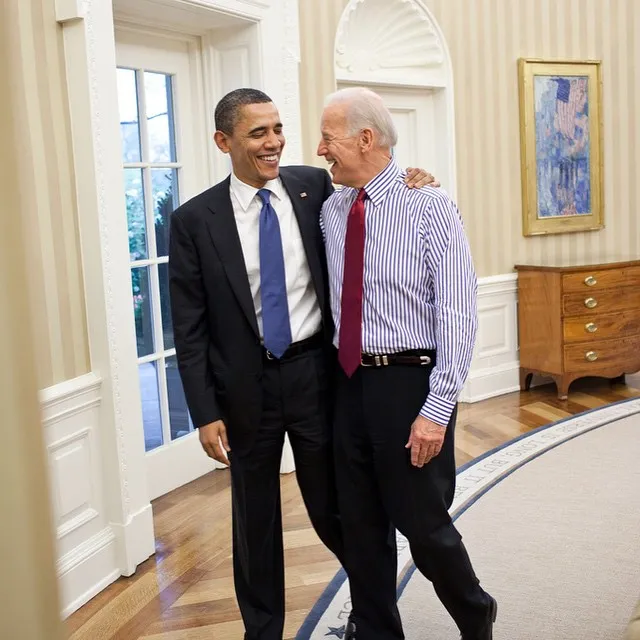
Barack Obama and Joe Biden in the Oval Office in June 2015, shown as historical presidency context.
A speech, an announcement and a signed law differ
The library's administration history includes Obama's signing of the Affordable Care Act in March 2010. That is a historical event. Understanding its later operation or current rules would require the applicable present records, which are a separate research task.
For biography reading, keep the type of event clear. A campaign speech communicates a position, an announcement describes a stated intention or action, and a signed legislative record establishes a different milestone. They should not be treated as interchangeable pieces of evidence.
A useful worksheet has columns for proposal, formal action and later implementation evidence. Put a source beside each populated field. Leaving a field blank when evidence is unavailable is better than assuming that a public promise was fully implemented exactly as first described.
Historical policy descriptions need their time boundary
A biography can explain what happened during an administration without becoming a current eligibility guide for a government programme. The date matters because policies, institutions and circumstances can change after an officeholder leaves.
Consider a fictional programme introduced in one year and amended later. A statement about its introduction can remain historically accurate while no longer describing every current condition. The reader needs to distinguish history from present instructions.
When using an older official document, write the year next to the claim. If the question concerns what someone should do today, locate the current responsible authority's guidance instead of treating a presidential biography as an application manual.
Two terms do not turn every year into an election year
Obama served two presidential terms, following elections in 2008 and 2012. His service ended in January 2017. A term, an election campaign and a calendar year are related but distinct parts of the timeline.
For a simple exercise, mark the election years and inauguration years on separate lines. Then shade the service periods. The picture makes it clear why the year in which an election is held can differ from the year in which the resulting term begins.
This method also helps readers avoid a common error in later news coverage: assuming that every prominent national election is another presidential election. The actual office and election type must be identified before interpreting the result.
Presidential archives are evidence, not a live administration page
An archive preserves records associated with a period of government. Its value lies partly in keeping historical material available after the administration ends. The continued existence of a page does not mean its subject is still in office.
A current news article, an archived biography and an original speech can each be useful, but their functions differ. The biography supplies a structured timeline; the speech records what was said; a current official directory answers a present-office question.
Students should write the document type beside a source. This simple habit helps prevent an old announcement from being mistaken for a new decision merely because it appears near the top of a search result.
How to read political numbers without losing the denominator
Political reporting often includes totals and percentages. A count of votes, a percentage of votes and a number of offices won are different measures. A profile becomes misleading if it switches among them without explanation.
For a fictional election, 600 votes out of 1,000 represent 60 percent. A lead of ten percentage points is different from ten additional votes. The example teaches arithmetic and does not describe an actual Obama election result.
Before comparing two figures, identify population, period and measurement method. A national figure and a district figure should not be compared as though they cover the same voters. The same principle applies to any public-data exercise.
Public record and personal speculation should remain separate
A public biography can discuss documented education, offices, books, speeches and awards without guessing a person's private thoughts or family conversations. An engaging story does not require invented quotations or unsupported claims about motives.
For an assignment, ask whether a statement is directly documented, an attributed interpretation or an unanswered question. Use different wording for each. A phrase such as the record shows should be reserved for what the record actually establishes.
This approach supports fair reading across political viewpoints. It allows critical questions about public decisions while avoiding the mistake of presenting a writer's assumption as a private fact about the person being discussed.
Build a biography that another reader can verify
Create a timeline with date, event, office or institution, document type and source. Keep education, employment, elected service and honours in recognisable categories. Add a short note where an election date differs from the start of a term.
Next, choose one event and explain why its label matters. For example, show why a state Senate election differs from a US Senate election or why a speech differs from a signed legislative action. That explanation turns a copied date list into an actual learning resource.
Use class resources for timelines and percentage practice. A project in programming courses could build a source-linked biography table that requires a year and event type before accepting a new entry.
Questions about Barack Obama
Was Obama the 44th president?
Yes. The presidential library records his first inauguration on 20 January 2009 as the 44th president. That is a historical office description. It should not be confused with a statement that he is the current president or with his age at inauguration.
Why do biographies mention both 2008 and 2009?
The first presidential election victory occurred in November 2008, while the first inauguration took place in January 2009. These are different stages in the transition. Both dates can be correct when the event attached to each one is stated clearly.
What did he study before entering national politics?
The library records a political-science degree from Columbia University in 1983 and graduation from Harvard Law School in 1991. His education was followed by several forms of professional and public work. It should be read as a sequence rather than a single uninterrupted government position.
How should a student use an archived political biography?
Use it for its documented historical record, retain dates and identify the type of event. For present rules or current officeholders, consult the appropriate current official source. An archive is valuable precisely because it preserves history, not because every statement in it describes today's circumstances.
Sources
- Barack Obama Presidential Library: official biography
- Nobel Prize: 2009 Peace Prize record
- US Government Publishing Office: Nobel acceptance remarks
Image credits: cover: Pete Souza, source, CC BY 3.0. Resized and converted to WebP. inline: Pete Souza, source, Public domain. Resized and converted to WebP.
Found an error or an outdated detail? Report a correction with the article URL and original source.