
Broadcom Explained: Ethernet, Switching Chips and Infrastructure Software
Understand Broadcom networking components, distinguish switch silicon from finished devices, and read bandwidth, latency and software claims clearly.
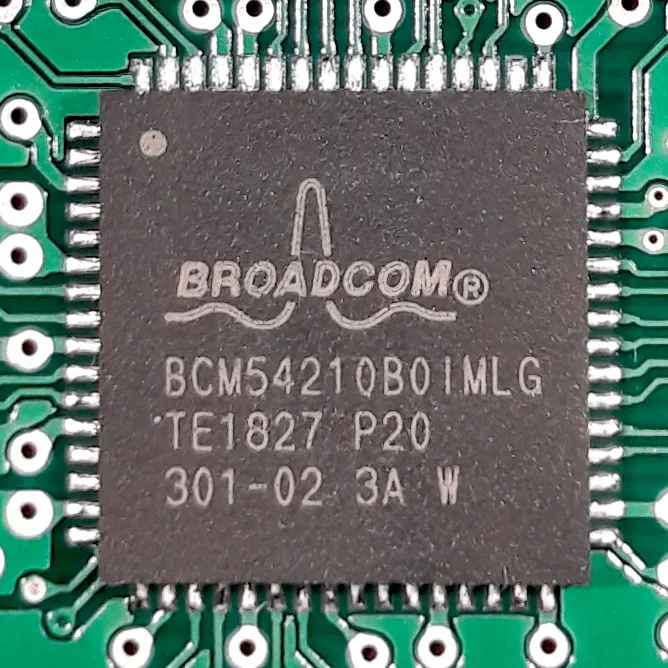
Broadcom supplies semiconductor and infrastructure-software products, including technologies used in Ethernet networking. Understanding the company requires separating a chip, the network device that uses it and the software controlling the system. A switch component is not a complete network, and a familiar vendor name does not establish the configuration or performance of every product containing its technology.
This guide was checked on 5 November 2026 using Broadcom's official product explanations. It teaches networking roles and specification reading. It does not provide a live share price, recommend an investment or publish instructions for accessing somebody else's network. Examples describe invented classroom systems and should not be treated as claims about a particular deployment.
What kinds of networking products does Broadcom describe?
Broadcom's Ethernet-connectivity pages identify switching, physical-layer and related technologies, together with software used in networking products. These categories address different parts of a system. Read the specific product description rather than assuming that every item bearing the company's name performs the same job.
Start with a diagram containing an end device, a network connection, a switch and another destination. Then add the functions needed to move information between the points. This makes it easier to understand why several technologies and software components can participate in what a user experiences as one ordinary connection.
Keep the diagram's limits visible. A simple classroom picture cannot describe every enterprise or data-centre design. Its purpose is to show relationships and introduce useful questions, not to provide a configuration that can be copied into any real network without further knowledge or authorisation.
What does an Ethernet switch do?
A switch participates in moving frames between network connections according to its design and configuration. Understanding that role requires more than counting the sockets on the front of a device. The forwarding process, supported capabilities and surrounding network arrangement determine what the device actually does.
For an invented example, draw three computers connected to a switch and label a message's intended destination. Ask which information the system needs to choose an appropriate outgoing path. The exercise introduces forwarding without claiming that every network uses an identical design or that one drawing covers all possible cases.
Distinguish the physical box from its internal functions. A network product can combine hardware, firmware and management software. A photograph of the enclosure may identify the product, but it does not reveal every configuration, security decision or traffic condition that affects its behaviour.
How are switching silicon and a finished switch different?
Switching silicon provides capabilities used within a larger product. A finished device also involves its physical design, interfaces, software, power arrangements and manufacturer decisions. A component's stated capability should not automatically be presented as the observed performance of every device built using that component.
Imagine a classroom project in which a controller becomes part of several different instruments. The shared controller is important, but the completed instruments can differ in their other parts and purposes. This analogy helps explain why component information and product information belong in different rows of a comparison table.
When reading an announcement, identify the level of the claim. Is it about a chip family, a reference design, a vendor's complete product or a deployed network? The distinction prevents a reader from attributing a result measured at one level to every other level without supporting evidence.
What is the role of network software?
Broadcom's switching-software material describes software and development tools used to configure and support networking solutions. Hardware capability and software behaviour are related but different. A feature supported by a component is not necessarily enabled or implemented in the same way in every finished product.
Use an invented school network to separate forwarding from administration. Moving ordinary traffic is one set of operations; deciding and managing the intended arrangement is another. A useful explanation identifies which process a particular tool or setting concerns instead of treating every function as a single vague act of connecting devices.
Do not infer access rights from technical curiosity. A classroom discussion can use diagrams and invented settings without contacting a live management interface. Learning how software controls equipment does not create permission to change the configuration of a school, workplace or service-provider network.
How are a physical connection and a logical arrangement different?
Physical connections describe how equipment is linked. Logical arrangements describe how information is organised and handled within the relevant design. Two systems can look similar in a photograph while following different rules for communication. Conversely, a logical diagram can hide important details of the actual cabling and devices.
For practice, draw the same four devices twice. In the first diagram, show cables and ports. In the second, label which groups are intended to communicate under the invented example. Explain why neither drawing replaces the other when trying to understand the complete system.
This distinction is useful when reading specifications and troubleshooting reports. A statement that a cable is connected does not establish that every higher-level function is configured correctly. A management screen showing an intended arrangement does not, by itself, prove that every physical link is working as expected.
What do bandwidth and latency measure?
Bandwidth-related capacity and latency describe different aspects of communication. A rate concerns how much information can move within a period under the stated conditions. Latency concerns delay. They should not be merged into one word such as fast without identifying the measurement being discussed.
In an invented exercise, one path can transfer a large amount once movement begins but has a longer initial delay. Another begins responding sooner but supports a lower transfer rate. Which is preferable depends on the task being modelled. The example illustrates why a single headline number cannot answer every application question.
Keep the units beside every value. A rate in bits per second is not a capacity in bytes, and a delay in milliseconds is not a percentage. Unit labels are small details with large consequences: removing them can make a chart visually simpler while making its interpretation unreliable.
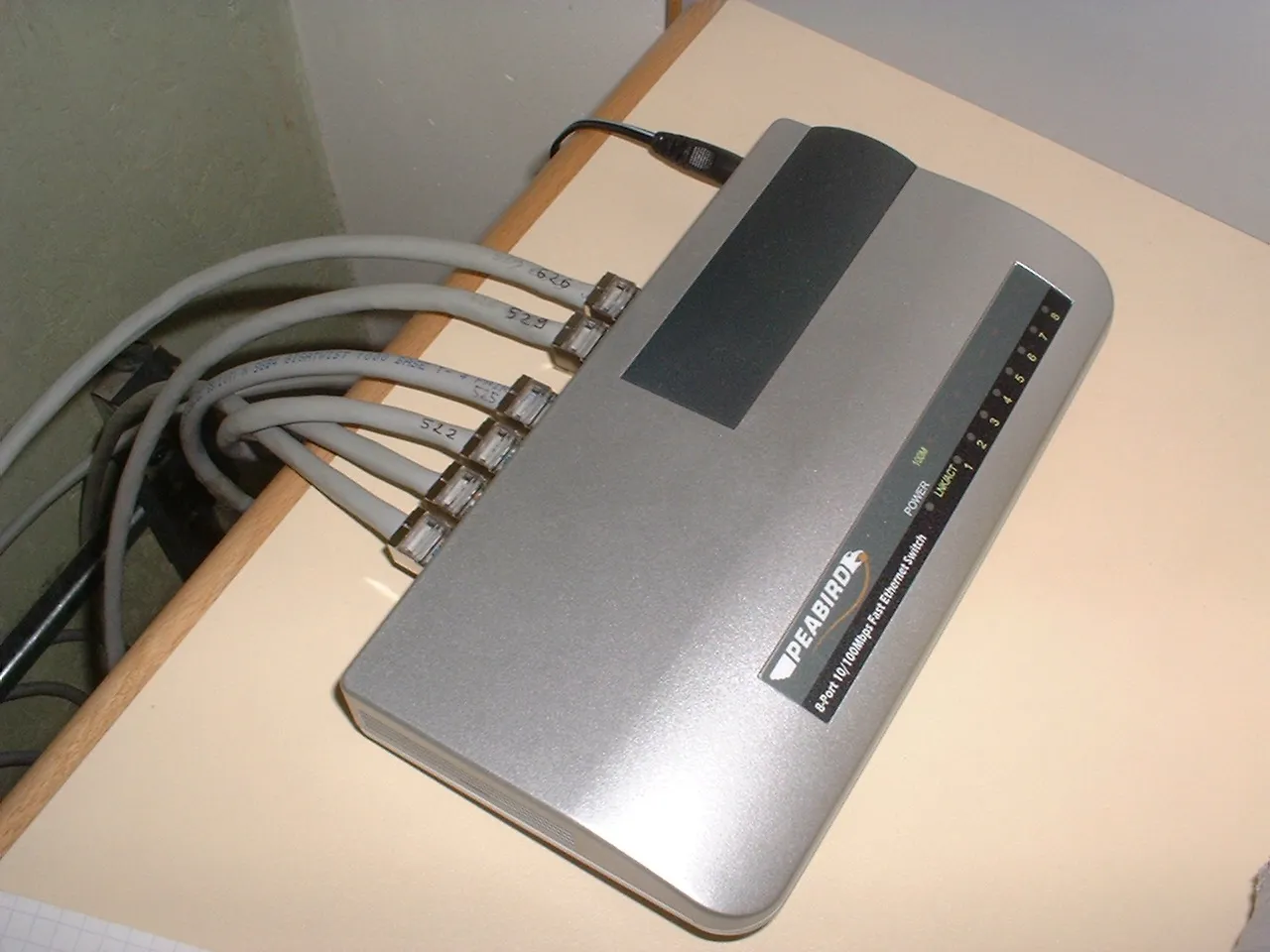
An archival Ethernet switch photographed in 2003, shown to illustrate a finished networking device.
Why can a network slow down under load?
Several operations may share a resource, and the conditions of the complete path affect the result. A device specification is not a promise that every application receives the same observed rate at every moment. Read the workload and the measurement method before deciding which component caused a delay.
Use a queue of invented tasks in a classroom model. If several requests arrive at once, some may wait even when each individual task is simple. Then change the arrival pattern while keeping the task itself unchanged. This demonstrates why average workload and bursts can produce different experiences.
State what the model leaves out. Real networks involve more detail than a queue drawn on paper, including different traffic types and device behaviour. A simple model can teach one relationship without becoming a complete explanation of every slow connection or an instruction to change live equipment.
How should I read a data-centre networking claim?
Identify the part of the system being discussed: a port, a switching component, a device or a larger arrangement. Then read the units and assumptions. A claim about aggregate capacity is not automatically the speed available to one application, just as a total classroom workload is not the time taken by every individual task.
Compare like with like. Two figures can use the same unit while representing different directions, scopes or test conditions. If a product brief supplies important qualifications, retain them when summarising the number. Removing the conditions can turn an accurate specification into an exaggerated general claim.
For a project, write a short explanation of one specification and give an invented example of what it does not establish. This is a strong test of understanding because it requires more than repeating the largest number printed in a promotional chart.
What should students understand about segmentation?
Network segmentation concerns organising communication within a design, but a label or diagram does not establish a complete security outcome. Relevant behaviour depends on the mechanisms, configuration and other controls actually used. Avoid promising that one named feature makes every device or service safe automatically.
For an invented example, separate classroom computers from a fictional administration service in a diagram. State the intended communication rule and identify what would need to enforce it. The exercise should make students ask about controls and verification rather than assuming that drawing two boxes creates an effective boundary.
Keep real credentials, addresses and private configurations out of a public project. Use invented identifiers and discuss the concept without publishing details of an actual organisation's infrastructure. A clear educational explanation can be useful without revealing information that other people rely on keeping private.
How are business and technology reports different?
A technical product brief describes capabilities under its stated conditions. A company report describes business information for a particular period. A strong networking demonstration does not, by itself, establish a current financial result or a future share-price movement. Those are separate claims requiring separate evidence.
When reading financial information, retain the issuer, period, metric and source. A revenue figure, a profit figure and a market quote measure different things. A useful explanation does not combine them into a single statement merely because all three appear in discussion of the same company.
For a live Broadcom quote, use appropriate current market information and the company's official investor route. This article is an educational technology guide. It does not rank a security, provide a changing price as a permanent fact or assess whether a financial product suits an individual reader.
How can I build a useful networking project?
Choose one question: what a switch does, why logical and physical diagrams differ or how units affect a performance comparison. Use a small invented system with clear labels. A focused project is easier to explain and check than a large diagram filled with unexplained commercial terms.
Add a table containing each component, its intended role and the evidence needed to describe it. Distinguish a documented capability from an observed result. If a property has not been established, write unknown instead of copying a number from a similarly named device.
The class resource directory includes available networking study material, while the programming courses support related software learning. Keep the purpose of an exercise clear. A diagram or small program can explain a concept without being a tested design for a production network or permission to alter one.
How does physical signalling differ from forwarding?
A physical-layer function concerns the signalling used by a connection. A forwarding decision concerns how information is handled within the relevant network design. These roles interact, but evidence that one part is active does not automatically establish that every higher-level operation has succeeded.
In an invented classroom example, a connection indicator is visible while a particular application still cannot complete its task. List the additional questions without immediately declaring a cause. The exercise teaches that one observation can narrow an enquiry without proving the whole system works or identifying every reason for failure.
Read the product documentation for the actual role being discussed. A physical-interface specification and a switching-software feature list should not be treated as interchangeable descriptions of the same component.
Frequently asked questions
Is a switching chip a complete network device?
A component is one part of a larger product. The finished device also depends on its interfaces, software and other design decisions. Read the documentation at the level relevant to the question, and do not automatically apply a component's capability statement to every product containing it.
Does the largest capacity figure guarantee the best result?
Not without identifying the task, scope and conditions. A rate, a delay and an aggregate-capacity figure answer different questions. Compare measurements that describe the same operation and retain their qualifications. A precise-looking number is not a complete account of every application's experience.
Does this guide offer investment advice?
No. It explains technology and source reading. A current quote, a business report and an individual investment decision need their own relevant information. The fact that a company supplies important infrastructure technology does not establish a guaranteed financial return or a recommendation for every reader.
Sources
- Broadcom: Ethernet connectivity and switching products
- Broadcom: Ethernet switching software
- Broadcom: software-to-silicon solutions
- Broadcom: investor information
Image credits: cover: Kwapix, source, CC BY-SA 4.0. Resized and converted to WebP. inline: Syced, source, CC0. Resized and converted to WebP.
Found an error or an outdated detail? Report a correction with the article URL and original source.