
Brooklyn Building Collapse: November 12 Update and Official Information
Read the dated Brooklyn collapse update, understand changing casualty reports and find official information without unverified blame or access claims.
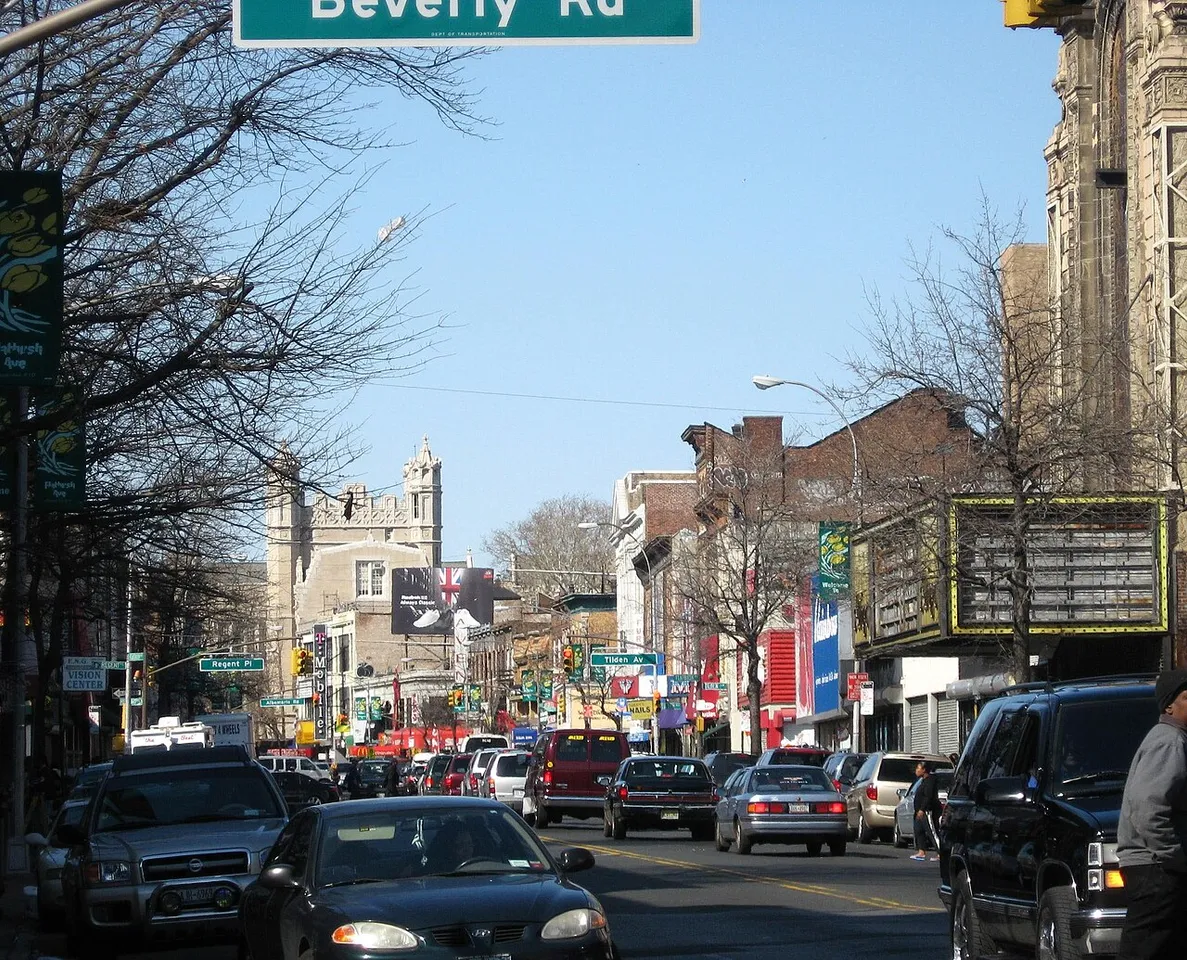
Brooklyn building collapse: a dated November 12 update
A three-storey building in Flatbush, Brooklyn, collapsed beside an excavation site on 11 November 2026. An Associated Press update published at 11:29 UTC on 12 November reported that the death toll had reached eight, citing the mayor. Earlier reports carried smaller totals as the rescue operation developed. Those earlier figures should not be repeated as the latest confirmed count.
The reported location is 1321 Flatbush Avenue, beside the construction site at 2625 Bedford Avenue. The cause remained under investigation in the reviewed reporting. Proximity to construction is a relevant observation, but it is not, by itself, a completed engineering finding or a legal determination of responsibility.
This page is a dated explanation of the reporting and the information residents should check. It is not a live emergency monitor. For immediate danger in New York City, contact emergency services through 911 and follow current instructions from responders and official city channels. Do not approach the scene to verify a photograph or an online claim.
What the available accounts establish
| Item | Reviewed information |
|---|---|
| Incident date | 11 November 2026 |
| Neighbourhood | Flatbush, Brooklyn |
| Building address in reporting | 1321 Flatbush Avenue |
| Adjacent site | 2625 Bedford Avenue |
| Latest casualty checkpoint used here | AP update at 11:29 UTC on 12 November |
| Cause | Under investigation in the reviewed accounts |
Reuters' earlier account described a building falling into an adjoining construction area. Local reporting described people rescued and surrounding streets affected by the response. These accounts document stages of a developing event, not a final inventory of everyone affected or a guarantee that access restrictions remain identical later.
The distinction is important for anyone arriving through search. A page first published on Wednesday can remain online after a Thursday update. Its presence does not make its original casualty total current. Read the update time and the event being described before comparing numbers.
Why the casualty figures changed
During an ongoing search, authorities can establish information in stages. People may initially be unaccounted for, later located or formally identified. A responsible summary preserves the wording and timestamp of a confirmed update rather than treating the earliest number as permanent.
That does not mean every conflicting number should be accepted. The useful question is whether each account identifies a source and a time. An attributed statement from officials and an anonymous comment are not equivalent simply because both contain a number.
If you share the update, attach the date and source rather than forwarding only a dramatic headline. Someone reading it hours later should be able to tell whether it describes the beginning of the response or a later checkpoint. The same principle applies to injury counts and reports of people still missing.
Avoid combining separate updates into a new total of your own. Adding a figure from one report to another can count the same people twice. Unless an official account explains how categories relate, keep them separate and retain the original labels.
Observation, investigation and responsibility are different stages
A photograph can establish that a damaged structure is next to an excavation. A witness can describe what they heard or saw. An investigation can examine records, conditions and technical evidence. A legal process can address responsibility. These are connected activities, but one should not be substituted for all the others.
For example, describing the physical location of construction is not the same as proving the precise mechanism of a collapse. A confident social-media caption may move between those claims without acknowledging the change. Readers should ask what evidence supports each step.
The same care applies to documents circulating online. A permit, complaint, inspection entry and enforcement order serve different purposes. The existence of one document does not automatically establish the status of every activity at a site. Reading the exact record is more reliable than accepting a cropped screenshot's interpretation.
This article does not identify a private individual as responsible or offer an independent structural assessment. Those conclusions would require evidence beyond the dated news accounts reviewed here. Keeping the investigation open is a factual boundary, not an attempt to minimise the seriousness of the incident.
Use official information for access and assistance
People affected by the incident may need changing information about street access, reception services or how to report concern about someone. The current city announcement is the relevant source for those practical details. An old article should not be treated as a standing instruction that a particular location is open indefinitely.
Notify NYC is the city's emergency-information service. Check its current notices and the relevant agency's official updates rather than relying only on a forwarded image. NYC311 is a route to city service information; it is distinct from the emergency function of 911.
If you are outside the immediate area, do not travel to the response site merely because a photograph appears to show a gap in a barrier. Access decisions belong to the responders managing the scene. A route that looks clear in one image may be restricted or unsafe when you arrive.
For a non-emergency enquiry, prepare a short description of what you need: an official update, information about a service, or the correct agency contact. Clear questions are easier to route than a long forwarded chain containing several unrelated rumours.
A practical information checklist for affected households
Keep essential reference information in one place: the affected address, a contact method and the date of any instruction received. Record who issued the instruction and how to check for updates. This is an organisational suggestion, not a statement that any particular assistance programme has approved a claim.
If an official provides a case or service reference, retain it accurately. Avoid posting the reference, identity documents or private contact details in a public comment thread. A public article can explain where to look without becoming a collection point for personal records.
Keep receipts and correspondence that may be relevant to later discussions with the appropriate organisations. Do not assume that retaining a document guarantees reimbursement, a particular benefit or a legal outcome. Those questions depend on the applicable arrangements and your circumstances.
If several family members are checking information, agree on a single place for confirmed updates. Label an unresolved question as unresolved. That reduces the chance that one person's tentative interpretation becomes a supposed official instruction when it is repeated to someone else.
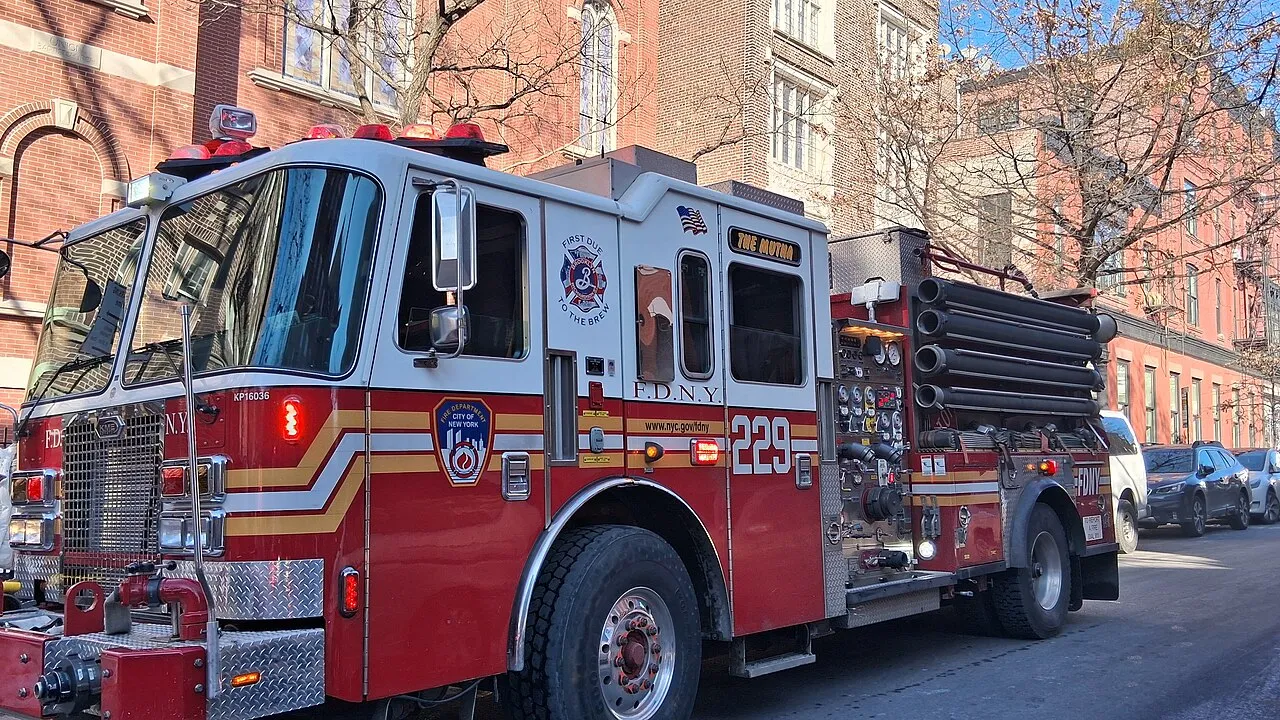
Archive FDNY Engine 229 photograph, illustrating emergency-service context; not a photograph of this incident.
Check a photograph before treating it as current
An image can be genuine while belonging to an earlier incident, another street or a different stage of the response. Look for the original caption, publication date and identifiable location. A fresh upload time does not establish when the picture was taken.
Do not infer casualty numbers from visible ambulances or the number of responders in a frame. Emergency resources can be deployed for several reasons. A photograph provides visual context; it does not replace an attributed official count.
Archive photographs used in an explanatory article should be labelled as archive or illustrative material. An ordinary Flatbush street view can help identify the neighbourhood without pretending to show the collapse itself. The caption should make that distinction clear before a reader draws the wrong conclusion.
The same principle applies to video. A short clip may omit what happened before or after it. Avoid claiming that it establishes the entire sequence, a person's intention or a technical cause unless the necessary supporting evidence is available.
Help without amplifying unverified appeals
Public concern can produce donation pages, offers of accommodation and requests to share personal information. Some may be genuine, but the existence of a tragedy does not authenticate every appeal using its name. Check who is organising an appeal and how its connection to the affected people is established.
An official service notice and a private fundraising request are different kinds of information. Do not describe one as the other. If you share an appeal, preserve its organiser's identity and the basis for your confidence instead of implying that a news article has endorsed it.
Never post someone's private location or contact details simply because you hope it will help. Ask whether the information is public, necessary and appropriate to circulate. A well-intentioned repost can create an additional privacy problem without improving the response.
For people not directly affected, useful support can begin with sharing verified service information and leaving response routes clear. There is no need to visit the scene, contact strangers for dramatic accounts or turn an uncertain claim into a public accusation.
Build a timeline that keeps the evidence visible
Students examining the coverage can make a table with event time, publication time, source and claim. Keep those fields separate. A report published on Thursday may describe an action taken on Wednesday, and a later correction may revise only one part of the earlier account.
Add a column for the status of the information: reported observation, official update, unresolved question or commentary. This prevents interpretation from silently becoming part of the factual chronology. It also shows why a careful account may change without every earlier report being fabricated.
When two sources disagree, identify the precise difference. Is it the address, the number of people, the time or the description of an agency's action? A specific question is easier to investigate than a general declaration that all reporting is unreliable.
Finally, keep the exercise proportionate. The purpose is to understand public information, not to identify private victims from images or reproduce distressing material. An accurate plain-text chronology can teach source evaluation without amplifying harm.
Questions readers may have
Where did the collapse happen?
Reviewed reporting places the incident in Flatbush, Brooklyn, at 1321 Flatbush Avenue beside an excavation site at 2625 Bedford Avenue. Check current official notices for access restrictions rather than assuming that the location details describe a route open to the public.
Has the cause been established?
The reviewed accounts describe an investigation. This article does not convert the adjacent excavation into a completed finding of cause or assign legal responsibility. A later authoritative finding should be reported as a separate, sourced development.
Why do older headlines show fewer deaths?
The reports were published at different stages of the response. This article uses the AP checkpoint from 11:29 UTC on 12 November for its opening update. Keep the timestamp attached when comparing it with earlier accounts or any later official revision.
Is this page a source of live emergency instructions?
No. It is a dated report and an information-reading guide. Follow emergency responders and current city announcements for immediate instructions. A static article cannot establish that a street, building or service location is safe or accessible at the moment you read it.
Continue with verified information
The central facts are serious enough without an invented explanation or an unverified name. Keep the location, date and source attached to each update, allow the investigation to establish responsibility, and use official channels for changing access and assistance information.
For other source-based explainers, visit the RayTech article collection. The links below identify the reporting checkpoint and official information routes used for this guide; they should be checked again when a decision depends on current conditions.
Prepare a question that an information service can answer
Before making a non-emergency enquiry, distinguish what you need to know. A question about access to an address is different from a question about an investigation. A request for the current service location is different from a request for a private person's status. Combining them can make it harder to reach the appropriate source.
Write the relevant address and the date of the notice you are asking about. Then state the question in one sentence. For example, you may need to know where the current official instructions are published. Do not assume that the person answering has seen the same screenshot or knows which version of a report you read.
If the response identifies another agency or a case reference, record that information accurately. Ask how to find subsequent updates rather than treating one conversation as a permanent statement about every later day. This is an organisational method, not a promise about the outcome of an enquiry.
For people following from outside New York, the same discipline helps when sharing information with someone closer to the event. Send the source and the specific question it answers. Avoid adding an instruction that was never issued by the source.
Sources
- Source: AP November 12 casualty update
- Source: Reuters account carried by AOL
- Source: WABC local reporting and update chronology
- Source: Notify NYC official information
Image credits: cover: User:Jim.henderson, source, Public domain. Resized and converted to WebP. inline: Kidfly182, source, CC BY 4.0. Resized and converted to WebP.
Found an error or an outdated detail? Report a correction with the article URL and original source.