
Campus Drivers: C. S. Quill’s Reading Order and the Six-Episode Adaptation
Start Campus Drivers with Supermad, check the five-book order and see how the six-episode adaptation differs. A spoiler-light guide for readers.
Campus Drivers is a college romance book series by C. S. Quill and the title of its French screen adaptation. The publisher's catalogue lists five numbered volumes; Amazon's announcement, updated on 6 November 2026, says the six-episode series is now streaming on Prime Video. The book sequence and the television episode sequence are separate things.
This is a spoiler-light reading guide. It explains where to start, how to identify an edition and what to look for when comparing prose with an adaptation. It does not reproduce scenes, distribute copies or assume that subscription terms, languages and catalogue access are identical for every viewer in Pakistan.
What is Campus Drivers about?
The publisher describes a campus setting where Lane and his friends run a student transport app. The first volume follows Lane and Lois as an unexpected living arrangement brings them into each other's lives. Amazon describes the screen adaptation around the same central pair. That premise is enough to decide whether the setup interests you without learning the outcome of their relationship.
The fictional app gives the setting a purpose
A campus ride service gives characters a reason to cross paths outside a classroom or dorm. It creates a useful contrast between a public role, where a driver is expected to help someone reach a destination, and private relationships, where expectations are less clearly defined. That is a reading observation about the setup, not a claim that the fictional service is available to real students.
The romance label is a starting point
Genre can explain why a reader expects relationships to carry much of the narrative. It does not tell you the exact tone or whether the material suits a particular age group. The publisher includes a suitability notice on its first-volume page. A parent, teacher or younger reader should consult the actual edition or screen rating before treating a campus setting as an age recommendation.
Where should a new reader start?
Start with volume 1, Supermad, then follow volumes 2, 3, 4 and 5 in the publisher's series catalogue. The catalogue lists multiple bindings and a box set, so a second listing for volume 1 does not necessarily mean there is a second opening story. Check the volume number before choosing a cover design or sorting by publication date.
| Reading step | What to look for in the catalogue |
|---|---|
| 1 | Tome 01, Supermad |
| 2 | Tome 02 |
| 3 | Tome 03 |
| 4 | Tome 04 |
| 5 | Tome 05 |
Why a new cover can be an older story
A book may be issued in hardback, paperback, a special binding or a boxed collection. The physical edition can have a newer publication date even when it carries the same numbered volume. For reading order, prefer the sequence number and check the author. For collecting a particular edition, compare ISBN and format as well. Those are two different tasks.
A box set does not add a sixth volume
The publisher lists a collection containing volumes 01 through 05. That is a packaging description, not evidence of an additional continuation. Check the contents before buying a set if you already own a copy of one volume. A listing with a large photograph of several covers is less reliable for this purpose than the explicit volume range printed in the catalogue entry.
How many episodes are in the adaptation?
Amazon's November update describes a six-episode French series starring Carmen Kassovitz as Lois and Baptiste Masseline as Lane. It is based on Quill's books, but six episodes do not imply a one-to-one mapping to the five volumes. The television catalogue controls episode numbering. The publisher's catalogue controls the order of the novels.
A release announcement is dated evidence
The streaming guide was originally published before the series arrived and later updated. The update date explains why the same page can contain newer availability information than an older article based on the first announcement. When sharing a release claim, prefer the updated source and keep the date. That prevents a launch plan being mistaken for a cancellation or a completed release being described as merely announced.
Local availability still needs a check
Open the official service from your own region to see current access, language tracks, subtitles and applicable costs. An announcement aimed at readers in another country may show that country's subscription price. It should not be converted mechanically into an assumed Pakistani charge. Never install a modified player or enter credentials on a lookalike site offering the series for free.
Should you read the book or watch first?
Either order can work. If you want to imagine the characters before seeing actors in the roles, begin with Supermad. If a screen version is a more comfortable introduction, start with episode one and choose the book afterward. For an assignment comparing media, record which version you saw first because that affects which details feel familiar or surprising.
Reading first gives you room to picture the scene
Prose can tell you what a narrator notices, remembers or misunderstands. The reader supplies many visual details that the book does not specify. Try writing down an impression of a setting after a chapter, without copying any lines. When watching later, compare your impression with the visual choices on screen. Different choices can still serve the same scene purpose.
Watching first helps identify different storytelling tools
A television scene can use framing, pauses, sound and editing to show a relationship without stating how a character feels. Reading the novel afterward makes it easier to notice what prose can do differently, such as slowing down inside a thought. Neither medium has to be declared better. The useful question is what each version makes clear and what it leaves for the audience to infer.
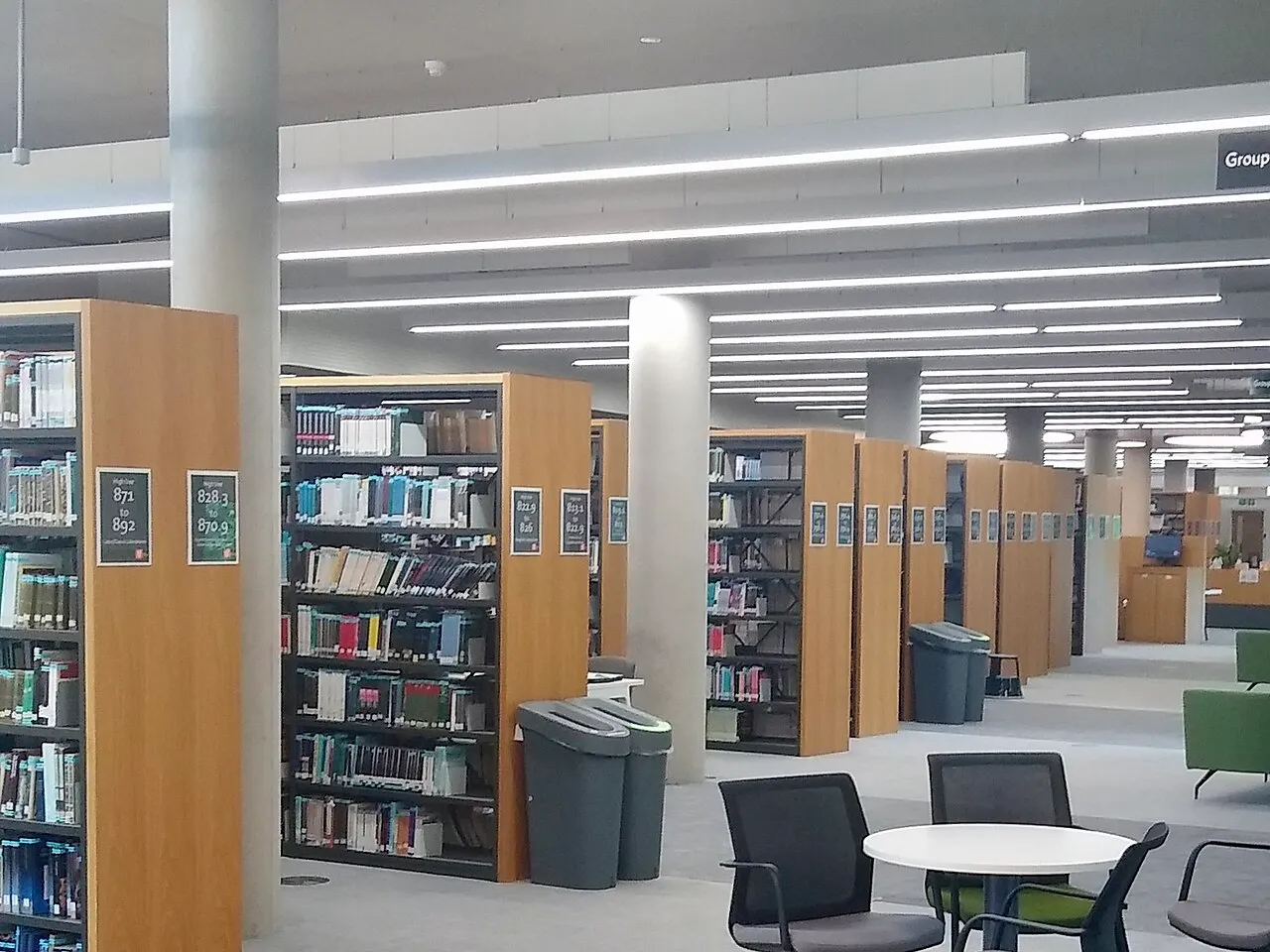
Library shelves at Royal Holloway University of London in September 2026, illustrative reading context rather than a filming location.
What changes when a novel becomes a series?
An adaptation turns a reading experience into timed scenes, performances and visual information. A chapter can devote pages to a memory, while an episode may use a look, a recurring object or a short exchange. The two forms have different constraints. Do not assume that changed pacing, reordered scenes or compressed dialogue automatically signal that the adaptation misunderstood the book.
Compare scene function before details
In an original example, a novel shows two roommates leaving notes because they avoid direct conversation. A screen version instead shows one leaving a spare key in a visible place. The objects differ, but both scenes can communicate a change in trust. Compare what an audience learns from each version before compiling a list of surface differences.
Name the evidence rather than summarising feelings alone
Instead of writing that a scene is more emotional, identify the cue that changed your reading: a pause, a repeated image, an earlier piece of information or a shift in viewpoint. Then explain the likely effect. It is fine if another reader interprets it differently. Good analysis gives enough detail for someone else to follow the reasoning without requiring them to agree.
What does a campus setting contribute?
A campus concentrates schedules, friendships and new responsibilities in one place. Characters can be repeatedly thrown together by classes, a shared space or a service such as a ride app. That structure makes meeting again plausible without needing coincidence in every chapter. It also gives readers a way to distinguish what a character chooses from what the setting makes unavoidable.
Think about the setting as a network
On paper, draw circles for a residence, a classroom, a meeting place and a transport service. Connect places that a fictional student visits in a day. Now imagine that one link is unavailable. Which interactions change? This exercise helps explain why a setting can drive a plot. It does not depend on copying a Campus Drivers scene or naming any outcome.
Keep fictional institutions separate from real ones
Amazon's description names Belrose University in the story. That is part of the narrative setup. A place that looks familiar on screen may be a filming location, a set or a combination of several locations. Do not treat the screen geography as evidence of a real university's courses, admissions rules or transport services. Fiction and location reporting require different sources.
How can you compare editions across languages?
Identify the language, author and volume number before matching editions. A translated title can differ from the original subtitle; a retailer may shorten the description. When a matching volume is uncertain, check the publisher's or library's record and ISBN. For screen versions, audio language and subtitle language are independent options and may vary with the service's local catalogue.
Translation and dubbing solve different problems
A translator working with a novel can choose phrasing that fits the page and the narrator's voice. A dubbed line also has timing and performance constraints. Subtitles may need to be shorter so viewers can read while watching. A difference between the three does not automatically prove an error. Ask whether the meaning, tone or timing needed to be preserved most closely.
Make a small edition checklist
Record the author, series, volume, language, format and ISBN. For a screen note, record the service, season, episode and date accessed instead. Keep these in separate columns if a book club is discussing both. A reader asking for the second book should not be directed to the second episode just because both entries contain the number two.
How can a group discuss the series without spoilers?
Set the stopping point first. A group can agree to discuss only the opening chapters or the first episode, then clearly label anything beyond that. Invite people to explain first impressions of a character before discussing later decisions. This makes the conversation accessible to members who chose different starting formats or who read at different speeds.
Try three spoiler-light discussion questions
Which early scene makes the campus feel like a lived-in place? What do the characters' public responsibilities reveal that their private conversations do not? Which difference between page and screen changes what you notice first? These questions focus on technique rather than plot outcomes. Readers can respond with a short description in their own words rather than pasting dialogue.
Compare an original scene of your own
Write a paragraph about two fictional students waiting for a ride on a rainy evening. Then turn it into three shots with no dialogue. Decide which information the camera can show and which information would need a voice-over or another scene. This exercise makes adaptation choices concrete. It also demonstrates that close reading can lead to original work rather than imitation.
A useful reading and viewing record
Create a note with the edition or episode, a date, one observed technique and one question. For a comparative assignment, add a column for what is directly observable and another for interpretation. This prevents a reasonable guess about a character from being presented as fact. It also keeps group discussion focused on evidence rather than personal criticism of other readers.
Build a catalogue as a coding exercise
A simple programme can store a volume number, language, format and ISBN for each book. Use separate fields for season and episode in the television list. Sort by volume number only within the book collection. Test a box set as a distinct entry linked to several volumes. For coding foundations, see programming courses and class resources.
The quick answer to keep
Campus Drivers begins with Supermad in the numbered book sequence, and the screen adaptation is a separate six-episode series announced as streaming in November 2026. Use the publisher to confirm books and the service to confirm local viewing. Read or watch first according to your preference, then compare specific choices without assuming every scene has a direct equivalent.
Find the right copy before paying
A library search can be a useful first step if you want to sample the novel before committing to a set. Search the author and Supermad together, then inspect the edition language. A legal sample can also help you decide whether the original French or an available translation is the better starting point.
Distinguish series titles in a search
Pair the words Campus Drivers with Quill for the novels or with Lois and Lane for the adaptation. Searching the title alone can return student transport services that have nothing to do with the story.
Sources
- Publisher's five-volume series catalogue
- Publisher's Supermad edition and content notice
- Amazon adaptation guide and 6 November availability update
Image credits: cover: Guilhem Vellut from Paris, France, source, CC BY 2.0. Resized and converted to WebP. inline: Mertbiol, source, CC0. Resized and converted to WebP.
Found an error or an outdated detail? Report a correction with the article URL and original source.