
Chamari Athapaththu: Landmark Innings, Sri Lanka’s Asia Cup and Scorecards
Explore Chamari Athapaththu’s 178 not out, unbeaten 195 and 2024 Asia Cup contribution, with clear explanations of overs, strike rate and partnerships.
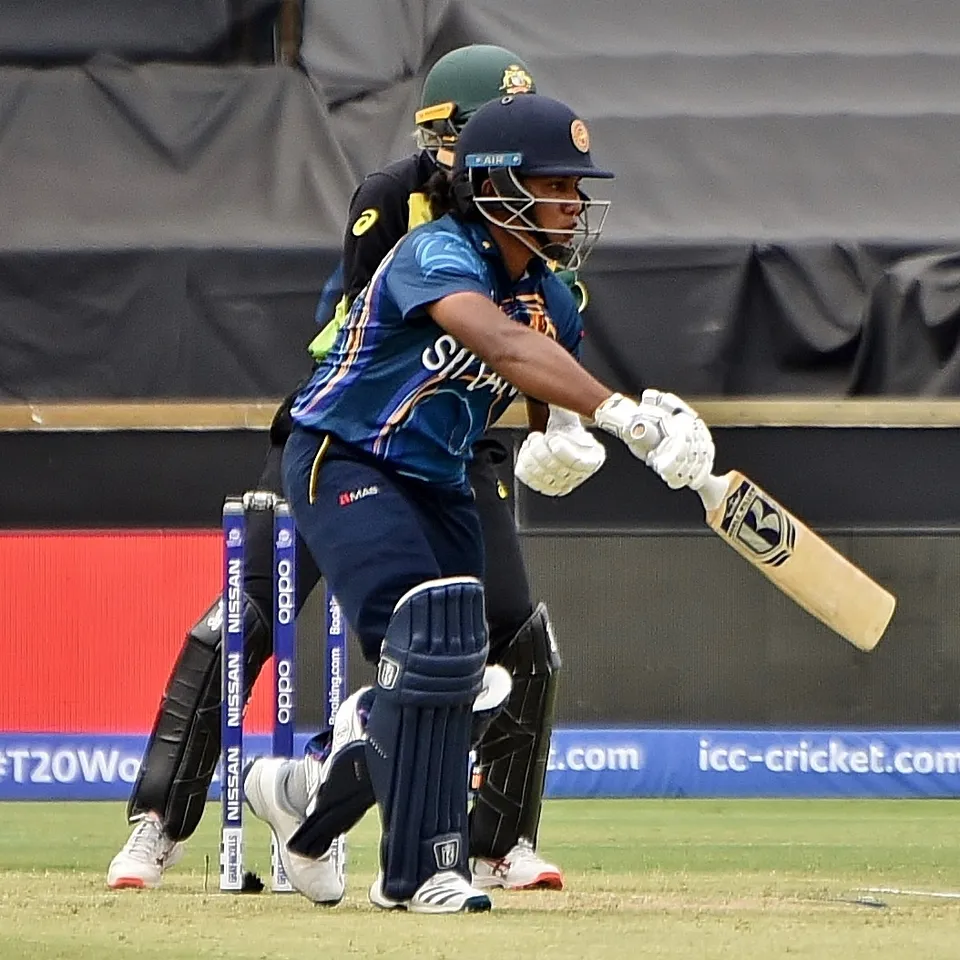
Chamari Athapaththu is a Sri Lankan cricketer whose career includes some of women's cricket's most memorable major innings. Her 178 not out against Australia in the 2017 World Cup, 195 not out in a successful ODI chase against South Africa in 2024, and contribution to Sri Lanka's 2024 Women's Asia Cup title provide three different ways to understand her importance.
This profile was reviewed on 6 November 2026 using ICC and Sri Lanka Cricket records. It separates dated achievements from changing rankings and explains the scorecard language behind the headlines. It is not a live match report, an unverified current team announcement or a claim that one innings can define every part of a player's career.
Who is Chamari Athapaththu?
Athapaththu is a Sri Lankan international player who has combined major batting contributions with leadership responsibilities. The official accounts discussed here identify her role in specific historical matches and campaigns. Those dated records are a sound basis for a profile without inventing private conversations or assuming that every current team arrangement is unchanged.
Her name can appear with spelling variations in score databases and older reports. Match the player, team and competition before treating two spellings as separate careers. A research table should preserve a consistent display name while retaining the source's original record for verification.
The useful question is not only how many runs she scored. It is which format, against whom, in what situation and with what team outcome. Those details turn a collection of impressive numbers into a readable account of a player working within a team sport.
Why does the 2017 innings against Australia stand out?
The ICC records Athapaththu's 178 not out from 143 balls against Australia during the 2017 Women's World Cup. It is a specific historical innings, not a current career total. The not-out mark belongs with the score because it describes how the innings ended under the scorecard's dismissal record.
The ICC's contemporary account drew attention to the way the innings developed rather than treating the final number as its only feature. A useful modern summary can acknowledge its significance while avoiding invented ball-by-ball details. To describe a particular shot sequence, the actual footage or detailed record is needed.
Students can use the innings to distinguish an individual performance from the team's entire match. A large personal contribution does not erase the other innings, bowling and fielding. A proper scorecard tells the wider story; the personal milestone and the team result should be reported as related but separate facts.
What happened in the 2024 South Africa chase?
Sri Lanka Cricket's official report records South Africa making 301 for five, followed by Sri Lanka reaching 305 for four in 44.3 overs. Athapaththu finished unbeaten on 195. The successful chase supplied a team outcome as well as a landmark individual innings, which is why the reporting should preserve both.
South Africa's 301 meant the ordinary winning target was 302 in that match's stated context. Sri Lanka finishing on 305 is not a contradiction: the winning scoring event can carry a team beyond the minimum target. A target describes what is needed to win, while the final score records what was actually reached.
The report also records a major opposing innings by Laura Wolvaardt. Including the opposition's contribution makes the chase more understandable. A one-player headline can introduce the story, but an informative article should show the contest rather than pretending that only one team produced a substantial performance.
Why does 44.3 overs not mean 44.3 decimal overs?
In conventional cricket score notation, 44.3 means forty-four completed overs and three further legal balls, not forty-four and three-tenths of an over. With six legal balls per over, that corresponds to 267 legal deliveries. The dot separates overs and balls rather than introducing an ordinary decimal fraction.
This distinction matters when calculating a rate. Entering 44.3 directly into a decimal calculator as a number of overs produces a different denominator from forty-four and a half overs. For a worked exercise, first convert the notation into legal balls, then apply the intended rate formula consistently.
The legal-ball count also differs from simply counting every delivery event, because extras can affect how deliveries are counted. An introductory calculation should state its scope. A careful learner checks the scorecard notation before assuming that a number written with a dot behaves like a decimal measurement in another subject.
What did Sri Lanka achieve at the 2024 Women's Asia Cup?
Sri Lanka won its maiden Women's Asia Cup title in 2024 with victory over India in the final. The ICC and Sri Lanka Cricket reports record 61 from Athapaththu and 69 not out from Harshitha Samarawickrama in the successful chase. The title belongs to the team, with several contributions forming the result.
This is different from the 195-not-out ODI innings against South Africa earlier in 2024. The opponent, format and competition are not the same. Combining those events into a single match description would create an invented record, even though each individual number came from a real report.
A timeline is useful here: place the South Africa ODI and Asia Cup final on separate rows. Give each its opponent and tournament label. The exercise makes clear that a player can have several important achievements within one year without those achievements being interchangeable.
How do ODI and T20I contexts differ?
The formats provide different innings lengths and competitive situations. A score in an ODI and a score in a T20I should retain the appropriate format label. A long-form career profile can discuss both, but it should not merge their statistics into an undefined average or compare scoring opportunities as though they were identical.
For a fictional exercise, imagine two chases with different available overs and wickets. A batter's required decisions can differ even when the remaining target is the same. This helps explain why the size of a score is not a complete description of its value in a match.
Use the tournament's actual scorecard for a real comparison. Do not attribute an imagined tactical choice to Athapaththu simply because it fits a general explanation of the format. The educational example should teach a question to ask, not masquerade as evidence about a real innings.
What does an asterisk after a score mean?
An asterisk conventionally marks a batter as not out. Thus 195* and 195 without that information are not identical descriptions of the innings. The mark matters to the dismissal record and to calculations such as batting average, where dismissals rather than innings alone form the relevant denominator.
In an invented example, a batter makes one hundred runs across two innings but is dismissed only once. A standard average calculation based on that record uses one dismissal. If a learner divides automatically by two innings, they are calculating a different measure while giving it the wrong label.
These numbers are not Athapaththu's current career statistics. They explain the notation before readers look up an actual record. The safest habit is to preserve the scorecard's asterisk and selected format, rather than stripping them away to produce a shorter but less accurate social-media caption.

Athapaththu batting for Perth Scorchers against Adelaide Strikers in October 2021, shown as franchise-career context.
How should strike rate be calculated?
Batting strike rate expresses runs per one hundred balls faced under the statistic's convention. It is not the same thing as the team's required run rate or the batter's average. The three measures have different denominators and answer different questions.
Using the documented 2017 innings, 178 divided by 143 and multiplied by one hundred gives approximately 124.48. This is a calculation from the published innings figures, not a new official ranking. Round consistently and retain the runs-and-balls information so another reader can reproduce the arithmetic.
A rate does not automatically explain the sequence of the innings. Two players can finish with the same strike rate after very different progressions. To analyse acceleration or a particular phase, use the actual phase data instead of imagining a pattern from the overall rate.
What can partnerships add to the story?
A partnership concerns runs added while two batters are together, including the applicable scorecard treatment of extras. It is a team-building unit that differs from either batter's individual score. A successful chase often needs that relationship to be explained rather than presenting the leading scorer as if they played alone.
For an original classroom example, two batters add eighty runs together. One contributes forty-five, another thirty, and five are recorded as extras under the model. The partnership total is still eighty. Adding only the two personal scores would omit part of the defined team contribution.
Do not copy the fictional numbers into the 2024 scorecard. Their purpose is to explain why a partnership and an individual tally are different records. The actual match needs its own complete information before any claim about a stand, its ranking or its historical importance is made.
How should leadership be discussed fairly?
The official 2024 coverage identifies Athapaththu's captaincy alongside her batting. Leadership is an important part of a team profile, but its decisions cannot all be inferred from a final score. Public statements and documented match events support a discussion; imagined dressing-room dialogue does not.
A strong individual innings and a successful team campaign can both be acknowledged without assigning every decision to one person. Coaches, teammates and the wider support structure have roles. A careful article credits the evidence it has rather than filling missing detail with a story about what someone must have thought.
For students, the distinction is useful in group projects too. An individual contribution and the group's final outcome are related but different levels of assessment. The analogy should support clear thinking, not imply that a classroom project reproduces the pressures of international sport.
Why should rankings and awards be dated?
A ranking is a changing record with a defined system and date. An award refers to a particular selection period or event. Neither should be described as permanently current just because a historical profile once recorded it. The date gives the reader a way to interpret the claim.
This article focuses on verified match and tournament milestones rather than publishing an unchecked current ranking. For a latest-position query, open the official ICC ranking and identify the format and date. Do not combine an ODI position with a T20I headline or assume that an old screenshot remains up to date.
An educational worksheet can label statements as match result, tournament title, ranking or award. Ask students which source would verify each. The exercise shows why one kind of record cannot automatically be used as proof of another, even when the same athlete appears in all four.
How can photographs preserve the right context?
A photograph from a franchise competition can illustrate Athapaththu's career while still needing a caption that identifies that setting. It should not be presented as a photograph from the 2017 World Cup or the 2024 Asia Cup final unless the source actually establishes that event.
The same applies to team clothing and image dates. Different uniforms do not necessarily identify a different player, but a familiar face alone does not prove when the picture was taken. Check the source and use the narrowest accurate description supported by it.
The credited images here are career illustrations, not evidence of a fresh selection decision or a new match result. Keeping that distinction clear prevents a historical picture from carrying a stronger claim than the text and sources can support.
Build a clear career timeline
Start with three rows: the 2017 World Cup innings, the 2024 South Africa ODI and the 2024 Asia Cup title. Record opponent, format, individual contribution and team context separately. The table should make it impossible to mistake 195* against South Africa for a score in the final against India.
Then add one worked statistic, such as the 2017 strike-rate calculation, and show the formula. Keep calculated commentary separate from the original score. This lets another learner check both the source fact and the arithmetic rather than accepting a polished number without knowing how it was obtained.
Our study resources support numerical practice, and programming courses can help students build a fictional cricket timeline. A useful interface should display format, event and date beside each achievement rather than expecting the reader to reconstruct the missing context.
Questions readers commonly ask
Was the 195-not-out innings in the Asia Cup final? No. It came in an ODI chase against South Africa in 2024. The Asia Cup final against India was a separate match, in which the official reports record Athapaththu's 61 and Samarawickrama's unbeaten 69.
Does 44.3 mean an ordinary decimal number of overs? No. It means forty-four overs and three legal balls under conventional notation. Convert carefully before calculating an average rate, and keep the distinction visible in any calculator or classroom worksheet.
Does this profile give live scores? No. It documents established milestones and explains the records. Use a current official scorecard for an ongoing match and preserve its date, opponent and format before comparing it with historical performances.
Sources
- ICC: Chamari Athapaththu profile
- ICC: the 2017 innings against Australia
- Sri Lanka Cricket: unbeaten 195 against South Africa
- ICC: Sri Lanka's maiden Women's Asia Cup title
Image credits: cover: Bahnfrend, source, CC BY-SA 4.0. Resized and converted to WebP. inline: Bahnfrend, source, CC BY-SA 4.0. Resized and converted to WebP.
Found an error or an outdated detail? Report a correction with the article URL and original source.