
Chris Lynn: Big Bash Career, Power Hitting and T20 Score Reading
Explore Chris Lynn’s Brisbane and Adelaide career stages. Learn power-hitting context, strike rate, boundary runs and required-rate calculations.
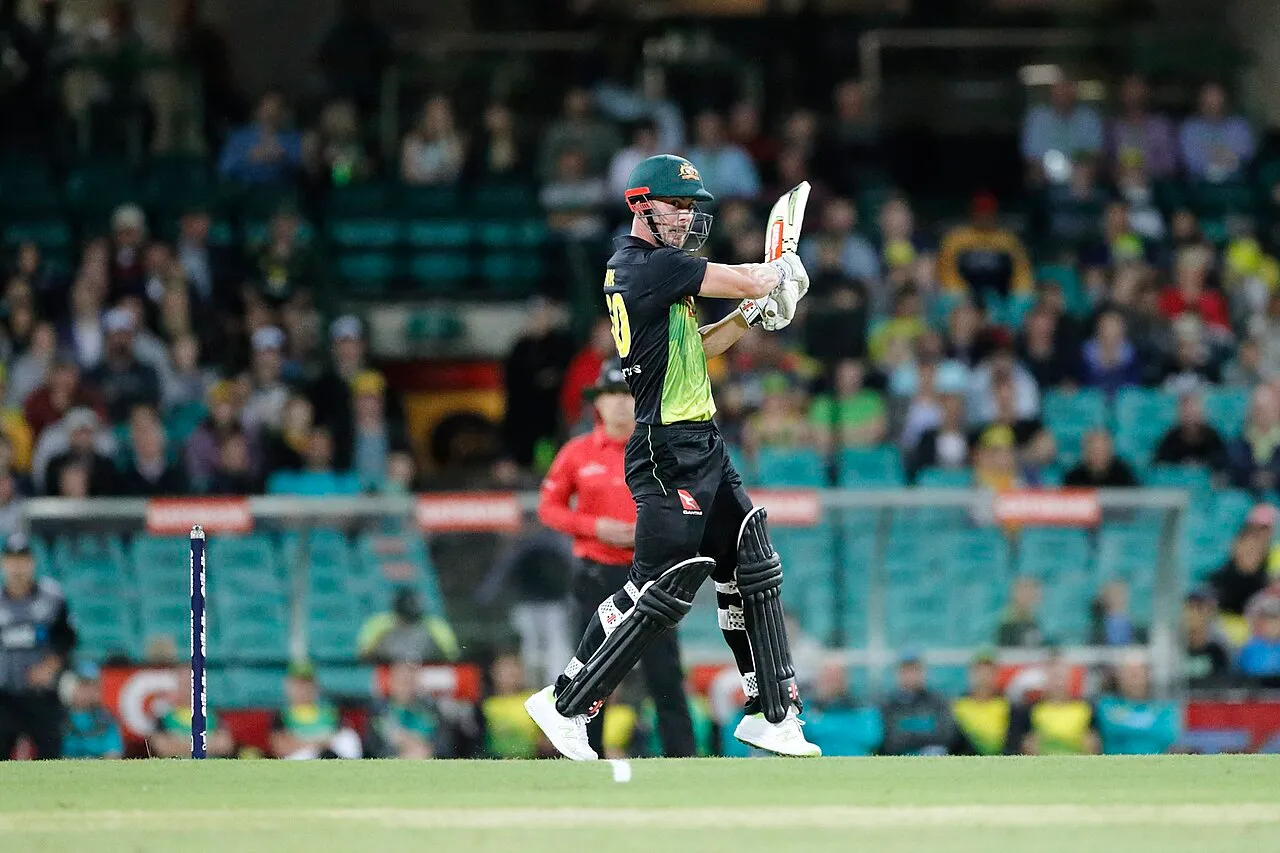
Chris Lynn's career is a useful introduction to power hitting because the visible six is only one part of a T20 innings. A batter also has to judge the ball, field, score and available overs. The same boundary attempt can be sensible in one situation and a poor choice in another. Understanding the task makes a performance more interesting than a montage of the longest hits.
This guide uses the documented Brisbane Heat and Adelaide Strikers stages of Lynn's career and explains the numbers behind short-format batting. It is not a live franchise lineup or an invented current contract. Historical announcements remain dated, and the calculations below are original teaching examples rather than unsourced additions to his career record.
Who is Chris Lynn?
Chris Lynn is an Australian cricketer known for short-format batting. His Big Bash career includes Brisbane Heat and a later move to Adelaide Strikers announced in 2022. The Strikers have also published subsequent contract updates. Those are separate stages, and an old signing should not be treated as an unlimited statement about every future season's availability.
A franchise team is not a national team
A league appearance and an international appearance belong to different records. Playing alongside overseas teammates in a franchise competition does not change the national representation attached to a separate international record. Keep competition, team and season together when organising the career. A combined list of shirts or logos cannot replace those distinctions.
Contracts and match availability differ
A signing announcement can establish an agreement for a defined period, while a particular match still needs its own squad and selection record. Do not assume a player appears in every fixture merely because a contract was announced. Conversely, an older appearance does not prove a current agreement. Dated team statements are the appropriate place to verify those changing details.
What happened in the 2022 Strikers move?
The August 2022 reporting documents Lynn joining Adelaide after his Brisbane period. Later Strikers announcements provide a separate record of continued arrangements. The historical move is useful career context, not a claim about today's opening partnership or the result of a current match. A reader seeking a specific fixture should use that event's official team information.
One agreement can have a defined window
Availability can depend on the terms and season described in the announcement. A headline that says signed does not supply every detail. Read the body and date before assuming how many matches were included or whether another competition was involved. This guide does not carry an old match limit forward into every later contract.
A season label needs its full form
A competition may use a numbered edition or span two calendar years. Store that label accurately rather than reduce it to the publication year of one announcement. Otherwise a profile can attach a result to the wrong campaign. The event record and the news-release date should remain separate when they refer to different stages.
What is power hitting in a useful analytical sense?
Power hitting involves producing scoring outcomes under the constraints of a match, not merely swinging hard. Ball recognition, contact, placement and risk all matter. A batter can strike forcefully and still choose the wrong target for the field. The useful question is what opportunity the ball presented and whether the chosen response fitted the team's task.
The incoming ball sets the problem
Length, line, pace and bounce influence what a batter can control. An attempted lofted shot from one contact position may be easier than from another. A viewing exercise should describe the arriving ball before judging the swing. This avoids treating every dismissal while attacking as reckless or every successful boundary as proof that the decision had no risk.
A field creates available spaces
The positions of fielders influence which scoring routes are open and what a mis-hit might cost. The same shot can face different risks against a different arrangement. Observe the field where the broadcast shows it, and acknowledge when the camera does not reveal the whole picture. Do not invent a gap simply because the ball eventually passed through one.
Contact quality and outcome are related but distinct
A well-timed ball can reach a fielder, while an edge can produce runs. The outcome matters to the score, but it does not fully describe the action. A careful analysis can distinguish execution from result without dismissing either. Over a small sample, those differences are especially important when a few unusual outcomes shape the impression.
How should batting strike rate be calculated?
Strike rate is runs divided by balls faced, multiplied by one hundred. It expresses scoring pace per hundred balls, not a percentage of successful shots. A fictional innings of forty-five from thirty balls has a rate of 150. That does not mean the batter faced one hundred balls or hit a boundary on every successful contact.
Keep the counts beside the rate
Twelve from four balls and sixty from twenty both produce a rate of 300, but they contain different sample sizes. The larger sample describes more deliveries, while both still require match context. Display runs and balls rather than only the most dramatic rate. A correct formula can still be used misleadingly if the reader cannot see its inputs.
A late cameo has a different task
A short finishing innings may ask the batter to accept more dismissal risk than an opening phase. Compare the role and match situation before ranking performances by rate alone. A fast cameo can be valuable without being directly equivalent to building a longer innings. The aim is to understand contribution, not force every batting job into one scale.
What does boundary share tell you?
Boundary share describes how much of an innings total came from fours and sixes under the chosen definition. It does not measure every skill used to build the score. Singles, twos and strike rotation can affect pressure and partnership rhythm. A boundary calculation is useful when it is labelled clearly and not presented as a complete rating of a batter.
Try an original example
Imagine a made-up innings containing five fours and three sixes. Those shots contribute thirty-eight runs. If the batter finishes with fifty-eight, the remaining twenty came through other scoring outcomes. The example is not Lynn's score. It shows how visible highlights can account for much of an innings while still leaving an important part outside the montage.
A count is not a distance measurement
One six and another both add six runs even if their estimated distances differ. A longer hit does not add extra scoreboard value under ordinary scoring. Distance graphics can entertain and describe a particular shot, but they should not replace the actual innings contribution. A batter's team may need repeated controlled scoring more than one exceptional measured hit.
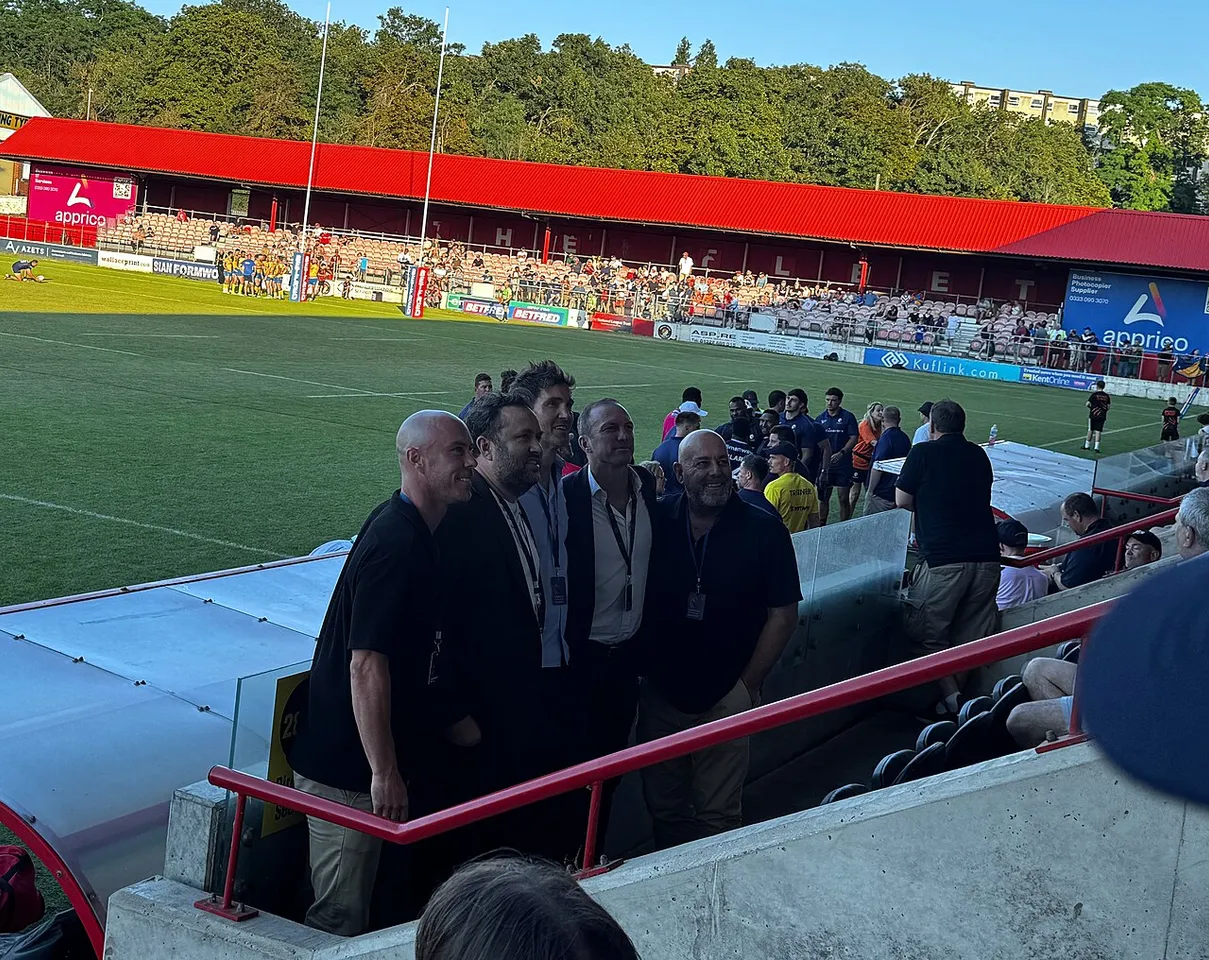
Chris Lynn with Grant Wechsel, Andrew Gray, Darren Lockyer and Darren Lehmann in a 2026 photograph; a group image, not a match lineup.
How can dot balls change the situation?
A dot ball produces no run in the relevant scoring record, but its meaning depends on the task. In a chase, several dots can increase the required rate. In another phase, a batter may be responding to difficult deliveries. Do not treat every dot as identical evidence of failure or every boundary as complete recovery from the earlier pressure.
Required rate uses the remaining task
Suppose a fictional team needs forty-eight runs from twenty-four legal balls. That is twelve runs per six-ball over. If six legal balls pass for only six runs, the task becomes forty-two from eighteen balls, or fourteen per over. These are teaching values, not a live match. The arithmetic explains how the same target can become more demanding as opportunities shrink.
Wickets change the options as well
The number of available batters and the team's situation influence how much risk can be accepted. A rate calculation alone does not tell a player which shot to attempt. Students should keep arithmetic and tactical judgement connected but separate. The equation describes the task; the actual response depends on the balls, field and players involved.
Why should T10 and T20 records remain separate?
The formats have different innings lengths and can use event-specific playing conditions. A performance in one should not be inserted into the other's record without a clear combined definition. A player can appear in several leagues, but the same familiar name does not make every competition statistically interchangeable. State the format and tournament before quoting a rate or title.
Match conditions belong to the event
Fielding restrictions, tie procedures and other details should be checked in the relevant competition rules. Do not assume that a rule remembered from one league applies everywhere. This article teaches general score reading, not the current playing conditions of every league Lynn has entered. A specific match explanation needs the specific event's documentation.
Franchise success is a team outcome
A title can reflect contributions across batting, bowling and fielding. A prominent hitter can play a major role without being the only reason for the result. A fair career account keeps individual innings and team honours distinct. It does not convert every trophy associated with a squad into proof that one player dominated all phases of the tournament.
How can students study an innings fairly?
Choose a defined consecutive sample, not only sixes or dismissals. Record runs, balls and the visible field or delivery features relevant to the question. Identify what the footage does not show. The project should explain one pattern rather than produce an unsupported ranking of every batter in the league from a handful of attractive clips.
Define the category before counting
If you label a ball short or a shot attacking, explain the classroom definition. Different observers may reasonably classify a marginal case differently. Discuss the evidence and keep the method consistent. The goal is a useful shared description, not a false impression that an informal video study has the same precision as a complete professional tracking dataset.
Handle incomplete records honestly
Missing ball-by-ball information is not a sequence of dots. A missing distance graphic is not a zero-metre hit. Keep unavailable fields distinct from measured zero values. This small data habit prevents charts and averages from making claims the source never supported. A complete-looking table is not more accurate if its empty cells were filled with guesses.
A simple batting calculator project
Use fields for format, team, event date, runs and balls. Calculate strike rate and a separately labelled required-rate example. For a six-ball-over model, convert overs notation into legal balls before dividing. Keep real historical records separate from fictional practice inputs. A good calculator explains its units rather than merely printing a number with an impressive font.
Test the edge cases
Check an empty innings, a very short innings and a partial over. Reject negative counts and unsupported ball notation. Preserve source links with any real data. The programming courses can support the implementation, while the class resources help with the mathematics. Clear tests protect the meaning of the output rather than simply confirm that the program runs.
Preserve the original notation
Keep the scorecard’s text beside calculated fields. If a parser reads an unusual score incorrectly, a reviewer can then trace the problem to the input instead of guessing how the number was produced. This small design choice makes later corrections easier to explain.
Questions about Chris Lynn
Does a 2022 signing prove today's lineup?
No. It establishes the agreement reported at that time. Later contract updates and match-specific selection need their own records. A career profile can explain the Brisbane and Adelaide stages without inventing current availability. Historical photographs should follow the same rule: an older shirt identifies a stage of the career, not necessarily today's team.
Is the highest strike rate always the best innings?
Not by itself. The rate needs runs, balls, role and match context. A small cameo can have a very high rate without the same task as a longer innings. A fair assessment asks how the performance helped the team under those conditions. The calculation supports the explanation; it does not replace the whole cricketing judgement.
Sources
- Adelaide Strikers: a dated Chris Lynn contract update
- ABC: the August 2022 move from Brisbane to Adelaide
Image credits: cover: www.davidmolloyphotography.com, source, CC BY 2.0. Resized and converted to WebP. inline: Fleets, source, CC0. Resized and converted to WebP.
Found an error or an outdated detail? Report a correction with the article URL and original source.