
Ciara Mageean: Remembering Her Career and European 1500m Title
Remember Ciara Mageean through official tributes and career records, with clear explanations of her European title and the meaning of race times.
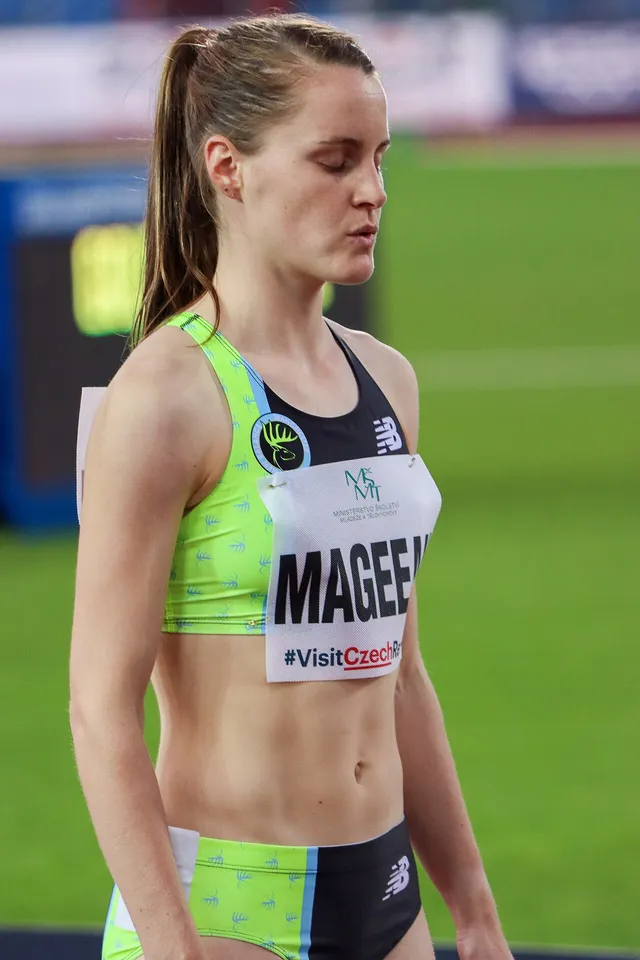
Ciara Mageean, Ireland’s 2024 European women’s 1500 metres champion, died on 1 November 2026, aged 34. Athletics Ireland and the Olympic Federation of Ireland published statements confirming her death and remembering her contribution to sport. This profile records her major achievements respectfully and explains the athletics results that form part of her sporting legacy.
The article was reviewed on 2 November 2026. It does not speculate about private medical details or reproduce family information unnecessary to understanding her career. The later numerical activities are separate educational examples about race records. They are not a reconstruction of her thoughts, training instructions or a claim to have known her personally.
Who was Ciara Mageean?
Mageean was a middle-distance runner from Portaferry, County Down, who represented Ireland internationally. Team Ireland’s profile records her 1500 metres career and membership of City of Lisburn AC. She competed at the Rio 2016 and Tokyo 2020 Olympic Games and became European champion in Rome in 2024.
Her career should be understood as more than one result. Team Ireland lists earlier European medals and junior achievements alongside her senior title. Those records show progression across different stages of competition, while the tributes from sporting bodies describe the encouragement and example she offered to others. Personal appreciation and a results table tell different parts of a sporting life.
A respectful profile identifies its sources and avoids invented memories. It can explain why an achievement mattered without pretending the writer witnessed every race. It should also leave space for the people who knew the athlete to speak in their own words, rather than manufacturing quotations to make an article sound more intimate.
What did the sporting bodies announce?
Athletics Ireland’s 1 November statement confirmed Mageean’s passing and expressed sympathy to her family, friends and loved ones. The Olympic Federation of Ireland also published a tribute on that date, recognising her achievements and influence within the sporting community. These institutional announcements establish the news reported at the beginning of this article.
They are not an invitation to speculate about private circumstances. This guide does not add an unverified medical explanation or publish personal arrangements. Readers looking for official statements can use the source links at the end. A concise and accurate account of the announcement is preferable to filling gaps with rumour.
When students write a tribute, ask them to separate confirmed biographical facts from their own reflection. A sentence about a medal needs a result source. A sentence about what perseverance means to the student can be clearly their own. Respectful writing does not require exaggerating either the record or the writer’s relationship to the person.
Her European championship progression
Team Ireland’s published biography records European outdoor bronze in 2016, European indoor bronze in 2019 and outdoor silver in 2022 before her 2024 outdoor gold. Keep the indoor and outdoor settings visible. Combining them into one unlabelled sequence can make it appear that every medal came from the same championship programme.
The progression offers a useful lesson in reading a career timeline. Each entry should identify year, event, competition and medal. A medal’s colour is only one field. Leaving out the event or competition can turn a precise achievement into an ambiguous claim that readers may interpret more broadly than intended.
For a classroom notebook, draw separate rows for indoor and outdoor championships. Add only verified entries. Do not fill every missing year with an assumed appearance or result. A gap in the notebook means the selected sources have not supplied an entry; it does not automatically mean the athlete stopped competing.
What was the 2024 European final result?
World Athletics lists Mageean first in the women’s 1500 metres final at the 2024 European Championships in Rome, with a time of 4:04.66. The result is a championship performance on a particular day. It should not be confused with a personal-best mark from another meeting.
The same results page lists Georgia Bell second in 4:05.33 and Agathe Guillemot third in 4:05.69. The differences are 0.67 seconds between first and second and 1.03 seconds between first and third. Those are finish-time differences, not measurements of the distance between athletes at every point in the race.
Write the event title above the numbers before doing arithmetic. A time without an event and date can easily be compared with the wrong distance or competition. The label gives the calculation its meaning. It also prevents a learner from treating an 800 metres mark and a 1500 metres mark as directly comparable finish times.
How do you read a time such as 4:04.66?
The notation means four minutes and 4.66 seconds, not 4.0466 minutes. Convert the minutes first: four multiplied by 60 equals 240 seconds. Add 4.66 to get 244.66 seconds. Keeping the units visible is the simplest way to avoid an error that a plausible-looking decimal can hide.
Now reverse the process with an original example of 250.50 seconds. Four complete minutes account for 240 seconds, leaving 10.50 seconds, so the display becomes 4:10.50. Explain each step rather than memorising a string manipulation trick. The underlying quantity is elapsed time; the display is one way of representing it.
For a coding task, accept minutes and seconds in separate inputs and calculate a total. Reject negative values and seconds outside the expected input range. Then format the result consistently. A good exercise teaches the difference between storing a quantity and displaying it, a distinction useful in many applications beyond athletics.
Why is a championship win not necessarily a personal best?
A championship ranks competitors by their performance in that contest. A personal best compares an athlete’s performances across the relevant event and conditions. Winning and running a personal best can happen together, but one does not logically require the other. A record book and a medal table answer different questions.
Team Ireland’s profile lists Mageean’s 1500 metres best as 3:55.87, recorded in September 2023. Converted to seconds, that is 235.87. The difference from the Rome winning time of 244.66 seconds is 8.79 seconds. The arithmetic does not diminish the title or prove a particular tactical reason for the different times.
Use a fictional race to explore the distinction. The winner might finish slower than a previous personal best while still beating everyone in that final. A learner should be able to explain both facts without treating them as contradictory. Ranking within a race and comparison across races are separate operations.
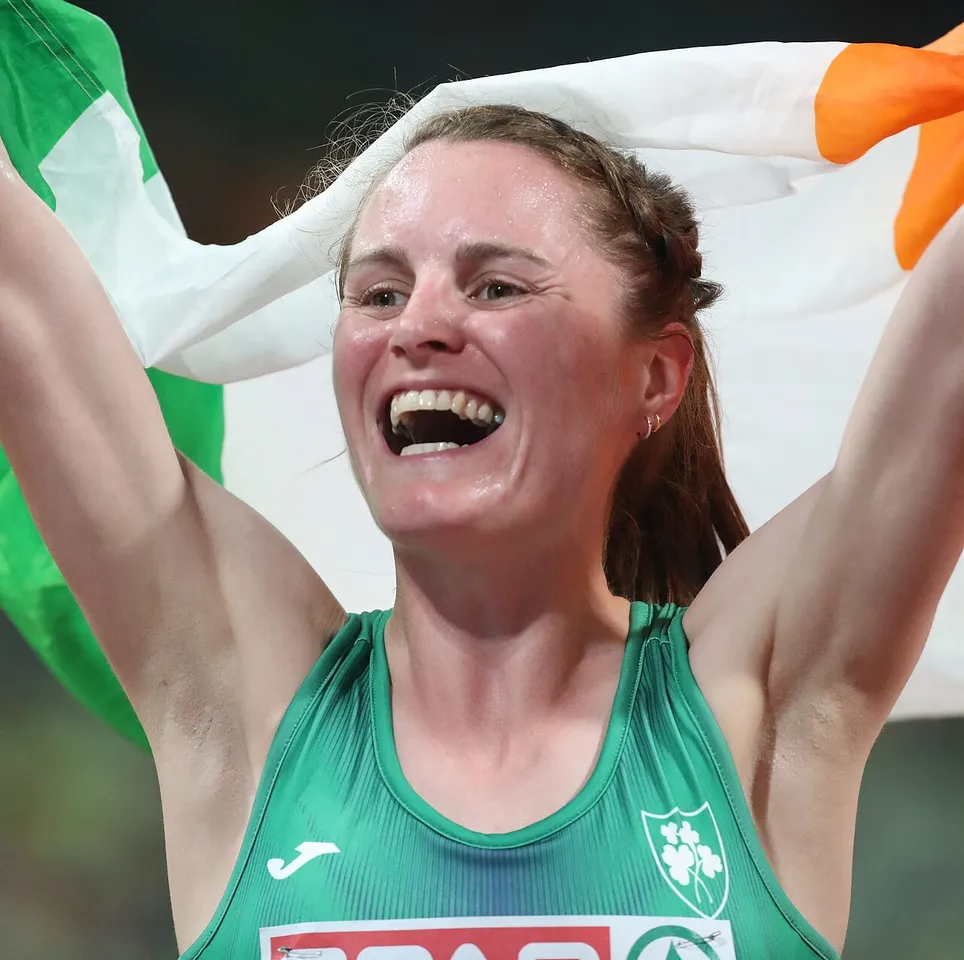
Historical 2022 championship photograph; not the Rome 2024 title race.
What does an average pace calculation establish?
Dividing total time by distance produces an average over that distance. For 244.66 seconds across 1.5 kilometres, the arithmetic gives approximately 163.11 seconds per kilometre, or 2:43.11. This is a calculated average, not an actual kilometre split reported from Mageean’s race.
That distinction is important. An athlete may change speed during a race, and an overall average does not reveal the pattern. Do not publish equal segment times as if they were measured splits. A calculation can be correct and still become misleading when its label claims something the source did not measure.
For an original exercise, invent three unequal segment times that add to a total. Compare their average with the individual values. Students can see that none of the segments has to equal the average. This teaches why a summary number is useful while also explaining what detail it leaves out.
Olympic selection and Olympic participation are different
Team Ireland’s biography states that Mageean competed in Rio and Tokyo. It also explains that she travelled to Paris 2024 but an Achilles injury prevented her from competing. A profile should preserve that distinction rather than converting every Games listed on an athlete page into a claim that she started a race there.
The same reading principle applies broadly: selection, entry, start and finish are different statuses. An entry list is not a result sheet. A person can be selected without competing, and can start without recording a finish. The correct label depends on the document, not on how impressive a summary sounds.
For a fictional database, make status an explicit field. Test selected, started, finished and withdrawn records. Ensure the interface does not display a finish time for an entry that has none. This is a respectful and accurate way to organise sporting history without turning missing data into a fabricated performance.
What can a race photograph show?
A photograph may identify an athlete, a location or a moment within a race. Its caption and provenance are essential. An image from an earlier championship should not be relabelled as the 2024 final, and a later article date does not change when the photograph was taken.
A podium image and a racing image also serve different purposes. One may show an award ceremony; the other shows an action moment. Neither supplies the complete result or the athlete’s private experience. Use the official record for times and places, and the image for the limited context it genuinely provides.
When writing alternative text, describe the visible subject concisely. Avoid loading it with search phrases or unsupported emotional claims. A caption can add the verified event and date. Clear visual labels allow the article to be accessible and informative without pretending that an image proves every surrounding sentence.
How can young readers learn from a sporting career?
Begin with curiosity and attainable learning tasks, not pressure to reproduce an elite athlete’s training. A student can learn to read a results sheet, understand units, describe a progression and appreciate the work of a sporting community. None of those activities requires copying a professional training programme.
An original classroom project might ask learners to choose one verified achievement, explain its event and write why it matters to them. Encourage different responses. One student may be interested in the mathematics of time, another in representing a country and another in the support offered to younger participants.
Avoid claiming that determination guarantees medals or prevents illness and injury. Sporting careers involve circumstances beyond a person’s control. A meaningful reflection can recognise commitment and achievement without turning a life into a simplistic formula for success or suggesting that anyone with a different outcome did not try hard enough.
Build a careful athletics record
Use separate fields for athlete, event, competition, date, placing, time and source. Keep a missing result distinct from zero. Add a note for selection or withdrawal when it is relevant. This structure makes corrections possible and prevents an attractive summary card from hiding uncertainty.
Learners can create a small time-conversion tool through our programming courses. Start with fictional examples, then test the documented Rome time. Check that the program displays 244.66 seconds and converts it back accurately. A rounding decision should be explicit rather than silently changing the underlying value.
Finish the project by writing a short source note. Identify which facts came from the official result, which came from the athlete profile and which calculations you performed yourself. This teaches a valuable habit: a good presentation makes the origin and meaning of its numbers understandable to the next reader.
Remembering achievement with accuracy
Mageean’s European title, Olympic appearances and earlier medals form a documented sporting legacy. The statements from Irish sporting bodies also recognise her influence on people beyond the results table. Those forms of remembrance can sit together without inventing personal anecdotes or treating private grief as material for speculation.
For readers encountering her name for the first time, the most useful starting points are the official announcement, the career profile and the championship result. Read them as different documents with different purposes. A tribute confirms the loss, a biography outlines a career and a results sheet records a particular competition.
Accurate remembrance is not cold or impersonal. It respects the athlete by getting the details right and respects the reader by showing where the information comes from. The educational activities here are offered separately as ways to understand the sport that Mageean represented with distinction, while acknowledging the sadness of the news.
Sources
- Athletics Ireland statement, 1 November 2026, confirming the announcement.
- Olympic Federation of Ireland tribute, for its institutional remembrance.
- Team Ireland athlete profile, for career details, personal best and Olympic participation distinctions.
- World Athletics: 2024 European women’s 1500 metres final, for the listed final times. All conversions, fictional records and classroom activities are original educational work, not additional measured race splits or medical guidance.
Image credits: cover: Bob Ramsak, source, CC BY-SA 4.0. Resized and converted to WebP. inline: Sandro Halank, Wikimedia Commons, source, CC BY-SA 4.0. Resized and converted to WebP.
Found an error or an outdated detail? Report a correction with the article URL and original source.