
CMK-100 Casio: The Titanium Automatic Watch Explained
Explore CMK-100 Casio with clear explanations, worked examples, source checks and practical questions for independent student learning.
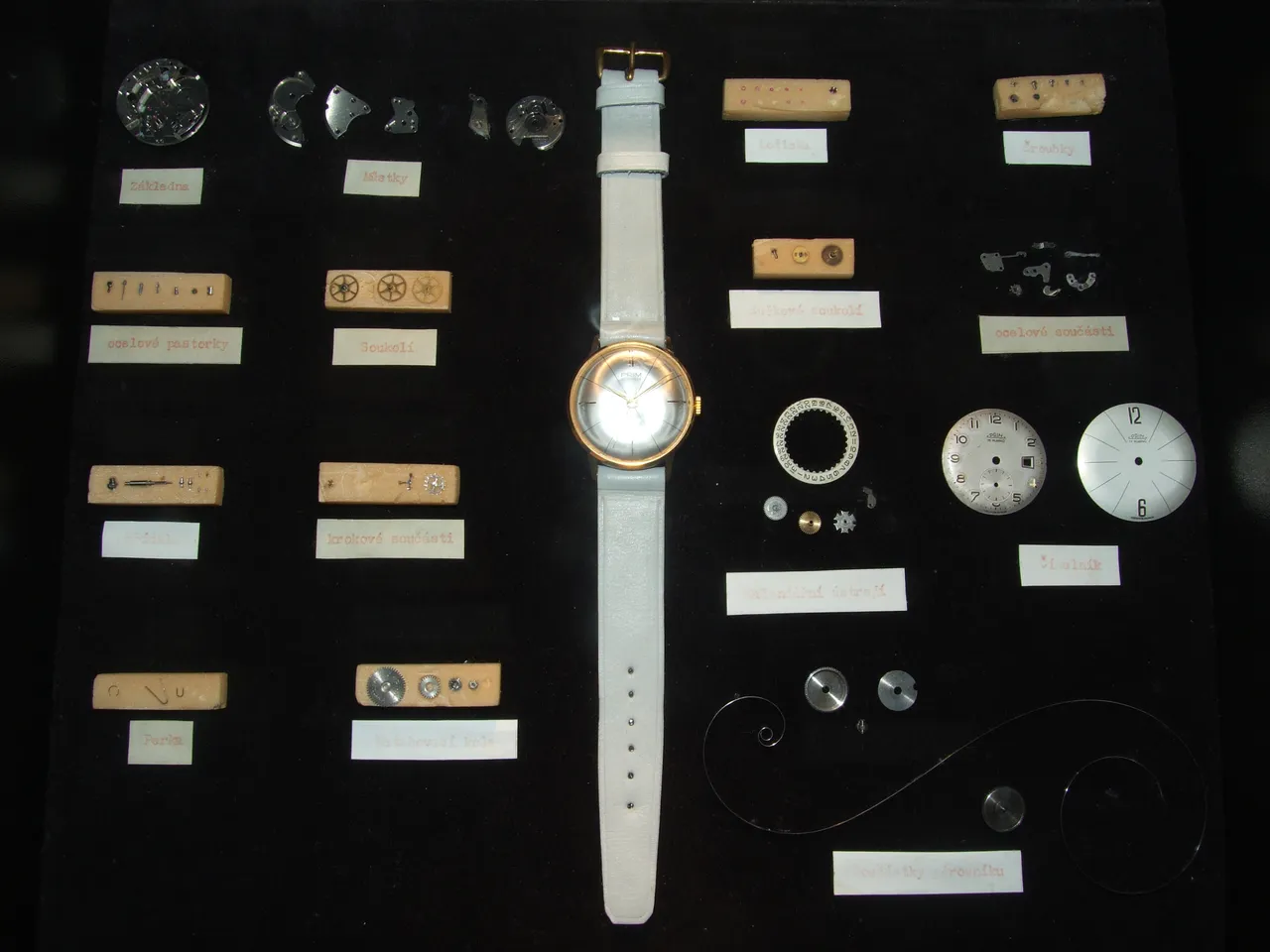
The Casio CMK-100 is an automatic mechanical watch series announced on 29 October 2026. Casio describes a titanium case, a readable three-hand dial and several band options. Its published specifications also include manual winding, a date display and approximately 42 hours of power reserve. Understanding those terms is more useful than treating every product number as an unexplained badge of quality.
This guide was checked on 2 November 2026 using Casio’s announcement, product information and US release. It is a specification-reading lesson, not a hands-on review. It does not promise current stock or a retail price in Pakistan, and contextual photographs are not labelled as pictures of the new model unless their records establish that identity.
What is the Casio CMK-100?
The CMK-100 is a field-watch-style automatic collection with five references in the announced lineup. Casio lists titanium, cloth or nylon, and leather band options across the series. The complete reference identifies a particular variant; the shorter family name does not establish every dial, finish and strap detail.
That distinction matters when comparing a product listing with a photograph. A family-level article may show several variants, while a retailer may sell only one. Check the full reference rather than assuming that every image and price attached to the series belongs to the exact model being discussed.
For a student exercise, create three fictional watch variants with a shared family name and different band materials. Ask which fields can be inherited from the family and which need their own values. This is a useful introduction to product data, especially when a short headline hides meaningful differences between variants.
What does automatic mechanical movement mean?
An automatic mechanical movement uses a mechanism that can wind through movement during wear. Casio’s specification also lists manual winding for this series. The term describes how energy reaches and is stored in the mechanism; it does not mean the watch has an unlimited power supply or that it never needs attention.
For a conceptual classroom analogy, imagine a small energy store replenished by an input mechanism. Energy enters, is stored and is gradually used to drive an output. This is only an analogy for understanding a system. It is not a repair diagram or an instruction to open or modify a watch.
When reading a product description, separate the movement type from other features such as a date display or water-resistance rating. They describe different aspects of the object. A clear specification table makes those categories visible instead of presenting a long list in which every term appears to mean the same kind of improvement.
What does a 42-hour power reserve mean?
Casio lists the power reserve as approximately 42 hours. That is a stated duration under the relevant specification conditions, not a promise that any partially wound example will continue for exactly that period. Preserve the word “approximately” and consult the manufacturer’s instructions for actual use.
As a mathematics exercise, 42 hours equals one day and eighteen hours. If a fictional fully prepared device began running at noon on Monday and lasted exactly 42 hours, its endpoint would be 6 a.m. Wednesday. The example teaches elapsed-time arithmetic; it is not a prediction for an individual watch on someone’s wrist.
Ask learners what information is missing if the starting energy level is unknown. A reserve figure alone cannot identify the remaining duration in that case. This is the same distinction between capacity and current state that appears in batteries, fuel tanks and many other everyday systems.
How should the stated daily rate be read?
The product page lists a mean daily rate of minus 20 to plus 40 seconds. The negative and positive signs indicate losing or gaining time relative to the reference used for comparison. Do not remove the signs or rewrite the range as a guarantee that every daily observation will be identical.
For an original calculation, suppose a fictional timekeeper gains ten seconds each day at a constant rate. Over seven days, the arithmetic gives seventy seconds. Real observations may not follow the simplified constant-rate model, so the calculation should be labelled as a demonstration rather than a forecast of this watch’s performance.
This is a good opportunity to discuss a range. A published range and a measured result from one example are different records. A review should explain its method if it reports actual timing behaviour. This article has not tested a physical CMK-100 and therefore does not invent a measured accuracy figure.
What is the seconds-hand hacking function?
Casio’s specifications identify a hacking function for the seconds hand. In watch terminology, this refers to stopping the seconds hand during an appropriate setting operation, allowing a reference time to be aligned more precisely. The exact operation should follow the manufacturer’s instructions for the model.
The learning point is the difference between a feature and its result in use. A setting feature can support a task, but it does not automatically establish long-term timing accuracy. Likewise, a watch that displays seconds is not necessarily displaying them with a special synchronisation function. Read the actual listed feature rather than inferring it from the dial alone.
For a fictional interface exercise, create a clock display with pause and resume controls. Explain what pausing changes and what it does not. The project can make the idea understandable without pretending that a software animation reproduces the internal mechanics of the product.
Why do dimensions need several labels?
Casio’s US product explanation gives a 38-millimetre case diameter and an 11.4-millimetre profile. Diameter and thickness measure different directions. A number labelled only “size” can be ambiguous, particularly when a listing mixes case dimensions with strap measurements or a photograph uses perspective.
Draw a simple top view and side view of an invented circular object. Mark the diameter on one and thickness on the other. Then convert millimetres to centimetres. The exercise shows why a precise label can communicate more than a large product photograph that lacks a scale reference.
Do not infer an individual fit from a dimension alone. People have different wrists and preferences, and photographs can make an object appear larger or smaller. This guide explains measurements rather than recommending a purchase. A useful comparison keeps the units, model and source consistent.

Casio headquarters provides brand context; this is not a product photograph of the CMK-100.
What does titanium tell you, and what does it not?
Casio describes a lightweight titanium case and surface treatments in the CMK-100 information. A material label identifies part of the construction, but it does not establish every component’s material, the weight of every variant or immunity to wear. The band option can also affect the complete object.
For a classroom analogy, compare two fictional objects with the same case material but different straps. Their total masses can differ even if the cases are identical. This helps learners understand why a family-level material description should not be treated as a complete variant-by-variant weight table.
Avoid turning a product adjective into an absolute guarantee. “Scratch-resistant” is not the same statement as “cannot be scratched.” A careful reader preserves the manufacturer’s wording and checks the relevant part, rather than broadening a feature into a claim about every possible condition.
How should sapphire crystal be interpreted?
The official product page lists sapphire crystal. The crystal is the transparent cover over the dial, not a claim that the whole watch is made of sapphire. Material names are useful when attached to the component they describe. Without that label, a short specification can sound more comprehensive than it is.
An original worksheet can ask learners to identify the case, dial, hands, crystal and band on a labelled schematic. Use a generic drawing and make clear that it is not an engineering plan for the CMK-100. The purpose is learning vocabulary so that a product description becomes easier to interpret.
If a comparison article mentions durability, ask whether it reports a material property, a manufacturer claim or a physical test. Those are different forms of evidence. This guide provides the first two kinds of context where sourced and does not fabricate laboratory results or long-term ownership experience.
Does 10-bar water resistance mean unlimited underwater use?
No. Casio lists 10-bar water resistance, also described on its product page as 100-metre water resistance. The rating should be read with the manufacturer’s usage and care instructions. It is not a simple permission to use the watch at any depth or operate controls underwater in any condition.
For an educational discussion, separate a test rating from a complete operating instruction. A number can summarise one specification while leaving conditions and limits in another document. The right response is to consult that document, not to extend the headline figure into an unrestricted promise.
This article does not prescribe diving use, servicing or water-exposure procedures. The practical lesson is to recognise when a product table is insufficient for a real-world action. Reading carefully includes knowing which information belongs in the official manual rather than guessing from a short marketing description.
What did the US announcement say about availability?
Casio America’s release said the series would be available in November through specified US channels and listed US prices varying by reference. Those are regional announcement details, not a verified Pakistan retail quote. Currency conversion alone would not establish local stock, import costs, warranty coverage or the final price a buyer would pay.
An original comparison worksheet can use fictional prices and exchange rates to practise arithmetic. Label it clearly and keep it separate from a product recommendation. A converted number is a calculation based on inputs, while a retail offer is a commercial record requiring its own current source.
Do not add an arbitrary “best price” or a countdown suggesting stock is running out. A useful educational guide can explain the release without manufacturing urgency. If a future article reports local availability, it should identify the seller, date and exact reference rather than silently changing this historical announcement into a live offer.
Build a variant-comparison table
Use separate fields for family, full reference, dial colour, band material, source and checked date. Keep specifications that genuinely apply to the family distinct from variant-specific values. An unknown value should remain unknown rather than inheriting the last model’s price or band by accident.
Learners can build a small example in our programming courses. Start with invented products, then test whether selecting a reference updates the correct fields. Add a note distinguishing announced information from measured testing. This is a meaningful design feature because it prevents a common misunderstanding.
Test an unavailable reference, a missing price and two variants sharing a dial colour. The interface should not treat colour alone as a unique identifier. A clear data model makes the comparison more reliable than a visually polished card that quietly mixes details from several products.
What should an image caption establish?
A photograph of a generic mechanical movement can illustrate the concept without showing the CMK-100’s actual mechanism. A historical Casio-related image can provide brand context without depicting the newly announced series. The caption needs to identify that limited role rather than relying on the reader to notice a different model name.
Do not label an older watch as the CMK-100 simply because both are analog or mechanical. The image record should establish the subject. A properly licensed contextual photograph with an honest caption is preferable to a wrong product image or an unlicensed promotional screenshot.
The central lesson is to read specifications as structured information: model, component, unit, condition and source. The CMK-100 announcement becomes more useful when those distinctions are explained. Readers can then approach the next product description with better questions instead of assuming that every technical phrase is a complete performance guarantee.
Sources
- Casio global announcement, 29 October 2026, for the collection and announced design features.
- Casio CMK-100 product information, for the listed dimensions, movement features and specifications checked for this guide.
- Casio America release, for the regional announcement context. All timing models, interfaces and fictional price exercises are original educational examples, not hands-on test results or purchase advice.
Image credits: cover: Kozuch, source, CC BY-SA 3.0. Resized and converted to WebP. inline: Akonnchiroll, source, CC BY-SA 4.0. Resized and converted to WebP.
Found an error or an outdated detail? Report a correction with the article URL and original source.