
Coal India Explained: Mining, Production, Dispatch, Stocks and Reports
Understand Coal India production, dispatch and stock figures, distinguish mass from energy and review company reports with clearly labelled examples.
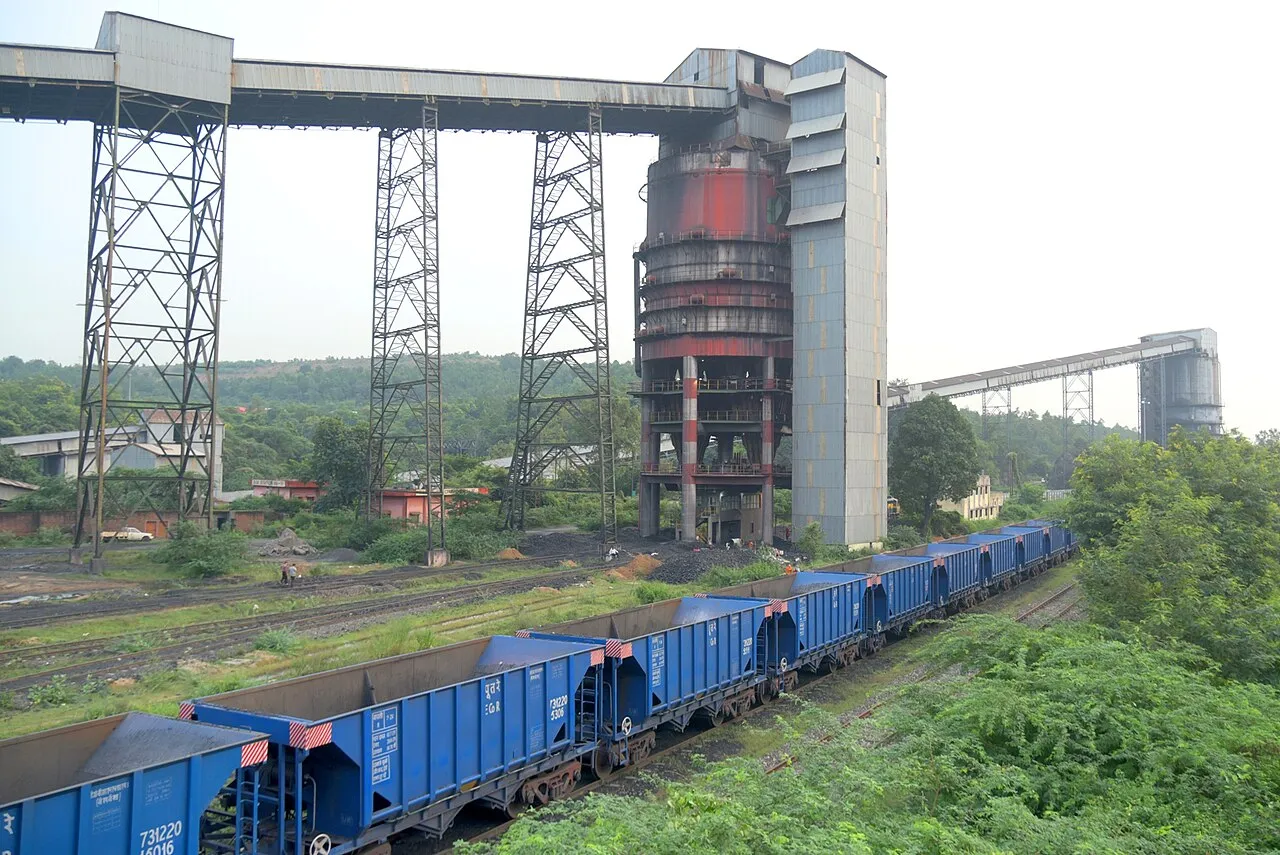
Coal India is an Indian coal-mining company group. Reading news about it requires distinguishing coal produced, coal dispatched, stock held and revenue earned. These measures are connected, but they do not represent the same event. A production record, a railway shipment and a share-price observation should therefore be explained separately rather than combined into one vague claim of growth.
This educational guide was reviewed on 6 November 2026. It uses official Indian coal-sector material, company reporting and original arithmetic exercises. It does not provide a live Coal India share price, a current production forecast or a recommendation to buy securities. All invented quantities below are teaching examples, not company operating results.
What does Coal India do?
Coal India operates in the coal-mining part of the energy and industrial supply chain. Its company reporting describes the group and its operations. A useful reading habit is to identify whether a figure concerns the group, a subsidiary, a mine or the wider Indian coal industry before interpreting it.
The boundaries matter because company output and national output are different totals. A national statistical report can include producers beyond one company group. A company's contribution should not be calculated using a numerator and denominator from different periods or incompatible definitions.
For a classroom diagram, draw mine, preparation, transport and customer as separate stages. Then attach each news claim to the stage it actually describes. This prevents a dispatch figure from being described as newly mined material or an industry-wide statistic from being presented as one company's performance.
How do surface and underground mining differ?
Surface and underground mining use different approaches to reaching deposits. The EIA's educational material distinguishes these broad methods and discusses coal preparation and transport. The choice of method involves the deposit and other conditions; a label alone cannot establish the performance or environmental outcome of a particular project.
Use a simple geological cross-section on paper. Place one fictional seam near the surface and another deeper below it. Ask which additional information would be needed to understand the operation. The diagram teaches the idea of access; it does not provide excavation instructions or reproduce a real mine plan.
Mining sites can be hazardous and subject to restricted access. Students should learn through approved educational material and public documentation, not by approaching equipment or entering facilities. A photograph is suitable context for a lesson without becoming an invitation to conduct an unauthorised field experiment.
What does a production figure measure?
A production figure records output under the reporting organisation's definition and period. It may concern a mine, subsidiary or group. Before comparing two numbers, identify the material, unit and scope. A headline that omits these fields can make an accurate number difficult to interpret responsibly.
For an invented example, a mine produces one hundred thousand tonnes in one month and one hundred and ten thousand in the next. The increase is ten thousand tonnes, or ten percent relative to the first month. The arithmetic does not explain why production changed or establish that the second month was operationally better in every respect.
Now ask whether the months contain the same number of days and whether the scope changed. Those questions can affect interpretation. A careful report separates the observed change from possible explanations and avoids assigning a cause without supporting evidence from the applicable operational information.
How is dispatch or offtake different from production?
Dispatch and offtake describe movement or supply under the source's definitions, while production concerns material produced. Output can enter stock before reaching customers, and deliveries can draw on material produced earlier. Therefore, shipments in a period do not have to equal production in that same period.
Imagine a fictional operation beginning with twenty units in stock, producing one hundred and dispatching one hundred and ten. Ignoring other adjustments, closing stock becomes ten. Dispatch exceeds current production because the operation used some opening stock. There is no arithmetic contradiction in the example.
The model is not an actual Coal India stock reconciliation. Real records can include adjustments and reporting details that must be read from the source. Its value is showing why production and dispatch should have separate rows rather than being treated as alternate names for one quantity.
How can stock changes be checked?
A simple inventory model starts with opening stock, adds relevant inflows and subtracts relevant outflows to obtain closing stock. Every term needs the same material boundary and compatible units. If the balance does not reconcile, investigate the definitions and adjustments before assuming a reporting error.
Use an invented worksheet with opening stock of fifty, production of two hundred and dispatch of one hundred and eighty. The simplified closing stock is seventy. Ask students to write the unit beside every value and state that no other stock movement or adjustment is included in the exercise.
Then add a fictional ten-unit correction and explain how it changes the reconciliation. This shows why a real stock table may contain more than three lines. A professional summary should preserve disclosed adjustments instead of forcing every dataset into an oversimplified equation that no longer matches its scope.
Why do tonnes and energy content need separate attention?
A tonne measures mass. The energy obtainable from a fuel depends on its characteristics and the relevant conversion process, not mass alone. Coal grades and quality information therefore matter when comparing supply records. Two shipments of equal mass need not be interchangeable for every industrial purpose.
For a classroom exercise, invent two materials with different stated energy content per unit mass. Multiply each by the same mass to obtain the model's energy quantities. The difference comes from the assumptions about energy content, not an error in weighing. Do not assign the invented values to actual Coal India products.
Read the source's unit and measurement basis before using quality information. A large energy number expressed per kilogram cannot be compared directly with another expressed per tonne. Correct unit conversion is necessary, but matching the underlying material and definition is equally important.
What roles do preparation and transport play?
Mining is not the only stage between a deposit and a customer. Coal may undergo preparation and then move through transport systems. EIA's overview describes several transport methods in general. Actual Indian company logistics should be understood through relevant company and official sector information rather than assuming another country's proportions apply.
In a fictional chain, a mine produces material faster than a transport link can move it. Stock can build even if production is strong. This illustrates a possible bottleneck, not a claim about a particular railway or Coal India facility. Identifying the stage is essential before diagnosing the cause of an observed delay.
Draw each stage with an invented capacity and follow one batch through the diagram. Ask whether improving a stage that is not currently limiting flow changes the final delivery rate. The exercise connects logistics with the broader idea that a system's performance cannot be understood from one component's maximum capacity alone.
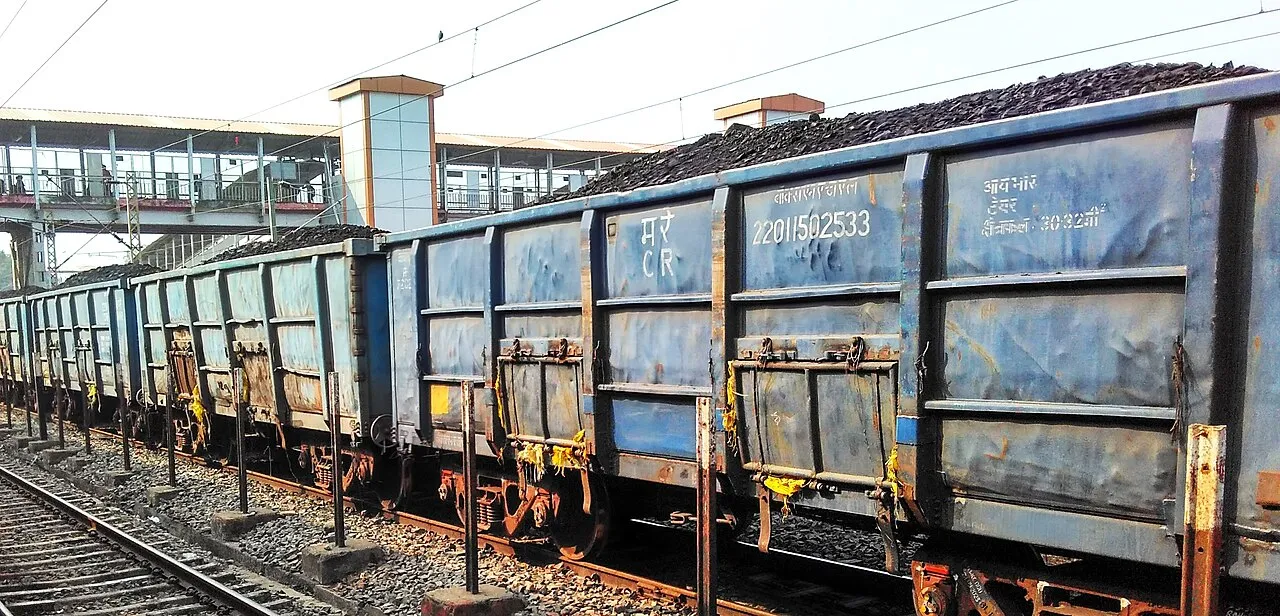
Coal transported in railway wagons in Bihar, shown as logistics context rather than a live Coal India dispatch report.
Can more coal automatically mean more electricity?
Coal supply and electricity generation are related in coal-fired systems, but the relationship is not a universal one-to-one conversion. Fuel quality, plant operation, conversion efficiency and other system conditions matter. Coal can also have uses outside electricity generation, depending on the product and customer.
An educational diagram can show fuel energy entering a process and electrical energy leaving it, with other energy pathways labelled separately. Do not present all input energy as useful electricity. A real calculation requires the relevant measurements and boundary, not a guessed conversion factor copied from an unrelated plant.
Our electricity lessons distinguish capacity from produced energy. That same discipline applies here: a quantity of fuel, a generator's rated power and the energy produced over a period answer different questions. Keep their units separate before attempting to connect them in an original classroom model.
Why can revenue differ from the direction of production?
Revenue depends on sales and their financial treatment, not production volume alone. Prices, product mix, quantities sold and reporting scope can matter. A company may produce material that remains in stock, so a production increase cannot automatically be rewritten as an equal percentage increase in sales revenue.
Use an invented example: one period sells one hundred units for ten each, giving one thousand currency units. Another sells one hundred and twenty for eight each, giving nine hundred and sixty. Sales volume rises while this simplified revenue falls. Neither period represents Coal India's actual accounts.
The model deliberately excludes costs, taxes and accounting complexities. Its purpose is to explain why a physical output headline is insufficient for a financial conclusion. Actual analysis needs the published statements, their notes and a comparison of equivalent periods and organisational boundaries.
How should targets and records be distinguished?
A target describes an intended outcome. An actual result describes what was recorded for a stated period under the source's definition. A provisional result may later be revised. These states should remain visible when a company or sector article summarises progress.
Create an invented annual target of one thousand units and a six-month result of four hundred. It is not enough to declare the target achieved, missed or certain to be met from those two numbers alone. The reporting question requires the remaining period and relevant operating context, not an unsupported straight-line prediction.
Similarly, the word record needs a defined comparison: record for one mine, a month, a year or the group? Preserve the scope of the original claim. Expanding a limited record into an all-time national statement makes the article less reliable even if the underlying number was copied correctly.
What should a Coal India share-price search check?
A live quotation needs the exchange, currency, timestamp and reference period. A delayed quote, previous close and intraday observation can describe different moments. This guide does not supply those live figures. Use a current appropriate market source and compare it with dated official disclosures rather than treating an educational example as a quote.
When a report links a price movement to a production announcement, distinguish the observed events from the writer's interpretation. Other market conditions may also be relevant. A plausible explanation is not automatically a demonstrated cause, and it does not predict what the price will do next.
Financial research should also separate revenue, profit and cash flow. A dividend announcement is another specific corporate event with its own terms and dates. Do not infer eligibility, future distributions or investment suitability from a general company overview. Consult the applicable current documents for the exact question.
How can environmental and operational claims be reviewed?
Ask what is being measured, over which boundary and period, and by whom. A statement about restoration work, water use or another environmental topic needs its own evidence. A large production figure does not establish environmental performance, while a photograph of greenery cannot verify a complete operational assessment.
Separate goals, implemented measures and measured outcomes in a research table. The distinction helps a reader understand whether a document describes an aspiration, an action or evidence of its result. It also avoids the opposite mistake of assuming that every initiative has failed simply because the article has not examined its data.
Use authorised public sources and do not seek restricted site access for a school exercise. A careful document review can develop useful analytical skills without exposing students to industrial hazards or presenting an incomplete classroom investigation as a regulatory finding.
A worked report-reading activity
Prepare a fictional table with two subsidiaries, each having opening stock, production and dispatch for one month. Calculate closing stock separately, then sum compatible group quantities. Do not add a subsidiary's total to the already consolidated group total, because that would count the same activity twice.
Next, write one paragraph about production and another about dispatch. Keep interpretations separate from calculations. If dispatch exceeds production in one row, refer back to opening stock before claiming that the table is impossible. If a value remains unexplained, identify the missing information rather than inventing an adjustment.
Students can practise through study resources and build a fictional inventory calculator in our programming courses. The calculator should reject missing units and inconsistent periods. A good learning tool explains why a result is incomplete, instead of producing a misleadingly precise total from incompatible inputs.
Questions readers commonly ask
Is national coal output the same as Coal India output? No. The producer boundary and period need to match. Use the Ministry of Coal's statistical definitions and the company's reporting scope before calculating a contribution or comparing growth.
Does this article provide today's share price? No. It explains the business and measurements behind relevant news. Current prices need current market information. A historical photograph of a mine or train also does not establish today's production or dispatch volume.
What is the most useful beginner habit? Write the quantity, unit, period, scope and source together. This short habit prevents many mistakes across mining, electricity, company results and examination statistics. Only after those fields match should a comparison or percentage calculation be made.
Sources
- Ministry of Coal: official publications and sector information
- Coal India: official company website
- EIA: coal mining and transportation
- Ministry of Coal: company-wise production statistics
Image credits: cover: Rosehubwiki, Kuber Patel, source, CC BY-SA 4.0. Resized and converted to WebP. inline: Salil Kumar Mukherjee, source, CC BY-SA 4.0. Resized and converted to WebP.
Found an error or an outdated detail? Report a correction with the article URL and original source.