
Dortmund 2-1 Betis: Silva, Ruibal and Karetsas’s Response
Follow Dortmund’s 2-1 win over Betis, Silva’s opener, Ruibal’s equaliser and Karetsas’s winner, with disallowed-goal and senior-versus-youth checks.
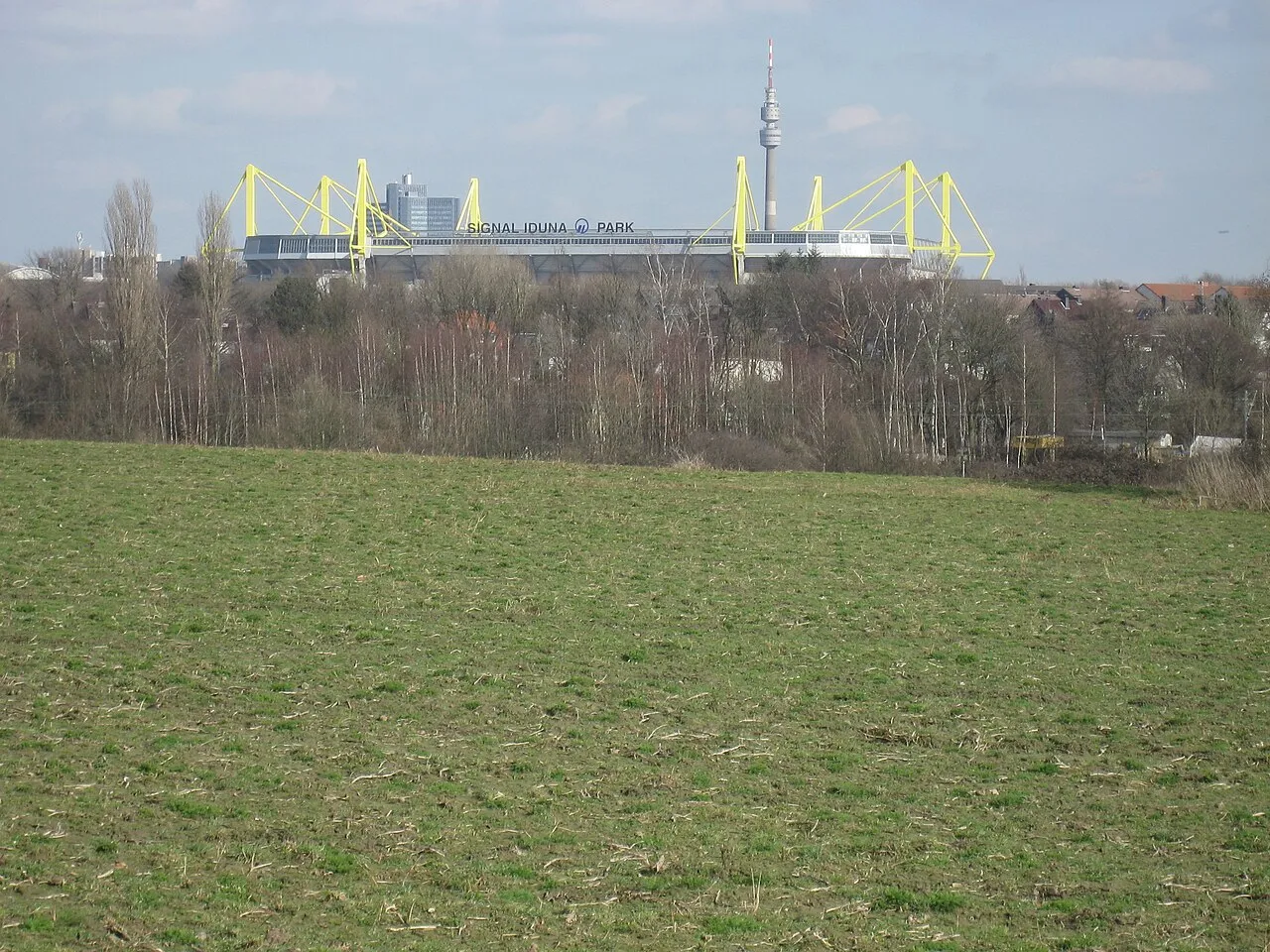
Borussia Dortmund beat Real Betis 2-1 in the Champions League on 4 November 2026. Fabio Silva opened the scoring after a goalless first half, Aitor Ruibal equalised, and Konstantinos Karetsas restored Dortmund's lead. The hosts held that advantage to full time at Signal Iduna Park.
The match offers several useful lessons for reading football: a disallowed effort is not an awarded goal, a substitute can influence the score, and a quick response after an equaliser can decide an otherwise close contest. This guide follows the verified sequence and separates those facts from tactical claims that require fuller evidence.
What was Dortmund versus Betis's final score?
Dortmund won 2-1. The league publisher's report records Silva scoring in the 49th minute, Ruibal equalising in the 67th and Karetsas scoring in the 72nd. The half-time score was 0-0. All three awarded goals therefore came after the interval.
The completed senior fixture belongs to the Champions League league phase. Dortmund's youth side also had a fixture against Betis's youth team around the same date, so a search result containing both club names is not sufficient by itself. Check the competition and age category before using a score or a player's name.
Information here was checked on 5 November. This article explains the finished match rather than operating as a live feed. A pre-match countdown or a stale 0-0 display on another page should not override the completed report and its confirmed scoring sequence.
The three awarded goals
| Minute | Scorer | Score after the goal |
|---|---|---|
| 49 | Fabio Silva | Dortmund 1-0 Betis |
| 67 | Aitor Ruibal | Dortmund 1-1 Betis |
| 72 | Konstantinos Karetsas | Dortmund 2-1 Betis |
Silva created the first scoring advantage. Ruibal removed it. Karetsas then created a fresh Dortmund lead, which became the winning one. Calling Ruibal's goal an equaliser and Karetsas's goal the winner accurately describes their different effects on the score.
The difference between the published minute labels for the last two goals is five. That identifies a short response period, but it is not an exact second-by-second timing measurement. Event lists normally round or label goals by minute, so avoid pretending that they contain greater precision than they actually provide.
A goalless first half still had a story
The 0-0 interval score means no awarded goals were recorded in the first half. It does not mean there were no chances, saves or important decisions. A report can describe an active half without contradicting a goalless scoreboard, because a shot and a goal are different events.
The league report describes early opportunities and a Betis effort ruled out for offside. Those incidents explain why a brief score notification can leave out much of the match. To understand the opening period, you need the event context as well as the interval total.
When watching a chance that does not become a goal, identify the outcome accurately: wide, saved, blocked or disallowed. These categories should not be collapsed into one phrase suggesting the team scored. A correct report makes clear which actions changed the score and which did not.
Why a disallowed effort does not count
The report describes an Antony effort that did not stand because of an offside position involving Troy Parrott. The important scoring fact is that the goal was not awarded. It therefore cannot be included in Betis's total, even if the ball entered the net and players initially celebrated.
For an offside explanation, the relevant moment and involvement matter. A player's position in an arbitrary freeze-frame is not enough to decide every offside question. Consult the current Laws of the Game and the actual incident rather than assuming that any attacker beyond a defender is automatically committing an offence.
Do not infer a specific VAR process unless the match record supports it. A decision can be discussed as offside without inventing how long a check took, which official made a particular communication or what a private conversation contained. The public event and an imagined officiating narrative are different things.
Silva broke the deadlock after the interval
Silva's 49th-minute goal made it 1-0. Because the first half had ended level, this was the match's first awarded scoring advantage. A goal soon after the restart can change the practical task facing the visitors without telling us that everything before it was under the hosts' control.
To study a restart phase, look at how both teams re-establish their positions and where the first sustained attacks develop. Compare the movements before the goal with earlier patterns, but do not assume that a half-time instruction is known simply because a goal followed soon afterwards.
Silva's contribution should be described through actions that can be verified. A goal is a concrete event. A complete player assessment would also consider movement, linking play and work without the ball. The scoreboard supplies an important part of that assessment, not the entire performance record.
Ruibal's equaliser changed Betis's position
Ruibal scored in the 67th minute after entering as a substitute, with Abde Ezzalzouli providing the assist in the published account. The goal made it 1-1. Betis were level again rather than ahead, an important distinction for understanding the response that followed.
A substitute's goal demonstrates an effect on the result while avoiding the need to claim that the coach could guarantee the outcome. A change can create different options, but many factors determine whether those options lead to a goal. Recognise the contribution without turning a successful action into proof that every alternative would have failed.
For a viewer, inspect how the chance reached the scorer. Which space was available? When did the pass arrive? How did the receiver position the body for the finish? These observations help explain the action while keeping the analysis grounded in something visible rather than a general claim about desire.
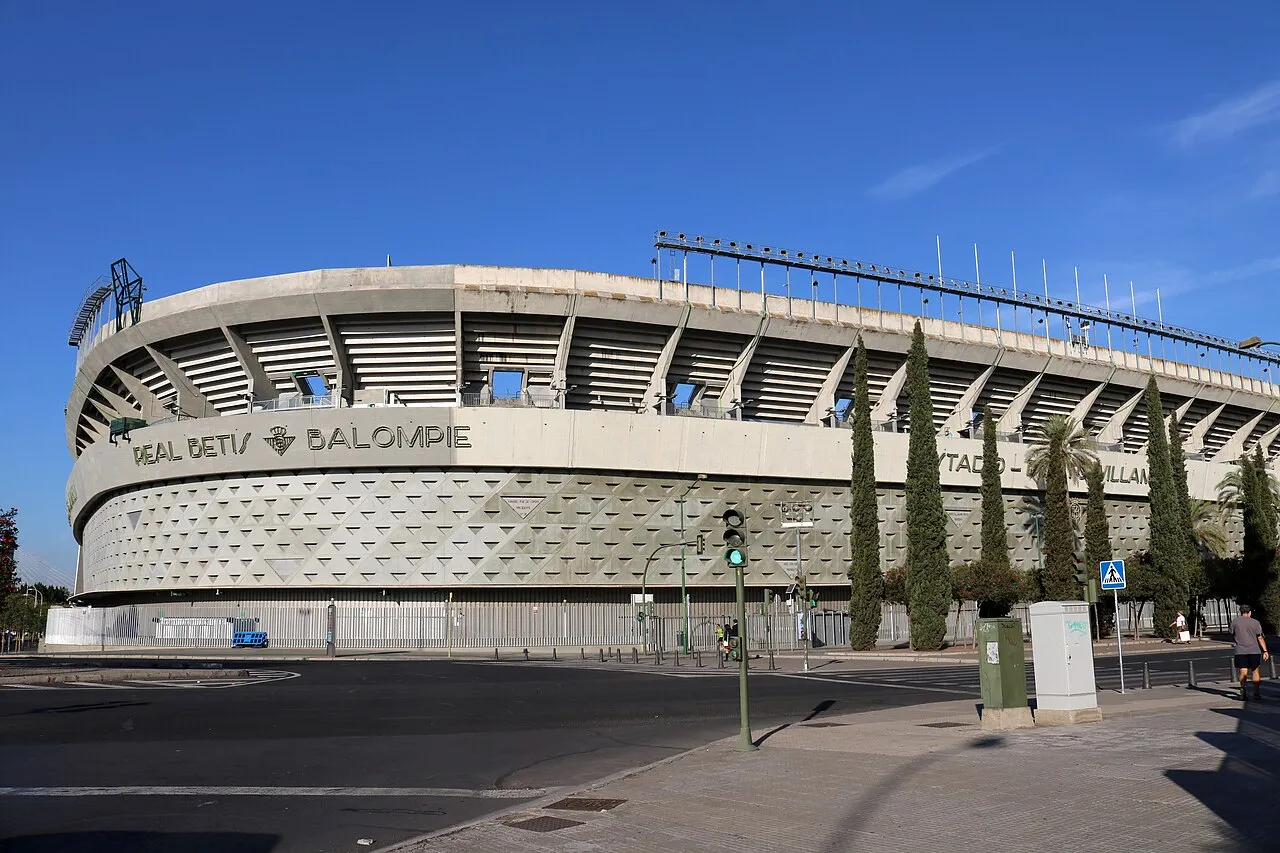
Betis’s Benito Villamarin stadium in a 2013 photograph, shown as historical club context.
Karetsas supplied the deciding response
Karetsas scored in the 72nd minute, restoring Dortmund's lead five recorded minutes after the equaliser. That response is central to the match: Betis's return to level terms was real, but it did not remain the final scoring state.
The final 2-1 score means Betis did not find another awarded equaliser. It does not mean they stopped trying or that no further action mattered. Late defending, possession and attacking decisions can all contribute to preserving or threatening a lead even when they do not add another goal.
When reviewing a winner, consider its place in the sequence. Karetsas did not merely add a third goal to a comfortable advantage. He moved the match from a draw back to a Dortmund lead. That role is more informative than describing the goal only by its minute or by a celebratory image.
A restored lead is different from a comeback from behind
Dortmund led, conceded an equaliser and led again. In the awarded scoring sequence, they were never behind. It is therefore more precise to say that they restored their lead than to describe a comeback from a losing position.
Betis, meanwhile, recovered from a one-goal deficit to draw level. That recovery did not become a victory. A match can contain a successful response by the eventual losing side without changing the final outcome. Good summaries leave room for those separate stages.
Try writing the sequence as three labels: home lead, draw, home lead. No away lead appears. This simple check can expose an exaggerated headline that uses a familiar dramatic phrase without matching the actual score states.
What the result contributes to the league phase
Dortmund earn three points from this fixture. Betis receive none. The match contributes two goals scored and one conceded to Dortmund's European record, a goal-difference change of plus one. Betis's contribution is the reverse: one scored, two conceded and minus one.
An overall competition rank requires the complete table, not only this match. Other clubs' results and the number of fixtures completed can affect the order. Use the official standings and an appropriate timestamp before claiming that a club has entered or left a particular qualification position.
The result is also separate from Dortmund's Bundesliga table and Betis's domestic-league table. A European win does not add domestic points. Compare like with like when reading form, goals or points; otherwise records from different competitions can appear to disagree even when each is accurate.
Keep the senior and youth fixtures apart
Dortmund's official youth announcement identifies a U19 meeting with Betis in the Youth League on 4 November. That is useful evidence of why readers can encounter more than one result involving these clubs around the same date.
Check the venue, competition label, team category and player list before using a record. A youth player scoring against Betis does not become a senior Champions League scorer because a search result shortened the club names. The events belong to different teams and different competitions.
The same caution applies to videos and photographs. A clip can show the correct badges while covering the wrong age group. Stadium photographs here are contextual images, not claims that the image was taken during this senior game. Accurate captions help keep visual familiarity from becoming mistaken evidence.
What to look for in a highlights review
Start with the opening opportunities and the disallowed effort, then follow the three awarded goals in order. This gives a more complete picture than watching only the winner. The first-half incidents explain how a goalless interval can still follow an eventful period.
Next, watch the equaliser and the response together. Do not isolate the winning goal from the few minutes preceding it. Look at possession, player positions and the next attacking opportunity, while avoiding an unsupported claim that a psychological change can be directly measured from the video.
Finally, check the full-time marker and the score. Short clips can end after a dramatic moment without showing the remaining play. Use the completed record to establish the result, and use footage to understand particular actions rather than asking an edited montage to serve as the entire match log.
A practical learning task
Write a four-sentence report. The first sentence gives the winner, score and competition. The second explains the goalless interval. The third names the opener and equaliser. The fourth explains how Karetsas restored the lead. If all four sentences agree with the event table, the core report is internally consistent.
Now add one sentence about the disallowed effort without counting it as a goal. This tests whether you can distinguish an apparent scoring action from an awarded goal. The skill is useful whenever commentary, celebrations and the official decision do not all happen at the same instant.
For further practice, compare our Bayern versus Dortmund Klassiker guide with this match. Keep the competitions and scoring sequences separate. Sharing one club does not make the two games interchangeable evidence of the same performance.
Questions readers are asking
Who scored the winning goal?
Konstantinos Karetsas scored in the 72nd minute to make it 2-1. Dortmund held that advantage to full time. Silva had scored the opener, while Ruibal's goal temporarily restored equality for Betis.
Were Dortmund behind before they won?
Not in the awarded scoring sequence. They led 1-0, were pegged back to 1-1 and then led 2-1. Restoring a lead describes that sequence more accurately than claiming a recovery from a losing position.
Did Antony's effort count?
No. The report records it as disallowed for offside involvement. It is part of the match's incident history but not part of Betis's awarded goal total. The final senior score remained Dortmund two, Betis one.
Does the U19 result belong in this report?
No. The Youth League fixture is separate. Use its own competition, players and venue when discussing it. This page covers the senior Champions League meeting at Signal Iduna Park, even though both fixtures involved the same clubs.
A quick accuracy check is to count only the awarded goals in chronological order. If your total includes the disallowed effort, return to the event record and correct it before sharing.
Sources
- League publisher's senior match report
- Dated senior match centre
- Dortmund official U19 fixture announcement
- Current Laws of the Game
Image credits: cover: user:Mbdortmund, source, CC BY 3.0. Resized and converted to WebP. inline: Maesi64, source, CC0. Resized and converted to WebP.
Found an error or an outdated detail? Report a correction with the article URL and original source.