
Elche vs Valencia: 0-1 Result, Corners and Match Reading
Explore Elche vs Valencia with clear explanations, worked examples, source checks and practical questions for independent student learning.
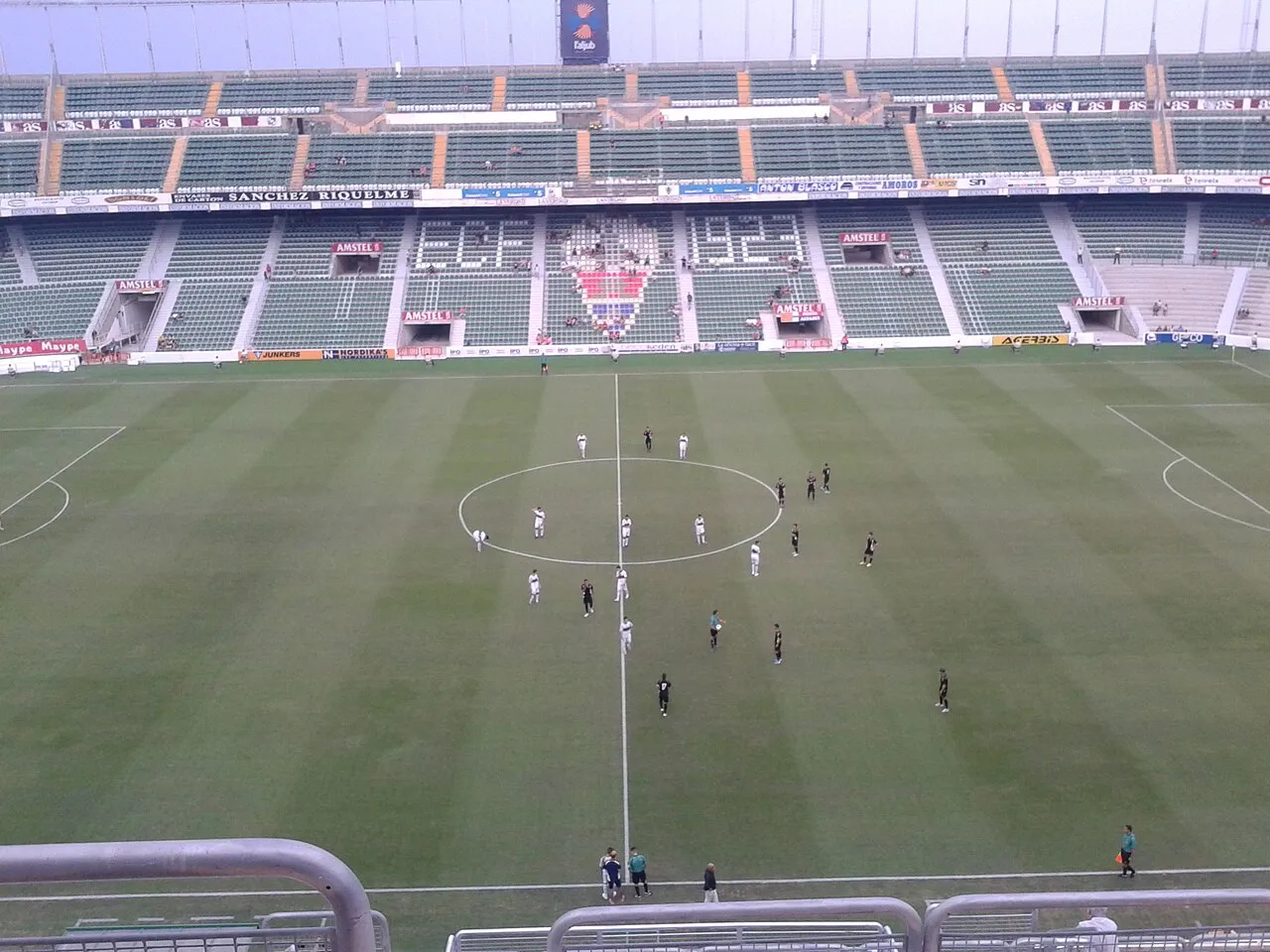
Valencia beat Elche 1–0 away from home on 1 November 2026 in LaLiga. The clubs' official records identify the result, with Valencia's reporting naming Umar Sadiq as the scorer. Written in home-away order, the match is Elche 0, Valencia 1. That is a one-goal away victory, not a home win or a draw.
This guide was checked on 2 November 2026. It explains how to read the score, distinguish chances from goals and interpret a few limited match quantities. It does not offer betting advice, an invented tactical reconstruction or a live commentary service. Additional examples are original fictional exercises rather than events attributed to this fixture.
Why does the order of the team names matter?
Football scorecards commonly put the home team first. Elche 0–1 Valencia therefore gives Elche zero and Valencia one. Reversing the names without reversing the numbers would change the apparent winner. A clear card should label each team visibly rather than requiring the reader to infer the order from a badge or colour.
The same result can be expressed as “Valencia won 1–0 at Elche,” because that sentence explicitly identifies the winner and location. The two forms are compatible. Trouble begins when a sentence changes perspective but leaves an unlabeled score beside it, making readers unsure whose number comes first.
For an original interface exercise, write both forms and ask another person to identify the home side, away side and winner. If the answers differ, improve the labels. This is an information-design problem, not a reason to add more decorative icons around an already ambiguous number.
What does the official result establish?
The verified final score establishes that Valencia scored once and Elche did not score in the completed match record. Valencia's club news identifies Sadiq as the scorer. These are narrow, useful facts. They do not, on their own, explain every chance, defensive action or coaching decision throughout the fixture.
The match belongs to the 2026/27 league season and the meeting on 1 November. Other Elche–Valencia games can appear in the same search results. Retaining date and competition prevents an older result, preview or reverse fixture from being mistaken for this one.
This guide deliberately avoids an unverified expected-goals total or a complete lineup copied from a different match. A result article is stronger when it states the confirmed record clearly and explains its limits than when it fills gaps with plausible-looking but unchecked details.
What is a clean sheet?
A clean sheet means that the team did not concede a goal in the relevant match or recorded appearance context. Valencia's team result here contains zero goals conceded. A team clean sheet does not automatically settle every individual goalkeeper statistic if substitutions or different record conventions require additional information.
For an original example, a fictional side wins 2–0. It has a team clean sheet and a two-goal margin. A 2–1 win has the same winning team and the same number of goals scored, but no clean sheet. The additional conceded goal changes one description even though the three-point outcome remains a win.
Do not describe a clean sheet as proof that no danger existed. Opponents may have had attempts, and defenders may have made important interventions. The result says no goal was conceded; a fuller performance explanation needs evidence of what happened before the final whistle.
How do corners differ from goals?
A corner is a restart opportunity, not a goal or a fixed fraction of a goal. Elche's official match page lists six corners for Elche and two for Valencia. Those counts show the recorded corner distribution. They do not change the final 0–1 score or prove that the side with more corners should have been awarded the win.
The recorded total is eight corners, with Elche taking six of them. Six divided by eight is seventy-five percent of the listed corners. Label that percentage precisely. It is not possession, share of all attacks, probability of winning or a measure of which team deserved the result.
This is a useful example of why a correct calculation can still be misused. The numerator and denominator support a corner-share statement. They do not support an unrelated conclusion about total dominance. Keep the calculation attached to the event category from which it was derived.
Can more opportunities coexist with a defeat?
Yes. Football results depend on goals, while attempts, corners and other recorded events describe different parts of play. A team can record more of one opportunity type and still score fewer goals. That does not make the event count false or the result contradictory; the measures simply answer different questions.
Imagine an original fictional match with seven corners for one team and one for the other, ending 0–1. The corner count does not explain the quality of each delivery or the later shot. To assess that, a viewer needs the actual sequence and an appropriate definition of chance quality.
Avoid writing “more corners means better finishing.” Corners are not a denominator for a general shot-conversion rate. A chance may arise from open play, a free kick or another situation. Good analysis names the specific event being counted rather than converting every available statistic into the same broad conclusion.
What is shot conversion, and what data is missing?
A simple shot-conversion rate divides goals by shots within a clearly defined sample. The definition of a shot and the provider's categories matter. A final score supplies goals but not necessarily the relevant attempt count. Without both inputs, a precise conversion percentage cannot be calculated from the result alone.
For an original example, a fictional side scores once from ten recorded shots, giving ten percent under that definition. Another scores once from five, giving twenty percent. Both have one goal, but the rates differ. The result still does not tell us whether the shots were equally difficult.
This article does not invent Elche's or Valencia's shot total to complete such a formula. The missing value is a reason to stop that calculation, not an invitation to guess. A reader should be able to distinguish a worked teaching example from a measured statistic about the actual fixture.
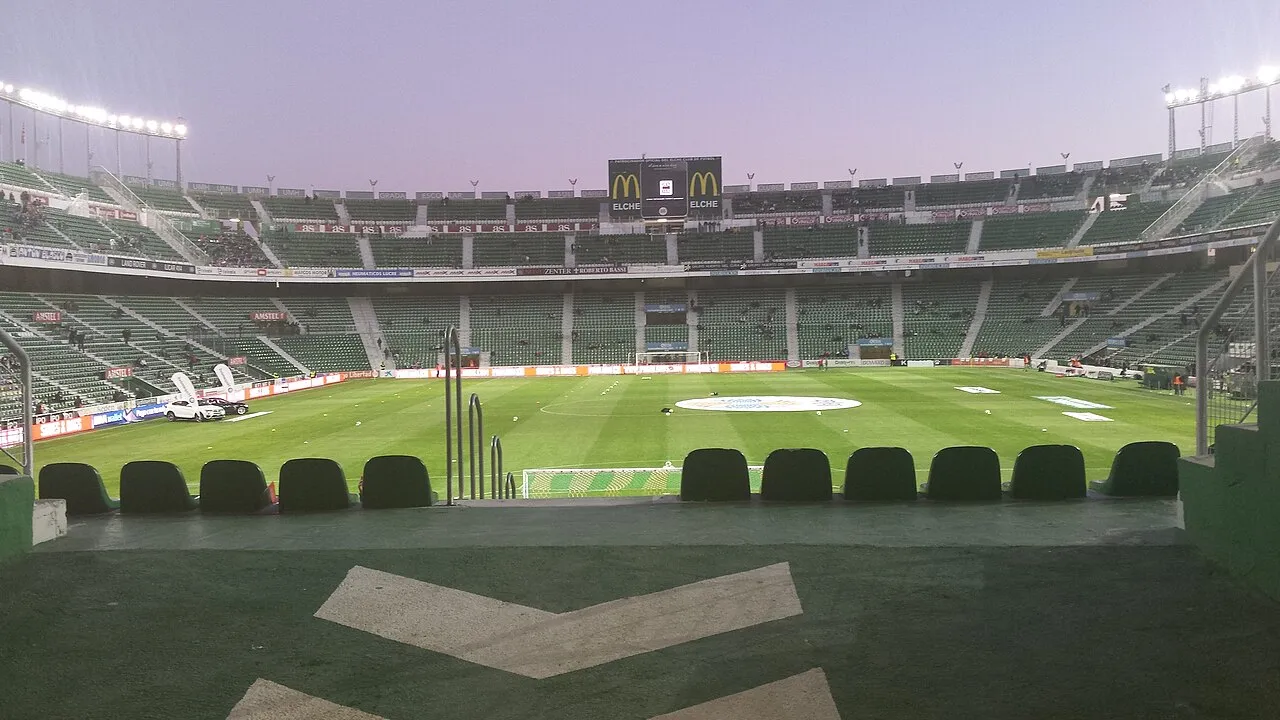
Historical stadium context, not a live photograph or evidence of a specific goal.
Why does a single goal change the score state?
Before the first confirmed goal, a match is level at 0–0. A goal for the away side changes the state to a home deficit and away lead. The tactical implications may be significant, but the exact response depends on the teams and situation. The score change itself is certain; a particular tactical explanation needs separate evidence.
For an original classroom timeline, imagine a goal after an hour of play. Mark the change from level to trailing or leading, then leave later events blank until they are supplied. Do not draw a smooth rise in pressure as though it were measured. A score-state chart tracks goals, not every emotional or territorial change in the match.
When the final record remains 0–1, no later valid goal changed the total. That does not mean no later event mattered. A save, missed chance or defensive clearance may have been important, but this guide does not invent those incidents to make the closing period sound dramatic.
How should a goalkeeper's contribution be discussed?
Use the verified match evidence. A clean sheet can be part of the discussion, while claims about saves, distribution or positioning need observations or properly defined statistics. Do not award an imaginary save count because the team conceded no goals. A goalkeeper can have very different workloads in different clean sheets.
In an original comparison, one fictional goalkeeper faces no shots on target and another faces five, with neither conceding. Both team results contain a clean sheet, but the recorded workload differs. Add the relevant information before trying to compare their performances.
Similarly, a conceded goal does not by itself establish a goalkeeper error. The full move and the available options matter. Precise writing describes the evidence before assigning blame, and it avoids treating a final score as a complete account of an individual player's choices.
What does an away victory mean for a league table?
Under the standard league system, a win earns three points regardless of whether it occurs at home or away. Venue can be useful context, but it does not create an extra automatic point. A team's table position also depends on its other results and the competition's applicable ranking rules.
For this individual result, Valencia's goal-difference contribution is plus one and Elche's is minus one. That is a match contribution, not a complete season figure. Do not publish a current league rank by combining this match with an old table or assuming that no other fixture has changed the standings.
Use an original exercise with two imaginary teams tied on points. Give them different goals for and against and ask what further rules would be needed to rank them. The exercise demonstrates why a league table needs its organiser's actual criteria rather than a ranking method invented from familiar examples.
How can students compare two match reports?
Start with shared identifiers: teams, date, competition and final score. Then separate facts from perspective. The winning club may emphasise the decisive goal and resilience, while the losing club may emphasise missed opportunities. Different emphasis can coexist with agreement on the underlying record.
For an original exercise, write two short summaries of a fictional 0–1 match from opposite perspectives. Underline every factual statement and circle every judgement. Ask whether a judgement has an example behind it. This teaches critical reading without requiring students to treat a club's voice as either perfectly neutral or automatically untrustworthy.
If the accounts disagree about a numerical field, return to the official match record and check whether one page is a preview, a live update or a completed report. A difference in publication stage may explain why one snapshot is no longer suitable as the final result.
A practical result-card challenge
Build a fictional result card with home name, away name, scores, date and status. Test a home win, an away win and a draw. Then test a scheduled fixture with missing scores. The component should not turn missing values into a false 0–0 draw or display the away winner beside the home team's name.
Add an optional corners row only when those values are available. A missing corner count should not prevent the verified final score from being shown, and a large corner count should not determine the winner. Different fields have different roles in the model.
Finally, ask another learner to explain the card without looking at its code. If the result, venue relationship and status are clear, the design is doing its job. Good presentation is not merely a collection of numbers; it makes the meaning of each number easy to identify.
What should you remember?
The verified outcome is Elche 0–1 Valencia on 1 November 2026. Valencia's scorer was Sadiq, and the away side kept a team clean sheet. The recorded corner counts illustrate why opportunity statistics and the final result must remain distinct. Neither a photograph nor a single measure can replace the full match record.
Continue with our football and statistics guides to practise reading scores, rates and source snapshots. Preserve date, category and unit, calculate only from available inputs and explain interpretation as interpretation. That produces a clearer match guide than an elaborate story built from unverified details.
A final reading exercise is to remove the decorative badges and colours from a result card. The text alone should still identify the away winner, the final status and the meaning of each statistic. If the information becomes ambiguous without the artwork, improve the labels before adding visual decoration. Accessibility and accuracy often benefit from the same clear wording.
Sources
- Elche: official match record, for the result and listed corner counts.
- Valencia: official match report, for the dated away win.
- Valencia: club news, for the 1 November scorer listing. All other matches, rates and interface cases are original fictional teaching examples.
Image credits: cover: Victormartinezm, source, CC BY-SA 3.0. Resized and converted to WebP. inline: Victormartinezm, source, CC BY-SA 4.0. Resized and converted to WebP.
Found an error or an outdated detail? Report a correction with the article URL and original source.