
The Elder Scrolls VI: Official Updates, Teasers and Game Development Explained
Understand The Elder Scrolls VI announcement history. Learn to check official updates, distinguish teasers from gameplay and explore development concepts.
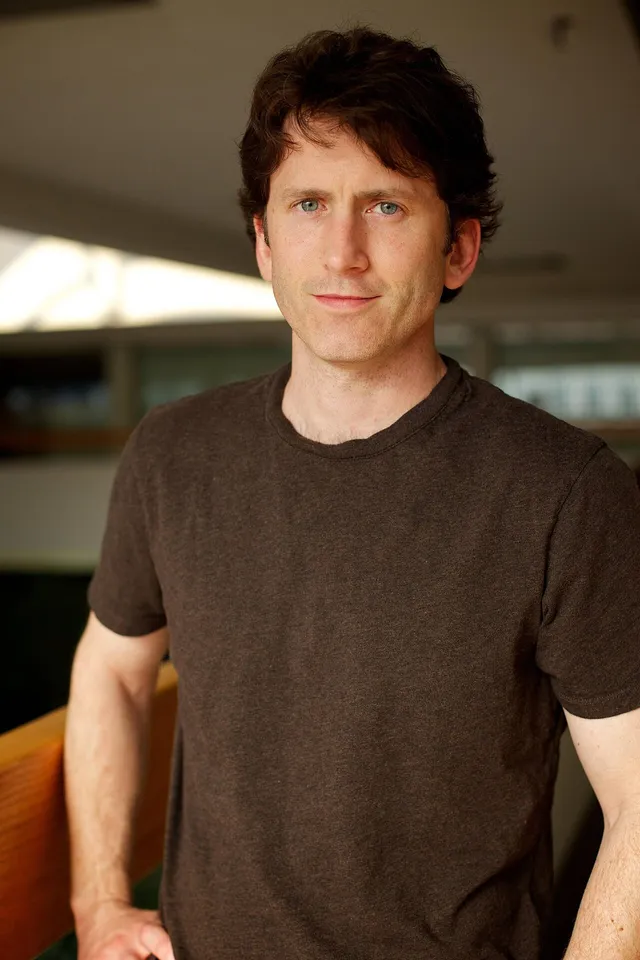
The Elder Scrolls VI attracts attention because players want to know what the next major chapter will contain and when they can play it. Those are reasonable questions, but a teaser, a development statement and a release announcement provide different kinds of evidence. Reading them as if they were interchangeable creates much of the confusion around a long-running game project.
This guide follows Bethesda's documented announcement history and explains how to assess later updates without inventing dates, specifications or playable features. It also turns the subject into a practical introduction to game development. Historical publisher and event photographs are context, not screenshots of an unreleased build or evidence that a particular feature has been completed.
What does the original Elder Scrolls VI announcement establish?
Bethesda's page dated 10 June 2018 records the reveal at its E3 showcase and describes The Elder Scrolls VI as a future project. That establishes a public announcement at that time. It does not by itself establish every later production stage, a complete feature list or the final requirements of a shipping version. The date belongs beside the claim.
An announcement is not a release
A developer can confirm that a project exists before it is ready for players. A reveal may communicate direction or reassure an audience without offering a launch date. The correct summary should preserve what was actually announced. Treating the first teaser as a promise of an immediate release adds a claim that the original record may never have made.
A later note answers a later question
Bethesda has also published a studio note identifying the project as a development focus. Such a statement provides context about work at the time of that note. It should not be combined with the 2018 wording as though both described one unchanged production moment. A useful timeline gives each update its own date and scope rather than flattening years into a single status label.
How should readers check a new claim?
Start with the original publisher or studio statement where available. Identify the exact claim: title, setting, date, platform, feature or production status. Then ask whether the source explicitly confirms it. A genuine official page can still be misused if a headline adds details the page does not contain. Source identity and claim support both matter.
A rumour and a confirmation need different labels
A claim repeated by many accounts can remain unconfirmed if they all rely on the same uncertain origin. Repetition is not independent evidence. A confirmed statement should be traceable to the relevant official record or other appropriate direct evidence. If that link is missing, do not turn the claim into a fact simply because it fits what fans hope to see.
Check the whole date, not only the upload date
An old interview can be uploaded again, clipped or discussed in a new article. The new upload does not make the underlying statement new. Look for when the interview occurred and whether later information changes its relevance. This habit prevents a historical remark about development from being presented as a fresh update about the current build.
Keep the speaker and wording attached
A studio statement, a developer's personal remark and a third-party prediction are not the same kind of announcement. Preserve attribution and any qualifying words. Saying a person hopes for an outcome is different from the publisher committing to it. A short summary should retain those distinctions instead of making every sentence sound equally final.
What is a teaser meant to do?
A teaser can introduce a project through mood, imagery or a limited concept. It may show far less than a gameplay demonstration. The absence of a visible feature does not prove the feature is impossible, while a visual suggestion does not establish a complete playable system. Interpret the material according to its stated purpose and the evidence it actually contains.
A landscape does not specify every mechanic
A scene can suggest a world without showing combat rules, quest structure or interaction systems. Fans can discuss interpretations, but those should remain interpretations. An article should not convert a mountain, building or camera movement into a guaranteed feature list unless additional official information supports the connection. Visual interest and factual confirmation are different questions.
A trailer is not a benchmark
A presentation video does not automatically show how a final game will perform on a reader's computer. Resolution, capture conditions and the development build may differ. Performance claims require the relevant product version and a defined test. Do not infer minimum hardware specifications or a guaranteed frame rate from a teaser's appearance alone.
What do development stages mean?
Game production can involve planning, prototyping, building content, integrating systems, testing and preparation for release. Studios use stage labels in different ways, so a term should be read in its actual context. A move from one stage does not provide a universal countdown. The amount of remaining work depends on the project rather than a fixed calendar attached to a label.
A prototype tests a question
A prototype might explore movement, interaction or a technical idea without containing the finished world's content. Its purpose can be to learn whether an approach works. That is different from a public demo designed to represent the final experience. This is a general development explanation, not a claim that a particular unshown Elder Scrolls VI prototype contains a named feature.
Content and systems must work together
A quest needs more than written dialogue. It can depend on locations, characters, conditions, interface feedback and saved state. A small change in one part can affect another. Understanding those connections explains why development is not simply a matter of writing a long story and adding graphics afterward. It does not justify inventing the project's private schedule or staffing details.
Testing covers more than finding crashes
A game may run without crashing yet contain a quest that cannot be completed, unclear instructions or an inaccessible interface. Testing therefore examines behaviour, consistency and user experience as well as stability. A studio saying it is testing does not reveal which problems remain. The public update should not be expanded into a complete quality report without evidence.
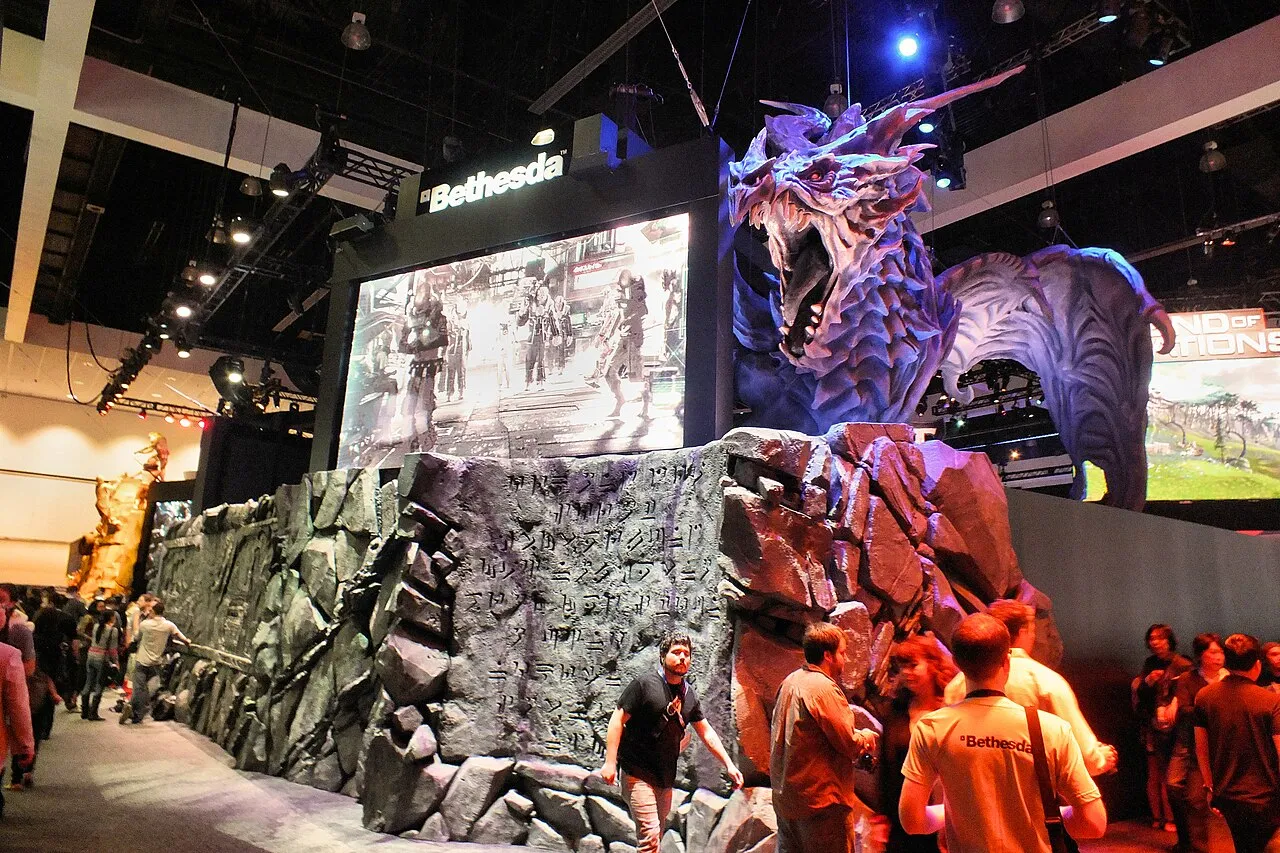
Bethesda’s E3 booth in 2011; archival industry context, not a screenshot or display of The Elder Scrolls VI.
Why can a complex game need careful integration?
Systems can interact in ways that are not obvious when each feature is tested alone. An inventory action, dialogue choice or location change may affect later state. The challenge is to keep those connections coherent. A general explanation of complexity helps readers understand production work, but it should not be presented as an inside account of a specific studio's unresolved bugs.
Saved state needs a clear model
Imagine a fictional quest with three stages: not started, active and complete. The game should not mark it complete before its conditions are met or forget completion after a reload. This simple model shows why state matters. Real games can contain many more conditions, but increasing the number of states does not remove the need for explicit rules and repeatable checks.
A choice needs a visible consequence
If a fictional player chooses to help one character, the interface and later dialogue should reflect the intended result. Otherwise the choice can feel meaningless or confusing. The teaching point is consistency between action and feedback. It is not a claim that Elder Scrolls VI will use a particular branching design or include a specific faction system not established by the sources.
How should platform and requirement claims be handled?
Use the relevant official product information when it is available and clearly applicable. A previous game, an old interview or a console logo in a fan graphic is not enough to establish every final platform or hardware requirement. This article does not supply a guessed specification table. A neat list is not useful if the underlying details are unsupported.
Do not buy hardware from an invented requirement
A reader considering a purchase needs current confirmed requirements and reliable testing for the relevant product. A prediction can be labelled as a prediction, but it should not be dressed as an official minimum. The practical distinction matters because a plausible-looking claim can lead someone to spend money on an assumption that was never confirmed.
A store placeholder is not always a launch commitment
A page can exist before all product details are final. Read whether a displayed date or edition is explicitly confirmed rather than assuming every field is a publisher promise. For any actual purchase, use the genuine service's current terms and product information. Do not treat a screenshot with missing context as a complete official release announcement.
What should images in an explainer show?
An archival photograph of a publisher's event can illustrate the announcement setting or industry context. It should not be captioned as a screenshot of the new game. A portrait of a developer identifies the person, not the final feature set. Clear captions let an article use real historical material without misleading readers about what has actually been shown publicly.
Distinguish official footage from fan work
Fan art, speculative maps and concept projects can be creative without being official material. If discussed, they need clear attribution and labels. This guide does not use them as evidence of confirmed game content. A search result containing the right title is not enough: the original source and nature of the image must also match the claim being made.
A previous game is a separate product
An older Elder Scrolls title can provide series context, but its features do not automatically become confirmed features of the next game. Compatibility, mod support and interfaces need their own evidence. Preserve the product name and version when making comparisons. This prevents a genuine screenshot from being used to suggest a new build that it does not depict.
A small game-development project for students
Build an original text-based quest with a few locations and clear state changes. Keep the setting and characters your own rather than copying protected game material. The exercise can teach variables, conditions and user feedback without attempting to recreate a commercial game. A small complete project is a better learning target than a large unfinished map with no working interactions.
Define acceptance checks before adding polish
Write down what should happen when the player starts, makes a choice, saves and reloads. Include an invalid input and a repeated action. The checks should verify behaviour rather than simply repeat the code's structure. Once those cases work, improve the wording and presentation. Attractive output should reinforce a coherent interaction rather than hide missing state rules.
Keep the source log separate from the game
For a research companion, make a table with statement, speaker, date, original link and what is not established. This helps students distinguish software-building practice from claims about Bethesda's project. The two activities can support each other without mixing invented classroom features into a factual news summary. Clear boundaries make both the code and the reporting more trustworthy.
Use the learning resources purposefully
The programming courses can support a small quest project, while the class resources provide related study material. Start with a language and topic you understand, keep the state model small and test each transition. Label fictional examples clearly. The goal is to learn from the kind of problems games solve, not to pretend the exercise reveals the contents of an unreleased product.
Questions about The Elder Scrolls VI
Does the 2018 teaser establish a complete release plan?
No. It establishes the announcement described in Bethesda's dated record. Later claims about dates, platforms or features require their own supporting information. A historical reveal can remain important without answering every current question. The responsible approach is to state what each official update establishes and leave unsupported details open rather than fill them with confident guesses.
Does a development update mean release is imminent?
Not by itself. A statement about work or priorities describes the information communicated at that time. It is not automatically a launch-date announcement or a guarantee of final specifications. Read the actual wording and distinguish progress from a dated release commitment. This avoids turning understandable enthusiasm into a practical claim that the source never made.
Sources
- Bethesda: the original June 2018 showcase announcement
- Bethesda Game Studios: later studio development note
Image credits: cover: Matt Grandstaff (Bethesda Softworks), source, CC BY-SA 3.0. Resized and converted to WebP. inline: - EMR -, source, CC BY 2.0. Resized and converted to WebP.
Found an error or an outdated detail? Report a correction with the article URL and original source.