
Everton vs Coventry City 3-1: Barry’s Brace and Moyes’s 592nd Match
Read how Everton came from behind to beat Coventry 3-1 on 6 November 2026, with two Thierno Barry goals and a milestone for David Moyes.
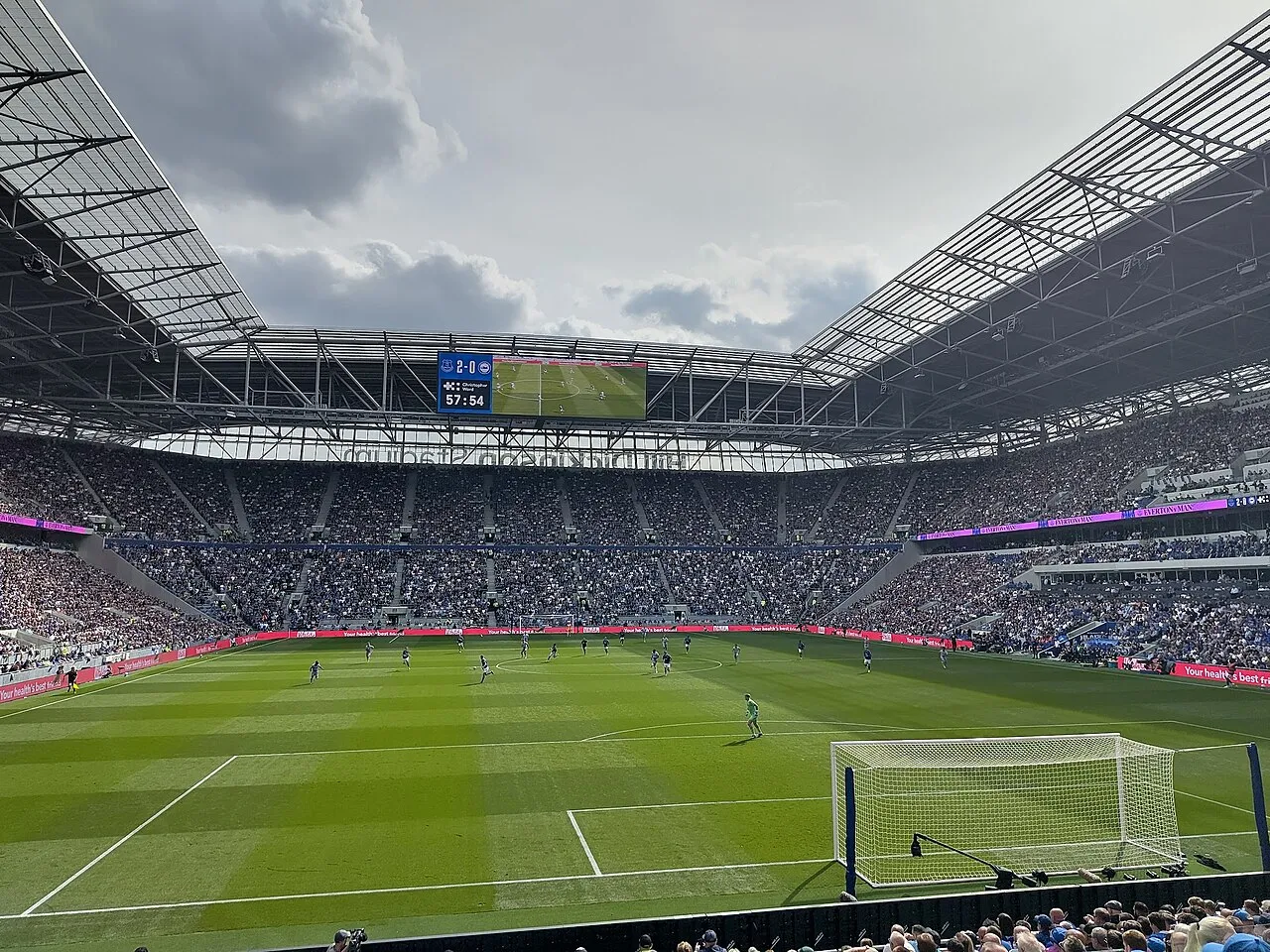
Everton beat Coventry City 3–1 at Hill Dickinson Stadium on 6 November 2026. Yann Gboho gave Coventry the lead after half-time. Thierno Barry scored twice to put Everton ahead, then set up Kiernan Dewsbury-Hall for the third. The teams had reached half-time level at 0–0. The win came in David Moyes's 592nd match as Everton manager, equalling Harry Catterick's total according to Everton.
The score is easy to remember. The sequence is more useful. Coventry held the lead first, Barry changed the score twice, and the last goal changed the size of Everton's lead. Reading the match as a series of score states helps explain what each goal did. It also gives students a practical way to check a match report against the published record.
Everton vs Coventry City result and scorers
Everton won 3–1 in the Premier League. The home team had three goals, from Barry twice and Dewsbury-Hall once. Gboho scored Coventry's only goal. Both clubs' reports support that scoring sequence. The order matters because a list of scorers grouped by club does not show that Coventry went ahead before Everton scored.
| Event | Scorer | Score after the goal |
|---|---|---|
| Coventry took the lead | Yann Gboho | Everton 0–1 Coventry |
| Everton equalised | Thierno Barry | Everton 1–1 Coventry |
| Everton took the lead | Thierno Barry | Everton 2–1 Coventry |
| Everton extended the lead | Kiernan Dewsbury-Hall | Everton 3–1 Coventry |
Why the score stays in home-away order
When the away side goes ahead, the score remains Everton 0–1 Coventry. Swapping the numbers to put the leading team first changes the meaning of the row unless the team names swap as well. A match log should assign home and away columns at the beginning and keep those columns through every event. This makes the score readable even when a goal changes which side is ahead.
How did Barry turn the match around?
Barry's first goal cancelled Coventry's lead and his second put Everton in front. Those two actions had different consequences. At 1–1, either side could still take the lead with the next goal. At 2–1, Coventry needed an equaliser to restore parity. The description of a comeback depends on that order, rather than on the two-goal margin shown at full time.
The first goal reset the match
A goal that makes the score 1–1 has the same value in the final tally as any other goal, yet it changes the next decision for both teams. A side that was protecting an advantage can no longer finish ahead by simply keeping the score unchanged. A side that was behind has restored a position from which a further goal can win the match. These are possible tactical consequences of the score. The match report alone does not establish every instruction the coaches gave.
The second goal gave Everton a lead to defend
Once Everton moved to 2–1, a Coventry equaliser would have produced a draw if no more goals followed. That makes a one-goal lead different from the eventual two-goal margin. A useful note for a reader watching highlights is to ask how much time each side had after the second Barry goal and what the score required of it. The clip of a goal often ends before those adjustments become visible.
What did Dewsbury-Hall's goal change?
Dewsbury-Hall made it 3–1 in the 81st minute after Barry supplied the pass. Everton's lead increased from one goal to two. Coventry would then have needed two unanswered goals to draw. A third goal described as insurance is still an ordinary goal in the table. The description refers to the extra margin it gave Everton late in this particular match.
Barry's assist and goals belong in separate columns
The goal total credits Barry with two and Dewsbury-Hall with one. The assist records Barry's contribution to the third. If you count a player with two goals and one assist as scoring three goals, you erase the actual scorer and inflate that player's tally. A contribution table can display goals and assists side by side and still reconcile the team total using the goals column alone.
An assist is one part of the move
A pass before a goal can earn an assist in the recorded event, while earlier passes and movement may help make it possible. A match summary usually cannot represent every contribution to a move. If you want to discuss a build-up, say which actions you can see in the replay or verify in the report. Treat an assist count as a specific recorded measure rather than a complete ranking of teamwork.
What was Moyes's managerial milestone?
Everton identified the fixture as Moyes's 592nd match in charge of the club, bringing him level with Harry Catterick. That is a count of matches as Everton manager. It covers a particular role at a particular club. The number should travel with that description whenever it appears in a chart or headline, because a managerial career can also be counted across several clubs or competitions.
Read the scope of a record before comparing it
A milestone can count all first-team games in a club's records, league games only, wins, or consecutive games in a single spell. Those are different sets. Before comparing a figure across managers, check that the source uses the same definition for both. Everton explicitly makes the comparison with Catterick in its own report. Extending the comparison to another club would require a fresh check of how that club counts matches.
A milestone and a result are two facts
The milestone would describe the occasion even if the score had ended differently. The 3–1 result describes what happened on the pitch. Keeping the two ideas separate is helpful when writing a headline. A headline about Barry's brace answers who changed the score, while one about Moyes answers why the fixture had historical significance for Everton. A reader who follows both can distinguish the narrative from the match record.
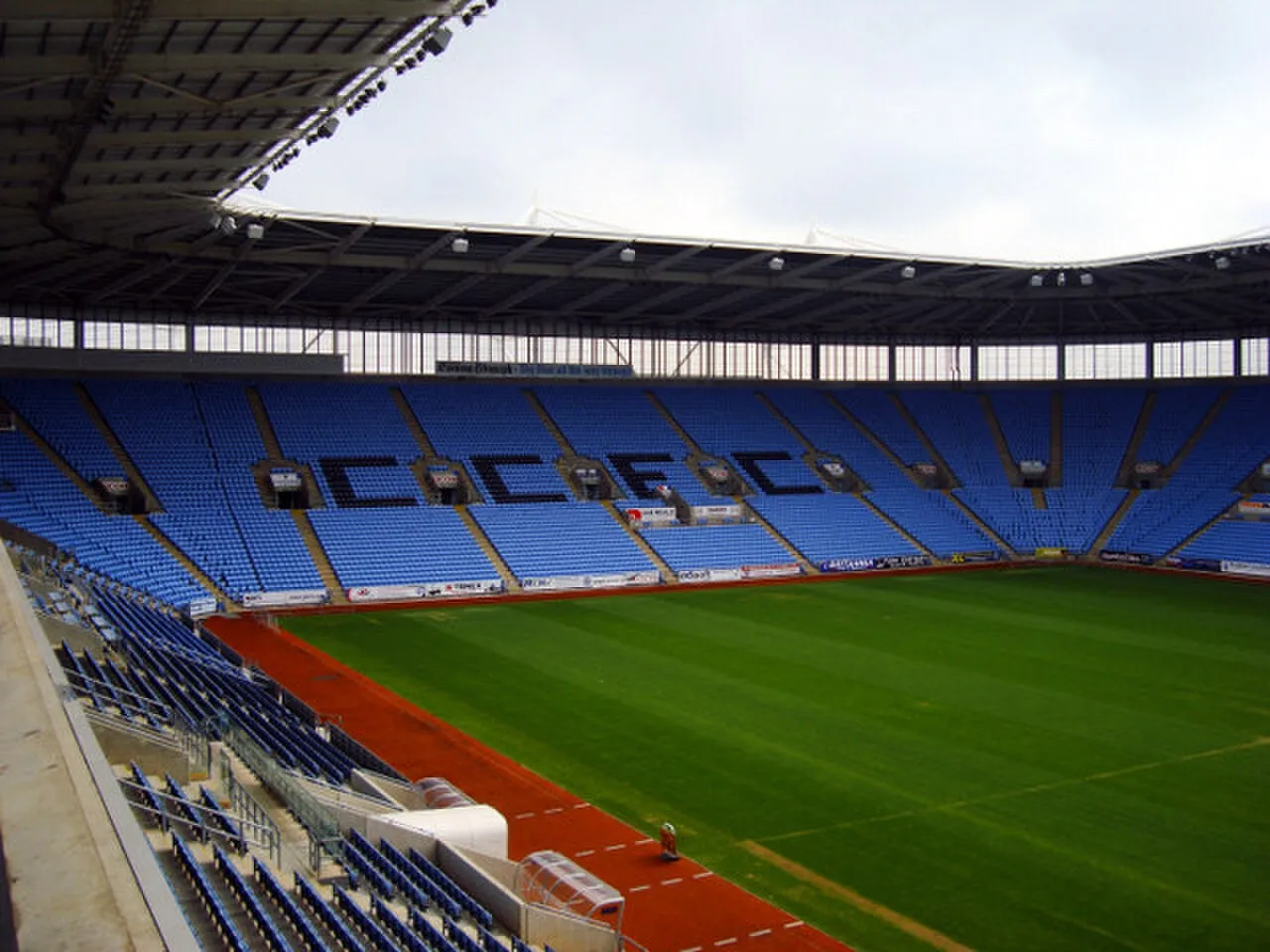
Archival view from the stands at Coventry City’s home ground, then called the Ricoh Arena. The match covered here took place in Liverpool.
How does the result affect league points?
The win gave Everton three points. Coventry took no points from the defeat. A 3–1 win and a 1–0 win both bring three points under the usual Premier League scoring system. The scoreline also affects goal difference. Everton's differential from this game was plus two, and Coventry's was minus two, because each side's goals against are the other side's goals for.
One match and the whole table
To calculate a team's running goal difference, subtract all goals conceded from all goals scored for the relevant period. The plus two from this match is the change contributed by the fixture. The season total depends on the earlier games. Likewise, a position quoted immediately after a Friday match can change as the weekend fixtures finish. Attach a timestamp to a table position if you include it in a match note.
A small arithmetic check
Suppose a team entered a match with 14 points and a goal difference of minus one. After winning 3–1, it would have 17 points and a goal difference of plus one, assuming the table had no other adjustments. Those starting values are an example. The lesson is that points and goal difference use different inputs. Adding three to both columns would produce the correct points total and the wrong goal difference.
Why can two reports give different goal minutes?
Football feeds sometimes display a goal minute differently around a clock boundary. A writer may describe how much time elapsed, while a timeline may display the minute in progress. An event can also appear at a different time if one account refers to the original action and another to the confirmation. The clubs agree on the scorer order and final score in this fixture, which are sufficient to explain the comeback.
Use one clock convention throughout a timeline
For a minute-by-minute record, choose a single match centre and preserve its convention for every row. If a report disagrees with that feed, check the source and whether the discrepancy changes the meaning. A one-minute difference in a label rarely changes the goal order. A different scorer or a different final score demands more investigation. Keep a source URL and checked date alongside the timeline so someone else can reproduce the choice.
Distinguish match time from local time
Match time tells you how far the game has progressed. Local time identifies when the fixture takes place in the host city. A viewer in another country may follow it after midnight and remember a different calendar date. Use the competition's dated fixture to identify the match and label any viewer-time conversion separately. That helps prevent the same game from being indexed twice under two dates.
What can a short highlight reel tell you?
A highlight reel can show the four goals and selected chances. It usually omits much of the play between them. It gives evidence for actions that appear on screen and a selective view of the match as a whole. To assess whether Everton pressed more effectively after the equaliser, for example, you would need a longer sequence or trustworthy event data covering that period.
Watch one attack with the score visible
Pause the clip before the attack and write down the score. Identify who is attacking, where the ball starts and which players are visible. Then compare that record with the next score state. Repeating this exercise for an equaliser and a late goal makes it easier to see the difference between a description of the play and an interpretation of why it happened.
Attribute disputed decisions to the record you use
Coverage of this match also discussed refereeing decisions. For a factual log, distinguish a claim made by a commentator, the decision shown during the match and any later official explanation. They may be published at different times. The scoring sequence can be verified on its own. An account of a disputed call needs separate evidence before a writer can confidently describe the procedure or the reason for a decision.
Build a match timeline from the result
Start with 0–0 and enter the four confirmed scoring events in order. For each row, store the team, scorer and score after the event. Check that each goal increases one side's total by one and leaves the other side's total alone. The last row should reproduce Everton 3–1 Coventry. This makes a simple classroom project in data validation using a real result.
Test the comeback rule
A comeback win requires the eventual winner to have trailed earlier. Everton satisfies that test because Coventry made it 0–1 and Everton later finished ahead. For a second exercise, make up a timeline where a team leads throughout and wins 3–1. Both records have the same final score and only one is a comeback. The example shows what a final score cannot tell you about the order of events.
Check the scorer totals independently
Group the rows by scorer and count the goals. The home rows should give Barry two and Dewsbury-Hall one. The away rows should give Gboho one. Grouping by team should then give three and one. The same record supports both summaries. Students who want to implement the check can use the programming courses to practise arrays, loops and grouped counts.
Quick answers about Everton 3–1 Coventry
Coventry went ahead through Gboho. Barry equalised, scored again to put Everton in front and assisted Dewsbury-Hall for the final goal. The venue was Hill Dickinson Stadium. The two goals made Barry the match's only scorer with a brace. Everton won the league match and the managerial appearance brought Moyes level with Catterick on the club's count.
What to keep when sharing the result
Include the two teams, date, competition and full-time score. If you add a sentence about Barry, distinguish his two goals from the assist. If you add the Moyes milestone, specify that the count concerns Everton matches in charge. A clear record answers the common questions without confusing the goal order, the final margin or the scope of the managerial record.
Store fixture identity before adding a score
Keep the competition, home club, away club and date together in a fixture record. Clubs can meet again in a later round or in another competition. Using those fields first makes it easier to attach a corrected score or a new report to the right game.
Sources
Image credits: cover: Austiñobobbiño, source, CC BY 4.0. Resized and converted to WebP. inline: Julieanne Savage, source, CC BY-SA 2.0. Resized and converted to WebP.
Found an error or an outdated detail? Report a correction with the article URL and original source.