
Felix Nmecha: Dortmund Profile and the Goal-Celebration Discussion
Read Felix Nmecha’s Dortmund context, the supporters’ statement and his response, keeping personal belief, criticism and football facts distinct.
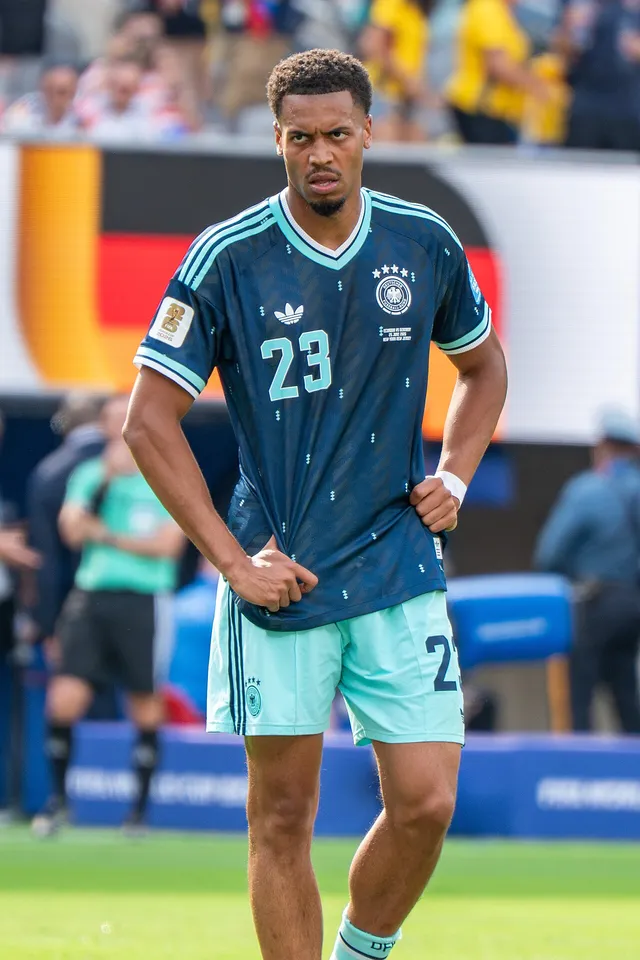
Felix Nmecha: the Dortmund profile and the public discussion
Felix Nmecha is a Borussia Dortmund and Germany midfielder. His name is also part of a November 2026 discussion about a goal celebration, personal belief and a religious network. Those subjects need careful separation: a professional profile, a supporters' statement and a player's response are different kinds of evidence.
On 8 November, Dortmund's fan and supporters' department published a statement concerning support for The King's Return campaign and the Ballers in God network. It explicitly distinguished its criticism of exclusionary messages from criticism of personal religious belief. AP subsequently reported Nmecha's response that his celebration was not intended to promote intolerance, discrimination or hate.
This article explains the attributed discussion alongside his football context. It does not assert a disciplinary sanction, a criminal offence or a new club decision that the reviewed sources have not established.
A short chronology of the statements
| Date | Identified development |
|---|---|
| 11 March 2026 | BVB announced a contract extension to 2030 |
| 8 November 2026 | Supporters' department published its campaign statement |
| 10 November 2026 | AP reported Nmecha's public response |
These entries should not be collapsed into one event. A contract announcement from March is professional background. The November statements concern a later public discussion. An older football report cannot establish how every aspect of the later issue was resolved.
The distinction also prevents a common headline error. A supporters' department statement is not automatically the same as a disciplinary ruling by the club, league or national association. Identify who is speaking before assigning the statement an institutional effect it does not claim.
Personal belief and criticism of a network
The supporters' statement says that public religious belief itself is not the target of its criticism. Its concern is the messaging and influence of a particular network and campaign. That qualification is central and should not be removed in a short summary.
Nmecha's reported response also needs accurate attribution. He describes the intended meaning of his own celebration and rejects an intention to promote hate. Reporting that explanation does not independently establish every fact about an organisation, just as reporting the criticism does not establish that every allegation has been adjudicated.
A responsible account allows readers to see both the stated concern and the player's response without inventing agreement between them. It should not generalise from this discussion to all Christians, all football supporters or every person with a religious identity.
Why attribution changes the meaning of a sentence
“The supporters' department argues” identifies a view and its source. “The player says” identifies a response. Removing those introductions can turn contested interpretations into the article's own unqualified conclusions. The wording is not decorative; it tells readers what sort of statement they are reading.
Similarly, a report that a club will speak with a player does not necessarily announce a punishment. A meeting, investigation, decision and sanction are separate stages. Each requires its own evidence.
When discussing the story with others, preserve those distinctions. A more dramatic summary may travel quickly but can make the disagreement harder to understand. Accurate language leaves room for later clarification rather than forcing every new statement into an exaggerated initial claim.
The professional football background
BVB's official March announcement states that Nmecha's contract was extended to 2030. It also identifies his move from Wolfsburg in 2023. Those are documented career checkpoints, not a guarantee of selection in every future match or proof that a player cannot move before the contract's end.
The club and Bundesliga profiles identify his football role. A position label provides a starting point, but a midfielder can perform different tasks depending on formation, teammates and the match. Reading the role through actual play is more useful than assuming every player with the same label has an identical job.
This guide does not give an unverified live appearance count or claim to have assessed a new performance that was not reviewed. The dated contract context and official profile are enough to establish the professional setting without manufacturing a current statistic.
What to watch in a midfielder's movement
Follow what happens before a player receives the ball. A useful position can open a passing route, draw attention or provide a teammate with a safer option. Those contributions may not appear in a highlight package that shows only the final shot or assist.
Then observe the first decision after receiving. Does the player turn, release quickly, retain the ball or invite pressure? The choice depends on the available space and the team's task. It should not be praised or criticised in isolation from those conditions.
For a learner, pause an authorised replay before a pass and identify the visible options. Compare your expectation with what happens next. This is an observation exercise, not a claim that a viewer can infer private coaching instructions or a player's thought process from one camera angle.
Passing totals need a purpose
A high pass count can indicate involvement, but it does not tell the entire story. The location, direction and pressure surrounding the passes matter. Completing a short safe exchange and finding a difficult forward route are different actions even if both add one to a completion total.
Consider a fictional comparison. One midfielder completes 45 of 50 passes, another 30 of 40. Their percentages differ, but the figures do not tell us the risk, distance or tactical purpose of the attempts. These invented values explain interpretation; they are not statistics attributed to Nmecha.
A useful analysis states what the number measures and then asks what it leaves out. That habit helps supporters appreciate a midfielder's work without treating one percentage as a complete ranking of quality.
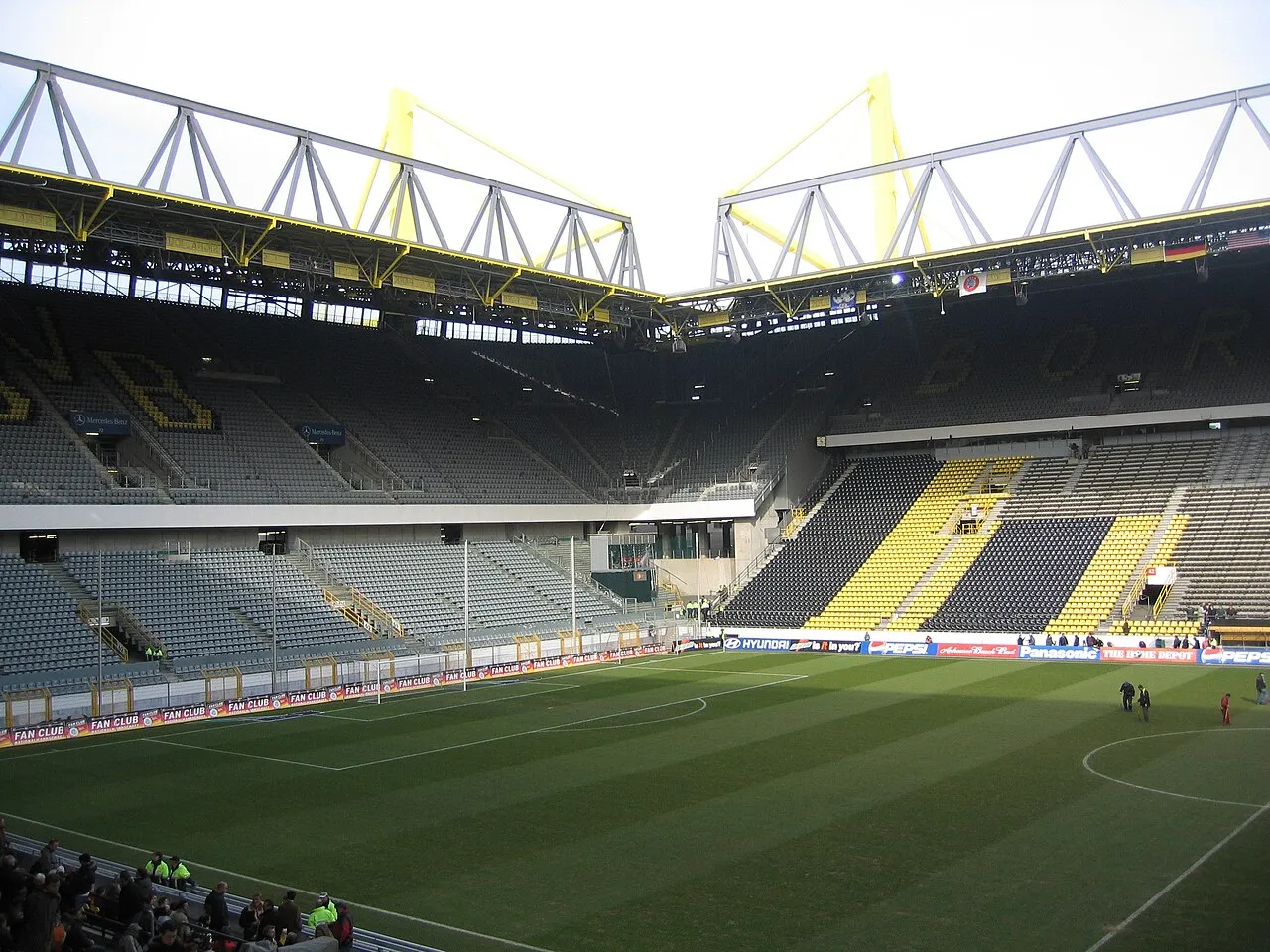
Archive Dortmund venue context, not a photograph of a specific November fixture.
Club football and international football
A player can have responsibilities in a club team and a national side. The teammates, preparation time and competition context differ. A club position or shirt number should not automatically be used to describe the role in a particular international match.
Selection also has stages. Being included in a squad is not the same as starting a fixture. A preview mentioning a possible appearance is not confirmation that the player participated. Check the official match team and completed record for that question.
This is especially useful during an international break, when several fixtures appear close together. Retain the country, opponent and date when discussing a performance. A Dortmund match and a Germany match belong to different records even when they occur in the same month.
What a contract date does and does not mean
A contract ending in 2030 identifies a published agreement's time horizon. It does not guarantee that every sporting or commercial circumstance remains unchanged until then. Nor does it mean a transfer rumour has been confirmed whenever someone discusses a player's market value.
Use the club announcement for the extension itself. Use a separate identified announcement for any later transfer, loan or contractual change. Mixing those stages can produce contradictory-looking claims that actually refer to different dates or possibilities.
For students learning sports business, create separate columns for agreement date, stated end date and later confirmed changes. Do not enter speculation in the same column as a completed event. This small organisational step makes a player's career chronology easier to follow.
Translating a statement carefully
The supporters' original notice is in German. A translated summary should preserve who is making the claim and what distinction the statement draws. A forceful word chosen in another language can change the tone if the translator ignores the surrounding sentences.
When uncertainty matters, consult the original and a reliable account rather than relying on an anonymous screenshot. Avoid presenting a shortened translation as though it were the complete statement. A few omitted qualifications can change the apparent target of criticism.
This article paraphrases the relevant positions and links the source rather than reproducing a long translation. Readers can inspect the original wording while keeping the analysis separate from the statements themselves.
Criticising ideas without targeting identities
Public figures and organisations can be questioned about public actions and messages. That does not require insulting an entire religion, nationality or group of supporters. A precise disagreement identifies the specific action or claim under discussion.
The same standard should apply when evaluating a response. A player can explain an intention, while other people may still ask questions about the effect of a public gesture. Intention and interpretation are related questions, but neither should be used to erase the other without explanation.
For a classroom discussion, ask participants to summarise each stated position fairly before offering their own view. If someone cannot describe the other position without caricature, they may be arguing against a version that the source did not actually present.
A source-checking worksheet
Create four columns: speaker, date, exact subject and evidential status. The club's contract announcement belongs in one row. The supporters' campaign statement belongs in another. Nmecha's response belongs in a third. A later official decision, if one is announced, would require an additional row.
Use a separate column for your interpretation. Keeping commentary apart from the record prevents a strongly held opinion from becoming an accidental factual assertion. It also makes the worksheet easier for another person to check.
The method applies beyond football. A government statement, a company response and a campaign group's criticism may all concern the same subject while serving different roles. Reliable reporting identifies those roles instead of treating every published paragraph as the same kind of authority.
Questions readers are asking
What is Nmecha's documented club context?
BVB's March 2026 notice announces an extension through 2030 and identifies his earlier move from Wolfsburg. Those facts establish career context. They do not confirm every future selection, a new transfer or the outcome of the November public discussion.
Was the supporters' statement a criticism of religious belief itself?
The statement explicitly distinguishes personal belief from its criticism of exclusionary messaging and a particular network. A summary should preserve that qualification rather than turn the discussion into a blanket claim about a religion or all its adherents.
What did Nmecha say in response?
AP reported that he rejected an intention to promote intolerance, discrimination or hate through the celebration. This article attributes that explanation to him. It does not turn the response into an independently verified account of every wider organisational claim.
Has a punishment been established here?
No. This review does not announce an unverified suspension, fine or other sanction. A statement of concern and a discussion with a player are not automatically the same as a completed disciplinary decision.
Keeping the football and the discussion understandable
A useful profile can explain Nmecha's professional role while reporting the surrounding statements accurately. It need not pretend the public discussion does not exist, but it also need not make every football statistic part of a moral verdict.
Follow later official statements if the situation develops, and keep the original dates attached to the earlier positions. For other sports and civic explainers, browse the RayTech article collection. The aim is a clearer account of who said what, alongside a more informed understanding of the player on the pitch.
Keep a correction visible when a detail changes
If a reader discovers that a summary has attributed a supporters’ statement to the whole club, the useful response is a precise correction. Identify the original speaker and explain what the earlier wording overstated. There is no need to replace one sweeping assertion with another.
The same approach applies to a translated phrase or an incorrectly dated football statistic. Preserve the corrected fact and its source, then separate any continuing interpretation from that record. A transparent correction improves the discussion because later readers can understand which part changed.
For a student preparing a short sports report, check names, institutions and dates as a final pass before sharing. Ask whether every claim of a decision is supported by an actual decision, whether every response is attributed and whether a fictional example could be mistaken for a real statistic. Those checks are small but consequential. They help a report remain useful even to someone who disagrees with its analysis, because the underlying chronology and identities can still be inspected and discussed.
Sources
- Source: BVB supporters' department statement
- Source: AP report of Nmecha's response
- Source: BVB contract-extension announcement
- Source: Bundesliga player profile
Image credits: cover: Bryan Berlin / WikiPortraits, source, CC BY-SA 4.0. Resized and converted to WebP. inline: Tbachner at German Wikipedia, source, Public domain. Resized and converted to WebP.
Found an error or an outdated detail? Report a correction with the article URL and original source.