
Getafe vs Sevilla: 3-1 Comeback and Score States Explained
Explore Getafe vs Sevilla with clear explanations, worked examples, source checks and practical questions for independent student learning.
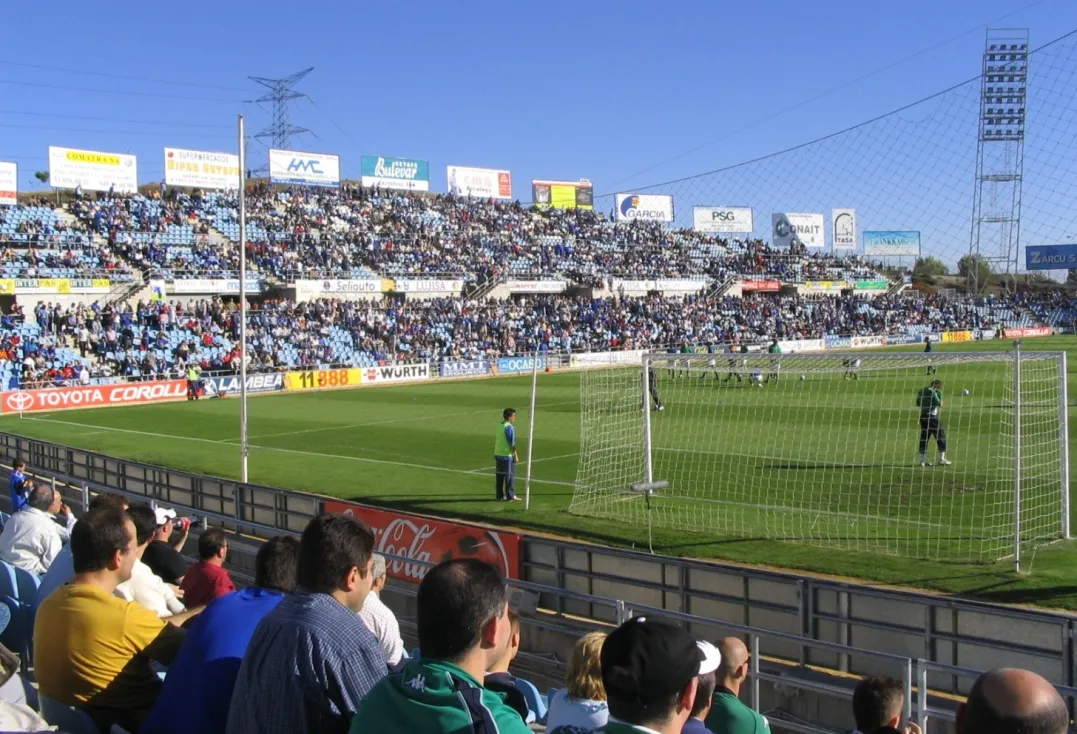
Getafe beat Sevilla 3–1 in LaLiga on 1 November 2026. The official league record identifies the completed fixture and shows Sevilla leading 1–0 at half-time. Those two snapshots establish a comeback: Getafe finished ahead after trailing at the interval. They do not, by themselves, explain every tactical change or individual contribution behind the reversal.
Checked on 2 November 2026, this guide explains the result through score states, goal difference and careful match reading. It is not a live commentary feed or a prediction. The additional classroom scorecards are fictional and are labelled separately from the documented fixture.
What does the final score establish?
The score is written in home-away order: Getafe three, Sevilla one. Getafe therefore won by a two-goal margin, while the match contained four goals in total. Margin and total answer different questions. A summary that calls this a four-goal victory would confuse the number of goals in the game with the difference between the teams.
Start with a small result card containing the date, competition, home team, away team and final status. Add the score only after those labels are clear. This prevents confusion with another meeting between the same clubs, especially when search results include fixtures from different months or seasons.
The league's result page and Sevilla's dated match-summary listing support the 3–1 outcome. This article does not supply an invented possession percentage, expected-goals figure or player rating. A correct result is useful without adding statistics that were not verified for this specific match.
Why is this a comeback?
The league record's half-time snapshot is Getafe 0, Sevilla 1. The final snapshot is Getafe 3, Sevilla 1. Comparing them shows that Getafe moved from one goal behind to two goals ahead. It also shows a second-half scoring change of three goals for Getafe and none for Sevilla in the completed record.
That calculation does not identify the precise cause. A different formation, an individual action, a substitution or a change in the opponents' performance would require additional evidence. “Came from behind” describes the score progression. “Won because of a particular tactical adjustment” is a stronger explanation that cannot be inferred from the two score snapshots alone.
For an original exercise, imagine a second match that is 1–0 at half-time and 3–1 at full-time. The final result matches this fixture, but the winning side was never shown trailing in those snapshots. Equal final scores can therefore describe different journeys through a match.
How can you draw a score-state timeline?
Place time along a horizontal axis and record each team's score whenever a confirmed goal changes it. Use steps rather than a continuously rising curve: football scores change at events, not smoothly between them. If exact goal times are unavailable, mark only the verified interval and final snapshots rather than inventing minute labels.
For this guide's limited verified sequence, the interval state is 0–1 and the finished state is 3–1. A simple two-point comparison can teach the reversal without pretending to be a full event timeline. Label it “half-time to full-time comparison” so the reader knows what the display does and does not contain.
In an original fictional timeline, goals at the twentieth, sixtieth and eightieth minutes could produce a 2–1 comeback. That example has different numbers and is not a reconstruction of Getafe's match. Keeping the example distinct avoids turning an illustration into a false account of actual events.
What is an equaliser?
An equaliser is a goal that brings the scores level at that moment. From 0–1, a goal for the trailing team produces 1–1. A subsequent goal that produces 2–1 changes the state again. Terms such as equaliser, lead and winner describe relationships within a sequence, not simply the order in which a player appears in a list.
A final score alone does not reveal every intermediate state. A 3–1 game could move through several sequences. Here the verified 0–1 half-time score narrows the possibilities, but a complete goal-event list would still be needed to attach every label to a named scorer and minute accurately.
Try an original activity with counters: one colour for each team. Add a counter only when a fictional goal is announced. After each event, ask who leads and by how much. The activity makes the changing relationship visible without needing to reproduce broadcast footage or guess at an unverified scorer.
How do goal difference and points differ?
Goal difference measures goals scored minus goals conceded over a defined set of matches. Match points are awarded under the competition's rules. For the standard league calculation, a win contributes three points, a draw one and a loss none. Scoring three goals does not mean a team earns three points because each goal is worth a point.
For this individual result, Getafe's goals-minus-conceded contribution is plus two and Sevilla's is minus two. Their points from the match follow the win and loss outcomes. Do not confuse either calculation with a complete season table, which requires all other relevant matches and any applicable official adjustments.
Use a fictional comparison: a 1–0 win and a 5–0 win both contribute three match points under the usual system, but they contribute different goal differences. That is why a league record commonly displays both points and goals. One measure cannot replace the other without losing information.
Does a comeback prove which team dominated?
A comeback establishes a reversal in the score. Dominance is a broader interpretation that needs a definition and evidence. A team might have more possession, more chances or more territorial control, but those are different concepts. The final score is decisive for the result without independently measuring all of them.
Imagine an original match in which a side creates many chances but converts few, while another scores efficiently from limited opportunities. A result card can correctly show the winner without explaining that pattern. To discuss the pattern, obtain the relevant observations and statistics rather than treating the score as a substitute for them.
Avoid dismissing either side through unsupported adjectives. “Sevilla lost 3–1 after leading at the interval” is a clear factual statement. “Every player stopped trying” asserts private effort and motivation that a scoreline cannot establish. Strong writing stays specific even when a result is disappointing for one club's supporters.
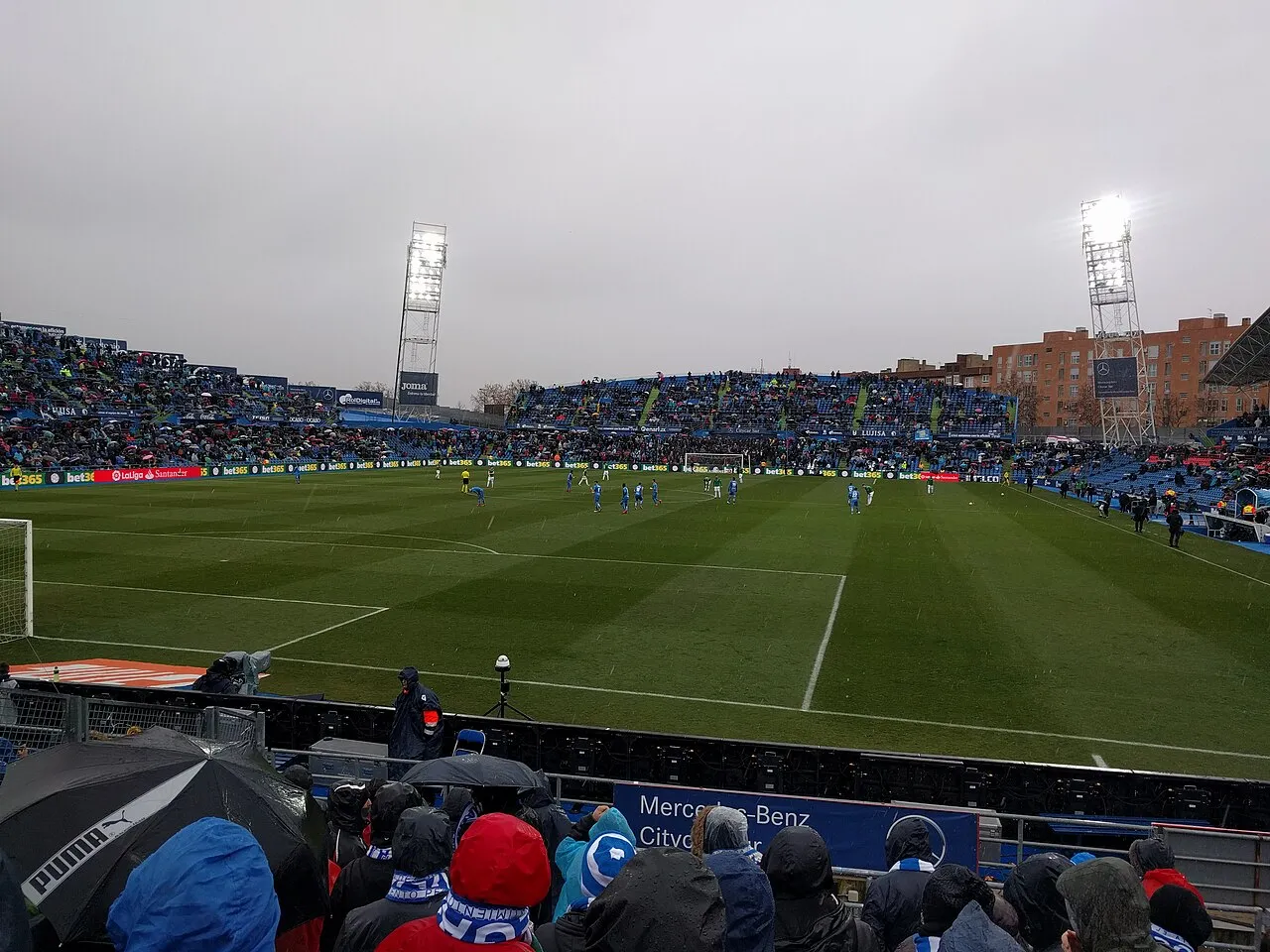
A different historical match, not Getafe against Sevilla in 2026.
How should you compare club and league reports?
The organiser is useful for competition identity and the official record, while a club's report may provide its own perspective and selected detail. Those purposes can overlap without being identical. Compare the narrow factual claim first, then distinguish interpretation, emphasis and promotional wording from the underlying result.
For an original source exercise, give learners two fictional summaries of the same match. One highlights the comeback; the other highlights the lost lead. Ask which facts they share and which details each foregrounds. Different emphasis does not automatically mean that one account is false, but a disagreement about the score or date requires resolution.
Preserve the original publication date when taking notes. An older Getafe–Sevilla meeting may appear beside this one. The same club names are not enough to establish that two pages describe the same event. Season, competition, venue and date provide the additional identifiers needed for a dependable comparison.
What do cards and substitutions tell you?
Cards and substitutions are events that can matter to a match, but their significance must be examined in context. A change occurring before a goal does not automatically prove it caused that goal. Record who changed, when and what the verified sequence shows before moving from chronology to explanation.
This guide does not reproduce an unverified disciplinary timeline. It is better to omit a minute than copy a contradictory snippet. If a record distinguishes a direct dismissal from a second caution, keep that distinction. If the information is incomplete, state the limit rather than inventing a familiar-looking event list.
For an original exercise, imagine a substitution at sixty minutes and a goal at seventy. Ask what additional evidence would support a causal explanation: the substitute's involvement, a change in positioning or a clear account of the move. The ten-minute gap alone is not enough to settle the question.
How can you build a reliable result component?
Keep home and away labels separate from score values, and store match status explicitly. A scheduled game should not appear as 0–0 merely because its score fields are empty. A missing value means unknown or not yet available, while zero means a known quantity. Confusing them creates false results before play begins.
An original data model can contain date, competition, home name, away name, status, home goals and away goals. Calculate a winner only when status and score values support it. If a record is live, describe the current leader rather than publishing a final winner. The distinction belongs in the logic, not only in the colour of a badge.
Also test home-away reversal. Swapping the names while leaving 3–1 unchanged would tell readers that Sevilla won. A visually attractive card can still communicate the opposite result if the data binding is wrong. Clear labels and a simple verification step matter more than decorative animation.
Can a small table help explain the arithmetic?
Create an original comparison with results 3–1, 2–0 and 2–2. The first two have a winning margin of two, but totals of four and two. The draw has four total goals and a margin of zero. Ask learners to identify which results share a total and which share a margin before calculating points.
Then add a second fictional fixture for each side and calculate combined goal difference from total goals for and against. Do not average individual match margins if the question asks for the accumulated difference. Define the period first, retain each score's orientation and show the subtraction explicitly.
This activity is not an updated LaLiga table. It teaches how the quantities relate. A real table must use the official set of completed matches and any relevant competition decisions, rather than a handful of selected results that happen to support a preferred conclusion about a club.
Questions readers often ask
Was the November meeting a Getafe win? Yes, the verified final score is 3–1. Did Sevilla lead at half-time? The league record shows 0–1 at the interval. Does that make it a comeback? Yes, because the eventual winner was trailing at that verified stage. Was the margin four? No: four goals in total, two goals of difference.
Can this result establish a season ranking? Not on its own. Can a historical stadium photo prove a goal happened? No; it illustrates context. Should an unfinished score be treated as a result? No. Preserve the final status and use a dated completed record before publishing a winner.
Explore more football learning guides to practise these distinctions. The useful lesson from Getafe–Sevilla is not only who won. It is how a match moves between states, how points differ from goals and how a precise summary can remain informative without inventing the parts of the story that have not been checked.
How do you check a short summary before sharing it?
Read the summary once for identity and once for arithmetic. On the identity pass, check the date, competition and orientation of the names. On the arithmetic pass, calculate the margin and total separately, then compare the interval and final snapshots. This two-pass method catches different mistakes without requiring a long checklist every time.
For an original exercise, exchange fictional result cards with a classmate and deliberately introduce one reversed label or double-counted goal. Ask the reader to find the error and explain the correction. The explanation matters: recognising why a field is wrong is more useful than merely replacing it with a number that happens to match the answer sheet.
Sources
- LaLiga: Getafe–Sevilla match record, for fixture identity, the 3–1 result and the half-time snapshot.
- LaLiga: Getafe results, for the dated completed fixture.
- Sevilla: 1 November match-summary listing, for the club's 3–1 result listing. All additional scorecards and data-model examples are original fictional exercises.
Image credits: cover: No machine-readable author provided. Miguel303xm~commonswiki assumed (based on copyright claims)., source, CC BY-SA 2.5. Resized and converted to WebP. inline: Miguelazo84, source, CC BY-SA 4.0. Resized and converted to WebP.
Found an error or an outdated detail? Report a correction with the article URL and original source.