
Ghana 2–0 Somalia: First Qualifying Points, Goals and Return Fixture
Read Ghana’s verified 2–0 win over Somalia, the goals and first qualifying points, with a clear distinction between the result and the return fixture.
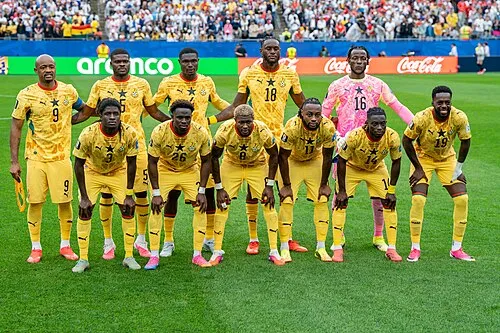
Ghana beat Somalia 2–0 at Sekondi Sports Stadium on 12 November 2026 to collect their first points of the 2027 Africa Cup of Nations qualifying campaign. Jonas Adjetey scored before half-time and Felix Afena-Gyan added the second in the 62nd minute. The Ghana Football Association's completed report is the main source for the result.
The win was important because Ghana entered the fixture after defeats in their first two qualifiers. It did not, by itself, confirm qualification for the finals. This guide records the match, explains the difference between a revival and a secured place, and helps readers interpret the remaining campaign without invented statistics or a prediction dressed up as news.
What happened in Ghana versus Somalia?
The Black Stars won by two goals without conceding. Adjetey provided the first-half breakthrough, and Afena-Gyan increased the advantage after the interval. The official account also records an earlier missed penalty by Jordan Ayew, showing that Ghana's scoring sequence did not begin with their first major opportunity.
The complete result should remain attached to the date and competition. A match preview, an in-game score and a completed report are different documents. A reader looking for the result needs the final one, not a schedule panel for the next meeting between the same teams.
This is the senior men's national-team qualifier described by the GFA. Club matches, youth fixtures and other national-team categories should not be combined with it in an unexplained head-to-head table.
Why use before half-time for the opening goal?
The official report places Adjetey's goal just before the interval. Its text uses the 47th minute while also describing a first-half goal. To avoid confusing an elapsed-time notation with an ordinary second-half minute, this guide uses the unambiguous description before half-time.
Football's added-time notation can appear in several forms across data feeds. A goal displayed as 45 plus additional minutes should not automatically be interpreted as occurring after the break. The phase and the source's description need to be read together.
This is a practical example of why copying a number without context can create an error. The aim is not to invent a replacement timestamp, but to retain what the official account clearly establishes while avoiding a misleading interpretation of its formatting.
What did the missed penalty change?
It meant an early opportunity did not become a goal. The later victory does not erase that event, but the miss should not be made into an unsupported explanation of the taker's emotions or the team's entire performance.
A penalty and an open-play chance present different situations. The outcome of one attempt does not establish a player's permanent ability, courage or reliability. Meaningful assessment needs a larger, properly defined sample rather than a judgement built from one moment.
For a student watching the match, the useful sequence is opportunity, outcome and subsequent response. Describe those events separately. A missed chance can be followed by a successful period without proving that the miss itself caused the later improvement.
Why was this Ghana's first points return?
The GFA report states that Ghana had lost their opening qualifiers against Côte d'Ivoire and The Gambia. A win then supplied three points. That explains the campaign significance more accurately than a claim that Ghana had been unbeaten or already held a commanding group position.
A team's reputation and its current qualifying record are different things. Familiar players and historical achievements can make a team prominent without giving it extra points in a new campaign. The table reflects the applicable results, not the strength of the name on the shirt.
When following qualification, start with matches played, wins, draws, defeats and points. Add historical context afterwards. This order prevents an expectation about a team from replacing the actual state of its competition.
How does a three-point win help after two defeats?
Under the qualifying table's win allocation, the victory adds three points. It improves the position relative to another defeat, but it does not undo the earlier results. A campaign can recover through future matches without its past record disappearing.
Consider a fictional team losing its first two games and winning its third. It has one win and two defeats after three appearances. Calling it a perfect campaign because the latest match was convincing would be incorrect. The most recent result and the whole campaign describe different samples.
This is why the phrase revived hopes is different from qualification confirmed. The first describes an improved opportunity; the second requires a calculation proving that remaining outcomes cannot prevent progression under the rules.
What does a clean sheet tell us?
It means Ghana conceded no goal in this completed match. It does not independently establish that Somalia created no opportunities or that the goalkeeper had nothing to do. Those stronger claims would require the actual chances and defensive actions to be reviewed.
A clean sheet is a team outcome. Goalkeeping, defending, pressure further forward and the opponent's execution can all contribute. Crediting one player with every aspect of it would simplify the contest beyond what the score alone shows.
For a viewing exercise, identify one defensive sequence from authorized footage and describe the visible actions. Note where the ball was won or an attempt was prevented. Keep that specific observation separate from a sweeping claim that a defence was flawless throughout the entire game.
How should you read the second goal?
Afena-Gyan's goal in the 62nd minute changed a one-goal lead into a two-goal advantage. That provided greater separation on the scoreboard. It did not make the remaining minutes disappear or establish a guaranteed future score.
The confirmed timing can be used to build a simple timeline: Ghana led at the interval, extended the lead after the break and finished without conceding. This explains the game's broad shape without inventing a detailed tactical analysis unsupported by the available evidence.
Avoid calling every second goal a mathematical guarantee. Football can change quickly, and the completed result is what allows the final outcome to be stated with certainty. During the match, the same scoreline would still describe an ongoing contest.
Why should a match report avoid invented possession figures?
Possession is a measured or estimated statistic with a provider's method behind it. A report describing one team as controlling long periods does not supply a precise percentage. Converting that description into a made-up number would create false precision.
The same applies to shots, expected goals and passing accuracy. Each requires actual data and definitions. Two providers can sometimes classify events differently, so a careful comparison identifies the source rather than presenting every figure as a universal measurement.
This article uses the official result and described events. It does not invent a complete statistical dashboard to make the page look more sophisticated. A reliable explanation of a few verified facts is more useful than a large table filled with guesses.
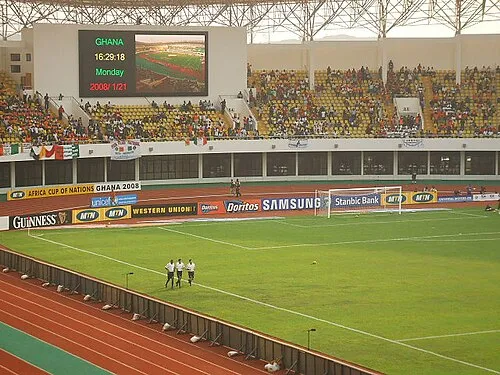
Archive Sekondi-Takoradi Stadium view with an older Ghana 2008 event display. It illustrates the venue, not match-night conditions in November 2026.
What is the difference between pressure and possession?
Possession concerns control of the ball; pressure can involve how a team restricts an opponent or creates repeated difficult situations. A side can have the ball in relatively safe areas without constantly threatening the goal. Another can create danger quickly with fewer touches.
To discuss pressure meaningfully, describe a sequence. Where did the ball move? Did the opposition have time to recover? Did a delivery enter a dangerous area? These questions give substance to the word without requiring a speculative percentage.
Do not infer a player's private intention from a highlight alone. A pass reaching a teammate is visible. A claim about a specific pre-planned combination may need a fuller replay or a direct explanation from those involved.
What is the next Ghana–Somalia fixture?
The GFA's completed report lists another meeting with Somalia on Monday 16 November 2026 at Sekondi. That is a separate fixture and should not inherit the 2–0 result as if it has already been played.
Readers should check the latest official schedule before making time-sensitive plans. A return fixture can have its own venue, start time and administrative arrangements. An older preview may not reflect a later change.
This guide does not predict the next score or confirm an unannounced starting lineup. A successful performance in the first meeting does not automatically establish future availability or selection, even for players who scored.
How do home and away labels affect a double-header?
The team listed first can identify the designated home side in a fixture record, but practical hosting arrangements still need to be checked. Neutral venues and scheduling decisions can make assumptions based solely on the order of names unreliable.
Use the official ground entry rather than guessing the location from the fixture label. If two meetings are played in the same city, that does not turn them into one match or mean the second game's formal designation is irrelevant.
For a notebook, record date, designated teams, ground and status in separate columns. This is especially useful when a qualifying window contains several games in quick succession and search engines display both previews and results together.
How can a first international goal be reported accurately?
The GFA identifies Adjetey's opener as his first goal for Ghana. That is a specific national-team milestone. It should not be expanded into a claim that he had never scored in club football, youth football or any other competitive setting.
A milestone needs its scope. First senior international goal, first goal in a particular competition and first goal for a club are different achievements. Retaining the exact category respects the player's record and helps the reader understand why the moment mattered.
The same principle applies to appearances, captaincy and clean-sheet records. A short headline can omit qualifiers, but the body should restore them. Precision is not unnecessary detail when the qualifier changes what the claim actually means.
A practical exercise with a qualifying table
Create a fictional four-team group and write three results for each side. Make sure every result is represented consistently for both participants. Allocate points using the stated rules and keep goals scored and conceded in separate columns.
Now change one result from a defeat to a 2–0 win. Update points, wins, defeats and goal statistics. Notice that the change affects more than one column, and that a convincing margin does not create more ordinary win points than a narrow success.
Finally, list what you would need to prove qualification: remaining fixtures, available points, progression places and tie-break rules. The exercise is intentionally fictional. It teaches the method without pretending to supply a verified full table for this real campaign.
What can students learn from comparing two reports?
Read the GFA match account alongside a separate report from a recognized news organization. Identify the shared facts first, then note differences in emphasis. One may focus on the national-team performance while another emphasizes the wider qualifying campaign.
Differences in emphasis do not automatically mean one report is false. Contradictory scores, dates or identities do require resolution. Distinguish a different angle from a different factual claim before deciding that two sources disagree.
Write a short summary using your own language. Include the result, date, scorers and the campaign significance. Leave out details you cannot verify. This develops news comprehension without copying another publication's wording or treating its commentary as a new fact.
Where can supporters find reliable updates?
The GFA and CAF provide relevant official competition and national-team information. For a live score, use a service that clearly labels the match's status and update time. A static result article should not be mistaken for a continuously refreshed scoreboard.
Keep local time and your own time zone distinct when checking the next kickoff. A time displayed without a zone can be misunderstood, especially by readers following from Pakistan. Use the schedule's stated zone before converting it.
For other dated match guides, visit the RayTech article library. Compare results with their event identities intact. The useful habit is not simply remembering who won, but understanding which match was played, what the result changed and what remains undecided.
Common questions
What was the completed result?
Ghana won 2–0 against Somalia at Sekondi on 12 November 2026. The score belongs to the AFCON qualifying campaign.
Who scored the goals?
Jonas Adjetey scored before half-time and Felix Afena-Gyan added the second. The opener was identified by the GFA as Adjetey's first Ghana goal.
Did the victory confirm qualification?
This article does not make that claim. It records Ghana's first points after two opening defeats and keeps future qualification separate from the completed result.
Is the return game's result included?
No. The reported return fixture on 16 November was a future event at the research point. It requires its own verified result after completion.
Sources
- GFA: completed Ghana–Somalia report
- GFA: official photo report confirming the scorers
- GFA: Adjetey's first international goal and return-fixture comments
- Ghana News Agency: campaign context
Checked on 14 November 2026. Table exercises are fictional learning activities. Archive photographs are illustrative and do not establish match-night conditions.
Image credits: cover: Bryan Berlin / WikiPortraits, source, CC BY-SA 4.0. Resized and converted to WebP. inline: Oluniyi Ajao, source, CC BY-SA 3.0. Resized and converted to WebP.
Found an error or an outdated detail? Report a correction with the article URL and original source.