
Hakeem Jeffries: House Democratic Leader, Speaker Elections and Public Record
Check Jeffries’s current House role, public career and the distinction between midterm coverage, party leadership and a completed Speaker election.
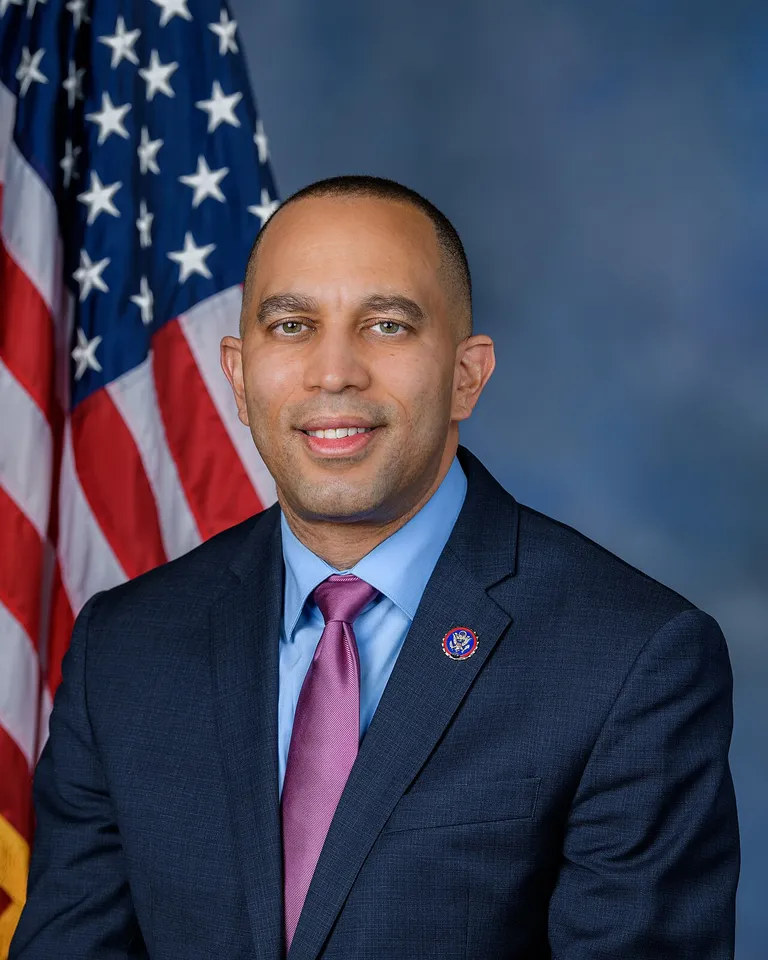
Hakeem Jeffries is a Democratic member of the United States House of Representatives from New York and the House Democratic Leader. As checked on 6 November 2026, the House's official leadership page lists Mike Johnson as Speaker and Jeffries as Democratic Leader. Those are different offices. Interest in a possible future speakership should not be reported as though a Speaker election has already occurred.
Post-midterm coverage has brought renewed attention to Jeffries and the next House leadership contest. This profile explains his verified public record, his current institutional role and the difference between election coverage and the House's own procedures. It does not invent a certified seat count, a completed future leadership vote or an announcement unsupported by the official record.
Who is Hakeem Jeffries?
Jeffries represents New York's Eighth Congressional District. His official congressional biography identifies him as the Democratic Leader, selected by his colleagues in 2022 and again in 2024. The institutional role concerns leadership of House Democrats; it does not make him the president, a senator or the presiding Speaker of the entire House.
His public career includes service in the New York State Assembly before entering Congress in 2013. These are different legislative institutions. A state-assembly role should not be relabelled as service in the federal Senate, and a congressional district should not be described as representing an entire state in the same way as a senator.
For readers outside the United States, that distinction supplies essential context. The word congressman normally refers here to his membership of the House, while Congress itself includes both the House and Senate. Naming the chamber makes a profile easier to understand than relying on a familiar political title alone.
What does the official biography establish about his background?
The House's historical record identifies Jeffries as born in Brooklyn in 1970 and records his education at Binghamton University, Georgetown University and New York University. It also describes legal work and service in the state assembly before his federal congressional career. These are biographical facts, not an endorsement of a policy position.
| Career stage | Public-record context |
|---|---|
| Education | Undergraduate, public-policy and law studies recorded by the House |
| New York State Assembly | Service before entering the federal House |
| Federal congressional service | Began in January 2013 |
| House Democratic leadership | Selected by colleagues for the 118th and 119th Congresses |
The table separates education, legislative membership and party leadership. A polished biography should preserve those categories rather than imply that one credential automatically supplies authority over every part of the federal government.
What is the difference between a representative and a senator?
A representative serves in the House from a congressional district. Senators serve in the other chamber of Congress under its separate constitutional structure. The chambers participate in the federal legislative process, but their membership, leadership and procedures are not identical.
Jeffries's district and House role should therefore remain visible in an article about him. A statement from a House leader is not automatically a Senate decision, and a House vote is not the same event as a vote in both chambers. This distinction becomes important when a headline says Congress passed something without explaining which stage has been completed.
For a classroom activity, draw two boxes labelled House and Senate and place a fictional legislative proposal between them. Then identify which record would establish action in each chamber. The exercise teaches institutional reading without asking students to support any political party or policy.
What does House Democratic Leader mean?
The House's leadership explanation says party members meet separately to select their leaders. Jeffries leads the Democratic side of the House under that organisation. A party leadership choice and the election of the Speaker by the whole House are separate processes with different institutional consequences.
This means a party can identify its leader or preferred Speaker candidate without that person already holding the speakership. The title should be taken from the appropriate current record. A campaign statement, caucus choice and completed floor election should not be collapsed into one event simply because they concern the same person.
Use a fictional example with Party A choosing a leader internally. The choice establishes whom that group has selected, not necessarily the outcome of a later vote involving all relevant members. Keeping the stages separate makes the procedure understandable without predicting how any real member will vote.
Who elects the Speaker of the House?
The Speaker is elected by the House of Representatives. The House's official explanation describes the Speaker's institutional, administrative, party and representative roles. The office is not automatically awarded by a news organisation calling a set of district races, nor is it filled by the president choosing a preferred congressional leader.
For the exact procedure in an actual contest, use the House Clerk and official House records. Attendance, nominations and the applicable voting process need their own documentation. This guide explains the institutional distinction and does not invent a vote threshold or a future vote total for a contest not yet completed.
The practical verification question is simple: where is the record of the House electing the Speaker? If a headline instead concerns a bid, nomination or expectation, preserve that language. A possibility can be important news while remaining different from a completed official action.
Why do midterm results and the next Congress have different dates?
An election chooses the people who will serve in the next term under the applicable constitutional timetable. It does not mean every office and leadership arrangement changes at the moment a projection is published. The current Congress and the incoming Congress are different time-bound institutional records.
For a student reading November 2026 coverage, this is crucial. A report about expected control of the next House can coexist with an official leadership page describing the current House. The records answer different questions. Check which Congress and date each statement concerns before calling the difference an error.
Make a timeline with election coverage, completion of the relevant electoral processes, the beginning of the next Congress and its leadership actions. Do not invent dates beyond the verified timetable or claim that every result is final. The timeline's purpose is to preserve the sequence, not forecast a particular political outcome.
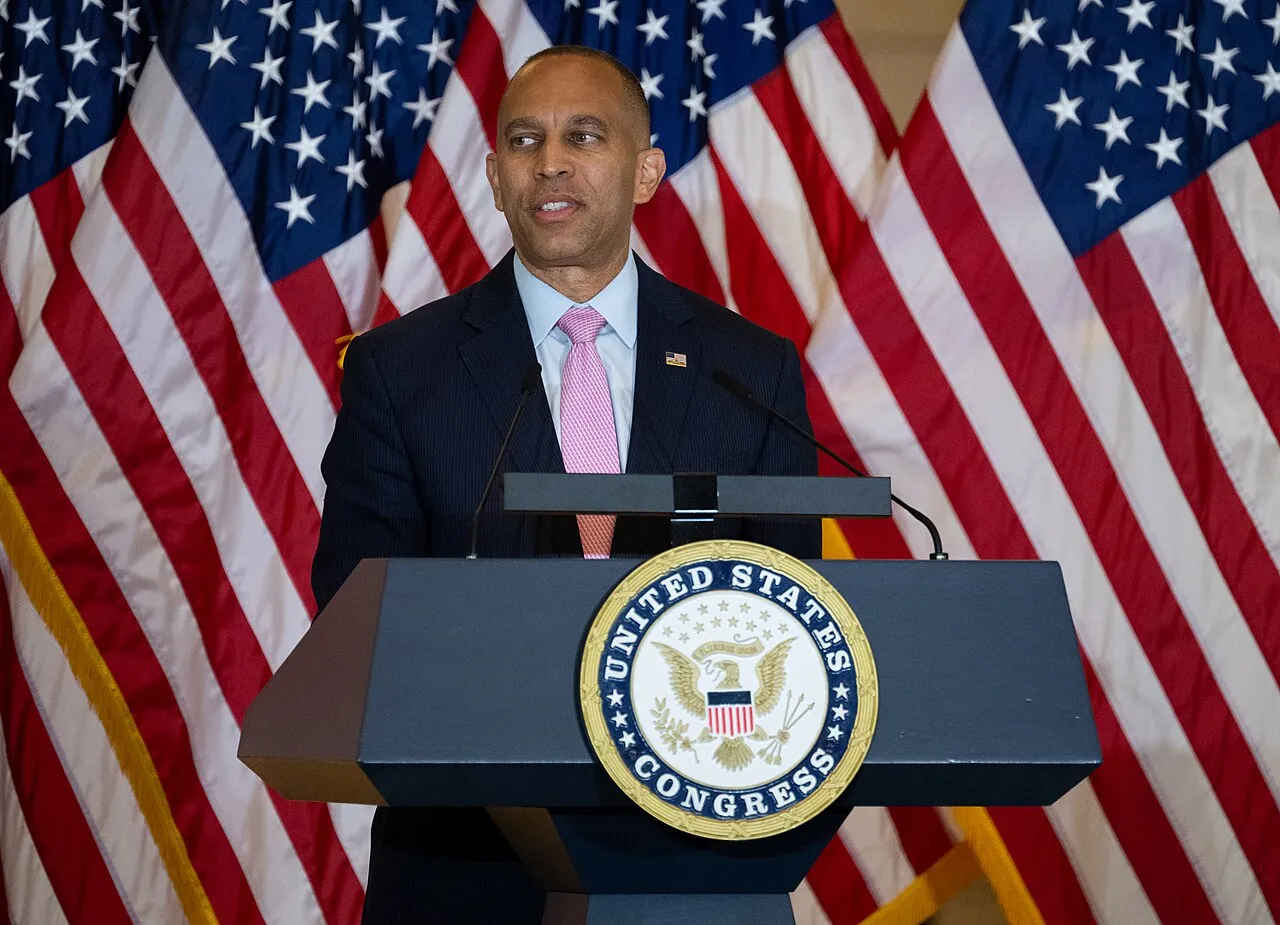
An archival Congressional Gold Medal ceremony for the Hidden Figures honourees in September 2024, shown as institutional context rather than a Speaker election.
Is a projection the same as a certified election result?
A media projection is an organisation's assessment based on its process and available evidence. Certification and official result procedures belong to the relevant electoral authorities. A responsible article identifies which kind of statement it is reporting instead of using the word official as a general substitute for confidence.
An individual district result, an aggregate expectation about chamber control and a later House leadership vote are also different records. Evidence for one should not silently become proof of all three. A statement about Jeffries's potential future role requires the appropriate procedural context.
This guide does not publish an unverified national seat count. It uses the current House leadership record to identify his present office and explains why later leadership developments need their own official evidence. Readers should check current election authorities and House records for the precise stage of a changing story.
What can a member's official website verify?
A member's site can establish contact routes, published statements, listed services and biographical information from that office. It is also a political communication source. A factual researcher should distinguish an office's description of its policy achievements from an independently established conclusion about their effects.
For example, a statement that an office supports a proposal is evidence of that stated position. It is not, by itself, proof that the proposal became law or achieved every claimed benefit. Legislative status and real-world outcomes need the records appropriate to those questions.
Use neutral attribution when discussing political claims. Avoid copying partisan praise or criticism into a biography as though it were an uncontested institutional fact. A useful profile can explain who the official is and what the office does without becoming a campaign message.
How should legislation be checked?
Identify the proposal and consult the official legislative record for its current status. Introduction, committee action, a vote in one chamber and enactment are different stages. A speech or press release about a bill does not automatically establish that the entire legislative process has finished.
For an invented example, a fictional proposal passes the House but has not completed the other required steps. Calling it a new law would overstate what the supplied record establishes. The correct summary should name the completed stage and the remaining uncertainty.
This is an educational explanation, not legal advice about a real statute. The same reading discipline helps students follow political news from many countries: identify the institution, document, date and stage before repeating a headline about a new rule or promised benefit.
How does Jeffries's role differ from the vice presidency?
The House Democratic Leader is a congressional party leadership role. The vice presidency is an executive office with a constitutional relationship to the Senate. Neither office is a different name for the other, and a person holding one does not automatically exercise all the functions of the other.
Our JD Vance and vice-presidential role guide explains that separate office. When reading a headline involving both officials, identify which institution each represents. This prevents a House political statement from being misreported as an executive decision or a Senate vote.
For a comparison table, list office, institution, how the role is obtained and the source used to verify the holder. The table is more useful than a generic ranking of powerful people because it explains the kind of authority involved rather than implying that every public official performs interchangeable duties.
What should a current Jeffries news update include?
A dated update should state what happened, which institution acted and what evidence establishes it. If the news is a leadership bid, say bid. If it is a caucus decision, identify the caucus. If it is a completed House action, cite that record rather than relying on a prediction made earlier in the week.
The review date also belongs beside claims about current office. This profile was checked on 6 November 2026, when the official page used here listed Johnson as Speaker and Jeffries as Democratic Leader. A later change would require an update, not the assumption that today's wording remains permanently current.
Avoid using an old photograph to imply that a new election or swearing-in has occurred. A portrait can identify Jeffries while still being unrelated to the latest headline. Captions should preserve the source's supported setting and leave procedural claims to the relevant records.
How can students study the story without partisan assumptions?
Begin with an office map rather than a preferred political outcome. Place House, Senate and executive branch in separate boxes, then attach the relevant official titles. Write one question for each box: who serves here, how is the role obtained and what document confirms an action?
Next, compare a fictional campaign statement with a fictional completed vote record. Label the first a proposal or intention and the second an institutional action. The exercise teaches source evaluation without asking students to campaign, donate or support a particular candidate.
Our study resources and programming courses can support a small civics timeline or document index. Use invented data for practice and clearly distinguish current records from historical entries. An interface that displays office and date together makes political information easier to evaluate responsibly.
Questions readers commonly ask
Is Hakeem Jeffries already Speaker in this article's official check?
The House leadership page checked on 6 November 2026 lists him as Democratic Leader and Mike Johnson as Speaker. Coverage of a possible future speakership should retain its conditional or procedural status until the appropriate House action establishes a change.
Does leading a party mean representing every member of the House?
The party leader's role and the Speaker's institutional role differ. The House explains their selection and responsibilities separately. A clear report names the actual office instead of using leader of the House as an imprecise description for every senior congressional figure.
Does this profile declare every midterm race certified?
No. It explains how to distinguish current office, election coverage and leadership procedures. Use the appropriate election authorities and official House records for changing results. A career and civics guide should not present an unchecked aggregate or a forecast as a completed formal action.
Sources
- House of Representatives: current leadership and role descriptions
- Jeffries's congressional office: biography
- House Clerk: member record
- House: the institution explained
- Congress.gov: official legislative records
Image credits: cover: Office of Representative Hakeem Jeffries, source, Public domain. Resized and converted to WebP. inline: NASA Headquarters / NASA/Joel Kowsky, source, Public domain. Resized and converted to WebP.
Found an error or an outdated detail? Report a correction with the article URL and original source.