
HQ-19 Explained: Public Evidence, Missile Defence and Unverified Claims
Explore HQ-19 using public sources: its reported missile-defence role, differences from similarly named systems and the limits of range and export claims.
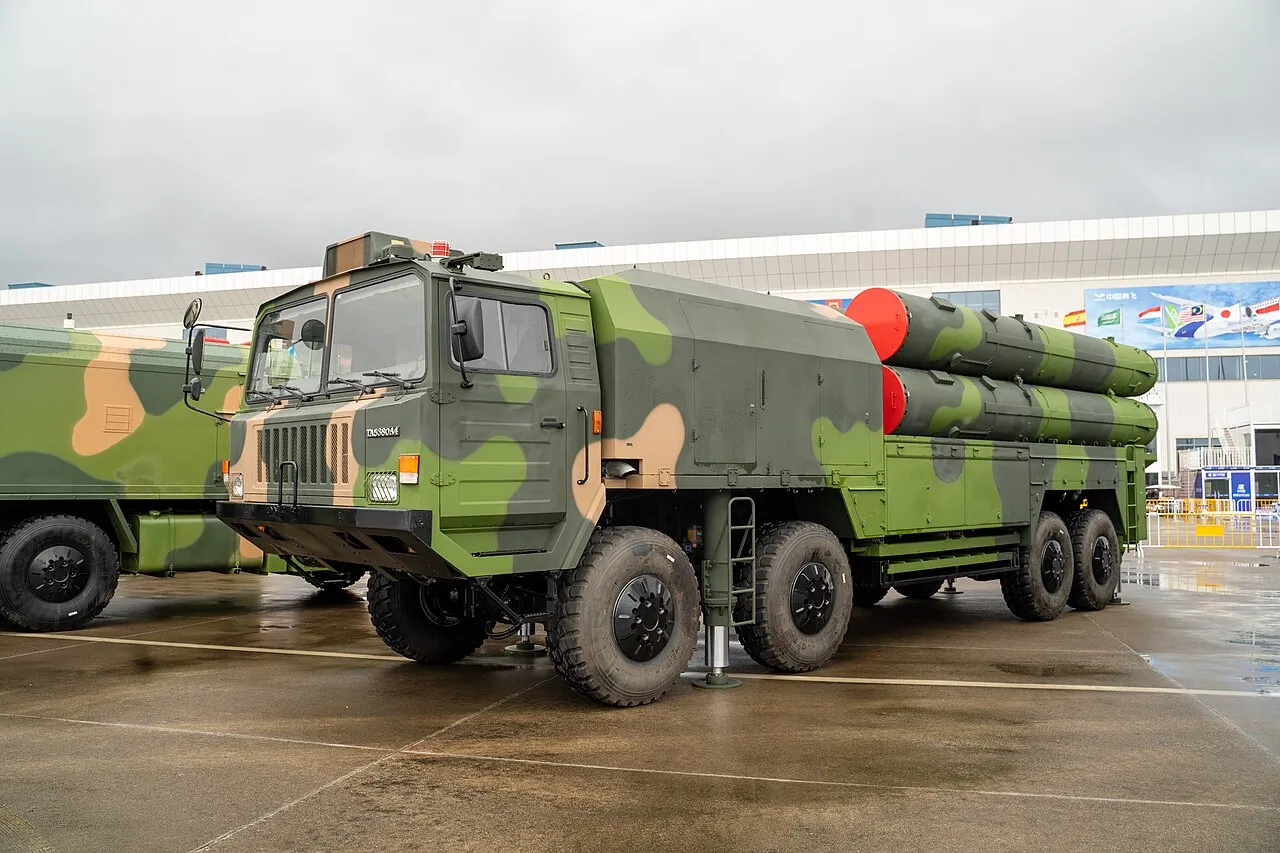
HQ-19 is a Chinese missile-defence system discussed in public reporting as an interceptor for ballistic-missile threats. It is not simply another name for every Chinese air-defence weapon. Japan's 2026 defence white paper distinguishes HQ-19 from HQ-29, and the public descriptions do not justify claims of guaranteed protection, a universal interception range or confirmed use in a particular battle.
For readers trying to understand a headline, the most useful first distinction is between the system's reported role and independently demonstrated performance. A weapon appearing at an air show, being described in a government assessment and being tested under stated conditions are different forms of evidence. None should be silently substituted for the others.
What does HQ-19 refer to?
The designation identifies a particular Chinese missile-defence system within a wider family of air- and missile-defence equipment. Public sources connect it with ballistic-missile interception. That broad description explains the category without implying that every radar, launcher or missile carrying a similar prefix has identical capabilities.
The distinction matters because search results often place HQ-9, HQ-19 and HQ-29 together. Similar names can indicate related national naming conventions without proving that the systems are interchangeable. A photograph or specification belonging to one should not be reassigned to another because the designations look familiar.
This guide stays at the level of public terminology, source interpretation and strategic context. It does not provide operational instructions, engagement settings, deployment locations or a technical assessment of how to defeat a defence system. The purpose is to understand the reporting accurately rather than turn uncertain claims into a battlefield manual.
Air defence and ballistic-missile defence are related, not identical
Air defence is a broad category that can include protection against aircraft and other airborne threats. Ballistic-missile defence concerns a particular kind of threat and its flight characteristics. A system described as defending airspace does not automatically possess every capability associated with intercepting ballistic missiles.
The target category should therefore remain attached to a capability claim. A statement about aircraft interception should not be presented as evidence of performance against a ballistic missile. Likewise, a report about one kind of missile test does not establish effectiveness against every other missile type.
For a general reader, the useful question is not merely whether a weapon is called advanced. It is what role the source describes and what evidence supports that description. Words such as strategic, high-altitude and long-range need context rather than serving as substitutes for a defined function.
Why flight phases appear in the discussion
The US Missile Defense Agency divides ballistic-missile flight into boost, midcourse and terminal phases. These terms identify stages of a trajectory. They help explain why reports distinguish systems intended for different parts of a missile's flight rather than treating interception as one uniform task.
At a high level, boost concerns the powered beginning, midcourse the intervening trajectory, and terminal the final approach. The terminology is useful without requiring specific timing, sensor settings or engagement geometry. It gives a reader a vocabulary for understanding why two public assessments may focus on different roles.
The phase described by a source is not the same thing as the interceptor's own maximum travel distance. A headline that mixes the two can make a system seem to cover an area that the cited information does not establish. Keep trajectory stage, target class and performance measurement separate.
What Japan's 2026 white paper says
The Japanese defence ministry's 2026 account discusses China's work on missile defence and describes HQ-19 in connection with terminal-phase interception. It separately identifies HQ-29 with a midcourse role and its public appearance at the 2025 parade. The distinction is important because it shows that the designations should not simply be merged.
This is an attributed government assessment, not a complete technical specification supplied by the manufacturer. It is evidence of how that ministry characterises the development. Readers should preserve the attribution and avoid treating the wording as a direct transcript of classified performance data.
Different assessments can also use cautious language. A phrase meaning that a system is believed or said to perform a role should not be translated into an unconditional guarantee. Removing that qualification can materially change a public defence report's level of confidence.
The public-display record has limits
Public records and reporting identify the HQ-19 display at the 2024 Zhuhai air show. An exhibition can establish that a system is being presented publicly and provide imagery for identification. It does not, by itself, demonstrate a successful interception under combat conditions.
A display photograph can show visible equipment, but it cannot answer every question about production numbers, reliability, supporting networks or readiness. It should be captioned for the event it actually depicts. An air-show image is not a photograph of a system firing in a recent conflict.
The distinction applies to video as well. A montage can combine transport, display and test footage from different dates. Before interpreting it as one event, identify the source and the sequence. A dramatic edit does not supply the documentary links needed to establish where and when each part was recorded.
Range figures need a label
Defence coverage uses the word range for different quantities. It may concern a sensor's detection claim, an interceptor's flight, the defended region or the class of incoming missile. These numbers are not interchangeable. A figure describing one should not be relabelled as another because both are expressed in kilometres.
This guide does not reproduce an unverified maximum engagement distance or speed for HQ-19. Public descriptions vary, and a precise-looking number without its definition and conditions can mislead more than a clear statement that the value is not established here.
The same caution applies to altitude. A stated ceiling is not a guarantee that every threat below it will be intercepted. The meaning of a performance claim depends on the source's terms and the conditions under which it was measured. A general news profile should not erase those conditions to produce a simple comparison chart.
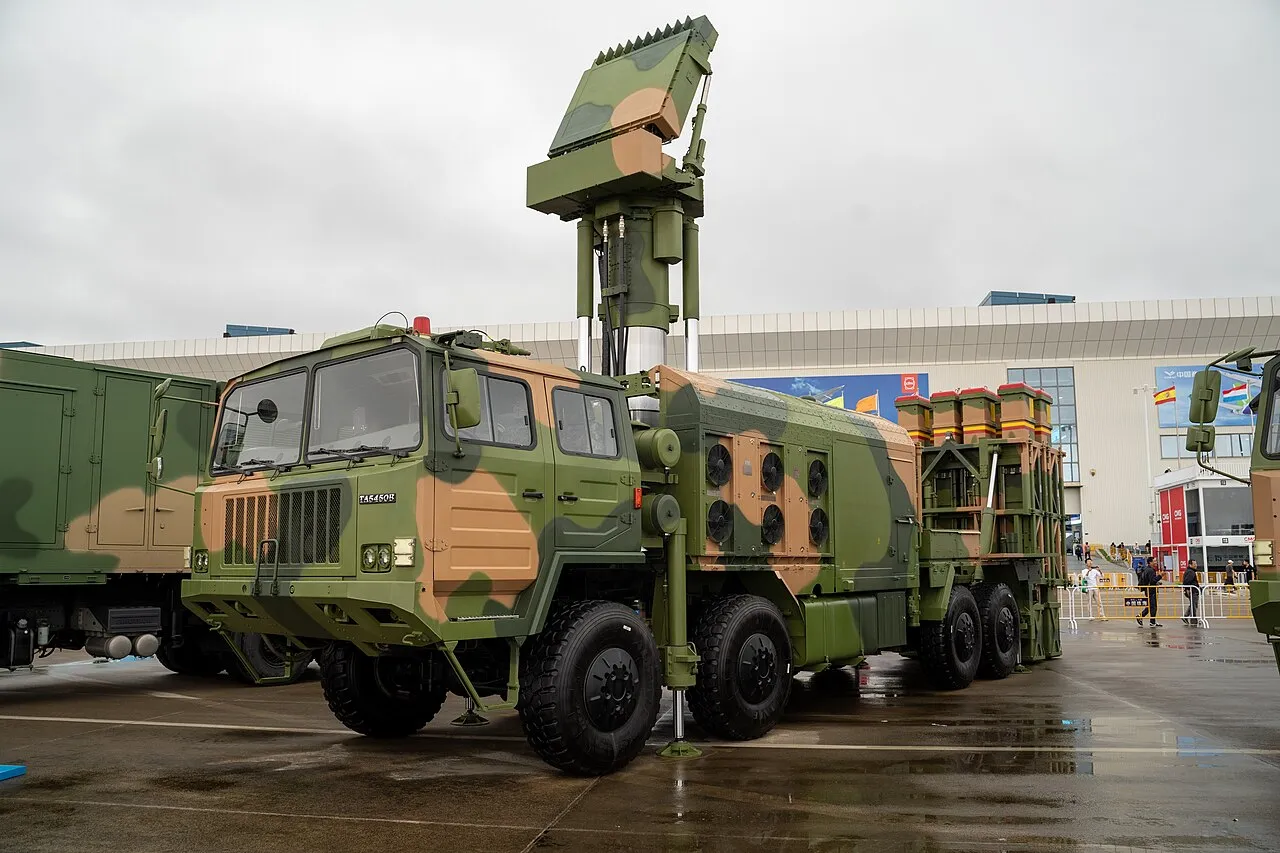
This is HQ-11, not HQ-19. The separate model illustrates why shared naming prefixes and airshow photographs must not be treated as evidence of identical systems.
Why comparisons with THAAD need restraint
HQ-19 is often compared with foreign missile-defence systems because readers recognise those names. A comparison can be a way of explaining a broad role, but it does not prove equivalence in sensors, interceptors, integration, testing, coverage or operational experience.
The label equivalent is particularly easy to overread. Two systems can be discussed in a similar category while differing substantially in design and evidence. A comparison that begins as an analogy should not become an unsupported claim that one has matched every measured capability of the other.
For the same reason, this article does not rank systems as unbeatable or useless. Those judgements would require a much stronger and more specific evidence base. A credible explanation can identify the category and uncertainty without turning the subject into a contest decided by promotional adjectives.
A defence system is more than its launcher
Public photographs naturally draw attention to the launcher because it is large and recognisable. Missile defence also involves information gathering, communication and decision-making elements. The Missile Defense Agency's overview describes a system of elements rather than presenting a single vehicle as the entirety of a defence architecture.
That general principle helps readers avoid a common inference: seeing several launchers does not establish the full capability or readiness of a national network. A photograph records what is visible in that scene. It is not a complete inventory of supporting equipment or a test of how the elements operate together.
This guide does not infer network layout from photographs or provide deployment advice. The educational point is about the scope of evidence. A visible component can be genuine while still being insufficient to support a much broader claim about coverage or effectiveness.
Tests, service entry and combat claims are different
A test report concerns a specified demonstration under particular conditions. A statement about service entry concerns organisational adoption or availability. A combat claim concerns an operational event. Each needs evidence suited to that question, and one label should not automatically be promoted into the next.
For example, an exhibition date is not necessarily a first operational deployment date. Similarly, a claim that a system is in service does not establish that it intercepted a particular target in a recent incident. A responsible report keeps those steps distinct even when doing so produces a less dramatic headline.
When looking at an interception claim, check whether an identified authority has confirmed the event and whether the claim names the system. A generic account of an air-defence response is not enough to identify the particular equipment used. This article does not attach HQ-19 to an unverified battlefield event.
What can be said about Pakistan-related claims?
Pakistan-focused searches can place Chinese defence equipment in the same discussion, but a general statement about defence cooperation does not confirm a particular HQ-19 acquisition or deployment. Such a claim would need its own reliable, dated evidence, ideally identifying the responsible authority and the equipment explicitly.
This guide does not establish a Pakistani deployment, an acquisition price or an operational location. It also does not treat the absence of confirmation in the material reviewed as proof that every possible claim is false. The position is narrower: those specific assertions are not verified here.
That distinction protects readers from two errors. One is repeating an unsupported acquisition story as fact. The other is issuing an equally unsupported categorical denial. A useful article can clearly state the evidence boundary without pretending to possess information that is not in its sources.
How to judge a new HQ-19 report
Begin with the publication date and the source's relationship to the subject. Is it an official announcement, an external government assessment, a manufacturer description or commentary? Then identify the actual claim: display, testing, procurement, service or an alleged operational event.
Next examine whether the photographs and quotations belong to that claim. A report can contain authentic older imagery without documenting a new event. The image date and caption should remain visible rather than allowing a reader to assume that every picture was taken on the publication date.
Finally, separate capability descriptions from demonstrated outcomes. Terms such as may, reportedly and assessed should survive the summary when they express real uncertainty. Removing them does not make the explanation more confident in a useful way; it changes the claim being made.
Why reliable coverage avoids absolute protection claims
Missile defence concerns complex systems and specific threats. A public description of a capability is not a promise that no attack can succeed. Claims of complete protection or certain failure often outrun the evidence available in open reporting.
This is not a prediction about a particular conflict. It is a limit on what can be concluded from the material discussed here. A careful account can explain why a system attracts attention while avoiding numerical success rates, exact coverage maps or performance guarantees that its sources do not substantiate.
The same standard should apply regardless of country. Official descriptions and external assessments should be identified, compared carefully and kept within their scope. The quality of a defence explanation depends on its evidence and definitions, not on which side produces the most impressive promotional footage.
Questions about HQ-19
Is HQ-19 the same as HQ-9 or HQ-29?
No. The designations refer to distinct systems in public reporting. Similar naming does not make their roles or capabilities interchangeable. Japan's 2026 assessment specifically distinguishes HQ-19 and HQ-29 in its missile-defence discussion, which is a reason to preserve the full designation in any summary.
Does an air-show photograph prove combat success?
No. It documents a display, not a battlefield interception. A combat claim needs evidence of the event, its date and the system involved. Historical display imagery can be useful identification material if it is labelled accurately and not presented as footage of a recent engagement.
Can one range figure explain the entire system?
No. Sensor range, interceptor performance, incoming-missile classification and defended coverage describe different things. A number without its definition is easy to misuse. This guide leaves unverified performance figures out rather than turning a poorly labelled value into a misleading specification.
Has this article confirmed Pakistani deployment?
No. It explains the Chinese system's public reporting and does not verify a specific Pakistani acquisition, deployment or operational use. Those claims require separate dated evidence. No operational location, price or classified detail has been inferred from general defence-cooperation news.
For more technology and world-affairs explanations, explore the article library. Students learning to compare sources can use class study resources for separate academic practice. Public defence reporting should be read as evidence with boundaries, not as an instruction manual or a guarantee about future events.
Sources
- Japan Ministry of Defense: 2026 white paper, China military section, for the attributed HQ-19/HQ-29 distinction.
- Japan National Institute for Defense Studies: 2025 perspective, for the 2024 Zhuhai public-display context.
- US Missile Defense Agency: A system of elements, for high-level flight-phase and system terminology.
- US Department of Defense: missile-defence overview, for general terminology, not as a technical endorsement of HQ-19. No public estimate is converted into an independently verified performance guarantee.
Image credits: cover: Z3144228, source, CC0. Resized and converted to WebP. inline: Z3144228, source, CC0. Resized and converted to WebP.
Found an error or an outdated detail? Report a correction with the article URL and original source.