
ICC Cricket World Cup 2027: Dates, Hosts and the New Format Explained
Understand the announced 2027 ODI World Cup dates, three host countries, Super Series and Super 7, and why older format documents show different totals.
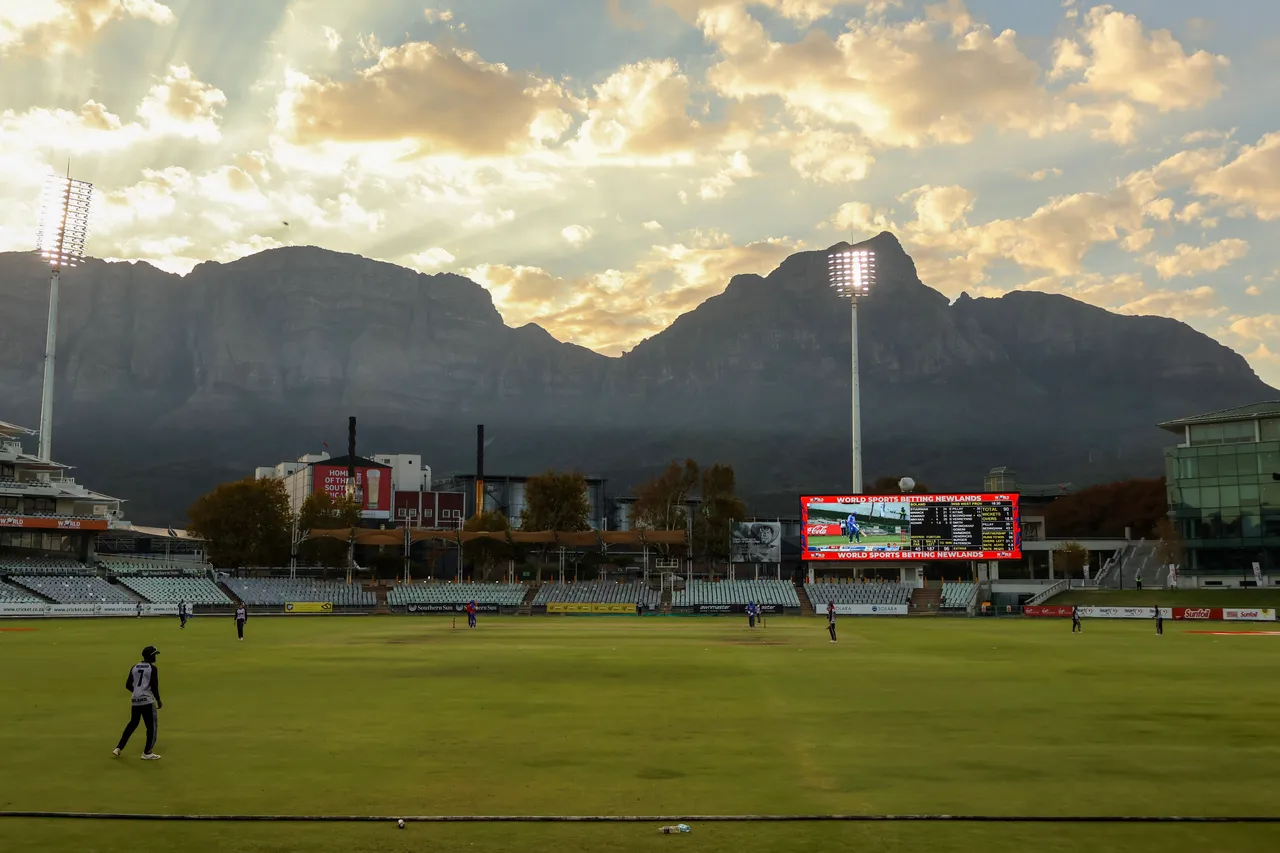
The ICC Men's Cricket World Cup 2027 is scheduled for 2 October to 21 November 2027, with South Africa, Zimbabwe and Namibia hosting. The ICC's October 2026 announcement describes fourteen teams and fifty-seven matches, including a preliminary Super Series, a group stage and a Super 7 stage before the knockouts.
Some older planning documents describe a different format. This guide follows the later dated announcement and explains how its match totals fit together. It is about the men's fifty-over World Cup, not the T20 World Cup, a women's tournament or an automatically updating list of qualified teams.
The announced structure in one table
| Stage | Teams or arrangement | Announced matches |
|---|---|---|
| Preliminary Super Series | Three teams, one advances | 3 |
| Group stage | Two groups of six | 30 |
| Super 7 | Seven teams, single round robin | 21 |
| Semi-finals | Four teams | 2 |
| Final | Two teams | 1 |
| Total | Full tournament | 57 |
The distinction between fourteen tournament participants and twelve group-stage participants is deliberate. The announced preliminary round reduces three entrants to one advancing side, which joins the teams already entering the next stage. It is not a table error that should be “corrected” by adding two invented group-stage places.
This also shows why a tournament's headline field size is not always the number of teams playing in every stage. A reader needs the progression diagram, not only the first large number printed on a promotional image.
Why are older articles showing fifty-four matches?
Earlier published planning material described two groups of seven and a Super Six structure. The later October 2026 schedule announcement sets out the fifty-seven-match arrangement above. A genuine older document can therefore differ from the newer schedule without being a forged source.
When information changes, publication date and document purpose matter. An early request for proposals can establish a planning assumption, while a later public schedule can describe the arrangement fans are now being asked to follow. Do not silently combine the two into a third format that neither source announced.
For a saved timetable, preserve the source and review date. This page's format review is dated 3 November 2026. Later official amendments, if issued, should be checked before using it for travel or a detailed fixture plan.
How does a three-team round robin produce three matches?
In a single round robin, each team meets every other team once. With three teams labelled A, B and C, the distinct pairings are A-B, A-C and B-C. Reversing a label to B-A does not create an additional fixture unless the competition explicitly requires a return meeting.
This is a useful distinction between counting opponents and counting matches. Three teams each have two opponents, which produces six team appearances. Every match uses two of those appearances, so dividing by two gives three actual matches.
The calculation explains the preliminary stage's total without predicting which entrant progresses. Counting the schedule is a mathematical question. Deciding the winner requires the actual results and the applicable classification rules.
How do two groups of six produce thirty matches?
A six-team single round robin contains fifteen distinct pairings. One way to count them is five opponents for the first team, four remaining new pairings for the next, then three, two and one. Those counts add to fifteen rather than thirty because a pairing is recorded only once.
With two independent groups, the group-stage total becomes thirty. This is a count of scheduled fixtures, not a claim that every group match must produce a completed result. Weather and other match circumstances are separate from the original fixture arithmetic.
The same method works for another group size: multiply the number of teams by one less than that number, then divide by two. The division prevents counting both directions of every pairing as separate games in a single round robin.
Why is Super 7 a twenty-one-match stage?
Seven teams create twenty-one distinct pairings in a single round robin. Seven multiplied by six gives forty-two team appearances; dividing by two gives twenty-one fixtures. Each side has six opponents within that stage.
The calculation does not tell us how points are awarded, how interruptions are treated or which tie-break rule applies. Those belong to the competition regulations. A correct fixture count should not be presented as a complete rulebook.
It also does not require assuming that earlier results carry forward. The later announcement describes a complete single round robin at this stage. Readers should use the stated arrangement rather than import a carry-forward rule from another tournament simply because both use the word “Super.”
Why the qualification labels need care
A team can qualify for an intermediate qualifier, qualify for the World Cup itself or qualify for a later stage within the World Cup. These are different achievements. The word “qualified” needs its destination attached or a headline can suggest more progress than has actually been secured.
For an original example, imagine a competition in which a regional event leads to a national qualifier, which then supplies the finalists. Winning a place at the national qualifier does not automatically mean winning a place in the final event. The same reasoning applies to cricket pathways without making the fictional example an actual ICC rule.
When reading an announcement, write down the event reached and the event still ahead. This simple two-column note is more reliable than treating every qualifying headline as confirmation that the team will appear in the main tournament.
Are host status and automatic qualification the same?
Not necessarily. Hosting matches describes an organisational role; a place in a playing field depends on the event's actual qualification rules. A general assumption that every host is automatically in every stage can be wrong in a multi-country competition.
Use the organiser's qualification announcement for the specific event rather than a rule remembered from a previous World Cup. The 2027 release distinguishes the qualification routes and entry points, so those details should be checked directly when confirming a country's status.
This article does not fill unresolved places with popular teams or speculate about a qualifier winner. A blank or provisional qualifier label is more accurate than an invented country name in an otherwise professional-looking fixture graphic.

Host-country geographical context, not a stadium map, a current city survey or a live tournament photograph.
What does a seeded position mean?
A seed or provisional slot is a way of organising a competition pathway. It should not automatically be read as the final finishing position earned on the field. An announced slot can help plan a possible schedule while remaining subject to the stated qualification arrangements.
For supporters, the practical question is whether the fixture is fixed for a named team or conditional on that team reaching a particular stage. Those two cases have different planning implications. A graphic can look equally definite in both unless the condition is retained.
This page does not turn provisional later-round allocations into guaranteed team appearances. Check the official wording before booking around a possible knockout or later-stage match. A pathway illustration is not proof that a side has already progressed.
How does the field shrink before the final?
Different stage types remove teams in different ways. A league stage compares several results across a table, while a knockout sends a winner forward from a particular tie. A supporter should first identify which type of stage is being played before interpreting a single defeat.
Losing one group game is not automatically the same as losing a semi-final. The first can still leave further matches and qualification possibilities; the second is a knockout outcome under the relevant rules. The sporting significance comes from the stage, not only the margin.
Likewise, an undefeated start does not independently establish the final champion. The schedule still has to be played. A careful preview can describe a strong position without presenting the rest of the tournament as a mathematical formality.
What is the difference between a fixture and a result?
A fixture gives the planned contest, location and time. A result records what happened after play and the applicable decision process. A schedule table with future dates should not contain invented winning scores to make it look more complete.
A postponed, abandoned or rescheduled event also needs its actual status. If a match moves, the old fixture entry can continue appearing in search results. Keep the update context rather than assuming that a visible date is automatically the latest official arrangement.
This matters especially when a page combines fixtures and completed results. Read the status label and the date before sharing a screenshot. A prediction written before a game is not transformed into a verified result merely because the scheduled date has passed.
What should Pakistan readers check in a start time?
Look for the time zone shown by the organiser or broadcaster. The venue's local time and Pakistan Standard Time are not interchangeable. Some sports websites also convert times to the viewer's device settings, so two legitimate pages can display different clock values for the same instant.
Do not convert a time unless its source zone is clear. The date can also change when converting across zones, especially around midnight. A complete reminder contains the fixture, date, time and zone rather than just “starts at seven.”
This guide does not publish an unverified Pakistan-time list for every match. The date range and format are its reviewed subject. Use the current official fixture for an exact start time, then make any conversion with the relevant zone and date attached.
Tickets and travel require a separate check
An official schedule announcement is a useful starting point, but it does not itself establish ticket availability, visa permission, transport or accommodation. Each has its own conditions. A person selling a package online should not be treated as authorised merely because they reproduce the correct fixture list.
Begin with the organiser's official event and ticket route, and examine the specific offer's terms. For travel requirements, use the relevant authorities and current advice for your own circumstances. This article does not assess an individual's eligibility to enter a host country.
Avoid paying through an unfamiliar message that promises a guaranteed final involving your preferred team. A legitimate fixture does not guarantee a team's progression, and a confident sales claim cannot change the competition's sporting uncertainty.
A simple way to verify a tournament graphic
Check the event title and format first, then the year and issue date. Count the stages and compare their totals. If the graphic says fourteen teams but shows twelve entering a later stage, look for the preliminary pathway before deciding it contains an error.
Next, identify any qualifiers or conditional team labels. Finally, compare the whole arrangement with the current official source. A graphic that combines an old Super Six explanation with a new fifty-seven-match total may be mixing versions rather than accurately describing either one.
The count above provides a useful audit: three plus thirty plus twenty-one plus two plus one equals fifty-seven. It checks the internal arithmetic, not the current validity of every future fixture. Both kinds of check matter, and neither replaces the other.
Questions about the 2027 World Cup
Is this the T20 World Cup?
No. The article covers the ICC Men's Cricket World Cup in the fifty-over format. Men's and women's events, T20 tournaments and qualification competitions have separate names, schedules and rules. Keep the full event title when searching for a fixture.
Why do some sources describe Super Six instead?
Earlier planning material used that structure. This page follows the later October 2026 schedule announcement, which describes Super 7 and a different match total. Check the date and purpose of the source before combining details from different versions.
Does a seeded team automatically reach the later stage?
A planned slot does not replace the requirement to qualify under the applicable arrangements. Read the organiser's conditions rather than interpreting every named pathway as an already secured appearance. This guide does not predict qualifiers or knockout winners.
Is the fixture count a live progress tracker?
No. It describes the announced tournament structure. The number of completed, postponed or abandoned games would need separate current information once the event begins. A schedule count and a played-match count answer different questions.
Read the pathway before the prediction
The most useful preparation is understanding which stage a team is entering and what it needs to reach next. The later announcement provides the framework, while the pairing arithmetic explains the total. Predictions should remain labelled as predictions rather than slip into a schedule as supposed facts.
For background on qualification pathways, browse our cricket explainers alongside the organiser's current records. Our study resources provide related numeracy practice. Always recheck the official schedule before making time-sensitive plans; this article's review date is 3 November 2026.
Sources
- ICC: 2027 schedule revealed, 1 October 2026, for the later date range, host countries and announced stage structure.
- ICC: Earlier planning document, for the historical distinction from the earlier fifty-four-match, Super Six plan. Earlier planning assumptions are not presented as the current schedule. Pair-counting demonstrations and general reading examples above are original explanations, not additional announced fixtures.
Image credits: cover: EGilham, source, CC BY-SA 4.0. Resized and converted to WebP. inline: Brian McMorrow, source, CC BY-SA 2.5. Resized and converted to WebP.
Found an error or an outdated detail? Report a correction with the article URL and original source.