
ICC Rankings Explained: Rank, Rating and Cricket Tables
Understand ICC team and player rankings, the difference between rank and rating, and why tournament standings and one innings do not establish a new No. 1.
ICC rankings describe teams or players within a specified cricket category. Before reading a position as “best in the world,” identify the format, men's or women's category, team or player table, and the date. A batting rank is not a team rank, and a tournament points table is not the same thing as an ICC rating table.
This guide explains how to read those distinctions and practise the arithmetic behind a simplified rating example. It does not publish an unverified live top ten. The official rankings page linked in Sources is the place to check the current table before quoting a position.
Which ICC rankings table do you need?
Begin with the question you are trying to answer. If you want a team's ODI standing, opening an individual T20I batting table will not answer it, even when the page includes a familiar player from that team. Navigation labels are part of the information, not decoration around the numbers.
Write a complete description before copying a rank. “Men's ODI team ranking” is more meaningful than “cricket ranking.” For an individual, include the discipline, such as batting, bowling or all-rounder, along with the format and category.
A useful note might read: “I checked the men's ODI team table on this date.” Add the actual check date when you consult it. This makes your statement understandable later, when the order may have changed.
What is the difference between rank and rating?
The rank is the position in an ordered table. A rating is the underlying numerical measure used to compare entries. Reading only the position hides how close or far apart the underlying values may be.
Consider this fictional classroom table, which is not an ICC table:
| Position | Fictional team | Illustrative rating |
|---|---|---|
| 1 | Team A | 120 |
| 2 | Team B | 119 |
| 3 | Team C | 104 |
The distance from first to second is one rating unit in this example, while the distance from second to third is fifteen. Both adjacent pairs are one position apart. That is why a change of one rank does not always describe the same size of numerical change.
Do not transfer these invented values to real teams. They are designed to make the reading skill visible without pretending to reproduce a current ranking snapshot.
How does the ICC describe team ratings?
The ICC's explanation says team ratings divide points by the match or series total and round the result to a whole number. Its published method applies eligibility criteria and covers separate formats. The calculation is not simply a count of a team's most recent wins.
For a deliberately simplified arithmetic exercise, suppose a fictional team has 2,400 points across a total of 20 qualifying units. Dividing 2,400 by 20 gives 120. This illustrates the division, not the full ICC rules for awarding points, weighting matches or deciding eligibility.
If a second fictional team has 2,380 points over the same total, its illustrative result is 119. Comparing raw point totals becomes less straightforward when the denominators differ, which is why you should inspect the rating column rather than sorting teams yourself by points alone.
You can check the arithmetic with a calculator or a small program. But correct division does not establish that the inputs meet the official method. A complete ranking calculation requires the governing rules as well as the numerical operation.
Are player ratings calculated like team averages?
Not as a simple copy of the team calculation. The ICC describes player rankings as a points-based moving assessment, with ratings on a scale from zero to 1,000. Its algorithm considers match circumstances, and factors differ by format. A player's latest score alone is therefore not a complete ranking calculation.
For readers, the practical point is to avoid deriving a new official position from one headline performance. You can report the performance if verified, then check the updated player table before saying what it did to the ranking.
Separate a personal opinion from the table. You may regard a player as especially valuable because of a role or a memorable match. That is a discussion about cricket judgement; it should not be presented as an official rank unless the relevant table establishes it.
Why are tournament standings a different kind of table?
A tournament table answers questions about a particular competition: how participating teams stand under that event's rules. An ICC rankings table provides a different assessment within a format. A side can win a tournament match without the event's standings becoming a replacement for the format's rankings.
When reading a screenshot, look for the heading and column labels before interpreting the numbers. Columns labelled played, won, lost and net run rate suggest a different task from a table displaying a rating and ranking position. The labels tell you what comparison the table is designed to support.
Do not apply a competition's tie-break rules to a rankings table without checking its methodology. Similar-looking rows do not imply identical rules. This is the same reason a school exam leaderboard and a student's average across several terms need different explanations.
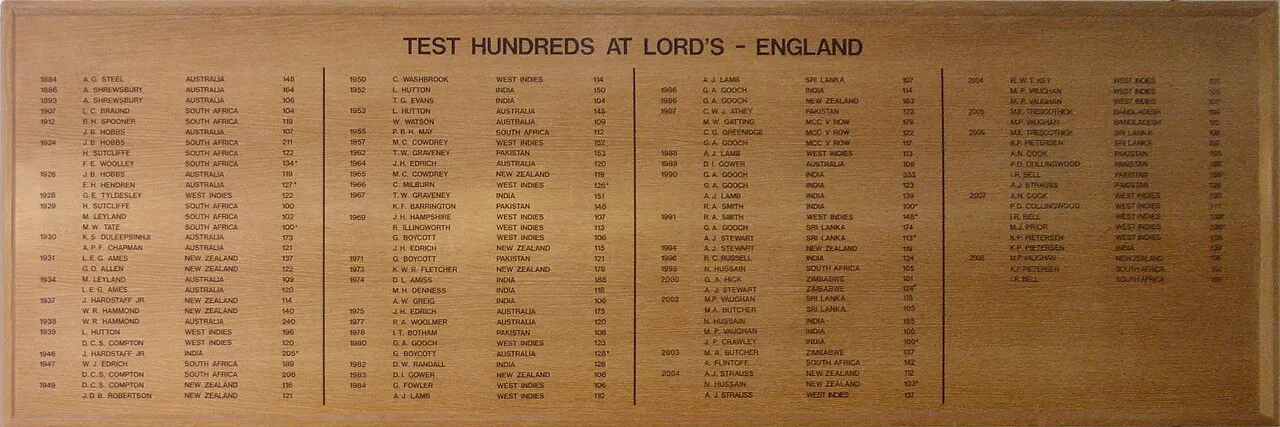
An honours board at Lord’s illustrates a different type of cricket record. It is not an ICC rankings table.
Does one strong innings establish a new No. 1?
No. A verified innings and a verified ranking update are separate pieces of information. A headline about a century does not itself establish the player's updated position in every batting category.
Try this reporting exercise. Write one sentence describing a checked match performance. Write a second sentence describing the table you consulted and its date. If you cannot verify the second sentence, leave it out rather than connecting the two with an invented ranking claim.
Our Pakistan–Sri Lanka final guide discusses a particular match and chase. It should be read as match context, not as a substitute for a current player or team rankings table.
How should you compare rankings from two dates?
Compare like with like. Use the same category, format and discipline, and preserve the date of each snapshot. A men's Test batting rank from one date cannot be meaningfully compared as a movement from a men's ODI batting rank on another date.
Record both the rank and rating if available. A player moving up one place might have an increasing, unchanged or otherwise differently affected rating depending on the full table. The position alone does not reveal every part of the change.
For a fictional exercise, imagine an entry changing from rank five with rating 700 to rank four with rating 705. You can describe the observed changes as one position upward and five rating points higher. You cannot infer the exact match-by-match causes without more evidence.
The ICC says annual rankings updates occur around 1 May. A comparison across an update should therefore be read with the methodology in mind rather than treated as proof that every change came from a match played that day.
How can students build a simple ranking-reading worksheet?
Use five fields: category, snapshot date, rank, rating and source. Add a notes field for anything that makes comparison difficult, such as missing values or a changed category. This keeps the record manageable without losing essential context.
Start with three rows rather than copying a large table. Ask which entry has the highest rating, which two are closest and whether the order you wrote matches the values. If the official table uses a tie convention you do not understand, check its explanation instead of inventing your own.
For a programming task, use fictional numbers first. Sort them, print the result and check what your program does when two values are equal. Label that output as your practice ordering, not as an official cricket ranking system.
You can extend the exercise in our programming courses, but keep the mathematical lesson separate from claims about the ICC's complete algorithm. A short sorting program demonstrates ordering; it does not reproduce the entire ratings process.
What does a historical honours board tell you?
The Lord's honours-board image in this guide illustrates a different kind of cricket record. A commemorative board and a changing rankings table serve different purposes. The photograph is not a current ICC table and should not be interpreted as one.
This is a useful visual-literacy exercise: ask what a record includes, what it leaves out and which question it was created to answer. A list of achievements, a scorecard, a standings table and a rating table may all contain numbers or names while supporting different conclusions.
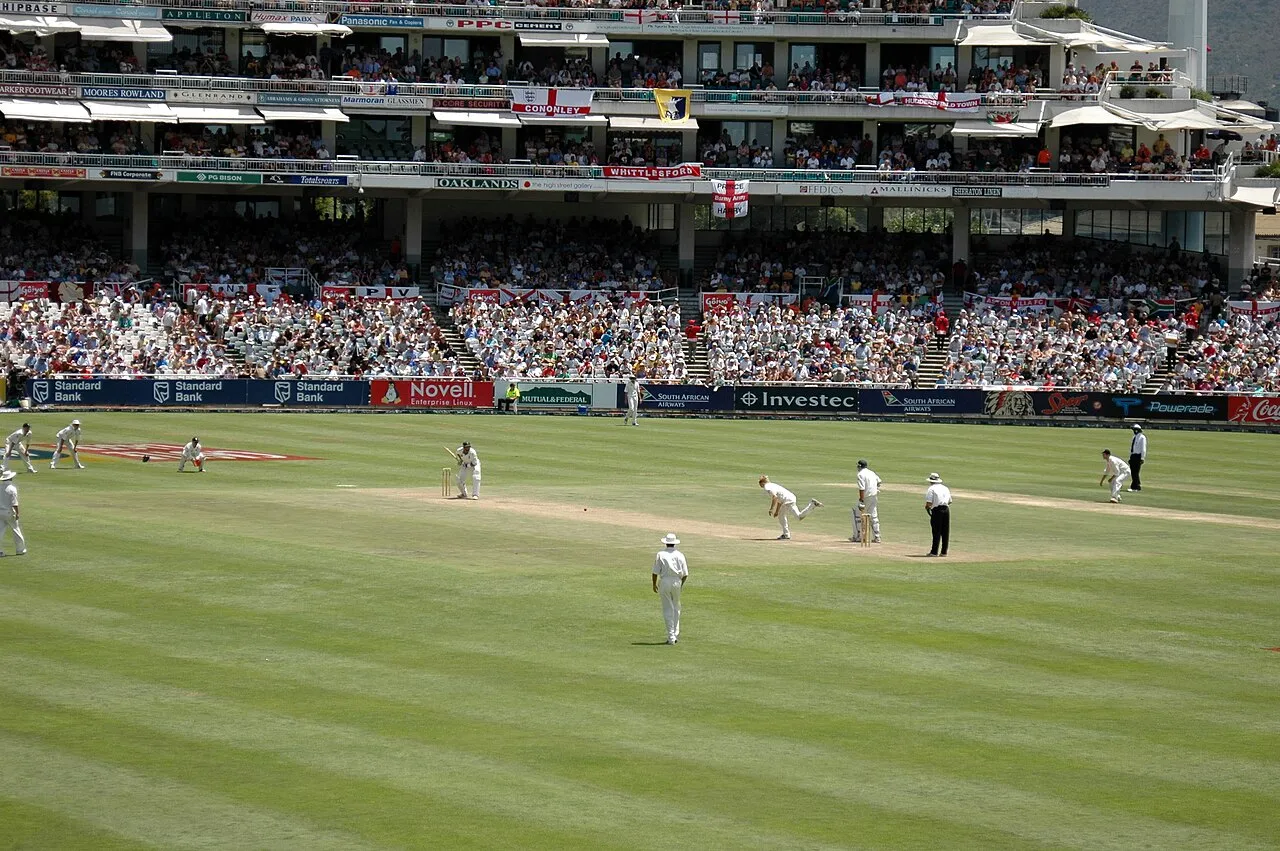
Likewise, the cover photograph shows a historical England–South Africa Test at Newlands in January 2005. It supplies cricket context, not evidence for a current rank or an image of a November 2026 match.
How do you avoid sharing a misleading ranking screenshot?
Include the heading, date, category and source. Cropping a table down to one familiar name may remove the information needed to interpret it. A screenshot can be genuine and still mislead when its context disappears.
Avoid adding “latest” unless you have just checked the relevant official page and can state when you checked it. If a live table fails to load, a blank result is not evidence that the ranking is empty or that a team has been removed.
Before posting, ask one final question: does the caption claim more than the evidence shows? A careful caption might identify the exact table and check date. An unsupported caption might turn the same image into a prediction, selection argument or universal claim about a team's quality.
Sources
Source 1: ICC rankings methodology
Source 2: official men's ODI team rankings
Checked 1 November 2026. No current top-ten values are reproduced because the live table's numeric rows were not available in the retrieved page. All Team A/B/C figures are fictional teaching examples.
Image credits: cover: Louis Rossouw from Cape Town, South Africa, source, CC BY 2.0. Resized and converted to WebP. inline: Lord's_honours_board.JPG: PaddyBriggs derivative work: Ukexpat, source, Public domain. Resized and converted to WebP.
Found an error or an outdated detail? Report a correction with the article URL and original source.