
ICC Women’s Champions Trophy 2027: India Venues, Dates and Format
See the ICC Women’s Champions Trophy 2027 dates, venues and six teams. Learn how the round robin works and how to read fixtures in Pakistan.
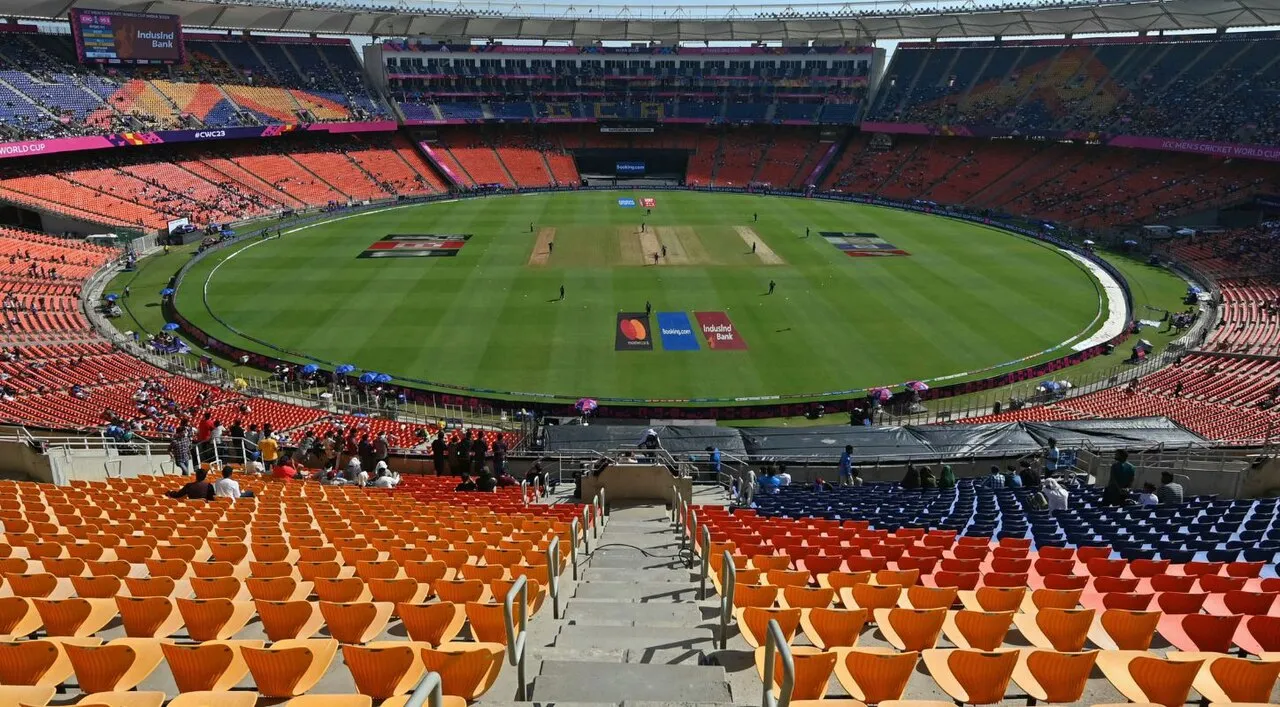
The inaugural ICC Women's Champions Trophy is scheduled for 14–28 February 2027 in India. The ICC's announcement dated 2 September 2026 names Mumbai's Cricket Club of India and the Vadodara International Cricket Stadium as the venues. This updates the earlier plan for Sri Lanka, which still appears in older documents and search results.
For a reader arriving from Pakistan, the essential distinction is that this is a women's international T20 competition involving six national teams. It is not the men's Champions Trophy and not a franchise league. The following guide separates the confirmed announcement from the match-reading skills that will help when individual fixtures and results are consulted.
What has the ICC confirmed?
The September announcement gives the tournament window, two venues, six participating teams and a round-robin stage followed by a final. Australia, England, India, New Zealand, South Africa and Sri Lanka are named. The top two sides in the league are scheduled to advance to the final on 28 February. These details should be read with the announcement's date attached.
Why older Sri Lanka references remain online
The same announcement explains the move from the original host. Earlier planning material can be authentic while no longer describing the current arrangement. That does not make every old document fraudulent. It means the reader needs version control: publication date, event year and a later official amendment. Use the new notice for hosting rather than combining incompatible hosts from different stages of planning.
Confirmed participation is not a final squad
A country's place in the competition does not identify its playing eleven, captain for every fixture or replacement players. Those require later squad and match announcements. A familiar photograph from a previous World Cup is not proof that every player shown will travel. Keep tournament participants, squad members and the final eleven in separate fields when making a guide.
How does a six-team round robin work?
In a single round robin, each team faces every other team once. With six sides, each has five different opponents. Counting each pairing only once gives six multiplied by five divided by two, or fifteen pairings. That is an explanation of the announced structure, not a substitute for an official day-by-day fixture list or any later amended playing conditions.
Why dividing by two matters
If you list Australia against England and England against Australia while counting a single meeting, you have counted the same pairing twice. Dividing by two removes that duplication. A small classroom example with three teams makes this visible: A versus B, A versus C and B versus C produce three matches, rather than six distinct matches.
A final is a separate stage
The league establishes which teams qualify under the applicable standings rules. The final then determines the winner through its own match result and playing conditions. Finishing first in the round robin should not be described as already winning the trophy. Nor should a team outside the top two be shown in a fictional semifinal bracket when the announced format does not provide semifinals.
Is this the same as the Women's World Cup?
No. Similar words in event titles can hide important differences in format, qualification and edition. Read the entire competition name before transferring a record or result. A champion from a different event is not automatically the winner of this new competition. The phrase inaugural also means there is no earlier completed edition of this particular trophy to summarise.
Separate national and franchise cricket
International sides represent their national teams in the event. Franchise tournaments organise teams around a different structure, often involving players from several countries. A player can appear in both types of cricket, but the records belong to their respective competitions. Combining franchise runs with international runs without a clear label produces an impressive-looking total that answers no precise question.
Keep the format in the title
When saving a note, include women's cricket, T20I, Champions Trophy and 2027. A shortened label such as Champions Trophy final can return unrelated men's matches or historical articles. Accurate labels also help readers sharing a page through a messaging app: the preview should explain what they are opening before they need to inspect a long URL.
What does T20I tell a new viewer?
The label identifies the international Twenty20 format. An uninterrupted innings is ordinarily scheduled for 20 overs, with six legal deliveries in each over. The detailed event conditions govern shortened games and exceptional situations. A useful first-time viewing habit is to track the score, wickets and legal balls remaining together, rather than judging only the number of boundaries.
A simple chase calculation
Take an invented target of 151. At 100 after fourteen overs, the chasing side needs 51 from six overs, or 36 legal balls. Its required rate is 8.5 runs per over. A commentator may round that number, but a learning exercise should show the calculation. This is an imaginary example and should never be presented as a result from the upcoming tournament.
A wicket changes the situation without changing the target
If a wicket falls in that example, the target remains 151 unless a separate playing-condition adjustment applies. What changes is the available batting resource and the players facing the remaining balls. That distinction explains why the same required rate can feel different with nine wickets left and with one wicket left. The equation is useful but does not capture every cricketing consideration.
How should readers compare scores across venues?
Start with what is actually known about the match. Ground dimensions, weather, surface, opposition and innings timing can affect a score, but those factors should not be invented from the city's name. A stadium photograph shows a setting; it cannot by itself establish the pitch's behaviour for a particular fixture. Venue reputation is context, not a guaranteed scoring formula.
Total runs do not tell the whole story
A fictional 140 in a difficult chase might be more competitive than 170 on a high-scoring evening elsewhere. To evaluate the innings, compare it with the opposition's performance and the conditions documented for that game. Do not declare every score below a familiar round number a failure. That shortcut ignores the actual contest the players had to manage.
Avoid unsupported weather predictions
A February tournament window does not establish the weather on a specific match day. Forecasts have issue times and uncertainty, and they need updating nearer the event. A historical climate description is not a live forecast. For travel or attendance, consult the relevant local forecast and official event notices instead of assuming the article's publication date makes every paragraph current.

An archival view of the Brabourne Stadium pavilion at the Cricket Club of India, Mumbai.
What do Mumbai and Vadodara mean for scheduling?
Both named host cities use Indian Standard Time. Pakistan Standard Time is thirty minutes behind IST. If an official fixture explicitly starts at 19:00 IST, the corresponding Pakistan time is 18:30 PKT. That is a timezone example, not an announced match start. Always inspect whether a sports app has already converted the display to your device's timezone.
The half-hour difference is easy to miss
Viewers accustomed to whole-hour offsets sometimes subtract one hour instead of thirty minutes. Write the full example before saving a calendar event: 19:00 minus 00:30 equals 18:30. Check the date as well for starts near midnight. A calendar with a named timezone is safer than a screenshot labelled only evening match.
A venue announcement does not allocate every match
Knowing that two stadiums host the tournament does not tell us which one hosts an individual pairing unless the fixture list says so. Do not place a final in one city merely because that city appears first in a press release. For a trip, copy the specific fixture's venue, date and session rather than the tournament's general location field.
How can a points table be read responsibly?
Use the official competition rules for points, ties, abandoned games and ordering teams on equal points. It is tempting to assume every tournament uses exactly the same tie-break sequence, but that should be checked. A table's columns explain what has happened so far; they do not automatically mean a team has secured qualification before all relevant permutations are settled.
Distinguish points from ranking position
Two teams can share the same points while occupying different positions because another criterion separates them. Conversely, a team can temporarily lead simply because it has played more matches. A useful comparison includes matches played, wins, losses and the competition's stated tie-break measures. Do not compare the first and sixth rows without checking whether their opportunity counts are equal.
Use a miniature fictional league
For practice, build a three-team table where every side plays twice. Give each invented game an outcome and apply one clearly stated classroom scoring rule. Then explain that the rule belongs to the exercise, not necessarily to the ICC event. This teaches table construction without pretending to have verified a playing-condition clause that has not been consulted.
How can students follow players without misleading comparisons?
Separate a player's tournament record from their career record. Show whether an average, strike rate or wicket total refers to this event, another competition or all matches in a specified format. For a first edition, no player can already hold a completed career record within this exact trophy. Older achievements can provide background when their competition and dates remain explicit.
Show opportunities beside percentages
An invented batter scoring 20 from ten balls has a strike rate of 200. Another scoring 70 from fifty has a rate of 140. The first is faster per ball, while the second contributes more runs. Neither number alone identifies the more valuable innings. Add wickets, target and stage of the chase before making a judgment about match contribution.
Keep bowling notation precise
Three wickets for 24 runs is written 3/24, with wickets before runs. An over notation such as 3.2 means twenty legal deliveries, not 3.2 decimal overs. Calculate economy by converting the legal balls correctly. These basic habits make cricket statistics much easier to understand and prevent small transcription errors becoming false claims about a player's performance.
A useful plan for following the tournament
Before the event, save the official tournament page and the dated hosting announcement. When fixtures are available, add the specific matches you want to watch in PKT. During a match, record one observation about batting, bowling or fielding rather than trying to capture every event. Afterward, check the final scorecard and correct any provisional notes.
Make a source-aware notebook
Use separate fields for confirmed announcement, upcoming fixture, live status and final result. Add the source URL and the time checked. A screenshot may be useful as a personal record, but it should not replace the link to the maintained page. This simple structure transfers well to school research, where the difference between a plan and a completed outcome also matters.
Build a learning exercise from the format
Write a short program that generates every unique pairing from a list of six team names. It should produce fifteen pairs without duplicates or a team playing itself. Then test the same logic with four teams, expecting six pairs. Use programming lessons for the coding foundation and class materials for related study resources.
Questions readers commonly ask
Is Pakistan named among the six participants in the September announcement? No. Does that stop Pakistan-based fans following the tournament? No, although legal viewing availability must be checked by territory. Is Sri Lanka still the host in the current notice? No; the revised host is India. Has this article supplied live scores or final squads? No, because those require separate current records.
The most useful check before sharing
Read the date, event name, host and format together. Those four fields catch many misleading posts before they circulate. If a graphic names a different host, ask whether it predates the amendment. If someone claims a trophy winner before the tournament, compare the claim with the actual schedule. Careful reading is a better guide than an impressive graphic or a confident caption.
Keep a fixture revision visible
When an organiser moves a match, update the calendar entry and retain a small note naming the earlier and revised dates. That way someone following an old screenshot can see what changed and which official notice superseded it.
Sources
Image credits: cover: Dibyajeet Dash, source, CC BY-SA 4.0. Resized and converted to WebP. inline: Nick Morrison, source, CC BY-SA 2.0. Resized and converted to WebP.
Found an error or an outdated detail? Report a correction with the article URL and original source.