
India–Afghanistan U19: Asia Cup Semi-Final Score and Match Context
Read the India–Afghanistan U19 semi-final context, reported completed totals, chase arithmetic and the distinction from February’s World Cup match.
India and Afghanistan meet in the U19 Asia Cup semi-final
India Under-19 and Afghanistan Under-19 were paired in the second semi-final of the 2026 men's U19 Asia Cup at Al Amerat on 12 November. The ICC and BCCI match pages identify the fixture. It must not be confused with their February U19 World Cup meeting, which belongs to a different tournament and date.
Completed-score reports available during this review show Afghanistan making 227 for eight and India replying with 230 for two in 36.5 overs, an eight-wicket win. However, a directly accessible completed primary scorecard was not available in this review. Those figures are therefore attributed to the completed secondary records, rather than presented as independently checked ball-by-ball observations.
The distinction matters because several indexed pages still carried an unfinished innings. A search engine can show a genuine earlier snapshot long after another source has updated the result. Read the status, date and competition together before deciding which record a headline describes.
The reported completed score
| Team | Reported innings |
|---|---|
| Afghanistan U19 | 227/8 in 50 overs |
| India U19 | 230/2 in 36.5 overs |
| Reported outcome | India won by eight wickets |
The completed secondary record identifies Lakshya Raichandani's 93 and a three-wicket contribution by Ishan Sood. The figures give a useful result summary, but they do not establish a detailed account of every partnership or dismissal. This article does not invent a winning shot or claim to have watched the entire match.
For the official current record, follow the linked ICC or BCCI match centre. If a later correction appears, the primary completed scorecard should take precedence over an archived search excerpt.
Why the chase can finish above the target
A first-innings total of 227 sets a normal target of 228. A final score of 230 is compatible with that target because the winning scoring event can take the chasing side beyond the minimum. The difference does not imply that the target was incorrectly calculated.
Similarly, an eight-wicket margin refers to wickets remaining after India lost two, not an eight-run gap between the totals. Different units describe different aspects of the result. A good summary retains the innings totals alongside the margin rather than expecting one phrase to explain everything.
The overs need care too. Thirty-six overs and five balls means 221 legal deliveries, not a decimal quantity of 36.5 overs for ordinary arithmetic. That would leave 79 legal deliveries from a full 50-over allocation. This is a calculation from the reported score, not an additional official award or qualification rule.
Why a knockout match changes the reading of a result
A semi-final determines who advances to the next stage, rather than merely adding another group result. That makes the immediate consequence clear, but it does not turn the losing side's entire tournament into a failure without useful performances. Development competitions should be understood through both results and what players demonstrate over time.
For India, the relevant next fixture should be checked in the official tournament schedule. For Afghanistan, the match review should begin with the actual innings sequence rather than a sweeping judgement based only on the margin.
A coach might ask where scoring slowed, which partnerships created pressure and how the bowling responded during the chase. Those are worthwhile questions. Answering them properly requires a complete scorecard, commentary or footage; a short result table cannot supply every tactical explanation.
Keep the two India–Afghanistan tournaments separate
Search results for these teams also include the February 2026 U19 World Cup semi-final. Different totals and a different winning margin from that match are not evidence that the November report is necessarily wrong. They may simply belong to another fixture.
Use four identifiers when checking: age group, competition, date and venue. “India versus Afghanistan” is too broad, and even “U19 semi-final 2026” can be ambiguous. Adding Al Amerat and the Asia Cup makes the intended match much clearer.
This habit also protects young players from accidental statistical errors. An innings from one tournament should not be attached to a player from another squad because a familiar surname or team name appears in both articles.
A scorecard exercise for learners
Take the reported chase and calculate its scoring rate using legal balls. Divide 230 by 221 and multiply by six to obtain approximately 6.24 runs per over. Compare that with 227 across 50 overs, which is 4.54. Label both as derived figures and retain the original inputs.
Then ask why those rates do not tell the whole tactical story. The chasing team knows the target and can adjust its approach to wickets and required rate. The first batting side operates without knowing the opponent's final task. A numerical comparison is useful, but the situations differ.
For more dated youth-cricket guides, browse the RayTech updates collection. Use the sources below to distinguish the official fixture from completed secondary reporting and earlier live snapshots.

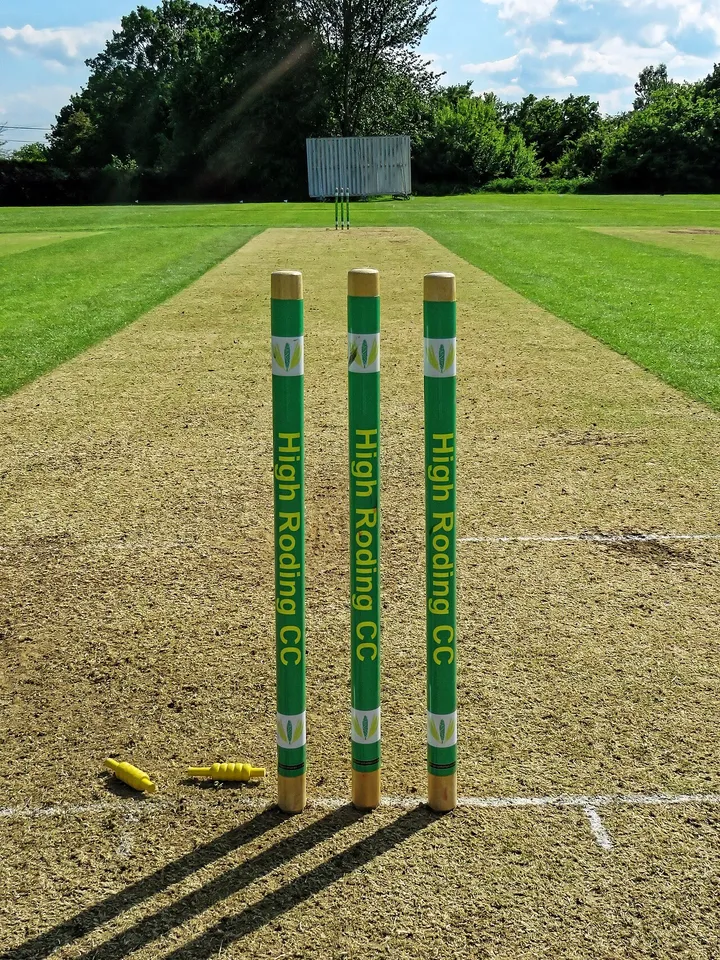
Illustrative batting equipment, not equipment identified with either U19 team.
Read an innings as a sequence of changing problems
A limited-overs innings has a beginning, a middle and an ending, but a scorecard does not explain those phases equally well. The final total tells you what was accumulated. It does not tell you whether the innings began quickly and slowed, recovered from early wickets or depended on a late partnership. Those are separate descriptions that need supporting information.
For the reported Afghanistan total, a useful first question is how many runs came from the top order, middle order and lower order. A second is whether extras made a significant contribution. Answering those questions from the full scorecard is better than attributing the total to one player simply because that player's name appears in a headline.
Keep team and individual figures separate. A batter's runs are part of the team total, while extras belong to the innings without being credited to a batter. A total can therefore be correct even when adding only the batters' scores produces a smaller number. Check the extras line before assuming that a published table contains an error.
The same discipline applies to wickets. A dismissal can affect the team's wicket count without being credited to a bowler in every case. When comparing a team's eight wickets with the sum of the bowlers' wickets, inspect the dismissal descriptions. Do not invent an additional bowling wicket merely to force two columns to match.
A chase has two clocks
The chasing side is working with runs still needed and legal deliveries still available. A required scoring rate connects those quantities, but the number changes after each event. A boundary reduces the remaining runs quickly; a dot ball consumes an opportunity without reducing them. Losing a wicket can change which batters are available even when the required rate barely moves.
Consider a fictional chase requiring 60 runs from 60 legal balls. The required rate is six per over. If an over produces three runs, the task becomes 57 from 54 balls, approximately 6.33 per over. That small rise does not by itself mean the chase is failing. The batting side may still have many wickets and suitable batters available.
Now imagine the same figures with only one wicket remaining. The arithmetic is identical, but the risk is different. An attacking shot that seems reasonable with a long batting order may carry a greater cost when one dismissal ends the innings. This is why required rate should be read alongside wickets and batting resources.
These examples are teaching calculations, not a reconstruction of the India innings. A reader should never mistake a useful hypothetical scenario for a period that actually occurred in this semi-final. Keeping that label visible makes the explanation reproducible without adding fictional match detail.
What an unbeaten score does and does not establish
A batter marked not out was still at the crease when that innings ended. That notation is important when calculating a batting average over several innings, because average uses dismissals rather than simply the number of appearances. It does not mean the batter faced no difficult deliveries or that every scoring decision was flawless.
Likewise, a score close to a hundred can be a substantial contribution without being described as a century. Keep the recorded figure intact. Rounding an individual's 93 to a hundred for a celebratory graphic would change a sporting fact, not merely its presentation.
When writing a short match note, identify the team result first and then the individual contribution. This avoids making a youth contest sound as though only one player participated. A chase can involve support at the other end, running between wickets and earlier bowling work even when one innings attracts most attention.
Do not infer a player's entire career trajectory from a single performance. A promising innings is worth recognising on its own terms. It does not guarantee a senior selection, a professional contract or a future international record. Such developments require their own announcements and evidence over time.
Compare performances without pretending the conditions were identical
A batting score and a bowling spell answer different questions. Runs contributed, deliveries used, wickets taken and runs conceded need their own units. A discussion becomes clearer when it explains which part of the team task a player helped solve rather than trying to collapse all contributions into one unsupported ranking.
For batting, ask how the contribution related to the innings situation. For bowling, ask about the spell's economy and wickets together, while remembering that the scorecard may not reveal dropped chances or fielding support. When those details are unavailable, leave them unknown rather than filling the gap with a familiar sporting phrase.
Comparisons across tournaments need even more care. Opposition, grounds, match situations and team roles can differ. A higher raw score in one fixture is not automatic proof of a better performance than a smaller but decisive contribution elsewhere. Explain the chosen comparison before drawing a conclusion from it.
A simple school exercise is to write two summaries of the same completed score: one using only totals, and one including the competition, date, margin and innings status. The second will usually be more informative even if it is only a few sentences longer. Context adds meaning without requiring invented drama.
Make a useful match notebook
Use a table with fields for competition, fixture date, venue, innings totals and source status. Add a separate field for your own observation. This structure makes it difficult to confuse a personal interpretation with a number supplied by the official record.
If the first source is still live and the second has a completed result, note both timestamps. The disagreement may reflect an update delay rather than two different matches or deliberate misinformation. If the completed totals remain inconsistent after checking the fixture identity, describe the conflict and wait for a better record.
Keep calculations beside their inputs. For example, the reported 221-ball chase can be converted into overs for a reader, but the legal-ball count should remain visible when computing a rate. Another student can then repeat the arithmetic and identify any mistake without needing to guess how the number was produced.
Finally, make your heading match what the notebook actually contains. A dated result explanation should not promise live commentary. A fixture preview should not acquire a winner before the match ends. The label is part of the information, especially for readers arriving from a search engine long after the original publication.
Questions about the reported margin
Does eight wickets mean Afghanistan lost only eight wickets?
No. The winning margin describes India's remaining wickets in the chase. Afghanistan's reported first-innings wicket count is a separate figure. Both happen to involve eight in this summary, but they refer to different teams and different parts of the match.
Can the result alone explain every tactical decision?
No. It establishes an outcome when supported by a completed record. A tactical review needs more information about innings progression, conditions and decision-making. Recognising that limit allows readers to appreciate the result without assigning motives or errors that a short score summary cannot demonstrate.
Check the tournament label on a shared result
Before sharing a graphic, read the full tournament name and date rather than the country abbreviations alone. The same youth teams can meet more than once in a year. If the image omits those identifiers, attach a link that supplies them. This helps another reader distinguish a genuine November Asia Cup result from an older World Cup memory without assuming that every difference in the totals is a reporting error.
Sources
- Source: ICC match centre
- Source: BCCI match statistics page
- Source: Completed result report
- Source: Tournament record and knockout bracket
Image credits: cover: Acabashi, source, CC BY-SA 4.0. Resized and converted to WebP. inline: Acabashi, source, CC BY-SA 4.0. Resized and converted to WebP.
Found an error or an outdated detail? Report a correction with the article URL and original source.