
India vs Bhutan 2-1: SAFF Championship 2026 Semi-final
India beat Bhutan 2-1 in Dhaka to reach the SAFF Championship final. Read the goals, VAR decisions and key chances.
India vs Bhutan 2-1: SAFF Championship 2026 semi-final explained
India reached the SAFF Championship 2026 final by beating Bhutan 2-1 in Dhaka on 14 November. Vishnu PV scored in the ninth minute and Chinglensana Singh Konsham doubled India's lead in the 27th minute, according to the All India Football Federation's match report. Kinzang Tashi Tobden pulled one back for Bhutan shortly after half-time. The South Asian Football Federation's official match document confirms the final score. India advanced; Bhutan's tournament ended at the semi-final.
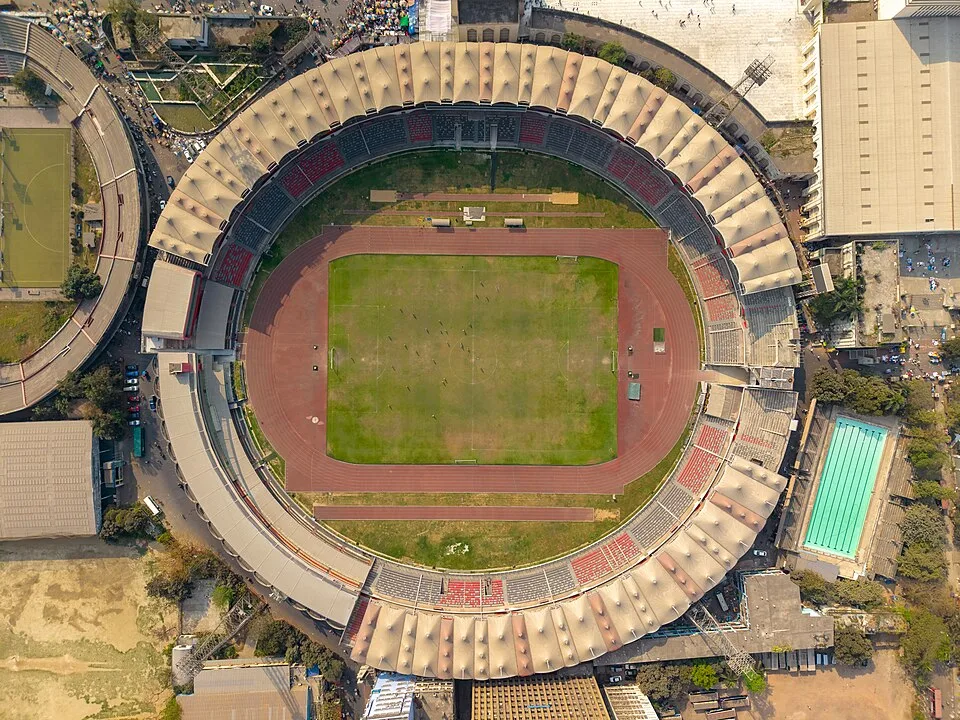
This was a senior men's SAFF Championship match at the National Stadium in Dhaka. The date, stage and teams matter, because India and Bhutan have also met in youth and women's competitions. Search results for their names can mix entirely different fixtures. The 2-1 on this page belongs to the men's 14 November 2026 semi-final, not to an older youth match.
Result and verified match details
| Detail | Recorded information |
|---|---|
| Match | India vs Bhutan |
| Competition | SAFF Championship 2026 |
| Stage | Semi-final |
| Date | 14 November 2026 |
| Ground | National Stadium, Dhaka, Bangladesh |
| Result | India 2, Bhutan 1 |
| India goals | Vishnu PV, 9th minute; Chinglensana Singh Konsham, 27th minute |
| Bhutan goal | Kinzang Tashi Tobden, early second half |
The AIFF headline lists Tobden's goal in the 47th minute, while its narrative describes an allowed goal in the 48th minute after a VAR review. That one-minute difference may reflect the event time versus the restart or recording convention. The safe summary is that Bhutan scored immediately after the interval; the source should be consulted for the exact timestamp before putting a minute in metadata or a search snippet.
India had reached the semi-final as Group B winners after defeating Maldives 1-0 in the final group game, according to the AIFF's separate report. Bhutan arrived after a difficult group route and were appearing in a SAFF Championship semi-final for the first time in 18 years, according to the federation's account. That contrast shaped expectations but did not make Bhutan's second-half challenge a formality.
How India went in front
The opening minutes were not a procession. Bhutan worked to disrupt India's passing in midfield, and the AIFF account says India took time to establish rhythm. The breakthrough came from a long diagonal pass towards Vishnu on the left. He controlled the ball, moved onto his right foot and sent the finish beyond Bhutan goalkeeper Gyeltshen Zangpo. It was the ninth minute and India had a 1-0 lead.
An early goal changes the choices available to both sides. India could continue probing for another opening while Bhutan had to consider how much risk to take. A goal after nine minutes does not, by itself, prove one team dominated the remaining 81. It tells us when the scoreboard moved, and the subsequent chances show how the match developed.
India's next notable opening came in the 17th minute. Brison Fernandes found Suhail Ahmad Bhat moving into the left side of the box, but the goalkeeper turned Bhat's first-time shot away. A few minutes later Ricky Shabong carried the ball into the area and played it back for Bhat, whose attempt was blocked. Abhishek Suryavanshi also delivered a cross that led to a Fernandes volley just wide of the left post. These events show that the lead did not cause India to stop attacking.
Bhutan captain Chencho Gyeltshen gave India a warning near the edge of the area, using quick feet to get past opponents before being crowded out. It was an indication that Bhutan had players capable of creating danger when they could move the ball into advanced positions. The first-half balance still favored India in the AIFF account, but a one-goal lead left room for a comeback.
The second goal and the interval
India's second goal followed a corner from the right. Manglenthang Kipgen sent in the delivery, Bhutan did not clear, and captain Chinglensana reacted to the loose ball in front of goal. His finish made it 2-0 in the 27th minute. Set pieces can produce chances even when open-play approaches are being contested, and this one gave India a cushion before half-time.
The AIFF report states that by the half-hour mark India had six shots and Bhutan had not yet attempted one. That is a time-specific observation, not a full-match shot statistic. It helps explain why India carried a two-goal advantage into the break without pretending the second half would follow the same pattern. Bhutan's later response is precisely why a score at half-time should not be written as a final verdict.
For students learning to read a match report, separate the scoreboard from the flow. A two-goal lead tells you the difference in goals. The sequence of saves, blocks, crosses and corners offers the reasoning for how the difference arose. Neither alone describes the whole contest. A team can create several chances without scoring, while a single set piece can change the score immediately.
Bhutan's response after half-time
Bhutan returned from the interval with a more direct approach. A free-kick was sent into the Indian box, India failed to clear it cleanly and Chencho Gyeltshen gathered the ball on the left. His driven effort reached the far-post area where Kinzang Tashi Tobden headed it in. The officials initially flagged offside, but a video review allowed the goal. The scoreboard became 2-1.
The review mattered because a disallowed goal would have left Bhutan two behind. With the goal standing, one more Bhutan goal could have brought the sides level. A video review is not a second goal or a penalty in itself; it is a decision about whether the existing play counts. The AIFF says the tournament was using the Video Assistant Referee for the first time, and this semi-final contained more than one significant review.
Bhutan nearly equalised soon after. Shabong's attempted clearance from a cross fell to Gyeltshen, who sent an effort towards goal. Indian goalkeeper Arsh Anwer Shaikh tipped it over the crossbar. The save is important to the match narrative because it came while India's lead was only one goal. It does not require an invented probability or an unsupported description of the shot's measured speed to explain its importance.
As the half continued, India adjusted personnel. Head coach Naushad Moosa introduced Macarton Nickson for Kipgen and Irfan Yadwad for Vishnu in the 64th minute, according to the AIFF report. Substitutions can change positions and energy, but the report alone does not prove that either change caused a specific tactical outcome. The record tells us who entered and when; any stronger tactical claim would need match footage or detailed analysis.
The overturned penalty
Yadwad sent a cross from the left that struck Nima Wangdi's arm inside the area. The referee initially awarded India a penalty. After a VAR review, the penalty decision was overturned. This is a separate incident from Bhutan's allowed goal. In one review, an on-field offside decision was changed and Bhutan's goal counted. In the other, an on-field penalty decision was changed and India did not take a spot-kick.
This distinction is useful for readers who see the phrase 'VAR changed the match' without an explanation. A video review can confirm, reverse or leave an on-field decision in place. The final score records goals, not every contested decision. Explaining the two decisions separately helps a student understand why the score stayed at 2-1 through this period.
Late chances and the final whistle
India came close to restoring a two-goal cushion in the 85th minute. Suhail Ahmad Bhat moved into the area, shifted to create a shooting angle and hit the crossbar. Had it gone in, Bhutan's task in the final minutes would have been much harder. It did not, so the lead remained one goal and the contest stayed open.
Bhutan pushed for an equaliser. Gyeltshen delivered towards substitute Kinzang Tenzin, but the ball travelled beyond his reach. Tenzin Norbu later sent a volley wide in added time. Another cross was headed back across goal by Tandin Tshewang, with Tenzin unable to make contact. Those late sequences explain why the final minutes were tense even though India had led since the first half.
India held on to win 2-1. The result put the defending champions into the SAFF Championship final, scheduled for 17 November. The opponent depended on the other semi-final, so an article published before that result should not name a finalist without a separate source check. The semifinal result itself is final and does not depend on what happened three days later.
What the match says about reading football results
A scoreboard is essential but compressed. It says India scored twice and Bhutan once. The match report adds the order: an early India lead, a second goal from a corner, Bhutan's reviewed reply, an Indian save, a reversed penalty and chances at both ends near the finish. Each part explains why a 2-1 result felt different from a routine game in which the winner never came under pressure.
The minute of a goal is one piece of information, not a complete tactical account. Vishnu's early finish followed a diagonal pass and individual movement. Chinglensana's came after a corner and an incomplete clearance. Bhutan's reply came from a free-kick situation and survived an offside review. The three goals arose in different ways, and describing those differences is more useful than repeating the final score in every paragraph.
The 2-1 margin also shows why chance counts and scorelines should be handled carefully. India had six attempts to none by the half-hour mark in the AIFF report, yet Bhutan created danger after the break. An early statistical advantage is not a guarantee of how the whole match will end. A late shot against the crossbar is also not a goal. Good reporting keeps attempts, saves and decisions in their proper categories.
Answers to common questions
A useful timeline for readers checking the result
The opening goal came before either side had settled into a long spell of possession. India then created chances for Bhat and Fernandes before their captain converted the loose ball from a corner. Those details matter when comparing reports: the second goal was a set-piece finish, not a second strike by Vishnu. Bhutan's reply came after the break and after a review of an offside flag. A reader checking a short social-media clip should compare the scorer and the period of play with the federation report before treating the clip as evidence of a different goal.
The score after Bhutan's reply was 2-1, and it remained 2-1 despite two further incidents that could easily be misreported. India were initially awarded a penalty, but the decision was reversed after review. Bhat also struck the crossbar late in the match. Neither episode added a goal. The distinction matters because automated live feeds and brief posts sometimes mix chances, decisions and confirmed scores into a confusing sequence.
For someone following the competition rather than only this fixture, the result establishes one clear next step: India moved into the final. It does not establish the final's winner. A semi-final article should retain its 14 November context even after the final is played, and a later final recap should be a separately dated report with its own verified score. This preserves a reliable historical record for students, supporters and search visitors who return to compare the two rounds.
If a match summary gives only the result, the official match document is the stronger place to confirm the event. The AIFF narrative then supplies the sequence of chances and reviews. Using both serves a practical purpose: the document anchors the result while the narrative explains how the score was reached. Where the sources describe a minute differently, a careful account can say 'shortly after half-time' without manufacturing precision.
Who won India vs Bhutan on 14 November 2026?
India won 2-1 in the SAFF Championship 2026 men's semi-final in Dhaka. The SAFF match document confirms the final score. India's goals came from Vishnu PV and Chinglensana Singh Konsham; Kinzang Tashi Tobden scored for Bhutan.
Who scored first?
Vishnu PV scored for India in the ninth minute. Chinglensana made it 2-0 later in the first half. Bhutan's goal came shortly after the interval, reducing the deficit to one.
Did VAR disallow Bhutan's goal?
No. An offside flag initially stopped the celebration, but after VAR review the goal was allowed. A separate review overturned a penalty that had initially been awarded to India.
Was this a youth match?
No. It was the men's senior SAFF Championship 2026 semi-final. India and Bhutan have also met at youth level in other competitions, so the date and tournament should accompany any search result or shared score.
What happened next for India?
The win qualified India for the final scheduled on 17 November 2026. The identity of the other finalist and the later final result require their own verified sources. This report describes the completed semi-final only.
Sources
- All India Football Federation: India 2-1 Bhutan semi-final report
- South Asian Football Federation: official India vs Bhutan match document
- AIFF: India entered the semi-final as Group B winners
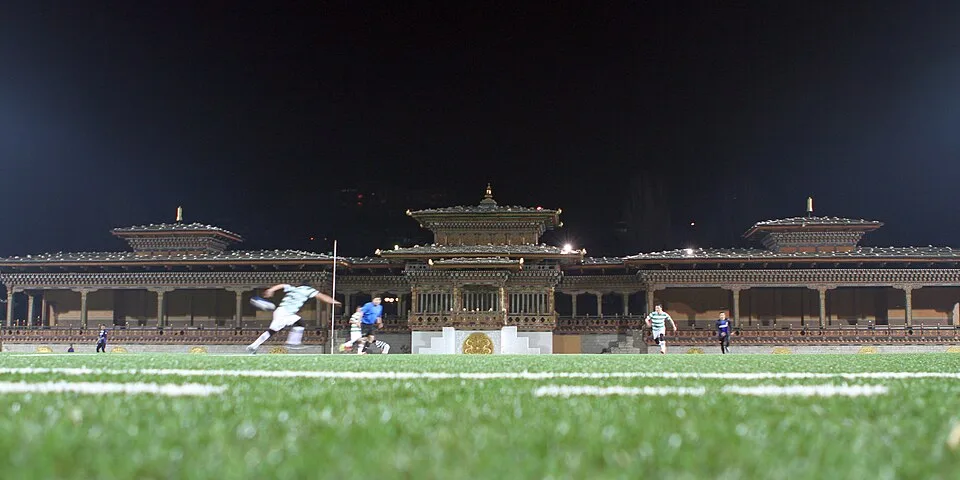
Image credits: Cover by Jubair Bin Iqbal, CC BY-SA 4.0; resized and converted to WebP. Inline by Benjamin Goetzinger, CC BY-SA 4.0; resized and converted to WebP. Both are archive images, not photographs of this semi-final.
Checked on 14 November 2026. The match events above are paraphrased from the federation reports; unmeasured tactical details and later final results are not invented.
Found an error or an outdated detail? Report a correction with the article URL and original source.