
Jaecoo J5 BEV Price in Pakistan: Comfort, Premium and Charging Costs
Compare the reported Jaecoo J5 BEV launch prices in Pakistan, then learn what to check in a dealer quote, range claim and charging estimate.
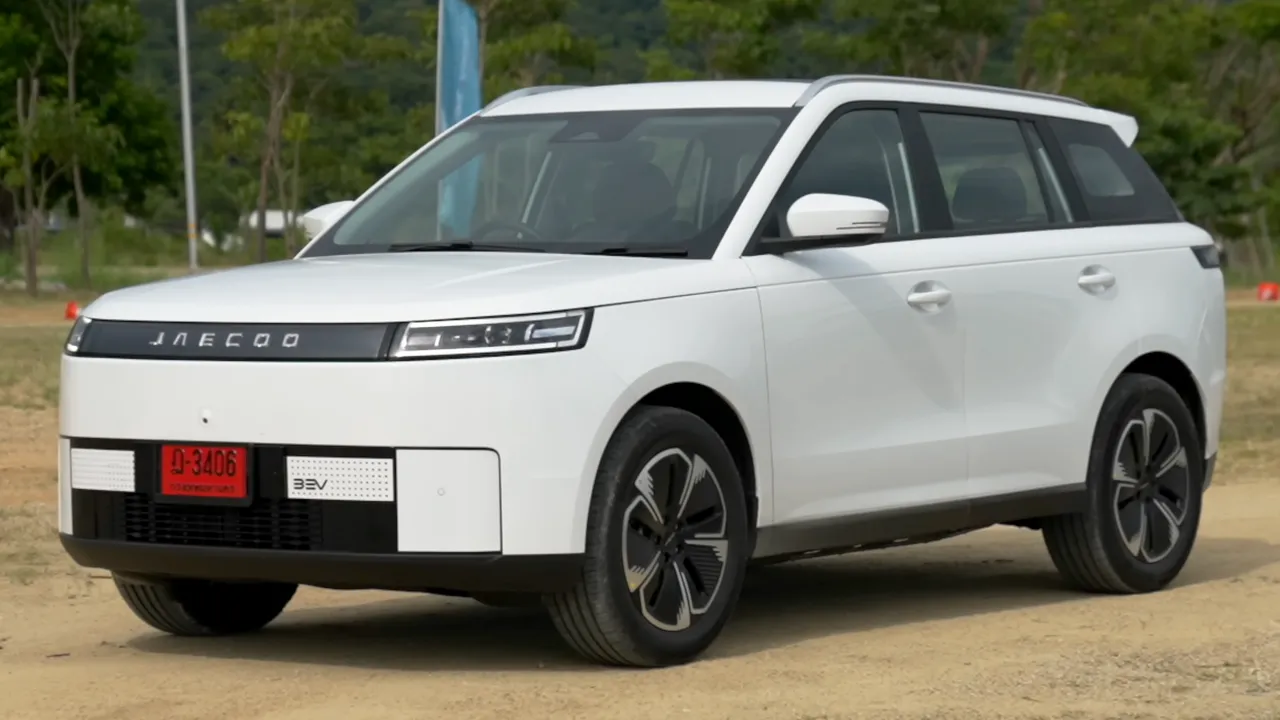
November launch reports put the Jaecoo J5 battery-electric vehicle at PKR 5,999,000 for Comfort and PKR 6,699,000 for Premium in Pakistan. These are reported introductory figures, not a live dealer quote. ProPakistani and MotorNama both reported the prices, with the introductory window stated as ending on 30 November 2026. The gap between the listed variants is PKR 700,000.
That is the starting point for understanding the announcement. It is not enough to estimate an actual household's total cost, journey range or charging installation. The rest of this guide shows how to read a written quote, distinguish the electric model from similarly named versions and test ownership assumptions with simple arithmetic.
What prices and booking amounts were reported?
The early November coverage lists Comfort at PKR 5,999,000 and Premium at PKR 6,699,000. It also reports booking amounts of PKR 1,200,000 and PKR 1,500,000 respectively. These figures describe the reported launch offer. Ask an authorised seller for dated written terms before treating a booking amount, expiry date or balance as binding.
| Variant | Reported introductory price | Reported booking amount |
|---|---|---|
| Comfort | PKR 5,999,000 | PKR 1,200,000 |
| Premium | PKR 6,699,000 | PKR 1,500,000 |
The balance is a calculation, not a quotation
If the entire reported booking amount is credited against the advertised vehicle price, simple subtraction gives PKR 4,799,000 for Comfort and PKR 5,199,000 for Premium before any other amounts. The word if matters. A seller's document must explain which payment is credited, whether price is locked and which charges are excluded. Arithmetic cannot resolve a missing contract term.
Introductory pricing has a date
A promotion's closing date does not necessarily establish which date determines eligibility. It might depend on a confirmed order, payment receipt or another condition. A reposted November graphic may still be online months later. Keep the dated written offer, not only a cropped screenshot. This article does not predict prices after the offer period or promise that a particular dealer has stock.
How is a BEV different from a hybrid?
A battery-electric vehicle uses stored electrical energy for propulsion and is charged from an external supply. A hybrid uses a combustion engine as part of its propulsion or energy system. A shared model family name does not make their charging, refuelling or maintenance arrangements interchangeable. Confirm that the quoted vehicle is the Pakistan-market J5 BEV, not another J5 variant.
Market specifications can differ
The same brand may offer different equipment, batteries or test-cycle claims in different countries. A review of a Thai, Indonesian or Australian car can help explain general controls, but it does not establish the contents of a Pakistan order. Check the local brochure and the written vehicle description for the exact variant. Images in this article are illustrative where they show another market.
Ask for the full variant description
Use the model, powertrain, trim and applicable model year together. A quote that simply says J5 leaves room for misunderstanding. When a seller sends a feature list, save it with the date and match it to the order form. If the brochure and the form disagree, get the discrepancy clarified in writing instead of guessing that the more attractive specification must apply.
What does a claimed driving range mean?
A published range is normally measured or estimated under a named testing procedure. ProPakistani's launch report identifies the quoted 405-kilometre figure as NEDC-rated and reports a 49.5 kWh battery. A test-cycle figure is a comparison input, not a guaranteed result on a hot motorway journey. The battery figure also needs a definition before using it in energy calculations.
Gross and usable capacity are different questions
A pack's headline capacity may not be the exact amount available to the driver. Some energy can be reserved by the management system, and usable capacity can change with conditions and ageing. Ask how a specification defines the number. If only headline capacity is known, do not silently substitute it for an independently measured usable figure in a trip planner.
Estimate distance from observed consumption
In a fictional example, a vehicle has 36 kWh available for a planned leg and averages 18 kWh per 100 km. Dividing 36 by 18 and multiplying by 100 gives 200 km. If consumption rises to 22.5 kWh per 100 km, the same budget gives 160 km. These are teaching numbers, not measured figures for the J5. The contrast shows why one range claim cannot fit every route.
What is the difference between kW and kWh?
Kilowatts measure power, or the rate at which energy is transferred. Kilowatt-hours measure a quantity of energy. A charger rated in kilowatts is not itself a battery capacity. A useful comparison is water flow versus water volume: a faster flow can fill the same container sooner, but flow and volume are not the same measurement.
An ideal charging-time calculation
For an invented 24 kWh charging session at a constant 6 kW reaching the battery, the ideal calculation gives four hours. Real elapsed time can differ because power changes, energy is lost and the vehicle or installation may limit the rate. This example does not claim that a particular home socket, charging point or J5 version can deliver 6 kW.
A supplied charger is not an installed system
Launch coverage mentions a complimentary charger. Ask what is included in the actual offer: hardware, cable, installation, inspection, warranty and support may be separate. A qualified electrician should assess the existing supply and protection before installation. The label on a charger does not establish that a household can safely run it at its maximum rating.
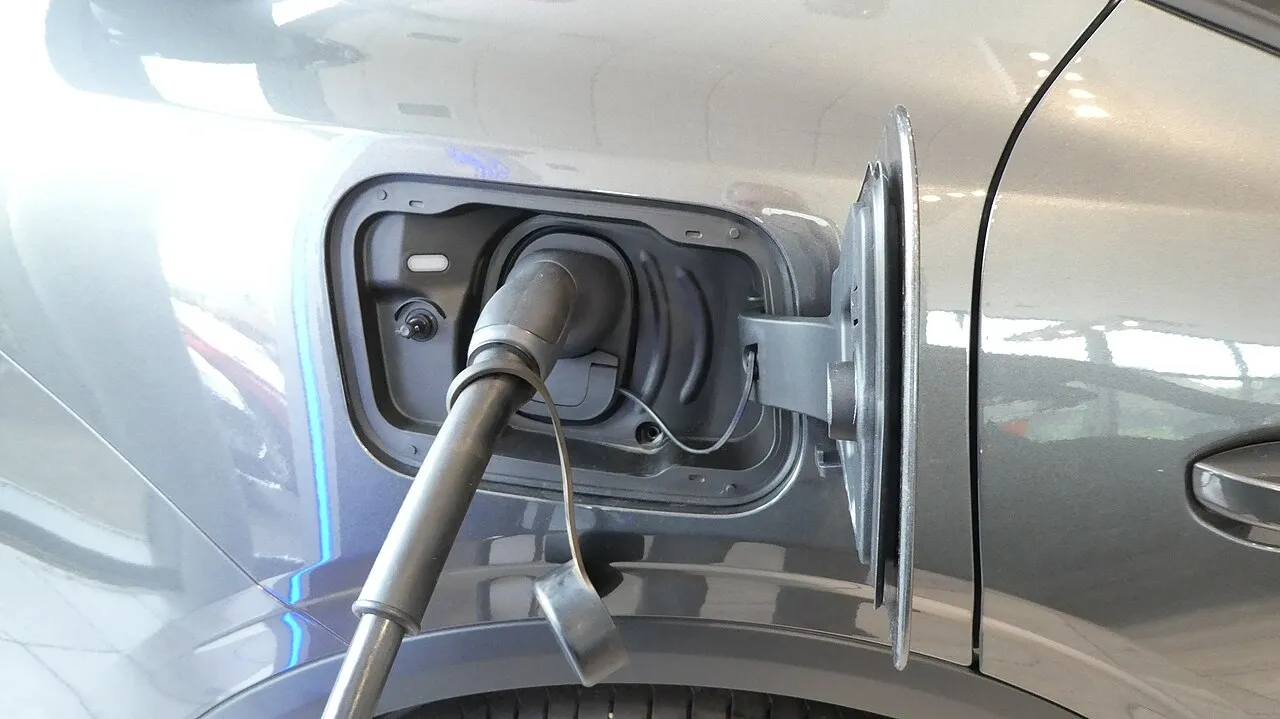
A Type 2 cable connected to an electric vehicle, shown to explain charging hardware rather than to identify the local J5 connector.
How should home and public charging be compared?
Begin with the actual parking arrangement. A car parked overnight at a dedicated bay has different charging options from one parked on a street or shared driveway. Ask about permission, power supply and cable access before using an ideal home-charging figure in a budget. A public station also needs a compatible connection, reliable access and a clear price.
Public charging costs are not one number
An operator can charge for energy, time, a session or parking under its own terms. Compare the complete bill for an equivalent amount of energy rather than treating one displayed tariff as the total. Check whether a price is current and applies to that site. The article does not supply a live station map or certify the availability of a particular charger.
Create a backup plan for longer trips
A map marker can be stale or the charger can be occupied. Record an alternative stop before relying on a single site. Consider expected consumption, access hours and a reserve appropriate to the route. A route calculation is more useful when it explicitly includes uncertainty rather than assuming every charger will be available at the moment the vehicle arrives.
How can an owner estimate energy costs?
Use distance, measured consumption and the effective price actually paid for energy. Keep assumptions visible so that they can be replaced by real observations later. An electricity bill can include charges beyond its simplest advertised unit rate. Likewise, a public station's receipt can contain fees that cannot be inferred from distance alone.
A fictional monthly calculation
At 900 km per month and 17 kWh per 100 km measured from the battery, a fictional vehicle uses 153 kWh in driving. If the illustrative charging efficiency is 90 percent, drawing about 170 kWh would supply those 153 kWh. Multiply 170 by your applicable price per kWh, then add other applicable charges. None of these example inputs is a quoted Pakistan tariff or a measured J5 result.
Compare scenarios rather than one perfect month
Make one row for routine city travel and another for a month with more motorway use or public charging. Keep the vehicle, distance and tariff assumptions visible. If changing one assumption reverses the comparison, the result is sensitive and should not be presented as guaranteed savings. A practical spreadsheet is a tool for questions, not a substitute for actual bills.
What should appear on the written vehicle quote?
A useful quotation identifies the seller, vehicle variant, dated price, payment schedule and any amount not included. It should make it possible to distinguish advertised vehicle price from the amount required to register and use the car. Ask about a change in price before delivery, the conditions for cancelling and the treatment of an advance payment.
Compare on the same basis
One quote may include delivery or installation while another leaves it out. Before comparing totals, place included and excluded items in separate columns. Do the same for optional features rather than assuming every accessory pictured in a brochure is standard. The purpose is to see the actual difference between two offers, not simply to rank two large numbers.
Keep payment verification independent
Find the seller through an official listing and confirm payment instructions independently before transferring money. A forwarded message with a familiar logo is not a reliable identity check. Obtain an official receipt and keep the order reference. Avoid sharing passwords, verification codes or unnecessary identity material in a public group merely because someone claims to represent a dealership.
What matters beyond the headline price?
Price is one variable in ownership. Service access, warranty terms, available parts, charging convenience and insurance can matter over several years. Check which items are covered, what exclusions apply and who provides support. For the battery, ask how the seller defines coverage and the process for assessment. Do not assume a foreign warranty brochure applies locally.
Put the trim difference in context
The reported PKR 700,000 difference is easy to calculate. Whether it is meaningful depends on equipment confirmed for the two local variants and on what an owner actually needs. Make a side-by-side list of verified items rather than assigning a value to features copied from another market. A dealership demonstration can clarify usability, but a written specification is still needed.
Consider the regular journey first
A household's longest possible trip is not always its most useful planning case. Write down a typical weekday route, weekly distance and where the car could actually charge. Then add a less common long journey as a separate scenario. This provides a better picture than choosing a vehicle only because an official range number happens to exceed one trip's distance.
A simple worksheet for comparing two offers
Use these fields: source date, seller, full variant name, advertised price, booking amount, refundable conditions, extra charges, charging setup and service contact. Mark an unconfirmed entry as unknown rather than filling it with an estimate that looks official. Keep quotes with their original dates so a future revision does not erase the evidence behind the earlier comparison.
An exercise for students
Build a small table with a price column, a deposit column and a separate status field for whether the deposit is credited. Return an estimated balance only when the status is confirmed. Add test cases for an unknown deposit and an expired offer. This is a useful lesson in separating missing data from zero. Explore programming courses or class resources for more practice.
What can be concluded today?
The reported introduction gives two clearly named trims and a dated price comparison. It does not settle an individual buyer's final bill, charging suitability or real-world range. Use the two launch reports as historical context and an authorised written quote for an actual purchase decision. Keeping the two records separate makes both the news and the later comparison more useful.
A short test-drive record
If you test a vehicle through an authorised seller, record the route length, traffic, displayed energy use and whether the air conditioning was running. Ask the seller to show where charging limits are set and how the car reports a session. A short drive cannot establish annual energy costs, but it can show which controls and measurements you will be able to use later. Keep the notes for the exact trim driven so that a comparison does not accidentally combine two variants.
Record the delivery window separately
MotorNama reported that deliveries were expected to begin in early January 2027. An expected start for deliveries is different from a confirmed date for a specific order. Ask for your estimated window in writing and check what the seller's terms say if it changes. Do not plan an essential journey around an unconfirmed handover date.
Sources
Image credits: cover: iMoD Official, source, CC BY 3.0. Resized and converted to WebP. inline: Pamsimhaho, source, CC0. Resized and converted to WebP.
Found an error or an outdated detail? Report a correction with the article URL and original source.