
James Talarico: Texas Senate Result, Education and the Role Ahead
Read James Talarico’s background and the reported Texas Senate result, with senator-elect status, certification and federal responsibilities explained.

James Talarico is a Texas Democrat and former public-school teacher whose United States Senate victory was reported on 4 November 2026. His public career began in the Texas House, where he was first elected in 2018. The reported Senate outcome concerns a federal office, which is different from the state legislative position described in his existing official biography.
This profile explains his background, the distinction between those offices and how to read the result and legislative record carefully. A news organization calling a race is not the same document as official certification, and winning an election is not identical to beginning the new term that follows it.
Who is James Talarico?
The Texas House biography identifies Talarico as a former public-school teacher born in Round Rock. It records his schooling in the area, degrees from the University of Texas at Austin and Harvard University, and work teaching middle school in San Antonio. Those are biographical details from an official legislative source rather than assumptions based on a campaign clip.
He was first elected to the Texas House in 2018. That experience belongs to state government, even when national coverage discusses him in connection with a United States Senate race. A reader should retain the full office name because the word representative can otherwise conceal the distinction between state and federal institutions.
The biography is also a dated record. It can remain useful for background while another source reports a new election outcome. The existence of an older state-house page does not mean that a newly reported federal result is automatically false, nor does the new result rewrite every earlier role.
What happened in the 2026 Senate race?
On 4 November, the reviewed election reporting called the Texas United States Senate race for Talarico. Reports identified Republican Ken Paxton as his opponent. This page describes that as a reported election outcome and does not invent a final certified vote margin.
The distinction matters because different sources perform different jobs. A news call communicates a publisher's judgment that the result is settled under its standards. Election officials administer the count, canvass and certification process. A clear article can report the call while still identifying the source and status.
For a precise vote total, use a dated official results report and check the office, jurisdiction and update time. Do not combine an early county count with a later statewide percentage and present the mixture as one coherent final table.
Senator-elect is different from serving senator
Election coverage can describe a successful candidate as senator-elect before the new term begins. That identifies the election outcome without pretending the person has already exercised every power of the office. The transition from campaigning to serving follows the relevant constitutional and institutional process.
A current-member directory may therefore differ from a list of people elected for the next Congress. Neither list is necessarily wrong. One answers who is serving now; the other answers who has been chosen for an upcoming term.
When writing an assignment, attach a date to the title you use. Former state representative, candidate, senator-elect and serving senator describe different stages. Choosing the correct title makes the account clearer and avoids a small wording error becoming an inaccurate statement of present authority.
Texas House and United States Senate: the basic difference
The Texas House is part of the state's legislature. The United States Senate is part of the federal Congress. A state representative works within state-government authority, while a United States senator serves in a national institution. Sharing a party label does not make the offices interchangeable.
| Question | Texas House | United States Senate |
|---|---|---|
| Level of government | State | Federal |
| Institution | Texas Legislature | United States Congress |
| Geographic representation | A state-house district | A state within the Senate system |
| Records to examine | State bills and votes | Federal bills, votes and committee work |
This framework helps explain why a state legislative achievement should not be described as a federal law passed by a United States senator. The career connection is real, but the legal record still belongs to the institution where the action occurred.
Why his teaching background appears in the profile
Teaching is a documented part of Talarico's professional history and a recurring theme in his legislative biography. It helps explain why education is prominent in the public record associated with him. It does not automatically prove that every education proposal he supports will achieve its intended outcome.
A useful policy discussion moves from background to evidence. What problem does a proposal address? What mechanism would it use? Which students, schools or organizations fall within its scope? Those questions evaluate the policy rather than treating a professional biography as a substitute for analysis.
The same standard should apply to praise and criticism. Experience can inform a person's priorities, but claims about results need the relevant legislation, implementation record and data. A sympathetic or hostile description of the politician is not enough.
What does his state legislative biography claim?
The official profile highlights work on school finance, early-childhood class sizes, student mental-health programs and childcare. It also describes work involving prescription-drug costs and other state issues. These are the office's descriptions of its record, not a complete independent evaluation of every policy outcome.
To examine a particular claim, follow it to the bill or enacted measure. Identify whether Talarico was an author, coauthor, sponsor, committee participant or supporter. Those roles can all be meaningful, but they should not be described as identical contributions.
Also check which version became law. A bill can change during the legislative process. A statement about an introduced proposal may not describe the final text, and a passed measure may include limits that disappear from a short campaign summary.
How to read a legislative achievement accurately
Start with the bill identifier, session and institution. A familiar subject title is not enough because several proposals can concern the same issue. The record should allow the reader to locate the actual text and its history.
Next check the action status. Introduced, referred to committee, passed one chamber and enacted are different stages. A politician's support for a proposal does not establish that the proposal became law. Conversely, a measure's enactment does not reveal every detail of who negotiated it.
Finally distinguish the law's existence from its outcomes. A new program can be authorized before its funding, administration or effects are fully visible. To judge whether it worked, identify the relevant time period and outcome data rather than assume success or failure from the announcement alone.
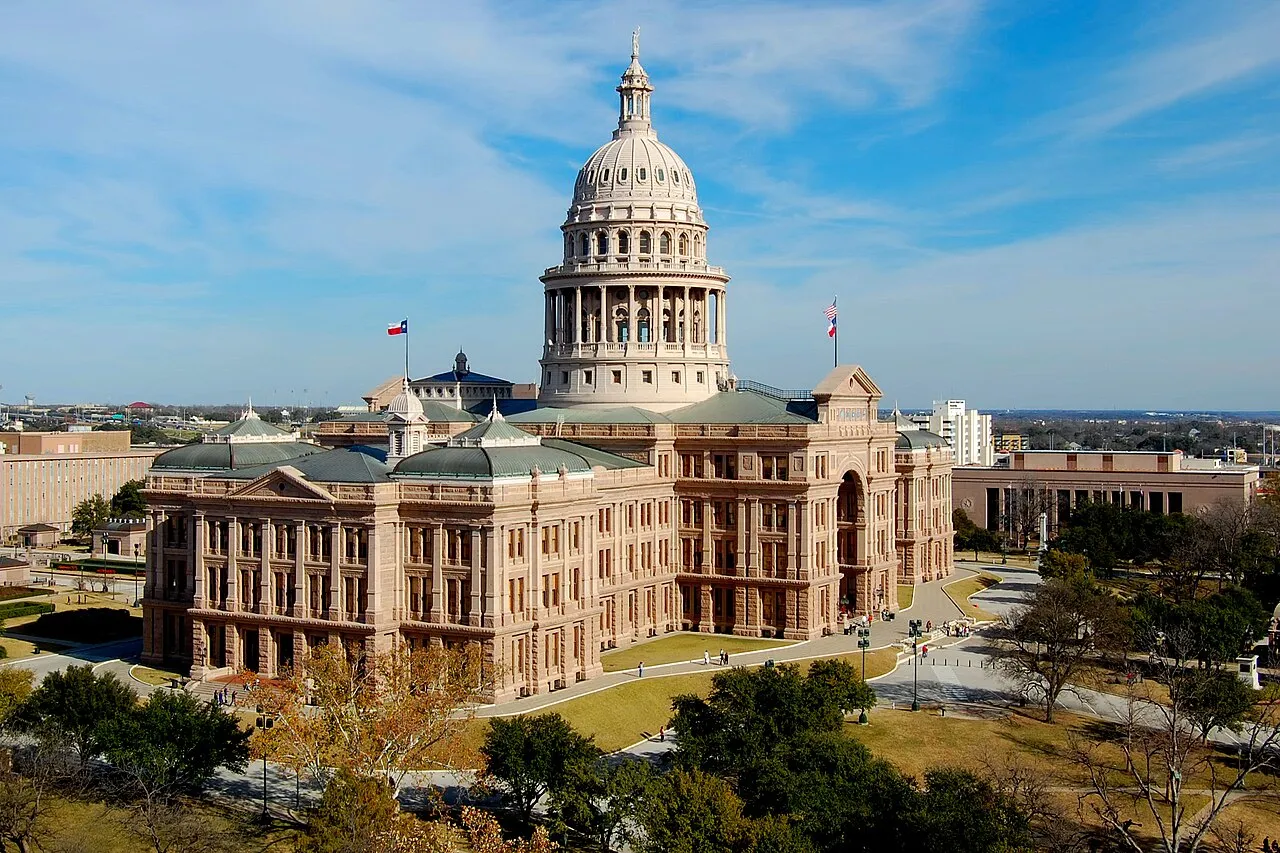
The Texas State Capitol in Austin, photographed in 2010; state-government context.
A policy-reading exercise using education
Imagine a fictional proposal to reduce a classroom's pupil limit. The goal may be more individual attention, but a complete analysis also asks about staffing, classroom space, funding and implementation timing. Those practical questions do not deny the goal; they help determine how the proposal could operate.
Now distinguish an authorization from a measured result. Passing the pupil-limit rule is one event. Observing the actual student-to-teacher ratio after implementation is another. A claim about improved learning would require further evidence rather than follow automatically from either event.
This exercise is not a verdict on a particular Talarico measure. It demonstrates how students can evaluate a policy claim consistently. The same method works for a proposal from any party: identify the mechanism, scope, resources and evidence of results.
What does the Senate do with legislation?
The federal legislative process involves bills, committee work, chamber action and other required stages. A senator can advocate, introduce or support a measure without controlling every step. The final outcome depends on the wider institution and the applicable process.
That is why a campaign promise should not be presented as a guaranteed future law. The promise identifies an intention. The legislative record will show what is introduced, negotiated, amended or enacted after the person takes office.
For readers outside the United States, this is a particularly useful distinction. A nationally prominent name can dominate a headline while the detailed process involves many members and institutions. Understanding those roles makes political coverage easier to follow without relying on personality alone.
How does party affiliation affect the explanation?
Talarico is a Democrat. That identifies his party, not an instruction to support him or a complete description of every policy position he holds. Parties contain internal differences, and individual records should be examined rather than inferred solely from a label.
Our Democrats and Republicans guide explains the organizations and their relationship to government. A party is not itself a branch of government, and a party victory in one contest should not be confused with automatic control of every institution.
For an election result, keep the individual contest visible. A Senate race, a governor's race and a congressional district race choose different offices. They can influence the same political environment while remaining separate decisions with separate records.
Polls, vote counts and a race call answer different questions
A poll estimates opinion among a sample during a defined period. A vote count records ballots reported through the election process. A race call is a publisher's determination based on its standards and evidence. None should be relabeled as the other.
A narrow poll lead does not guarantee a win, and a probability of winning is not the candidate's predicted percentage of the vote. These are common errors when numbers are copied from a graphic without the accompanying explanation.
After the election, use the completed result record for claims about actual votes. Retain the date and status if the record remains unofficial. A profile can accurately report a news call while leaving a precise final margin unstated until the appropriate record has been checked.
A simple source hierarchy for this profile
| Question | Strong starting source |
|---|---|
| What was his earlier public role? | Official legislative biography |
| What did a bill do? | Legislative text and action history |
| What did a campaign promise? | Dated campaign statement |
| Who was reported to have won? | Clearly attributed election reporting |
| What is the certified count? | Relevant election authority's final record |
No source answers every question equally well. A campaign page can establish what was promised, but it cannot independently prove every claimed outcome. An official biography establishes a public record but may also describe the officeholder's work favorably. Read the purpose as well as the content.
This approach helps avoid both uncritical promotion and reflexive dismissal. The aim is to connect each claim with evidence suited to that claim, then state the conclusion with an appropriate level of certainty.
Questions readers are asking
Which party does James Talarico represent?
He is a Democrat. That party affiliation is part of his political identity, while his specific policy record should be checked through the relevant state or federal documents. A label does not replace the details of a bill or vote.
Was he a teacher before politics?
His official Texas House biography identifies him as a former public-school teacher and records middle-school teaching in San Antonio. It also provides his education and earlier Texas House election background.
Was the 2026 contest for the Texas State Senate?
The reported victory discussed here concerns the United States Senate from Texas, a federal office. That is different from the Texas State Senate and from the Texas House where his earlier legislative career was based.
Does this article provide a certified final vote margin?
No. It reports the reviewed election call and explains the distinction between that reporting and certification. A precise margin should come from a dated, matching official results record rather than a guessed or mixed snapshot.
Read the date before the office title
When a profile appears in search, check whether it describes an election campaign, a projected result or a person already serving in office. Those stages require different labels, even when the same politician appears in every headline.
Sources
- Texas House official biography
- Reported Senate result
- Opponent and election context
- Congressional legislative process
- United States Senate directory
Image credits: cover: Antonioaesparza, source, CC BY-SA 4.0. Resized and converted to WebP. inline: LoneStarMike, source, CC BY 3.0. Resized and converted to WebP.
Found an error or an outdated detail? Report a correction with the article URL and original source.