
Japan vs Brazil 3-2: Singapore 2026 Result and Goals
Japan beat Brazil 3-2 in Singapore after a Vinicius Junior double brought Brazil level. See every scorer and the verified timeline.
Japan 3-2 Brazil on 14 November 2026: the Singapore match explained
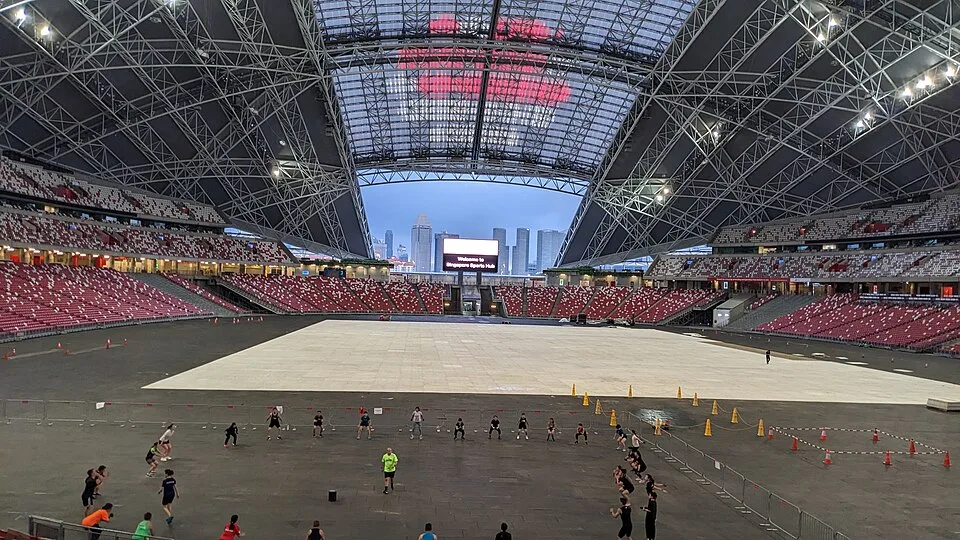
Japan beat Brazil 3-2 at Singapore's National Stadium on 14 November 2026. The Japan Football Association's completed match page records a 2-1 Japanese lead at half-time, a 2-2 score after Vinicius Junior's second goal, and a stoppage-time winner by Tatsuhiro Sakamoto. Brazil's football federation also confirms the result, venue and five scorers. This was a senior men's international friendly in the Mizuho Blue Challenge, not a World Cup knockout match or a qualifier.
The result is easy to confuse with Japan's 3-2 victory over Brazil in Tokyo on 14 October 2025. The two games had the same final score but different dates, grounds and goal scorers. In 2025 Japan came back from two goals down, with Takumi Minamino, Keito Nakamura and Ayase Ueda scoring after the interval. In the 2026 Singapore match Japan led 2-0, Brazil equalised, and Sakamoto settled it in added time. A useful search result must say which of these stories it describes.
Verified match details
| Item | Detail |
|---|---|
| Match | Japan 3-2 Brazil |
| Date | 14 November 2026 |
| Competition | Mizuho Blue Challenge, Singapore |
| Venue | National Stadium, Singapore |
| Half-time | Japan 2-1 Brazil |
| Japan scorers | Takefusa Kubo 15'; Keito Nakamura 19'; Tatsuhiro Sakamoto 90+1' |
| Brazil scorers | Vinicius Junior 33', 75' |
These scorer minutes follow the JFA match page. Brazil's federation narrates the first two Japan goals as the 14th and 18th minutes and Vinicius's goals as the 32nd and 29th minute of the second half. A one-minute difference between reports can reflect how a running match clock is displayed and how an event is logged. The names, order, half-time position and final score agree. For precise minute labels in this article, the JFA's completed match record is the reference.
How Japan built a two-goal lead
Japan began by turning a defensive transition into a direct attack. According to the Brazilian Football Confederation's report, Dona passed to Kubo, who carried the ball forward, entered the area and scored. The JFA logs the opener at 15 minutes. The goal was important because it put Brazil in a chasing position before the opening quarter-hour had passed. It did not determine the outcome: four more goals would follow.
Four minutes later, Nakano delivered into the area and Nakamura finished past Brazil goalkeeper Pedro Morisco. Japan had scored twice with different actions: a move through Kubo and a delivery finished by Nakamura. A description that merely says Japan dominated early loses the useful sequence. Brazil were now two goals behind but had enough of the first half left to respond.
The JFA line-up identifies Kubo and Nakamura among Japan's starters, with Zion Suzuki in goal. Brazil's starters included Vinicius Junior, Raphinha and Estevao. Match line-ups are relevant when a highlight or a search result uses only a surname; they help identify whether a report refers to the senior national teams. A list of players is not evidence that every starter had a decisive action, so this account focuses on documented chances and goals.
Vinicius Junior gets Brazil back into the game
Brazil's first goal came in the 33rd minute on the JFA record. Brazil had won possession in Japan's half. Estevao's attempt was saved by Suzuki, and Vinicius Junior then received the ball from Bruno Guimaraes and struck from outside the area. The CBF report describes the effort as forceful and says it cut the score to 2-1. The save and the subsequent goal were separate moments; compressing them into one finishing action would misstate the play.
Andre nearly levelled before half-time with a long-range effort that forced Suzuki to save for a corner, according to the CBF narrative. Japan nevertheless reached the interval ahead 2-1. The half-time score matters because it distinguishes the match's two phases. Japan's two early strikes gave them an advantage, while Brazil's reply ensured that the second half began as a one-goal game rather than a comfortable two-goal lead.
For readers scanning a live-score widget, the 2-1 at half-time was a temporary state. It should not be copied into a final score snippet. The finished JFA page explicitly shows Japan scoring once more after the break and Brazil scoring once more. Both of those second-half goals are needed to understand the 3-2 conclusion.
The second-half fightback
Brazil started the second half with an opening for Raphinha. The CBF says he received an Andre pass inside the area and shot, but Suzuki saved. Brazil changed three players at roughly 12 minutes into the half, bringing on Jonathan Jesus, Marlon Gomes and Alisson Santana. Those substitutions are recorded in the federation's narrative; they are part of the chronology, not proof that a single change caused the equaliser.
The equaliser came in the 75th minute of the match on the JFA record. Bruno Guimaraes took a short corner to Vinicius Junior, who found space, struck across goal and saw the ball hit the post before it crossed the line. It was Vinicius's second goal, making the score 2-2. A rebound from the post can be confusing in a short clip, but the CBF report states the ball crossed the line. The score after this action was level.
Endrick then sent a long-range effort against Japan's crossbar. It was an important chance to note without turning it into a goal. Had it entered the net, Brazil could have moved ahead. It did not. The match remained 2-2 and Japan still had time to win. This distinction between a near miss and a recorded goal is one reason the final JFA page is more dependable than an isolated social post.
Sakamoto's stoppage-time winner
The decisive change came in added time. Japan's official page credits Tatsuhiro Sakamoto with the 90+1-minute goal. The CBF report also says Sakamoto scored in stoppage time to close the match at 3-2. That is the goal that separates the teams in the final result. Neither Kubo's opener nor Nakamura's second was the late winner, although both were necessary parts of Japan's total.
The timing gives the scoreline its shape. Japan went two ahead, Brazil erased the lead with a Vinicius double, and Japan found one more goal after regulation time had reached ninety minutes. A headline about Japan 'holding on' could suggest Brazil never caught up, which would be inaccurate. Brazil drew level before Japan won. A headline about a 'comeback win' for Japan could also mislead, because Japan had led first. The clearest description is a stoppage-time Japan victory after Brazil's comeback to 2-2.
The CBF report notes a confrontation near the end and says Raphinha and coach Carlo Ancelotti were sent off. That disciplinary detail belongs after the scoring sequence and should be attributed to the Brazilian federation. It does not change the winner or the time of the decisive goal. Readers seeking a complete disciplinary record should use the official competition match record rather than infer other cards from a brief recap.
Why the two 3-2 Japan wins must be kept separate
The 2025 and 2026 meetings are a particularly strong test of accurate sports reporting. In October 2025, Japan's football association called its 3-2 result its first ever win over Brazil in fourteen meetings. That match was at Tokyo Stadium, and Japan were 0-2 down at the interval. Minamino, Nakamura and Ueda scored in the second half. The historic first-victory description applies to that earlier fixture.
The 14 November 2026 match took place in Singapore. Japan were 2-1 ahead at half-time and Sakamoto scored the late deciding goal. Vinicius Junior scored twice for Brazil. Nakamura appears in both matches, which makes name-only comparisons even less reliable. Match date, venue, half-time score and complete scorer list together identify the right game. A search for 'Japan Brazil 3-2' without a year is not enough.
The JFA's 2025 retrospective also helps with perspective. Japan had already beaten Brazil once before this Singapore meeting; the 2026 victory was not the first in the teams' history. It was a second distinct 3-2 result in the period discussed here. There is no need to invent a wider head-to-head record or tactical trend from two games alone. Each match had its own line-up, location and sequence.
Reading the official match page
The JFA result page presents both halves and a named scorer timeline. It also lists starting players and substitutes. For someone checking a claim on social media, begin with the full date and completed status, then compare the goals in order. Japan scored at 15 and 19 minutes; Vinicius replied at 33; Vinicius equalised at 75; Sakamoto scored at 90+1. The page's half-time line, Japan 2-1 Brazil, is a quick cross-check of the first three events.
The CBF article supplies a narrative of how several of those goals developed. It explains the passing action before Kubo's opener, Nakano's delivery to Nakamura, the build-up to Vinicius's first goal, and the short corner for his second. It records the near misses by Andre, Raphinha and Endrick. The official result and the federation narrative complement each other: one anchors score and timing, the other gives context. Where they differ by a minute, this article does not pretend that both clocks display an identical timestamp.
Be careful with automatic match summaries. A timeline entry marked 'shot' is not a goal, and a ball striking the bar is not a score change. The second Vinicius effort did hit the post, but according to the CBF it went across the line. Endrick's later attempt struck the crossbar and did not go in. Those two visually similar woodwork moments had opposite scoring outcomes. A complete result page resolves the difference.
What this result means for each side
For Japan, the immediate outcome was a 3-2 win over a high-profile opponent in Singapore. It also showed a side that could score early and respond after conceding an equaliser. That is an observation from the goal sequence, not a claim about a future tournament or a prediction of rankings. Japan's next scheduled match in the Singapore event was against Paraguay on 17 November, according to the JFA event page. The result of that later match must be checked separately.
For Brazil, two goals from Vinicius Junior restored parity after a difficult start, but the late Japan goal left the team with a loss. The CBF said Brazil's next match would be against Singapore on 17 November. Neither a friendly loss nor a friendly win alone establishes a team's form over a season. The evidence here supports a match-specific conclusion: Brazil recovered from 0-2 to 2-2 and then conceded in added time.
The result also illustrates why a friendly should be identified as such. It was played during the November international window, but it was not a World Cup group match, a qualifying match, or a cup final. Readers may search for teams, scores and player names without knowing the competition label. Including that label protects them from mixing this fixture with the 2026 World Cup or with the 2025 Tokyo friendly.
Common questions about Japan vs Brazil
Who won on 14 November 2026?
Japan won 3-2 at the National Stadium in Singapore. Japan led 2-1 at half-time, Brazil equalised in the second half, and Japan scored again in added time.
Who scored for Japan?
Takefusa Kubo scored in the 15th minute, Keito Nakamura in the 19th and Tatsuhiro Sakamoto in the 90+1st minute, according to the Japan Football Association's completed match record.
Who scored for Brazil?
Vinicius Junior scored both Brazil goals, at 33 and 75 minutes on the JFA record. The Brazilian federation confirms that both Brazil goals were his.
Did Japan beat Brazil 3-2 in 2025 as well?
Yes. Japan won 3-2 in Tokyo on 14 October 2025 after trailing 0-2. It was a separate match from the 14 November 2026 game in Singapore. The 2025 scorer list and the order of goals differ.
Was the 2026 match a World Cup game?
No. It was a senior men's friendly in the Mizuho Blue Challenge event. The Japan and Brazil federations identify the venue as Singapore's National Stadium.
Did Endrick score the winner?
No. The CBF report says Endrick hit the crossbar while the game was level. The Japan winner was Sakamoto's goal in stoppage time.
Sources
- Japan Football Association: completed 14 November match page
- Brazilian Football Confederation: Japan 3-2 Brazil match report
- JFA: retrospective on the separate October 2025 match
- JFA: Singapore event and next fixture
Image credits: Cover by Robertsky, CC BY-SA 4.0; resized and converted to WebP. Inline by Santeri Viinamäki, CC BY-SA 4.0; resized and converted to WebP. Both are archive images, not photographs of this match.
Checked on 14 November 2026. Match scores and scorers were compared against both national federations. Future results are not inferred.
Found an error or an outdated detail? Report a correction with the article URL and original source.