
Joe Root: The Lord’s 10,000-Run Milestone and Test Batting Explained
Explore Joe Root’s dated Lord’s 10,000-run milestone and learn how Test targets, not-outs, averages, partnerships and winning margins work.
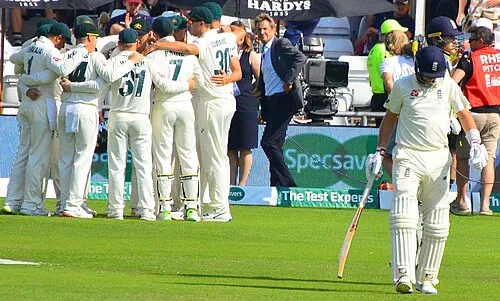
Joe Root's Test batting offers students a way to understand the difference between a single innings, a career milestone and a team's match situation. On 5 June 2022 at Lord's, he reached 10,000 Test runs while completing a century against New Zealand. England finished the chase with five wickets in hand. Those are historical facts, not an announcement of his current career total.
This guide explains why that moment mattered and how to read Test batting more carefully. It covers targets, fourth innings, averages, not-outs and partnerships, with short exercises that a learner can check independently. It does not predict future records or claim access to Root's private preparation, coaching conversations or selection plans.
What made the Lord's milestone important?
Reaching 10,000 runs in one international format requires substantial accumulated output. The ICC's contemporary reporting identified Root as the second England batter to reach that Test milestone, after Alastair Cook. The achievement occurred during a match-winning innings rather than in a separate exhibition or training session.
The figure concerns Test cricket specifically. It is not an aggregate of Test, ODI, T20 international and domestic runs. Keeping those categories separate is essential because a career can contain several different statistical records, each with its own opportunities and playing conditions.
A milestone also differs from a player's final total. Root continued playing after June 2022, so 10,000 should not be labelled his current career aggregate. In a historical explanation, the correct question is when he crossed the threshold and what match was taking place, not whether the number still describes his entire career.
What happened in the match against New Zealand?
The ICC's match report dated 5 June 2022 records England winning by five wickets at Lord's. New Zealand made 132 and 285; England made 141 in the first innings and 279 for five in the chase. Root's century and his stand with Ben Foakes helped complete the recovery.
These totals explain the target. England led by nine after the first innings because 141 minus 132 equals nine. New Zealand's second-innings 285 therefore left England needing 277 to win. The target is one more than the total required to draw level across both innings.
Do not simply subtract the two second-innings scores to describe a Test result. Both completed first innings matter. The result is based on the match's full innings accounting, not a comparison of whichever two totals are most visible in a short highlights caption.
What is the fourth innings of a Test?
In a typical completed Test, each team can bat twice. The fourth innings is the second innings of the side batting last. That side may be pursuing a victory target, trying to avoid defeat, or responding to a declaration under the match's remaining time and conditions.
Batting last can create a distinctive challenge, but it does not guarantee that every pitch deteriorates in the same way. Weather, surface preparation, wear and bowling quality differ between grounds and matches. Describe the actual evidence rather than treating the innings number as a complete explanation of difficulty.
For a student, draw four boxes labelled Team A first innings, Team B first innings, Team A second innings and Team B second innings. Fill in a real scorecard. This makes the order visible and helps prevent confusing an innings number with the day of the match.
How do you calculate a Test chase target?
Add the runs scored by the team that has completed both its innings. Subtract the chasing team's first-innings total. Add one for the winning target. This works for an ordinary two-innings situation without unusual adjustments, but match-specific rules or forfeitures should always be checked when relevant.
Try a fictional example. Team A scores 250 and 180, giving a combined 430. Team B scored 220 in its first innings. Team B needs 211 in its second innings to finish one run ahead overall. The target is not 180 and not 430.
Now change Team B's first innings to 300. Its target becomes 131. The same second-innings opposition score creates a different chase because the first-innings position changed. This is why a Test batting review needs the earlier totals, even when the final day's highlights focus on one batter.
Why does a five-wicket victory not mean five wickets were taken?
A win by wickets describes the resources left in a successful chase. With ten wickets available in a normal innings, completing the target at five wickets down means a victory by five wickets. It does not describe the total wickets the winning side took across the whole match.
This wording differs from a victory by runs, which describes the gap when the defending side dismisses the chasing team short of its target. An innings victory is another form of result that reflects the full two-innings structure. Read the result label before interpreting the number.
For a fictional chase completed at 211 for seven, the result is a three-wicket win. If the chasing side instead finishes all out for 200 when chasing 211, it loses by ten runs. These examples help learners connect the language of the result with the underlying target.
How do not-outs affect batting average?
Batting average divides total runs by dismissals, not simply by innings played. A not-out contributes runs but does not add a dismissal. The asterisk beside an individual score marks an unbeaten innings and therefore matters when calculating an average over several appearances.
Suppose a fictional batter scores 40, 60 not out and 20. The total is 120 runs from three innings but only two dismissals. The batting average is 60. Dividing by three would produce 40, which is runs per innings in that example, not the conventional batting average.
Not-outs are part of the game, not an automatic reason to dismiss a statistic. However, when comparing players, look at innings count, dismissals and batting position. A lower-order player with several short unbeaten innings can have a different statistical pattern from a top-order batter who is dismissed more frequently.
Why is strike rate not the only Test batting measure?
Strike rate shows scoring pace per one hundred balls. In Test cricket, time, wickets and the possibility of a draw can change the task. A batter may need to survive a difficult period, accelerate toward a declaration or pursue a target before time runs out.
A fictional 50 from 120 balls can therefore serve a different purpose from 50 from 45. The faster innings creates runs in fewer deliveries. The slower innings may preserve wickets in demanding conditions, although that interpretation needs evidence from the actual match. Neither is automatically superior without a defined question.
When reviewing Root, record the team's position at entry and departure. Add the remaining time if it is relevant and available. This creates a more complete picture than choosing whichever single rate makes a preferred argument sound strongest.

Archive Lord’s Cricket Ground illustration. It provides venue context rather than documenting the June 2022 match.
What can a partnership tell you about a recovery?
A partnership records the runs added while two batters are together. In a recovery, it can show how the team moved away from a vulnerable position. The stand can include extras, so it is not always identical to the sum of runs credited to the two batters during an oversimplified comparison.
The Lord's report describes Root and Foakes continuing together on the final morning. That is enough to establish a shared contribution without inventing their conversation or assigning every tactical choice to one person. The scorecard and the visible sequence should guide the explanation.
For practice, sketch a team's score after each wicket. A long horizontal section between two wicket marks can reveal a substantial partnership. Then compare that with the individual batting totals. This helps students understand why cricket is not only a collection of isolated personal scores.
What is strike rotation, and why does it matter?
Strike rotation means changing which batter faces through running and the normal change of ends between overs. A single can move a batter from the facing end; a completed over also affects the next striker. The exact sequence matters when following a partnership.
An innings can progress through singles and twos without producing constant boundaries. That observation is not a claim that every quiet scoring pattern was planned in advance. It simply recognizes that a score grows through several kinds of successful delivery outcome.
Create a fictional six-ball over and track the two batters using initials. Include a single on the fifth ball and another single on the sixth. Work out who faces the next over. This small exercise is a useful way to understand a scorecard before making more complicated tactical judgements.
How should you read an innings through changing phases?
Break the innings into evidence-based sections rather than treating it as one uninterrupted mood. An early spell with a new ball, a quieter period against spin and a late target chase can ask different questions. The same batter may change approach as those conditions change.
If you have a complete delivery record, compare runs and wickets across equal sections. If you only have highlights, do not manufacture a precise phase analysis from missing footage. You can still describe what is visible, while stating that the selection does not include every delivery.
Avoid describing a player as fearless, nervous or certain solely from a facial expression. Sports writing often turns uncertain psychology into fact. A stronger sentence explains the measurable situation and the visible action, allowing the reader to understand the pressure without pretending to read a person's mind.
How can a career milestone become misleading online?
An old milestone clip can circulate with its date removed. A reader may then assume the achievement happened today or that the displayed total is still current. The video itself can be authentic while the surrounding interpretation is wrong.
Before sharing, check the match date, opponent and format. Look for the original report rather than relying only on a reposted graphic. If the article includes a ranking or record comparison, retain its historical scope. A correct statement can become incorrect when its time qualification disappears.
This guide uses the Lord's milestone as a learning case, checked on 14 November 2026. It does not supply a current career-runs table, a prediction about another player's record or a guarantee about future selection. Those are different questions that require updated evidence.
A useful classroom exercise with the Lord's totals
Write the four innings totals from the match in order. Calculate England's first-innings lead and then derive the fourth-innings target. Explain why the winning score can exceed the target when a boundary takes the side past the required number.
Next, write one sentence about Root's personal milestone and another about England's team result. Include the date in the first sentence and the winning margin in the second. Keeping them separate makes the writing clearer and prevents a personal number from replacing the match story.
Finally, compare a milestone article with a full match report. List which questions each answers. The milestone piece may focus on accumulated runs and historical company. The match report explains the sequence and result. Neither source should be expected to answer every possible question by itself.
How can beginners build better sports-reading habits?
Keep a small glossary for innings, target, dismissal, not-out, lead, deficit and partnership. Add one original example for each word. This is more effective than memorizing a definition without knowing how it appears on a real scorecard.
When a number is presented, ask what it measures and over which sample. Is it a single innings, a match, a series or an entire format career? Then ask whether it changes over time. These two checks prevent many common mistakes in both cricket writing and general data interpretation.
The RayTech article collection offers related sporting explainers. Use them to compare different roles, but keep each example's date and format attached. Learning to read a score accurately is more valuable than collecting a large number of unsupported superlatives about favourite players.
Common questions about Joe Root's milestone
When did Root reach 10,000 Test runs?
He crossed the milestone at Lord's against New Zealand on 5 June 2022. The ICC's match-day report establishes that context. It should not be presented as a new November 2026 event.
Was 10,000 his total across every format?
No. The milestone discussed here concerns Test runs. Other international and domestic formats have separate records and should not be silently added to the same statistical category.
Does an unbeaten innings count toward total runs?
Yes. Its runs contribute to the total. The difference is that a not-out does not add a dismissal when calculating the conventional batting average.
Does this guide establish Root's latest career total?
No. A current total needs a current official statistical record. This article explains a dated milestone and Test scorecard concepts, rather than presenting a live statistical dashboard.
Sources
- ICC: England's Lord's victory and Root's milestone, 5 June 2022
- ICC: Root's 10,000-run milestone background
The second source displays an inconsistent earlier page date; the event date here follows the match report and its dated match-day material. Arithmetic exercises and reading activities are original explanations, not additional match reporting.
Image credits: cover: Ben Sutherland, source, CC BY 2.0. Resized and converted to WebP. inline: Ank Kumar, source, CC BY-SA 4.0. Resized and converted to WebP.
Found an error or an outdated detail? Report a correction with the article URL and original source.