
Johnny Depp’s Ebenezer: Release Details and a Dickens Reading Guide
Check Johnny Depp’s Ebenezer release details, theatrical availability and Dickens background, with a reading guide instead of an invented review.
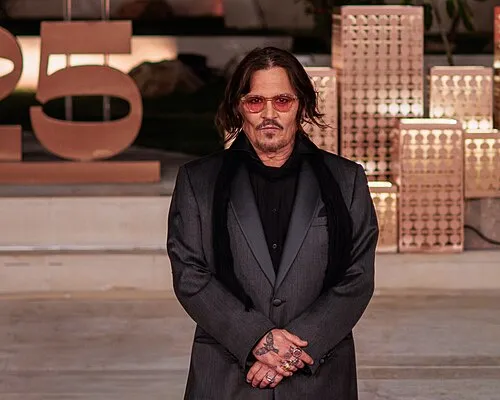
Johnny Depp plays Ebenezer Scrooge in Ebenezer, the Paramount Pictures film directed by Ti West. Paramount's release page gives 13 November 2026 as its theatrical date, and its release-day guide describes the film as playing exclusively in theatres. That does not establish an identical opening date or screening availability in every country.
This is a release-information and reading guide, not a film review. We have not claimed to watch the completed movie, judge Depp's performance or verify local cinema listings in Pakistan. The article connects the confirmed production information with an introduction to Charles Dickens' A Christmas Carol, helping students distinguish an original book, a screen adaptation and promotional material.
Which Johnny Depp film has been released?
The title is Ebenezer. The studio identifies Depp with the role of Ebenezer Scrooge and Ti West as director. The project revisits Dickens' nineteenth-century Christmas story rather than presenting Scrooge as a newly invented character.
Use the exact title when checking a cinema or film platform. Several adaptations of the same book exist, and a search for the character's name can return older films, stage productions or fan-made videos. A matching character is not enough to identify the 2026 release.
Keep the year, director and distributor together in your notes. Those details help separate this production from another version of A Christmas Carol. They also prevent a trailer for an older adaptation from being mistaken for the current film.
Who is involved in the production?
Paramount's information names Nathaniel Halpern as writer and lists an ensemble including Rupert Grint, Andrea Riseborough, Sam Claflin, Daisy Ridley and Ian McKellen. Those are confirmed credits, not evidence that every performer has the same amount of screen time or the same narrative importance.
Credits describe different jobs. A writer develops the screenplay; a director oversees the film's creative realization; actors perform the roles. Production and distribution involve additional responsibilities. A headline focused on a leading actor should not erase the collaborative nature of the work.
For students interested in media careers, reading the credits is a useful exercise. Identify which role interests you and what evidence you would need to understand its contribution. Do not assume that the most recognizable name personally made every visual, musical or editing decision.
Is the full movie already streaming?
The studio's 13 November guide describes a theatrical release. A trailer, behind-the-scenes feature or promotional page on a streaming service does not necessarily mean the feature film itself is available there. These are different types of content.
Check a platform's actual movie listing and your regional catalogue before subscribing. A page may contain an interview, teaser or article while the film remains in cinemas. The word watch beside promotional material should be read with the content label, not treated as a blanket availability promise.
This guide therefore does not invent a streaming date. If an authorized release window is announced later, it should be covered as a separately verified update. Current screening availability in a particular city should be checked through the cinema's own schedule.
What should families know before choosing a screening?
Paramount's release-day information lists a PG-13 rating for frightening material and an approximate running time of 116 minutes. A rating in one market is not automatically the classification used by every local authority or exhibitor.
A familiar Christmas story should not be assumed suitable for every child simply because of its title. Adaptations can emphasize different moods, and parents should review the local content information before deciding. An approximate runtime also does not include every cinema's advertisements or interval arrangements.
This is practical viewing information, not a guarantee that all viewers will react in the same way. Families know their own circumstances better than a general article can. Check the actual edition and local listing rather than relying on an old adaptation's reputation.
What is A Christmas Carol?
Charles Dickens' A Christmas Carol is a novella first published in 1843. Its central figure, Ebenezer Scrooge, is confronted with his attitudes toward other people and the consequences of his choices. Supernatural visitors provide a structure through which the story examines memory, present responsibility and possible future outcomes.
This description concerns the original literary work. It should not be read as a claim that every event, line or emphasis appears unchanged in the new film. An adaptation can retain a premise while altering how it is presented.
Students can use the book as an accessible starting point for discussing character change. The important question is not merely whether Scrooge becomes different, but how the narrative makes that change understandable through actions, contrasts and encounters.
Why does the story use a miser as its central character?
A character strongly attached to one way of living creates a clear point of tension. Scrooge's habits make the gap between his material concerns and his relationships visible. The reader is invited to consider whether financial calculation alone provides an adequate account of a human life.
That is a literary interpretation, not a claim that wealth automatically makes every person unkind or that the story supplies a complete economic policy. A character can dramatize a problem without serving as a statistical description of a whole social group.
For a reading exercise, identify an action that reveals Scrooge's priorities. Explain what the action suggests and support your interpretation from the scene. This is stronger than attaching a broad moral label without showing how the text creates that impression.
How does memory function in the original story?
Memory allows the reader to see a character as someone with a history rather than a fixed label. Looking backward can reveal opportunities, relationships and choices that help explain the present. Explanation does not automatically excuse every later action, but it can make a transformation more comprehensible.
Students should separate a remembered event from the present narrator's interpretation of it. Ask what changes when the same person looks back at an earlier stage of life. The exercise encourages close reading rather than reducing the story to a list of supernatural appearances.
This can be discussed without requiring a personal disclosure from a student. A classroom activity can remain focused on the fictional character and the text. Learning about narrative perspective does not mean students must share private experiences to participate.

Archive Charles Dickens Museum exterior from 2014, illustrating the literary background. It is not a filming-location claim.
Why does the present matter as much as the past?
The story's concern is not only regret. It also asks a character to notice the people and circumstances around him now. The present supplies opportunities for a different response rather than leaving change entirely in the realm of memory or distant prediction.
In an essay, distinguish the description of a scene from its significance. A household, conversation or social contrast may establish conditions; your analysis explains why those conditions challenge the character's assumptions. Both parts are needed for a persuasive paragraph.
Avoid treating an interpretation as the only possible reading. Another student may emphasize family, generosity, isolation or social responsibility. A good discussion asks whether each reading is supported, rather than rewarding whichever moral slogan sounds most confident.
What is the role of a possible future?
A possible future creates consequences that the character can consider before the story's present has finished unfolding. It adds urgency by showing that habits can lead somewhere, while leaving room for a different course of action.
For students, the distinction between inevitability and warning is important. A story can present a frightening outcome to prompt reflection without claiming that real human lives follow one mechanically predetermined path. Literary devices are not clinical predictions or instructions for judging another person's future.
Try writing two sentences: one describing what a future scene depicts and another explaining its effect on the character. Keeping those sentences separate helps avoid a summary-only essay that recounts events without analysing their narrative purpose.
How is a novella different from a film?
A novella uses written language, narration and the reader's imagination. A film uses performance, framing, sound, editing and duration. Neither medium simply transfers every feature of the other without choices. An internal thought in prose may need a different screen device to communicate it.
This means a comparison should ask how a similar idea is conveyed, not merely whether every line appears. A screen adaptation can alter pacing or emphasis while still engaging with a source work. Whether a particular change succeeds is a judgement requiring the actual film, not its announcement page.
This article makes no verdict on the new adaptation's success. It provides questions viewers can use after seeing it, while keeping confirmed release information separate from an imagined review.
What should you look for in an adaptation comparison?
Choose one limited element, such as the introduction of a character, a setting or a moment of decision. Describe how the book presents it. Then, after watching an authorized version, describe the film's method without assuming that difference automatically means failure.
Compare the effects. Does a visual detail replace a descriptive passage? Does a performance communicate something that prose states directly? Does a change in order alter what the audience knows at a particular moment? These questions produce a more useful analysis than a simple checklist of missing lines.
Make sure your comparison names the adaptation's year and director. Otherwise, an observation about one screen version can be incorrectly attributed to another. The same familiar story can support many distinct productions.
Why is a trailer not a complete review source?
A trailer is selected promotional material. It can establish a production's advertised premise and show particular images, but it does not reveal the full pacing, context or balance of the completed film. A short clip may be edited differently from the feature sequence.
A writer can describe what a trailer visibly contains while acknowledging that limit. Claiming to know the emotional effect of the whole movie or the quality of every performance would require viewing the work itself.
For students practising media literacy, label each note as release fact, promotional claim, direct observation or personal judgement. This simple framework prevents excitement about an announcement from becoming a fabricated first-hand assessment.
Where can students read the original book?
Project Gutenberg provides an edition of A Christmas Carol with browser reading and downloadable formats. Its record identifies the work and the available edition. Readers should observe the site's jurisdictional notice and distinguish the old literary text from modern adaptations and newly created artwork.
The existence of a public-domain original does not make a new film, soundtrack or promotional photograph free to redistribute. Different works can have different rights even when they share characters and a story foundation.
Use an authorized book edition or library copy and cite the edition used for schoolwork. Page numbers can vary between editions, so chapter or section references may help when classmates use different copies.
A short reading and writing activity
Read a manageable section and list one detail about setting, one action revealing character and one question the passage raises. Write a paragraph explaining how those details connect. Use your own language rather than copying a summary from a film page.
After seeing an adaptation, revisit the paragraph and add a comparison supported by a specific scene. Keep the book and screen evidence clearly identified. If you have not watched the movie, leave that part as a question instead of inventing an answer.
The RayTech article library contains further reading and entertainment explainers. A useful cultural article can help readers approach a work thoughtfully without promising a local screening, a streaming date or a review experience the writer has not actually had.
Common questions
Which character does Johnny Depp play?
Paramount identifies him as Ebenezer Scrooge in Ebenezer. Confirm the title and year when checking listings for this adaptation.
Is the movie based on Dickens?
Yes. The studio describes it as a reimagining of A Christmas Carol. The literary discussion in this guide concerns the original work, not an unverified scene-by-scene account of the film.
Can I assume a Paramount+ article means the full film is streaming?
No. Promotional articles and extras are different from a feature-film listing. The release-day studio guide describes theatrical availability.
Is this a review of the completed movie?
No. It is a verified release and literary reading guide. No firsthand screening, star rating or performance verdict is claimed.
Sources
- Paramount: official Ebenezer release page
- Paramount+: release-day production and viewing information
- Project Gutenberg: A Christmas Carol edition record
Checked on 14 November 2026. Literary interpretations and classroom activities are original explanations. Archive illustrations are not presented as official film stills.
Image credits: cover: Segolene Liger, source, CC BY-SA 4.0. Resized and converted to WebP. inline: Charles Dickens Museum, Doughty Street, London WC1 by Christine Matthews, source, CC BY-SA 2.0. Resized and converted to WebP.
Found an error or an outdated detail? Report a correction with the article URL and original source.