
Juventus vs Napoli: 2-0 Result and the Scoring Sequence
Explore Juventus vs Napoli with clear explanations, worked examples, source checks and practical questions for independent student learning.
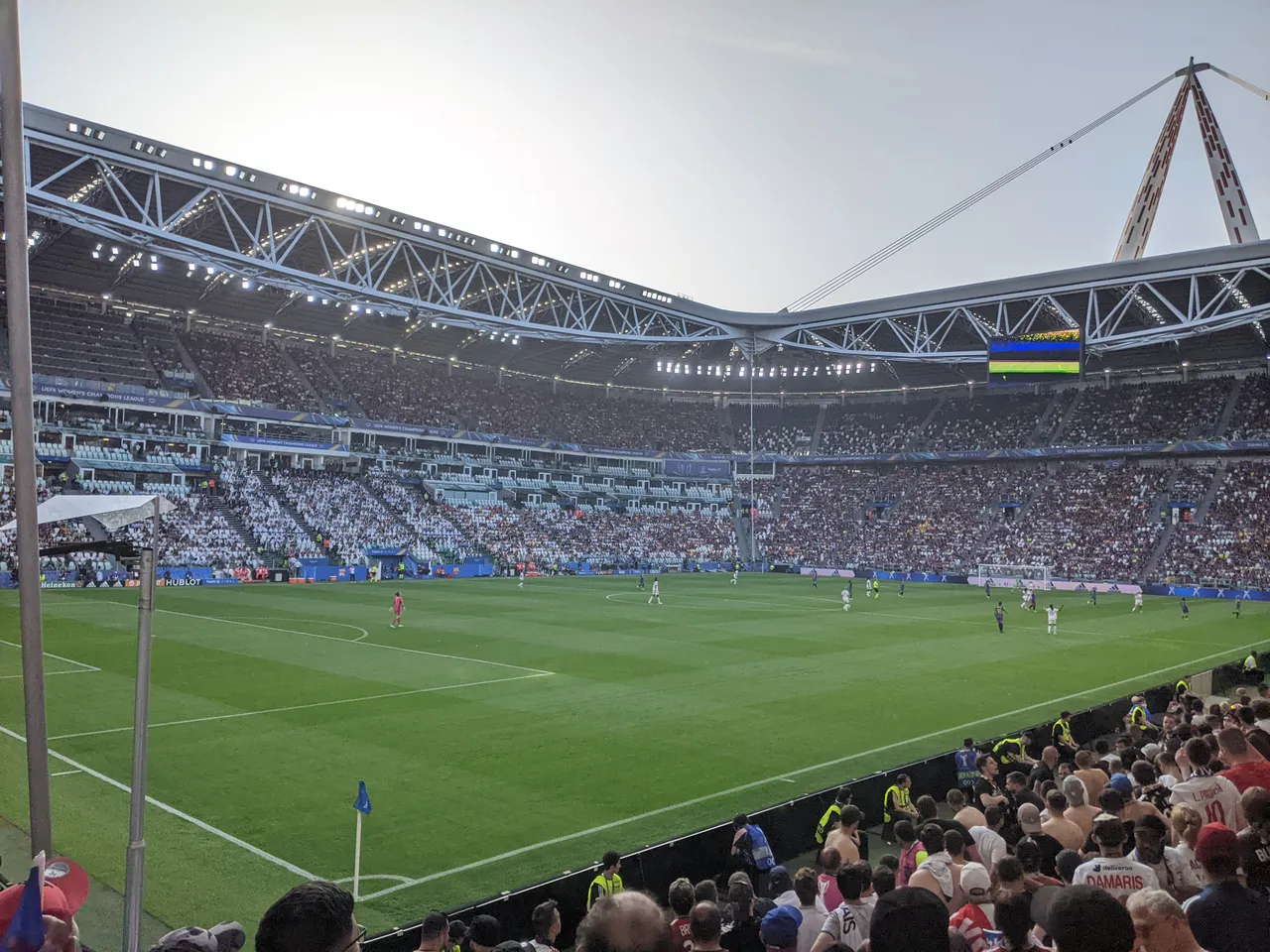
Juventus beat Napoli 2-0 at the Allianz Stadium on 1 November 2026. Kerim Alajbegovic opened the scoring in the 70th minute and Jérémie Boga added the second in the 87th. Napoli also had Luca Marianucci sent off after the opening goal. The result offers a useful lesson in how substitutions, score changes and disciplinary events fit into a match account.
This guide was checked on 2 November 2026 using the club and league reports. It is not a live standings page or an eyewitness tactical analysis. The discussion distinguishes reported events from general football concepts, and its original classroom situations are not presented as additional actions from this fixture.
What was the Juventus vs Napoli result?
The final score in home-away order was Juventus 2, Napoli 0. The official Juventus report identifies it as a home Serie A match and records a scoreless first half. Both goals came after the interval. This matters when comparing an early match update with the completed result: 0-0 was a stage of the game, not the final outcome.
A short fixture card should include the date, competition, venue and status as well as the score. Juventus and Napoli meet repeatedly, so the two names alone do not identify which match a page describes. A historical result should not become “today’s score” merely because someone shares its link on another date.
For an original exercise, prepare one card labelled half-time and another labelled full-time. Ask a learner whether the cards disagree. They describe different points in the same event, so both can be accurate. A timestamp and status label can prevent an apparent contradiction without changing either number.
Which events changed the second half?
Juventus’s account describes Alajbegovic’s opener after Zhegrova supplied him, followed by Marianucci’s dismissal and then Boga’s later goal. The club and league accounts agree on the overall sequence. Their displayed timing of the dismissal differs slightly, so this guide does not turn that minor difference into an invented exact timestamp.
The important ordering is that Juventus took the lead before Napoli’s reduction in players, then extended the lead later. An account that placed the dismissal before the opener would change the apparent context of the first goal. Sequence is part of meaning, not simply a decorative timeline beneath a photograph.
Write three event cards and arrange them in order. Then deliberately swap two and explain which interpretation changes. This exercise shows why a timeline must preserve the source’s sequence even when the writer chooses not to reproduce every minute label or describe every intervening action.
Why are substitutions part of the story?
The Juventus report lists Zhegrova replacing Kolo Muani and Boga replacing Alajbegovic. It also describes contributions from those players to the goals. That establishes participation and specific reported actions. It does not prove that every substitution automatically improves a team or that the same change would work in every match.
In football, a substitution can alter the skills, energy or roles available to a side. To explain its effect in a particular game, identify an observable action rather than relying only on the fact that a goal occurred later. “A substitute scored” is a narrower claim than “the entire tactical plan was transformed.”
For a fictional team discussion, give three substitute profiles: a player comfortable receiving between lines, one who offers width and one who helps defend space. Ask which might address a stated problem. There need not be one universal answer. The quality of the explanation depends on connecting the proposed role to the problem.
What is the difference between a contribution and a cause?
A player’s final pass or finish can be described as a contribution to a scoring move. A broader statement about why the entire match was won requires more evidence. Football involves several interacting decisions, and a single event should not automatically become the explanation for everything that followed.
Imagine a fictional match where a substitute scores with their first touch. The event shows an immediate scoring contribution. It does not, on its own, establish whether the team had already been creating chances, whether the opponent made a mistake or whether a change in shape caused the opening.
Ask students to write two versions of a summary: one describing the event and one offering an interpretation. Underline the extra evidence the interpretation needs. This is a useful reasoning exercise because it allows analysis while showing where a writer moves beyond a straightforward record of what happened.
How can an outside-the-area shot be discussed responsibly?
The league report characterises the two Juventus goals as strikes from distance. A description of shot location can help explain the visible action, but location alone does not supply a probability of scoring. An expected-goals estimate would require a defined model and the relevant inputs, not just the phrase “long-range effort.”
For an original observation task, draw a pitch and mark several fictional shooting locations. Ask which additional factors could matter to an analysis, such as defensive pressure or the angle available. Do not assign a precise probability unless the exercise explicitly supplies an invented model and labels it as such.
A useful classroom diagram can show direction and space without pretending to be professional event data. State whether the positions are approximate and whether the illustration is fictional. Clear limits make the diagram more informative, because readers know what it is designed to explain and what it cannot establish.
What does a second yellow card change?
A dismissal changes the number of players available to a side under the applicable match rules. In this fixture, the reports identify Marianucci’s second booking as leading to his dismissal. The event belongs in the account, but it should not be described as the cause of an earlier goal that had already been scored.
The general football question is how a side reorganises when it has fewer players. It may need to cover similar spaces with different responsibilities. The specific response requires observation or reporting. This article does not invent Napoli’s exact positional adjustments from the red-card entry alone.
Use a fictional board with eleven markers, then remove one. Ask learners to identify which spaces might become harder to cover and what information they would need before choosing a new shape. The exercise is about a constrained decision, not a claim that every ten-player team should use the same arrangement.

Delle Alpi in demolizione. Historical or contextual illustration; not a photograph of the current event or product being reported.
A scoreless first half is still information
The club report describes chances before the interval, including an effort against the post, while recording no first-half goal. This distinction is important: attempts and goals are different events. A period can contain attacking actions without changing the score, and the lack of a goal does not establish that neither team tried to attack.
For a fictional exercise, give two halves the same 0-0 score but different lists of attempts. Ask learners which conclusions the score supports and which require the event list. The exercise illustrates how a summary can be accurate yet incomplete without being wrong.
When writing your own account, avoid adding a detailed shot count from memory or from a short compilation. If a complete and reliable dataset is unavailable, describe the verified events you have. An article does not become more accurate merely because its layout contains more statistical boxes.
How should Juventus and Napoli standings be read?
The match result affects the table under the competition’s points system, but a current ranking requires the full relevant snapshot. This guide does not infer a precise league position from the 2-0 score. Other fixtures and existing totals matter, and a pre-match table may no longer describe the situation after the round finishes.
Try a fictional three-team table with a supplied three-points-for-a-win rule. Update one result, then introduce another team’s match. Compare the table after each update. A learner can see why a correct points change does not necessarily establish the final order of the entire group.
If a standings display includes matches played, goal difference and other columns, explain each one separately. Do not apply a tie-break from another competition without checking the rules. The right table is more than a sorted list of the two clubs mentioned in the headline.
Why can club and league reports sound different?
A club report is written from a participant’s perspective, while a league report may organise its account differently. They can agree on core events and still emphasise different moments. A writer should compare the actual claims rather than assuming that a difference in tone is automatically a factual contradiction.
Where the records genuinely differ, identify the field involved. A minor displayed minute difference is not the same kind of issue as a different scorer or final score. Preserve the common verified facts and explain material uncertainty. Do not quietly combine incompatible details into a smoother but unsupported story.
For a media-literacy worksheet, provide two fictional reports of the same match. Ask students to list shared facts, unique details and genuine conflicts. This helps them use several sources thoughtfully rather than choosing the one with the most confident headline or the most enthusiastic language.
Build a small substitution timeline
Use fields for player off, player on, team and event time. Keep scoring and disciplinary events as separate event types. A substitution record should not overwrite a goal record simply because the two occur near each other. The model needs to preserve several events within the same period.
Learners can build an example through our programming courses. Start with invented names, then compare the structure with the verified substitutions discussed here. Display a clear source note. If an event time is uncertain or omitted, show that rather than assigning a convenient default minute.
Test simultaneous events, an unknown time and a correction to an existing entry. The interface should remain understandable after the update. This is a useful application of structured data: the chronology can change without accidentally changing the final score or attaching an action to the wrong player.
What should historical stadium images tell the reader?
An image of the Allianz Stadium can illustrate Juventus’s home setting without showing the November 2026 fixture. A Napoli-related stadium image can provide club context without being the venue for this match. The caption should state that distinction instead of asking readers to infer it from the surrounding text.
Do not use a photograph of a different player as a named scorer because the shirt colours match. The subject should be verified from the image record. If the article uses venue imagery, its alternative text should describe the visible venue rather than inventing a goal celebration outside the frame.
This matters when a result card is shared separately. Keep the fixture date, home-away order and source visible. A contextual photograph should support the card without becoming false evidence of the event. Good design makes those labels readable on a phone rather than sacrificing them for decoration.
Questions for a final understanding check
Can you describe the order of the opener, dismissal and second goal? Can you distinguish a substitute’s reported contribution from a complete explanation of the team’s performance? Can you explain why the first-half score and the final score are both necessary when reading an update written during the match?
Next, identify one claim that the available event list cannot settle. It might concern an exact tactical shape, a modelled probability or a league position after other games. Explain what additional evidence would answer it. This turns a familiar football result into practice in asking precise questions.
The Juventus-Napoli match is useful because its decisive events can be placed in a clear sequence. Keep that sequence, the verified result and the source context together. The educational examples help readers reason about the game without pretending to add unrecorded events or turning a two-goal win into a complete explanation of a season.
Sources
- Juventus official report, 1 November 2026, for the result, scoring times, substitutions and disciplinary event.
- Lega Serie A match report, for the league’s account and shot descriptions. Exact dismissal timing is not reconciled here; the agreed sequence is preserved. Fictional diagrams and worksheets are original educational examples.
Image credits: cover: Sebleouf, source, CC BY-SA 4.0. Resized and converted to WebP. inline: Franco Desogus, source, CC BY 3.0. Resized and converted to WebP.
Found an error or an outdated detail? Report a correction with the article URL and original source.