
Karen Khachanov: Paris 2018, Olympic Silver and Tennis Match Structure
Explore Karen Khachanov’s Paris 2018 title and Tokyo silver. Learn score structure, service pressure and careful comparisons of tennis statistics.
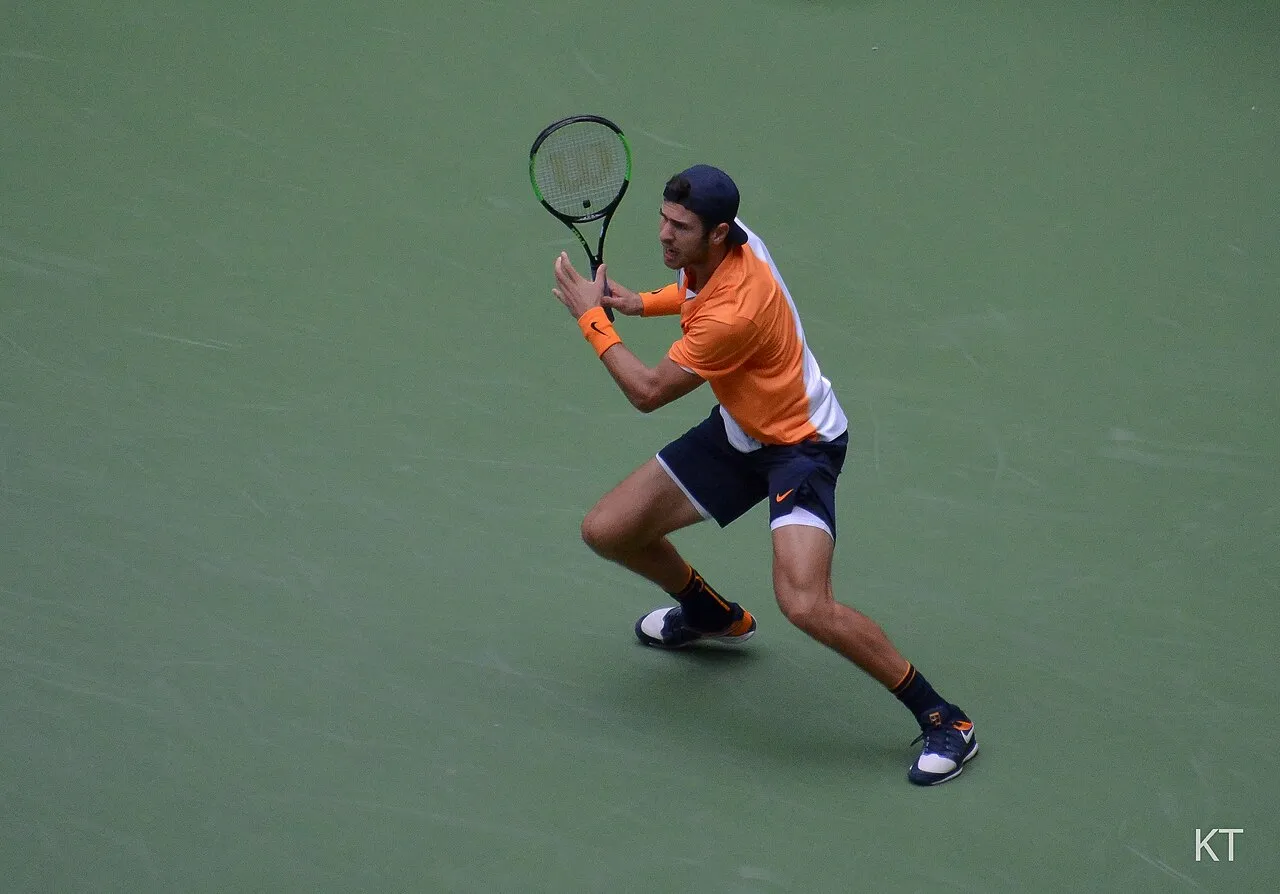
Karen Khachanov's 2018 Paris title is a clear example of why a tennis result needs both a score and a competition label. He defeated Novak Djokovic to win a Masters 1000 event, while his later Olympic silver belongs to another competition and another year of play. Those achievements can be appreciated together without treating them as the same kind of trophy.
This guide explains the historical milestones and uses them to explore rally structure, service pressure and careful score reading. It does not claim a current ranking, forecast a title or interpret an old image as proof of present fitness. Numerical exercises use fictional inputs unless a particular historical match is named and linked to its official record.
Who is Karen Khachanov?
Karen Khachanov is a professional tennis player whose established achievements include the 2018 Paris Masters title and the men's singles silver medal at the Tokyo Olympic Games held in 2021. ATP's biography distinguishes the Games' Tokyo 2020 name from the year the competition was played. That detail matters when a reader builds a chronological career table.
Event branding and calendar year can differ
A competition can retain an edition name that does not match the year its matches took place. Tokyo 2020 is a prominent example. A historical profile should preserve both pieces of information where needed rather than silently changing one. This prevents a reader from placing the Olympic result before an event that actually happened earlier in calendar time.
A medal is not a tour title
An Olympic medal records a finish in that event's competition. An ATP tournament title belongs to a separate event category. Combining the two into one undifferentiated title count makes the summary harder to understand. Use distinct columns for event, discipline and outcome so the reader can see what was won and under which competition structure.
What happened in Paris in 2018?
Khachanov defeated Djokovic 7-5, 6-4 in the 2018 Paris final to win his first Masters 1000 title. ATP's official report supplies the result and tournament context. The record establishes that historical victory; it does not mean every later meeting between the players followed the same pattern or that one match settles an entire career comparison.
Two sets contain many separate decisions
The score records twelve games in the first set and ten in the second. It does not show the number of deuces, break opportunities or long rallies within them. A concise score is useful for the outcome but incomplete for the match story. Additional point or game records are needed before claiming exactly how the pressure developed.
The first set needed more than six games
A 7-5 set shows that the eventual winner reached seven games while the opponent finished with five. The game totals should not be mistaken for individual rally points. Tennis has several layers of scoring, and a report should identify which layer it describes. Saying a player won seven points when the source means seven games changes the meaning substantially.
Why is the Masters 1000 category relevant?
The category identifies a part of the ATP tour structure. It is not a claim that a player won one thousand matches or that every event using a large number has the same format. A career achievement should retain its event category because a tour title, a major title and an Olympic result are distinct records.
A breakthrough can have a narrow definition
Calling Paris 2018 Khachanov's first Masters 1000 title does not require calling it his first tennis success of any kind. The category gives the milestone its precise meaning. Sports reporting becomes misleading when first is left without an object. Ask first what, in which discipline and at what level before repeating a shortened headline.
A draw creates a sequence of problems
Winning a tournament involves more than the final opponent. Different rounds can demand different responses to serve, return and rally patterns. A profile may identify the final as the headline result while acknowledging that the title required a complete run. It should not invent detailed match plans for earlier rounds when those plans are not established by the cited evidence.
How should a viewer study baseline pressure?
Baseline pressure develops when one player limits the other's time, balance or available targets. Pace can contribute, but depth and direction also matter. A player can strike hard without gaining control if the opponent receives the ball comfortably. Watch the position created after the shot rather than using the sound of contact as the measure of attacking quality.
A deep ball can change the next contact
When a ball lands near the baseline, the opponent may have less room to step forward. The actual effect still depends on height, spin and preparation. Do not assume every deep shot is excellent or every shorter one a mistake. A deliberate shorter angle can sometimes create a different problem. The point sequence gives the target its meaning.
Changing direction has a cost
A shot down a different line can open space but may demand more control from the available contact position. If a player is stretched, maintaining a safer direction can be sensible. This is a general tennis principle, not an instruction to praise every conservative shot. Evaluate the realistic alternatives and the pressure under which the choice was made.
The next recovery completes the action
After striking, a player needs to prepare for the opponent's likely reply. A strong ball followed by poor recovery can leave an easy target open. A useful viewing exercise therefore follows contact, movement and next preparation as one sequence. Judging only the first swing misses how the advantage was preserved or lost.
What does service pressure mean?
A server can feel scoreboard pressure in situations where losing the game changes the set's immediate balance. That is an observable context, not permission to diagnose private emotions. Discuss the score and choices visible on court. Claims that a player panicked or lost belief require more than one expression or a short edited clip.
A break point is a specific opportunity
A receiving player has break point when winning the next point would win the service game under the applicable scoring format. Not every receiving point is a break point. Keeping that distinction clear helps explain why a player can win many points on return without taking many service games. The distribution of points matters as well as their total.
Saved chances and conceded games differ
A player may save several break points in one service game and still lose that game later. Another may concede on the only chance faced. The break-point count and service-game outcome should be read together. Neither statistic alone fully describes how comfortable the server was or how much pressure the receiver created throughout the set.

Karen Khachanov at practice during the 2024 Washington Open, shown as historical player context.
How can percentages mislead a comparison?
Imagine a fictional player saves four of five break points, while another saves eight of twelve. The first has the higher percentage; the second has saved more points in absolute terms. The examples use different sample sizes. A balanced report displays both counts and percentages and avoids treating one rate as proof of complete superiority across all parts of serving.
An empty sample is not a perfect record
If a player faces no break points, there is no break-point-saving percentage to calculate from that sample. Calling it 100 percent invents a success count, while calling it zero implies failure. Mark it not applicable or no opportunities. Handling empty data correctly is a small but important step in building trustworthy sports charts.
Similar totals can hide different sets
Two players can win similar numbers of points yet experience different game sequences. Tennis groups points into games and sets rather than awarding the match to the larger raw total. A cluster of points at one stage may have a different score effect from the same number elsewhere. This structure explains why aggregate data needs the final score beside it.
What does an Olympic silver medal establish?
The medal records a second-place finish in the men's singles event at those Games. It is not a claim of winning the gold-medal match. ATP's biography provides the Tokyo context without requiring a current medal table. Accurate wording preserves the achievement and avoids treating a podium photograph as proof that the player finished in first place.
Compare competitions carefully
Olympic tennis and tour events exist within different organisational settings. A result from one can be part of a career narrative without being added to another event's record. State the competition before comparing rounds, medals or titles. A clear table can accommodate multiple achievements more honestly than a single number labelled major successes with no definition.
National representation can be historically specific
An athlete's designation in an official Olympic result should be read in that event's context. Do not casually replace the listed team label with a present-day assumption. This guide follows the historical source rather than making political or eligibility claims about current competition. Nationality, event representation and tournament participation are related but distinct pieces of information.
A match-structure project for students
Take an official historical score and create a table with one row for each set. Add only the game counts supported by the record. If point-by-point data is available, build a separate table for that layer rather than mixing points and games. This exercise teaches how a compact sports notation represents several nested structures.
Separate recorded facts from an inferred story
A 7-5 set does not prove that every game was close or that one player dominated until a sudden collapse. Those are narratives requiring more evidence. Start with what the score establishes, then add only supported details. Learning to resist an attractive but unproven explanation is a valuable analytical habit in sport and in other subjects.
Build a small score-reading tool
The programming courses can help students turn a labelled dataset into a table, while the class resources support the arithmetic. Store event, year, discipline and source with each result. Keep an Olympic medal field separate from tour titles and validate that every set has a clear player perspective. Useful software protects meaning before decorating the output.
Reading a pressure game without guessing
Take a service game shown in full and note the score before each point. Record the serve result, the return and whether the server immediately gained a comfortable position. You may find that a difficult game contained several good serves but also one poor next shot. That is a more useful explanation than simply saying the server could not handle pressure. The point log shows where the sequence changed and allows another viewer to assess the same evidence.
Keep duration separate from quality
A long game can reflect repeated deuces rather than continuous long rallies. A short game may contain four excellent serves or four quick mistakes. Elapsed time alone cannot decide which description fits. If you use a stopwatch, state what period you measured and keep it separate from the shot observations. Avoid treating a long match as automatic proof of better tennis or a short final as proof that the losing player never competed seriously.
State what would change the conclusion
A sound report can explain what further evidence it would need. Point-by-point data might clarify opportunity distribution, while full video might reveal return depth. Naming that missing evidence makes the conclusion more credible. It shows that the interpretation is open to correction rather than designed to protect a favourite story regardless of what another source reveals.
Questions about Karen Khachanov
Was the Paris 2018 result a Grand Slam title?
No. It was a Masters 1000 singles title. The final victory over Djokovic is a substantial historical achievement in that category. Calling it a major singles championship would change the competition being described. A profile should use the official event label instead of making the result sound larger by replacing it with a different tournament category.
Why can Tokyo 2020 appear beside 2021?
Tokyo 2020 is the Games' edition name, while the tennis competition was held in 2021. Both labels can therefore be correct when used clearly. Keeping the distinction avoids a false chronology in a career summary. It also teaches a broader source-reading habit: an event's branded edition and the date an activity occurred are not always the same field.
Sources
- ATP Tour: Khachanov's 2018 Paris final victory
- ATP Tour: Karen Khachanov biography and Tokyo medal context
Image credits: cover: Carine06 from UK, source, CC BY-SA 2.0. Resized and converted to WebP. inline: Hameltion, source, CC BY-SA 4.0. Resized and converted to WebP.
Found an error or an outdated detail? Report a correction with the article URL and original source.