
Karl Bushby: The 28-Year Journey Home and the Goliath Expedition
Explore Karl Bushby’s return to Hull, the Goliath Expedition’s human-powered rules and how elapsed time differs from active walking time.
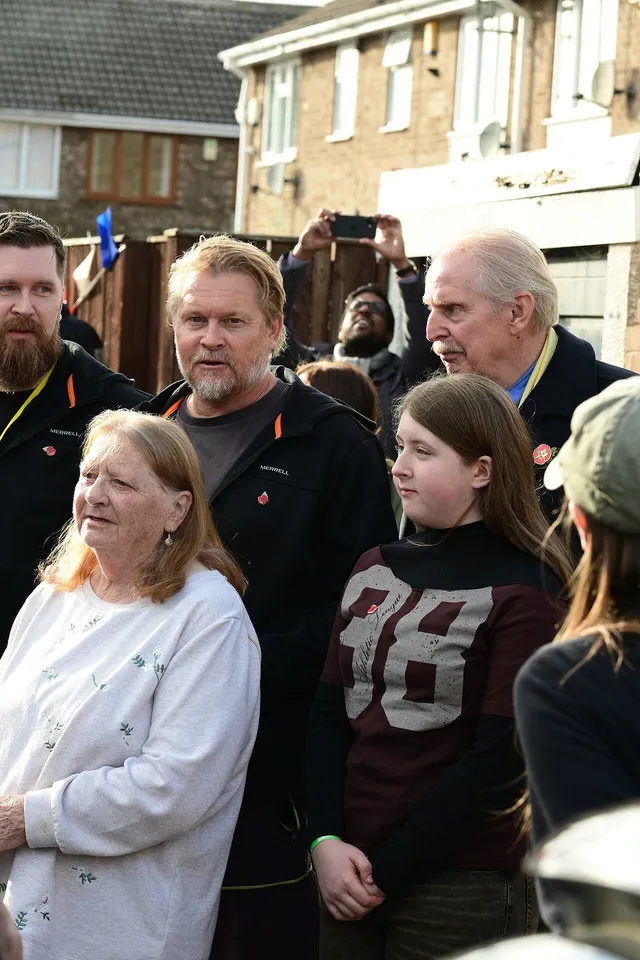
Karl Bushby returned to Hull in November 2026 after the Goliath Expedition, a human-powered journey that began in Chile in 1998. The University of Hull welcomed him back on 2 November, following the city council's announcement of a public homecoming. Contemporary reporting describes a journey lasting twenty-eight years and covering roughly fifty thousand kilometres.
The story is more complicated than a claim that someone walked continuously for twenty-eight years. It includes interruptions, permissions, changing support and crossings that required different forms of human-powered travel. Understanding those distinctions makes the achievement more interesting, not less impressive.
Who is Karl Bushby?
Bushby is a Hull-born British adventurer and former paratrooper associated with the Goliath Expedition. The project's own account says he left Chile in 1998 with a rule against using transport to advance the journey and a commitment not to return home until he had completed the route on foot.
Those self-imposed rules define the expedition's purpose. They do not mean every day across the entire period consisted of walking, or that water crossings were literally completed on dry land. A responsible description distinguishes the journey's organizing principle from an oversimplified slogan.
The 2026 homecoming matters because it closes a very long personal and geographical project. It is not necessary to add an unsupported world-record label to recognize the scale. A record claim would require its own definition and verification, separate from the well-documented return to Hull.
What confirms the homecoming?
Hull City Council published a notice inviting people to welcome Bushby in Queen Victoria Square on Monday 2 November. The University of Hull subsequently published its own welcome on that date. These local primary sources help distinguish a planned arrival from confirmation that the homecoming had occurred.
Reporting published before the arrival described him as nearly home. That was a dated stage of the story, not a permanent status. A reader checking the news on 4 November should look for the later record rather than repeat an earlier headline as though the final walk had not yet happened.
| Stage | Dated context |
|---|---|
| 1998 | Expedition begins in Chile |
| October 2026 | Final English stage follows the Channel crossing |
| 26 October 2026 | Council announces the planned Hull welcome |
| 2 November 2026 | Local homecoming and university welcome |
The timeline illustrates a wider research habit: separate an intention, an approaching event and a completed event. Each can be accurately reported at a different time, but the verbs should change as the record develops.
What was the Goliath Expedition trying to do?
The central idea was to make a connected human-powered journey from the southern end of South America back to Britain. The project's rule against transport advancing the route gave the challenge its distinctive character. Reaching the destination was not simply a matter of selecting the shortest commercial travel itinerary.
That rule created practical complications at sea crossings, borders and places where the next section could not immediately be completed. The elapsed time therefore includes much more than the days spent covering distance. Permissions, logistics, finance and conditions all formed part of the project.
For students, the expedition offers a useful distinction between a goal and a route. The goal remained recognizable while the sequence of practical steps had to respond to changing circumstances. Planning a very long project rarely means that every original estimate survives unchanged.
Why did it take twenty-eight years?
Contemporary reporting describes a mixture of environmental difficulties, administrative delays and changing support. A route crossing many countries cannot be understood only through physical endurance. The ability to continue also depends on access, timing, resources and coordination with other people.
A long delay does not automatically mean the traveler was walking slowly. It may mean that a section could not be advanced at all during that period. Dividing total distance by total elapsed days can produce an arithmetic average, but that average is not a measure of daily walking pace.
This matters when assessing any long project. A calendar includes active work, waiting, recovery and preparation. If those categories are merged, a simple productivity number can conceal the actual constraint. The more useful question is what prevented or enabled progress at each stage.
How far is fifty thousand kilometres?
Reports use approximate figures such as thirty-one thousand miles and fifty thousand kilometres. These are rounded descriptions of a very large journey, not two contradictory measurements. Converting one rounded value into another should not create a false appearance of precision.
One mile is approximately 1.609 kilometres. Multiplying thirty-one thousand by that value gives just under fifty thousand kilometres. The difference between that result and a rounded headline figure is not evidence that thousands of steps have gone missing.
For a classroom exercise, write the unit and the level of precision beside every distance. An approximate route total should remain approximate after conversion. Adding several decimal places to a rounded source does not make the underlying measurement more accurate.
Why a route map is more informative than a distance headline
A map shows the geographical relationships hidden inside a single number. South America, North America, the Bering region and Eurasia present very different environments and logistical problems. Two segments of equal distance may require very different preparation and time.
Look at the scale of the map before comparing apparent lengths. A world map distorts some distances and shapes depending on its projection. A line that looks direct on one map may not represent the shortest path on the globe or the route a person could realistically follow.
Use an expedition map to understand sequence and geography, not to infer an exact current location. A historical route display is not a live tracker. The public homecoming can be described without publishing a person's private address or trying to monitor their movements afterward.
The Bering Strait as a geographical challenge
The Bering Strait separates Alaska and Russia and links the story's American and Eurasian stages. Public accounts describe Bushby's crossing of the region as one of the expedition's major challenges. Its importance is geographical and historical within the journey, not an invitation to treat a map line as an ordinary pedestrian connection.
Water, ice, weather and jurisdiction make such a crossing different from following a road between towns. A brief article cannot reproduce the conditions of a past expedition or establish that a similar attempt would be possible at another time.
For learning, compare the strait's position on a globe with its appearance on a flat map. That exercise explains why a route connecting continents can look surprising to someone used to seeing them placed at opposite edges of a conventional world map.
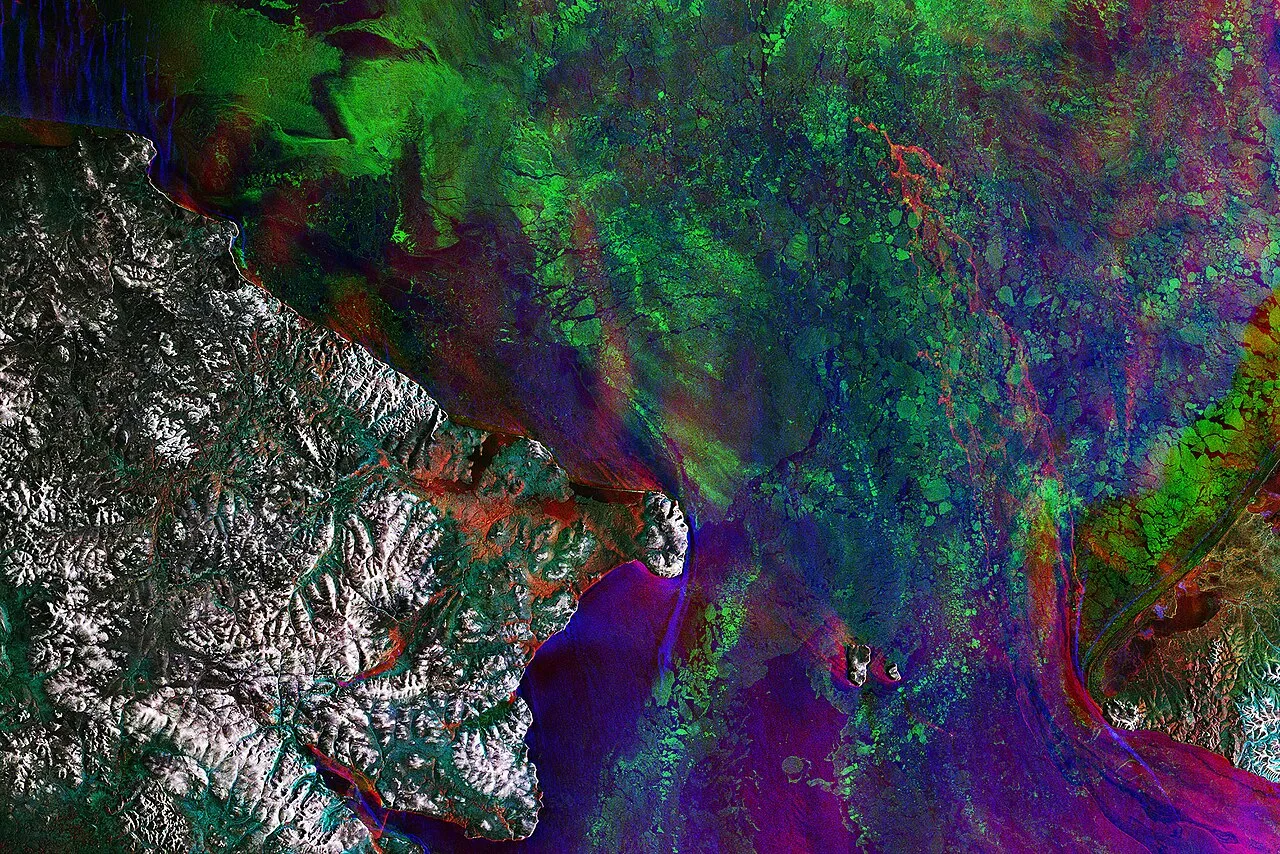
A Sentinel-1 radar composite of the Bering Strait using 2017–2018 scans; geographic context, not an expedition photograph.
Human-powered does not mean only one activity
The journey is often summarized as a walk, but the broader record also includes swimming crossings. The useful description keeps the project's human-powered principle visible without pretending that every kilometre was covered through the same movement on the same surface.
This is not a reason to dismiss the achievement. It is a reason to describe it accurately. Different activities can be part of one connected expedition when the project's rules and records explain how those stages fit together.
The same clarity is useful in sport and science. A category needs a definition. Before comparing two expeditions, ask whether they use the same rules about transport, interruptions, support and route continuity. Without those definitions, a dramatic ranking such as longest or toughest may compare unlike projects.
What role did other people play?
Long expeditions depend on more than the person visible in the final photograph. Supporters, local contacts, sponsors and family can contribute resources, information and continuity. Recognizing that network does not remove the traveler's personal effort.
It instead provides a more realistic picture of how ambitious projects are sustained. A person may carry the equipment and cover the route while still relying on a wider group for parts of the organization. Individual achievement and collective support are not mutually exclusive explanations.
For a student project, list the roles needed to keep a multi-year expedition documented and supported. Consider communication, record keeping, finance and route research. The exercise turns an inspirational headline into a concrete understanding of project coordination.
Returning home can be a transition rather than a simple ending
Reaching the destination completes the route objective, but it also changes the daily structure that sustained the traveler for years. Contemporary interviews discussed uncertainty about life after the journey. Those comments should be treated as the person's reported experience, not turned into an amateur psychological diagnosis.
A long-term project can shape routines, relationships and identity. Completing it may bring relief and satisfaction alongside practical questions about what comes next. Recognizing that complexity gives the story more human depth than assuming every homecoming photograph explains every feeling.
The public record does not require access to private family conversations to make that point. Respectful reporting can discuss the transition through published statements while leaving personal details outside the account.
A useful lesson in planning and revision
Bushby's journey is a strong example of why a plan needs both a stable purpose and room for revision. If the objective changes every time an obstacle appears, the project may lose coherence. If the method can never change, the project may become impossible to continue.
For an ordinary learning goal, apply the principle at a much smaller scale. Define what completion means, identify the next achievable step and record the obstacle when progress stops. Then adjust the method with evidence rather than simply increase the pressure to move faster.
This is not a claim that a school assignment is equivalent to a transcontinental expedition. It is a way to extract a practical idea from an unusual story: persistence becomes more useful when it includes observation, realistic constraints and a clear account of what the next step requires.
How to verify a remarkable travel claim
Begin with the traveler's own project record, then compare it with dated independent reporting and relevant local confirmations. Each source contributes something different. A project page explains its rules, a news report may document a particular stage and a local institution may confirm a public arrival.
Check whether a statement describes a plan or a completed event. Then inspect distances, units and the meaning of the category being used. A claim about a human-powered expedition should not be silently rewritten as a nonstop walk without interruptions.
Finally avoid adding a superlative that the sources do not establish. Extraordinary is a description of scale; a formal world record is a defined claim requiring its own evidence. Clear wording can preserve the wonder of the story while improving its accuracy.
Questions readers are asking
Did Karl Bushby return to Hull in 2026?
The local and university records reviewed here place the homecoming on 2 November 2026. Earlier reports describing him as nearly home should be read with their publication date rather than treated as the latest status.
Did he walk without stopping for twenty-eight years?
No such claim is made here. The elapsed period includes interruptions and logistical challenges, and the wider human-powered journey involved more than one type of crossing. Total calendar time is not the same as active walking time.
Why do reports use both miles and kilometres?
They are different units describing approximately the same scale. Thirty-one thousand miles converts to roughly fifty thousand kilometres. Rounded source figures should remain rounded rather than gain misleading decimal precision through conversion.
Is this a route guide for copying the expedition?
No. It is a profile and geography-learning guide based on the documented journey. Historical crossings do not establish current access, conditions or suitability for another traveler. The useful lesson is how to understand the record, not how to reproduce every stage.
Separate the finish from the next decision
Completing a long project does not require immediately announcing another one. A useful review can simply record what worked, which assumptions changed and what other people contributed. That reflection has value without inventing a new expedition on the traveller's behalf.
Sources
- Goliath Expedition project record
- Hull council homecoming notice
- University of Hull welcome
- Contemporary journey and arrival report
- Dated pre-arrival interview
Image credits: cover: Hullian111, source, CC BY-SA 4.0. Resized and converted to WebP. inline: European Space Agency, source, CC BY-SA 3.0 igo. Resized and converted to WebP.
Found an error or an outdated detail? Report a correction with the article URL and original source.