
Kitco Metals: Gold Quotes, Bid and Ask and Pakistan Price Comparisons
Learn to read Kitco quotes, timestamps, bid and ask, troy ounces and purity, with labelled Pakistan conversion examples and clear price qualifications.
What is Kitco Metals used for?
Kitco provides precious-metal quotations, charts, news, reference tools and routes to bullion buying and selling. Those functions are related but not identical. A displayed market reference is not automatically the price a particular buyer will pay for a finished jewellery item or the amount a dealer will offer for it.
For readers in Pakistan, the central task is to keep currency, unit, purity and timestamp together. An international US-dollar quote per troy ounce cannot be compared directly with a local rupee figure per tola without accounting for those differences.
This guide explains the reading method and uses clearly labelled examples. RayTech has no commercial affiliation with Kitco. The article does not recommend a purchase, offer a price target or guarantee an investment outcome.
A dated example, not a live quote
The reviewed Kitco gold page showed a 12 November 2026 snapshot at 6:49am Eastern time with a US-dollar bid of 3,947.10 and ask of 3,949.10 per troy ounce. These values identify what the source displayed at that checkpoint. They should not be presented as permanently current or guaranteed transaction prices.
A static article cannot keep a changing market quote live simply by using that word in a heading. For current information, open the original chart and read its timestamp. Check whether the selected currency, unit and market context match the question you are trying to answer.
The rest of this article concentrates on the method. Its worked currency example deliberately uses round fictional inputs rather than suggesting that a historical international quote and an invented exchange rate establish today's Pakistan jewellery price.
Quote, chart, commentary and shop
| Tool or page | The main question it helps answer |
|---|---|
| Metal quote | What reference is displayed for a metal at a stated time? |
| Chart | How has the selected series changed over a chosen period? |
| Commentary | What interpretation or argument is an identified author offering? |
| Product listing | What terms are attached to a particular item or transaction? |
Do not substitute one for another. A commentator's forecast is not a completed market outcome. A chart is not a promise that a dealer will transact at its last plotted point. A bullion listing may include product-specific terms absent from the reference quote.
Identifying the page's purpose first makes the rest easier to read. It also reduces the chance of mistaking a marketing statement for a neutral definition or a historical chart for a current offer.
Bid and ask are different sides of a quote
The bid and ask describe different sides of a quoted market. Their difference is the spread. A reader who notices only one figure may not understand why an immediate opposite transaction would involve another price.
Using the dated snapshot above, the displayed difference is two US dollars per troy ounce. That arithmetic does not establish the full cost of buying and selling a particular physical product. Product premiums, charges and transaction conditions require their own checking.
For a fictional classroom example, suppose a quote shows bid 2,000 and ask 2,004 in the same unit and currency. The spread is four, not a four-unit profit guaranteed to a customer. The direction of the transaction matters, which is why both labels belong with the numbers.
A troy ounce is not an ordinary household ounce
Precious metals commonly use the troy ounce, approximately 31.1034768 grams. An ordinary avoirdupois ounce uses a different mass. Choosing the wrong unit produces an incorrect conversion even when the arithmetic is otherwise careful.
If a quote is expressed per troy ounce, divide by the troy-gram conversion to obtain a per-gram reference in the same currency. Keep enough precision during the calculation and round the final result appropriately for the purpose.
Do not remove the unit from a spreadsheet heading. “Price per ounce” can become ambiguous when the sheet is shared with someone outside the original discussion. Writing the full unit takes little space and prevents a substantial error.
The tola relationship
The standard bullion conversion commonly used for a tola is approximately 11.6638038 grams, or three eighths of a troy ounce. That relationship makes a clearly defined conversion possible when the source quote uses troy ounces.
For an illustrative US$4,000 per troy ounce, the corresponding pure-metal reference per tola is 4,000 multiplied by three eighths, or US$1,500. This is an invented round-price exercise, not an assertion that a current local dealer offers a tola for that dollar amount.
A conversion changes the unit, not the underlying evidence. It does not add a current exchange rate, establish purity or include jewellery workmanship. Each of those needs a separate input rather than being silently assumed.
A fictional USD-to-PKR worksheet
Assume, only for this exercise, US$4,000 per troy ounce and Rs280 per US dollar. Multiplying gives Rs1,120,000 per troy ounce before considering any other transaction components. Multiplying that by three eighths gives Rs420,000 per tola of pure-metal equivalent.
The Rs280 exchange rate is fictional for the exercise. It is not presented as the current bank, interbank, cash or dealer rate. A real comparison would need an appropriate dated exchange-rate source and an understanding of which rate applies to the transaction.
This is why the formula is more useful than a bare answer. A reader can replace the illustrative inputs with relevant verified values while retaining the same units. Publishing only the result would hide the assumptions and make it look like a current market quotation.
Purity changes the metal-content calculation
Karats describe a proportion of gold content: 22 divided by 24 is approximately 91.67%, while 18 divided by 24 is 75%. A simple metal-content exercise multiplies a pure-metal reference by the relevant proportion.
Using the fictional Rs420,000 pure-metal reference per tola, the 22-karat equivalent is Rs385,000, and the 18-karat equivalent is Rs315,000. These are illustrative content calculations, not finished jewellery offers or an assurance about a particular item's verified composition.
An item's actual identity and purity need appropriate evidence. A photograph, colour or sales caption is not a substitute for checking the product. This article does not assess an individual ornament or instruct readers to perform unsafe chemical testing at home.
Illustrative silver coins, not a current dealer offer or evidence of a quoted metal price.
Metal value is not the complete retail bill
A finished item can include craftsmanship, design, business costs and other charges or terms. A quoted gold-content reference therefore should not be treated as the full amount payable for every piece of jewellery.
Equally, an amount paid for workmanship is not automatically recovered in a later sale. The terms offered by a buyer can differ from the terms charged by a seller. A person should ask for an itemised explanation rather than assume that one percentage describes both transactions.
For a useful comparison, identify mass, stated purity, metal component and additional charges separately. This does not decide whether a particular offer is good or bad. It makes the basis of the comparison visible so that the reader is not comparing different products as though they were identical.
Weight and price must refer to the same thing
An item containing stones or other materials may have a total weight that is not identical to its gold-content weight. A general price-per-gram calculation cannot settle the valuation of every mixed-material item without additional information.
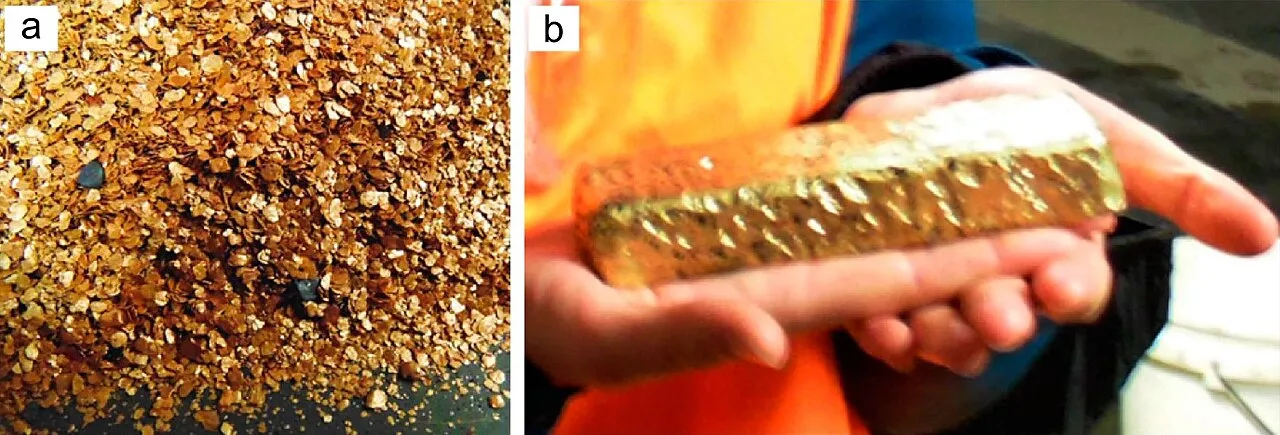
The same caution applies to different metal products. A doré bar, a refined bullion bar and a finished ornament are not interchangeable descriptions. An illustrative photograph of one should not be labelled as though it proves the purity or value of another.
When reading an online listing, ask what the mass measures and which component the price calculation concerns. If the answer is unclear, obtain clarification rather than filling the gap with the assumption most favourable to the advertisement.
Chart timeframes change the question
A daily chart and a multi-year chart show different periods. A movement that looks dramatic over an hour can appear small over several years, while a long-term trend may contain substantial short-term reversals. Neither view automatically invalidates the other.
Before interpreting a chart, read the axes, currency and selected period. Check whether it represents an intraday quote, a closing series or another defined dataset. A visually steep line can result partly from the chosen scale.
This guide does not use a chart shape to predict a guaranteed next move. Historical data can support analysis, but the future is not established merely because a pattern resembles something a viewer has seen before.
Commentary is an argument, not a result
Market commentary often explains what an author thinks may influence prices. It can be useful when its assumptions are clear. It should not be rewritten as a promise that an event will produce a particular return.
Separate a reported fact, such as a dated quotation, from an interpretation of why it moved. Then separate both from a forecast. A paragraph can contain all three, but a careful reader should be able to identify which sentence belongs to each category.
This distinction is especially important when a headline is forwarded without the article. A conditional argument may lose the words that made it conditional. Read the actual context before making a financial decision based on a dramatic summary.
Compare a local quote with matching terms
Write down the local product, unit, purity, currency and time. Identify whether the figure concerns buying, selling or a reference calculation. Only then compare it with another source using matching definitions.
A difference can have several possible explanations, including the chosen exchange rate, product form or transaction terms. Do not assume one cause without checking. A precise question about the components is more useful than declaring every difference an error.
This article does not certify a dealer, assess a reader's financial circumstances or recommend an amount to invest. General information can make a comparison clearer without replacing the judgement and appropriate advice required for a real transaction.
A practical spreadsheet structure
Use separate input cells for the international quote, troy-ounce mass, chosen local unit, exchange rate and purity proportion. Add a label identifying each input as observed, assumed or hypothetical. Keep the source and date beside any observed value.
Show intermediate results rather than hiding the entire calculation in one unexplained formula. Someone reviewing the sheet should be able to see whether an error came from the quote, the currency conversion or the purity adjustment.
For a class exercise, ask another student to change one input while leaving the others fixed. Which output changes, and why? This teaches the relationship between variables without pretending that the spreadsheet predicts the market or quotes a real jewellery transaction.
Questions about Kitco and Pakistan comparisons
Is a Kitco quote the price of jewellery in Pakistan?
Not automatically. Currency, unit, purity, product form and retail terms all matter. A reference quote provides one input. It does not independently establish the complete local bill or a dealer's offer for an individual item.
Can I use an ordinary ounce conversion?
Not for a quote expressed per troy ounce. The units differ. Use the unit stated by the source and keep its conversion visible in the calculation. A correct multiplication with the wrong mass still produces the wrong comparison.
Are the example rupee figures current rates?
No. The worked worksheet deliberately uses an illustrative US$4,000 quote and a fictional Rs280 exchange rate. Its purpose is to explain the formula. Actual current comparisons require relevant dated inputs and the transaction's own terms.
Does the historical snapshot stay live on this page?
No. It remains a dated observation. Open the original chart for updated values and read its timestamp. A static guide should not imply that its saved number changes automatically with the market.
Use the tools for the question they answer
Kitco's quotations, charts, commentary and retail information can each be useful when their purpose is understood. The common mistake is to move from one category to another without noticing the change.
For more financial-literacy explanations, visit the RayTech article collection. Keep the source, timestamp and units with every number, and treat a clear calculation as a way to understand information rather than a guarantee about what to buy or what a future price will be.
Sources
- Source: Kitco services and market-information navigation
- Source: Gold chart, units, purity reference and dated snapshot
- Source: Kitco jeweller reference tools
Image credits: cover: Dave Craw, Christine McLachlan, Marianne Negrini and Noel Becker, source, CC BY 4.0. Resized and converted to WebP. inline: © Hans Hillewaert, source, CC BY-SA 3.0. Resized and converted to WebP.
Found an error or an outdated detail? Report a correction with the article URL and original source.