
Kylian Mbappe: Club, France and Goal Records Explained
Explore Kylian Mbappe with clear explanations, worked examples, source checks and practical questions for independent student learning.
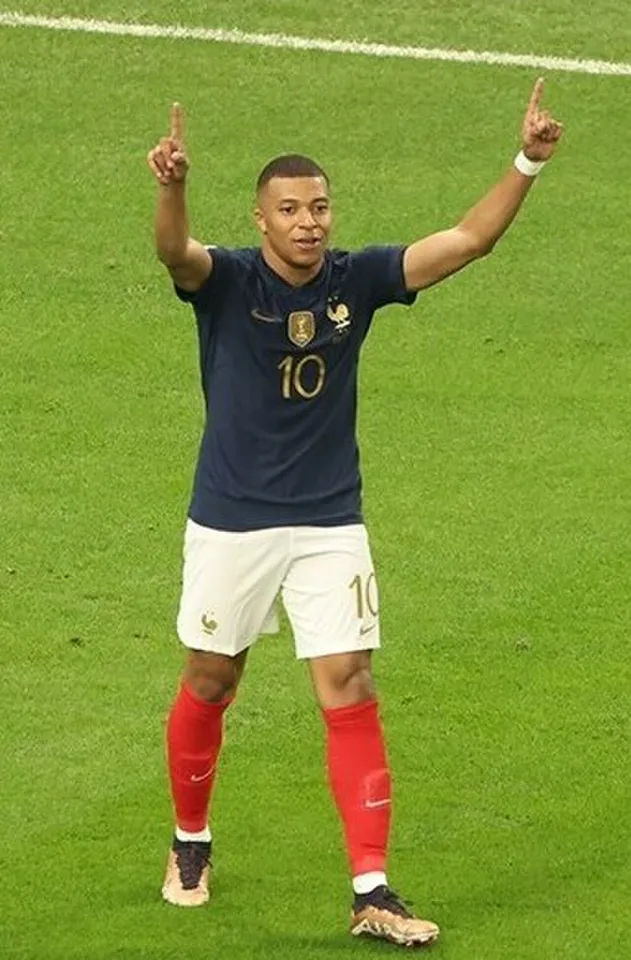
Kylian Mbappé is a France international forward who joined Real Madrid in 2024. His career can be explored through club football, international football and specific tournament records, but those categories should remain distinct. This guide uses official club, federation and FIFA sources to explain his profile and the numerical language used around a goalscorer's performances.
Information was checked on 2 November 2026. The article is not a live goal counter, transfer rumour page or prediction about future awards. It separates dated achievements from original classroom exercises so readers can learn how to interpret a player record without confusing a useful example with an additional career statistic.
What does his official profile establish?
Real Madrid lists Mbappé as a forward and places his club period from 2024 onward. The French federation provides a separate national-team record. Those sources answer different questions: the club page concerns a club career, while the federation page concerns France appearances and the relevant international context.
The federation record includes his France appearance against Luxembourg on 25 March 2017. A debut is an appearance, not merely a call-up announcement. A player may be selected before taking the field, so keep squad selection and first appearance as distinct timeline entries when summarising an early career.
An original profile worksheet can contain club, national side, playing role and dated milestones in separate fields. Add the source for each. This prevents a later update to the club field from accidentally changing a historical international event or making a past team look like the current one.
Why distinguish club goals from international goals?
Club and national-team matches belong to different competitions and records. A goal for Real Madrid is not a France goal, even when the same player scores both. A complete comparison must identify the category being counted and whether the source includes league matches, all club competitions or a particular national-team tournament.
Imagine an original fictional season with twenty league goals, five cup goals and four international goals. Twenty, twenty-five and twenty-nine can all be correct totals for different scopes. Publishing one without a label invites readers to compare unlike numbers or believe that one source contradicts another when the categories simply differ.
Use totals only after defining their boundaries. A headline saying “career goals” needs a clear explanation of what is included. This guide does not manufacture a current combined total from several pages with different update times. A narrower, dated claim is more dependable than an impressive number assembled without compatible definitions.
What did the 2022 World Cup record show?
FIFA records Mbappé as the 2022 tournament's Golden Boot winner with eight goals. His final against Argentina included a hat-trick. These are historical achievements belonging to that competition. They should not be presented as his current total across World Cups or as evidence that France won the final.
An individual scoring award and the team's outcome are different records. A player can lead a tournament's goal table while their side finishes second. Appreciating an individual performance does not require rewriting the competition result. The award label should remain attached to the achievement it actually recognises.
FIFA's later all-time scoring overview also records ten goals in the 2026 edition, alongside four in 2018 and eight in 2022. Those dated tournament figures sum to twenty-two. Keep that source and scope visible rather than confusing the total with all France goals or every goal in club football.
Is a shoot-out kick added to the match score?
A penalty taken during play and a kick in a deciding shoot-out belong to different parts of the record. A player can score both, but shoot-out conversions are not normally added as ordinary match goals. Identify which event is being described before using the word penalty in a scoring total.
For an original example, a fictional final ends 2–2 after extra time and is decided 4–3 on penalties. Reporting it as 6–5 would erase the distinction between the drawn match and the deciding procedure. The two sets of numbers describe different things and should be displayed with clear labels.
The same principle applies to a player's tally. If a fictional forward scores once during play and converts in the shoot-out, that does not create two ordinary match goals. A chart must preserve the event category rather than adding every successful kick to the same column because each involved the ball entering the net.
What is a hat-trick?
A hat-trick is three goals by the same player in a match under the relevant scoring record. It is not three team goals scored by three different players, and it is not automatically created by adding a shoot-out conversion to two goals during play. Precise event labels help prevent those common misunderstandings.
In an original exercise, a fictional team wins 4–1 with one player scoring three and another scoring one. The first player has a hat-trick, while the team has four total goals. A different 4–1 win with four scorers has the same team score but no individual hat-trick.
Mbappé's 2022 final achievement provides a real reference for the term, but it should not be turned into a universal claim about every final or tournament. A historical milestone is strongest when its date and competition are preserved instead of being repeated as a timeless superlative without context.
How do you calculate goals per appearance?
Divide goals by appearances for the exact sample being studied. The result describes an average across those appearances, not a promise that a player will score that amount in the next match. It also does not show how minutes were distributed between starts and substitute appearances.
For an original fictional sample, twelve goals in eight appearances gives 1.5 goals per appearance. That can include matches with no goals and matches with several. An average summarises the group; it does not describe a literal fractional goal in each game or guarantee a particular pattern.
If comparing two players, check whether both totals include the same competition types and period. Ten short substitute appearances and ten complete matches provide different amounts of playing time. The appearance-based average can remain mathematically correct while leaving that difference unexplained.

Historical Paris Saint-Germain context, not a current Real Madrid kit or match.
What does goals per ninety minutes add?
A per-ninety rate scales goals by minutes played, using ninety minutes as the reference unit. It can help compare samples with different playing time, but it does not eliminate small-sample uncertainty or differences in competition and role. The measure needs accurate minutes as well as goals.
An imaginary player scores three goals in 180 minutes. Three divided by 180 and multiplied by ninety gives 1.5 goals per ninety. Another imaginary player scores once in thirty minutes, producing three per ninety for that small sample. The larger rate does not prove that the second player would sustain it across a season.
Keep the sample size visible beside the rate. A chart that hides thirty minutes of evidence behind an enormous coloured bar may exaggerate what the number supports. Good presentation helps readers see both the calculation and the amount of information behind it.
Does a goal total describe every part of a forward's work?
Goals are central to evaluating a goalscorer, but they do not describe every action in a match. Movement, passing, ball retention and pressure can matter too. Those contributions require their own observations or defined statistics. Do not invent an assist or an off-ball intention merely because a player has a strong scoring reputation.
For an original scene, imagine a forward moving toward one side while a teammate receives the ball elsewhere. The movement may be relevant, but one camera angle might not establish the defender's reasoning or the planned pattern. Describe the visible sequence before claiming to know what every participant intended.
A balanced profile can recognise a documented goal without pretending it explains the entire performance. It can also discuss a goalless match without declaring that the player did nothing. The key is to support each additional claim with evidence appropriate to that specific action.
How does the recent Racing match fit the record?
Real Madrid's 1 November 2026 report records a 3–0 win at Racing Santander, with Mbappé scoring a penalty and Jude Bellingham and Yan Diomande also scoring. That is a dated club fixture. It should remain separate from a France tournament record and from any future fixture involving another opponent.
The report provides a useful example of team and individual counts. Mbappé's contribution to that match's goals is one, while the team's total is three. Neither value can replace the other. A player profile and a match summary may both discuss the event while organising the information differently.
For more detail on the score sequence, read the relevant football guides. This article does not use that one result to calculate an unverified season ranking, predict the next match or claim that every part of the team's performance can be assigned to the scorer of the opening goal.
How should readers approach transfer stories?
Distinguish an official agreement, a club announcement, reported discussions and speculation. A previous club's profile may remain online for historical reasons. Its existence does not establish a current contract. A future-looking headline also needs a date, because a prediction can remain searchable long after events have changed.
Create an original timeline with a rumour, an announcement and a first appearance. Place each in a separate row and identify its source type. Do not rewrite the rumour as an official event merely because a later announcement happened to resemble it. The strength of the evidence was different at each stage.
This guide relies on the current official club identity checked for publication and does not add an unverified next move. Readers can remain interested in career developments while refusing to treat every social post or recycled photograph as proof of a completed transfer.
What can students learn from a scoring chart?
Choose a clear question before drawing the chart. Are you comparing tournaments, seasons or individual matches? Use the same unit and label every category. A bar for a tournament's goals should not sit beside a bar for a whole career without making the scope difference obvious.
An original exercise can compare fictional tournament returns of four, six and eight goals. Ask whether a rising sequence proves that the next return must be ten. It does not. A pattern in three past values can be described, but extending it into the future requires assumptions that the chart alone does not justify.
Then add appearances and minutes. Notice how different denominators change the questions you can answer. The exercise helps learners move from admiring an impressive number to understanding how it was counted and what a comparison can reasonably establish.
What should you remember?
Mbappé's profile spans club and international football, with distinct records for each. Historical tournament awards, recent club goals and calculated rates can all be informative when their dates, categories and units remain visible. A result should never be altered to fit a player's reputation, and a small sample should not become a guarantee.
Explore more sports and numerical learning articles to practise those habits. Start with the source's exact claim, identify the sample and explain the measure in ordinary language. That approach produces a more useful understanding of a forward than a page of undated superlatives or an unexplained running total.
Before sharing a scoring chart, ask another learner to identify its period and competition without reading the accompanying article. If those labels are not visible, add them. A correct total becomes much more useful when its scope travels with the graphic instead of disappearing when the image is shared separately.
Sources
- Real Madrid: Mbappé profile, for position and club context.
- French Football Federation: Mbappé record, for the national-team appearance context.
- FIFA: 2022 tournament summary, for the Golden Boot and final hat-trick.
- FIFA: World Cup top scorers, for the dated edition totals.
- Real Madrid: Racing match report, for the 1 November 2026 club result. All other rates and timelines are fictional teaching examples.
Image credits: cover: حسین ظهروند, source, CC BY 4.0. Resized and converted to WebP. inline: Sandro Halank, Wikimedia Commons, source, CC BY-SA 4.0. Resized and converted to WebP.
Found an error or an outdated detail? Report a correction with the article URL and original source.