
Lata Mangeshkar: Playback Singing, Musical Expression and Recording Credits
Learn about Lata Mangeshkar’s playback singing, musical expression and honours. Understand recording credits, film voices and historical context.
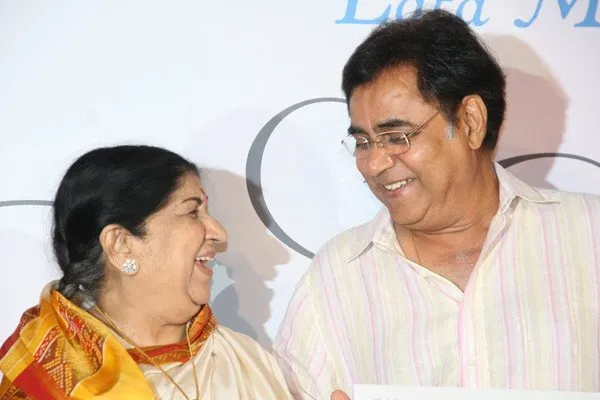
Lata Mangeshkar was a playback singer whose career became an important part of Indian film and musical history. Her honours included the Dadasaheb Phalke Award for 1989 and the Bharat Ratna in 2001. She died on 6 February 2022. A useful introduction to her work should explain not only the honours but also what playback singing contributes to a film and how musical credits are read.
This guide uses official public records for the historical milestones and then develops listening and media-literacy ideas for students. It does not reproduce song lyrics or invent a new performance, award or recording. The aim is to help readers understand the work behind a familiar voice rather than reduce a long musical career to an unverified count of songs.
What playback singing means
In playback singing, a recorded vocal performance is used as part of a film's musical presentation. The singer and the actor visible on screen can be different people. Recognising that distinction is essential when identifying who performed a song.
A film sequence may connect an actor's expression, a singer's voice, musical composition, words and editing. These contributions work together, but they remain different kinds of work. Crediting only the face on screen can leave the actual vocal performer out of the description.
| Credit | What to look for |
|---|---|
| Singer | The vocal performer |
| Composer | The musical composition credit |
| Lyricist | The words of the song |
| Screen performer | The person appearing in the sequence |
| Film and version | The particular work being discussed |
Why the singer's credit matters
A recorded voice can carry emotion, phrasing and musical detail that shape how a sequence is experienced. Naming the singer acknowledges that contribution. It also makes it easier to find the correct recording rather than a cover, remix or later performance using a similar title.
For a fictional classroom example, two singers perform the same melody with different phrasing. The composition remains recognisable, but the vocal performances are not identical. A discussion of one should not silently attribute the recording to the other.
When studying Mangeshkar, begin with the credits for the actual recording. A social-media caption or a familiar melody may provide a clue, but neither replaces a reliable identification of singer, film, language and version.
Honours and recordings belong to different timelines
The official Bharat Ratna notification identifies Mangeshkar in the 2001 record. Official parliamentary and film-award records also identify the Dadasaheb Phalke Award for 1989. These are historical honours, not dates attached to every song associated with her name.
A song's film release, recording session, later reissue and an award ceremony can all have different dates. A biography becomes confusing if it combines them into one timeline without labels. The distinction is especially useful when an older work becomes popular again.
For a student notebook, keep a career timeline and a separate recording list. Link an award to its actual year and category. Do not assume that an honour recognising a career applies to one particular song unless the source says so.
A career award is not a chart position
An honour recognising contribution to cinema or public life measures something different from a weekly popularity ranking. A streaming count, a chart position and a national award should not be presented as interchangeable indicators of the same achievement.
Imagine a fictional recording that returns to a platform's popular list many years after release. That later popularity is a new observation about the recording's reception, not a change in the year of the original performance or a newly awarded career honour.
Read each claim with its own source and date. This preserves the meaning of a documented honour while allowing a separate discussion of how listeners encounter older music through newer formats and platforms.
Melody and vocal performance are connected but distinct
A melody is a pattern of musical pitches over time. A vocal performance realises that material through a particular voice, timing and expression. The performer can contribute meaningfully without becoming the credited composer merely by singing the melody.
For a listening exercise, choose an authorised short recording and notice where a phrase rises, falls or pauses. Describe the pattern in your own words. This does not require copying the lyrics or claiming that a personal impression is an official technical analysis.
Then compare the musical idea with the delivery. Keeping those two levels separate helps students explain why a performance is recognisable while still acknowledging the work of the composer and other musicians in the recording.
Phrasing is more than singing each word correctly
Phrasing concerns how a musical line is shaped across time. Pauses, emphasis and the relationship between words and melody can affect what a listener notices. A performance is therefore not fully described by listing the words or counting the notes.
A fictional exercise can use a neutral spoken sentence. Read it once with a pause after the first phrase and once without that pause. The words remain the same, but the emphasis changes. The analogy helps explain why timing matters in singing.
When discussing an actual Mangeshkar recording, identify the passage through its timing or context rather than reproducing a long lyric. Describe what you hear and keep an interpretation separate from a claim about how the session was directed.
Language and diction require careful credit reading
A singer's work can appear in different languages and versions. A translated title, a dubbed film sequence and a later adaptation may not all refer to the same recording. The language and version are therefore useful identification fields.
For a fictional example, a film releases separate language versions with different vocal recordings. Knowing the title of the story does not automatically identify the singer in every version. The credit for the specific recording remains necessary.
Avoid publishing an exact lifetime song or language count unless the source defines what it includes. A count might treat alternate takes, versions, releases and reissues differently. A large career can be appreciated without pretending that every widely repeated total uses the same method.
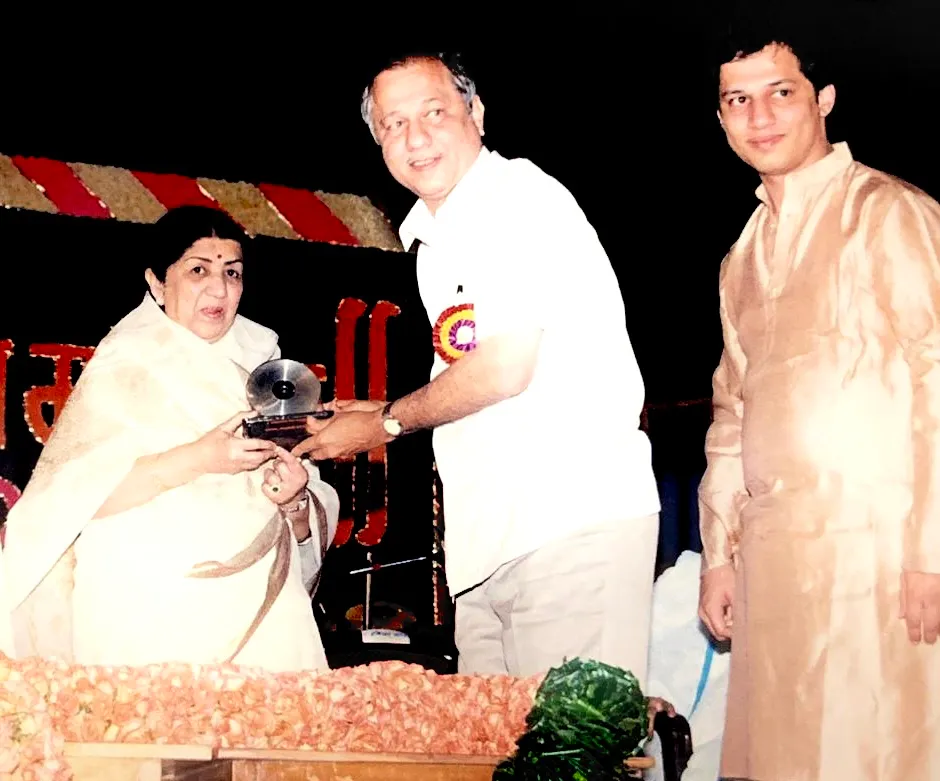
Lata Mangeshkar being felicitated by Dnyaneshwar Agashe and Mandar Agashe in an archival photograph; no current event is implied.
Solo and duet performances are different arrangements
A solo vocal and a duet organise voices differently. In a duet, the relationship between performers can shape the musical exchange. A recording should therefore credit the actual participants rather than assuming that the most recognisable voice performed every line.
For a listening worksheet, note when each voice enters, whether they alternate and when they overlap. These are observable features of the recording. They are different from guessing what the performers said privately during a studio session.
This exercise helps students move beyond a single famous name. Mangeshkar's career can be studied in relation to collaborators while preserving the separate contributions recorded in the song and film credits.
The orchestra and arrangement are part of the experience
Instrumental choices and the organisation of the accompaniment can influence how a vocal performance is heard. A discussion focused on the singer need not ignore the other musicians or the arrangement. The recording is a collaborative work even when one voice is central.
Listen for a fictional sequence in which an instrument answers a vocal phrase. The response can create continuity without adding another sung line. Describing that relationship teaches musical attention rather than simply ranking the loudest or highest sound.
For an actual recording, distinguish what can be heard from what the credits establish. A listener may recognise an instrumental sound without being able to identify every performer. Leave uncertain credits unresolved rather than inventing a name to complete a paragraph.
Film emotion is not the singer's private biography
A playback performance can express the feelings of a fictional character. Those feelings should not automatically be treated as a statement about the singer's private life. Performance and autobiography are different forms of evidence.
For a fictional example, a performer convincingly conveys sadness in a scene. That does not establish that the performer was experiencing the same event outside the recording. The artistic achievement lies partly in communicating a situation beyond a private literal account.
When writing about Mangeshkar, use public records for biographical facts and the actual work for artistic interpretation. This produces a richer discussion without relying on invented relationships, conversations or motives.
Recording quality can change what a listener hears
Different releases and playback devices can affect the listening experience. A noisy copy, a compressed upload and an officially issued recording may not preserve the same detail. The version used for analysis should therefore be identified where possible.
In a fictional comparison, one file is much louder than another. Louder playback does not by itself prove a better original performance. A fair comparison begins with consistent listening conditions and attention to the actual source rather than a volume difference.
This is a useful digital-literacy lesson. Students can discuss recording versions and platform presentation without making unsupported claims about how the original studio equipment was configured or how a particular recording was technically restored.
A later upload date is not the original release date
An older recording can appear on a platform long after its first release. The upload date describes that platform event, not necessarily the date of the performance, film or original recording. Treating them as identical can distort an entire career timeline.
For a fictional example, a song from a film released decades earlier is uploaded in 2026. The new platform date does not make it a new 2026 performance. The recording's identity needs the original work and version as well as the later upload information.
When sharing a song-related claim, preserve these labels. A renewed public interest can be discussed as renewed interest, without inventing a newly recorded performance or presenting an old image as evidence of a current event.
Historical photographs need their own captions
A photograph can show a public event or a period in a career, but it does not automatically illustrate the recording discussed beside it. The caption should identify the known occasion or clearly state that the image is general historical context.
For a student project, keep the photograph's source, creator, date if known and caption together. This prevents an awards photograph from being presented as a studio-session image or a much later public appearance from being attached to an earlier song.
The same discipline applies to this guide. Images support identification and context. They are not presented as evidence of a new performance after Mangeshkar's death or as proof of an undocumented recording session.
Build a listening notebook rather than a list of superlatives
Choose one correctly credited recording and write down the title, film or release, language, singer and source. Add observations about phrasing, contrast, accompaniment and the relationship between the voice and the scene. Use your own descriptions instead of copying promotional praise.
Next, separate fact from interpretation. The singer credit is a factual field supported by the release record. A statement that a phrase feels calm is an interpretation that should be explained through something observable in the performance.
Use class resources for structured writing and programming courses to create a simple music-credit catalogue. Require a version and source field so that the same title does not silently combine several different recordings into one entry.
Questions about Lata Mangeshkar
What is a playback singer?
A playback singer supplies a recorded vocal performance used in a film's musical presentation. The person heard and the actor seen can be different people. Reading the singer, composer, lyricist and screen-performance credits separately helps identify each contribution accurately.
When did she receive the Bharat Ratna?
The official notification records the Bharat Ratna in 2001. It is a historical honour and should retain its year. It is different from the release date of a particular song, a later upload date or an anniversary event discussing her career.
Was the Dadasaheb Phalke Award a separate honour?
Yes. Official records list the Dadasaheb Phalke Award for 1989, while the Bharat Ratna belongs to 2001. The awards recognise different institutional categories. A careful biography preserves their names and years rather than combining them into one undated accolade.
Does a recent upload mean a new performance?
No. The date on a platform can describe when an older recording was uploaded or reissued. Identify the original work and version before describing it as new. This is particularly important when discussing an artist whose historical recordings continue to reach new listeners.
Sources
- Government of India: 2001 Bharat Ratna notification
- Press Information Bureau: official tribute, February 2022
- Rajya Sabha: official parliamentary tribute and honours record
- National Film Awards catalogue: Dadasaheb Phalke recipients
Image credits: cover: Bollywood Hungama, source, CC BY 3.0. Resized and converted to WebP. inline: The Agashe Foundation, source, CC BY-SA 4.0. Resized and converted to WebP.
Found an error or an outdated detail? Report a correction with the article URL and original source.