
Lens 1-9 Como: Douvikas Hat-Trick, Goal Timeline and Matchday 4 Context
Check Como’s 9-1 away win over Lens on 4 November, follow all ten goals and learn how margin, points and goal difference describe different things.
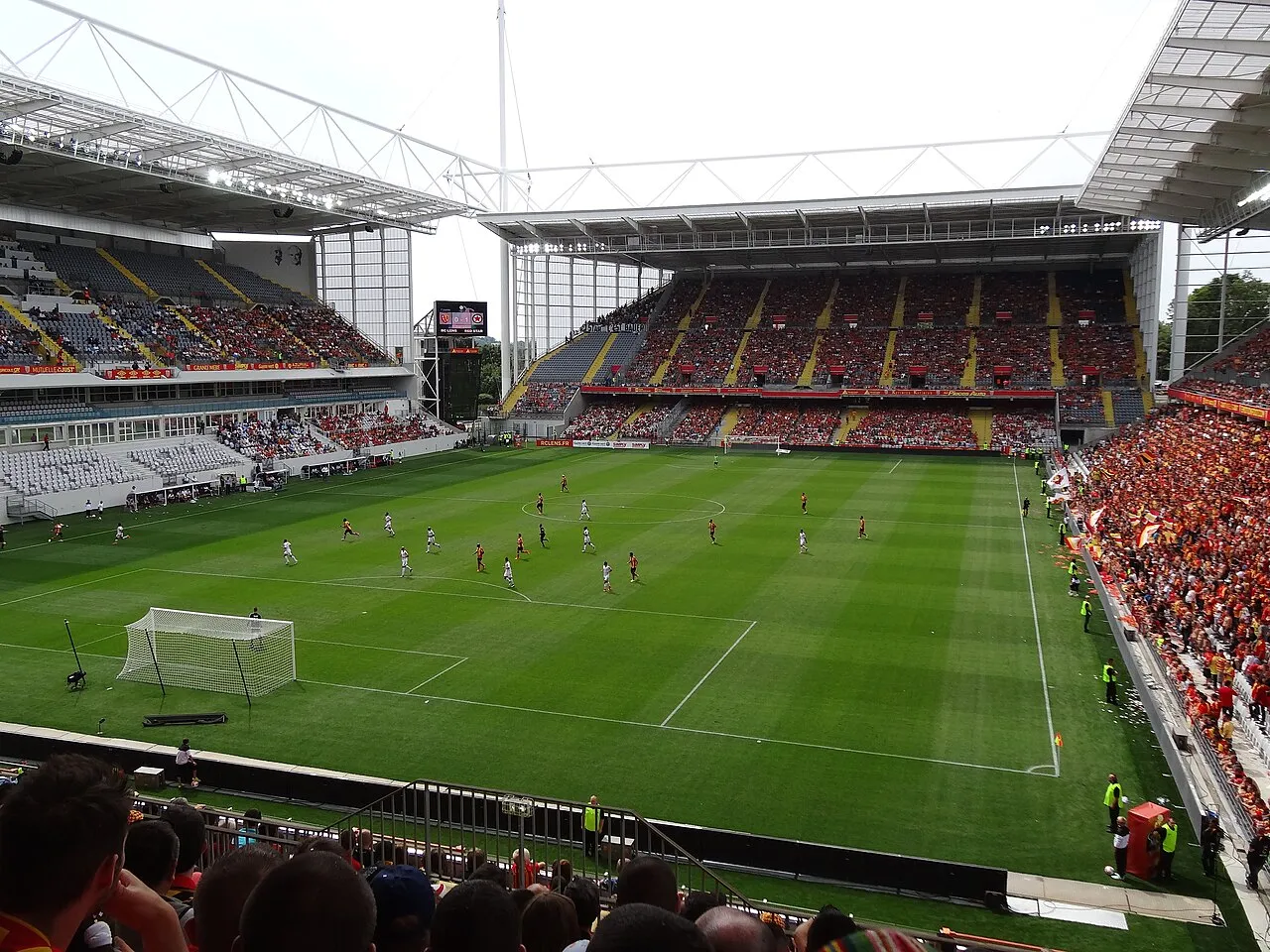
Como beat Lens 9-1 away in Champions League Matchday 4 on 4 November 2026. UEFA's round results and the detailed match record agree on the completed score. Tasos Douvikas scored a hat-trick, with the goal timeline recording his finishes in the seventh, 32nd and 57th minutes.
The result is striking enough without adding an unsupported all-time record. This guide follows the confirmed scoring sequence, explains what the margin changes in a league table and shows how to distinguish a scoreline, a tactical interpretation and a statistical claim. It does not invent possession figures, an expected-goals model or quotations from the dressing room.
What was the Lens versus Como result?
The completed score was Lens 1, Como 9. Lens were the home side, so a home-first result listing prints 1-9 even though a headline may say Como won 9-1. Those formulations describe the same result. The difference is ordering, not a disagreement about which team scored nine.
| Match detail | Confirmed record |
|---|---|
| Fixture | Lens versus Como |
| Competition | UEFA Champions League |
| Round | League phase, Matchday 4 |
| Date | 4 November 2026 |
| Final, home side first | Lens 1-9 Como |
| Winning margin | Eight goals |
| Hat-trick | Tasos Douvikas |
Keep the date and competition attached when comparing another meeting. A club can face the same opponent in a different setting, and a search snippet can mix an old match with a current preview. The full identifying record is more dependable than a score placed beside two badges without context.
The confirmed goal sequence
The detailed record supplies the following scoring entries. The cumulative column is calculated from that sequence, with Lens written first throughout. It is not a description of possession or a claim about the quality of every chance. It is a transparent way to follow how the final total was built.
| Minute | Scorer | Cumulative score |
|---|---|---|
| 7 | Douvikas, Como | 0-1 |
| 32 | Douvikas, Como | 0-2 |
| 40 | Nico Paz, Como | 0-3 |
| 47 | Lucas da Cunha, Como | 0-4 |
| 53 | Marc Oliver Kempf, Como | 0-5 |
| 57 | Douvikas, Como | 0-6 |
| 62 | Mattia Liberali, Como | 0-7 |
| 65 | Ruben Aguilar, Lens | 1-7 |
| 69 | Martin Baturina, Como | 1-8 |
| 90+1 | Matteo Papaccioli, Como | 1-9 |
The timeline shows the scale of Como's scoring across both halves. It also preserves Lens's goal rather than allowing a broad description of domination to erase an actual event. A factual recap should account for all the goals before moving on to interpretation.
How Douvikas's hat-trick fits the total
Three goals by the same player in the match form the hat-trick recorded here. That is a different claim from scoring every Como goal or scoring three consecutive goals without any other scorer between them. Read the sequence before adding a more specialised description.
His three goals account for one third of Como's nine. The other six came from other named scorers in the table. That arithmetic helps explain why the result was both an individual achievement and a wider team scoring performance. It does not establish which player made the greatest overall contribution beyond the goals.
Avoid turning the hat-trick into a guessed career record. A statement about a first Champions League hat-trick, a fastest hat-trick or a club record would need a defined historical dataset. The verified achievement is substantial without a superlative that has not been established by the evidence used here.
Why the margin is eight, not nine
Subtract the losing side's one goal from the winning side's nine to obtain an eight-goal margin. Nine is Como's scoring total; eight is the difference between the teams. These numbers answer different questions, and a clear report should not use them interchangeably.
The combined number of goals is ten. That third figure describes the match total rather than the winning side or the margin. For students, this is a compact exercise in choosing the right operation: addition for all goals, subtraction for the difference, and a single entry for one team's total.
Sports writing often compresses several measurements into one sentence. Before repeating a dramatic number, name the measurement. Goals scored, margin of victory and goals in the game can all be correct while differing. A precise label prevents a numerical mistake from becoming the headline.
What the result adds to a league-phase record
A win contributes the applicable league points, while goals for and against change separately. The wide margin therefore matters to the goals columns as well as the outcome. It does not mean the winning side receives one league point for every goal scored or eight points for the margin.
For an illustrative points comparison, a narrow win and this wide win both occupy the win category under the three-points-for-a-win system. Their goal-difference effects differ. That explains why a table can show clubs level on points with very different goals records. The columns are connected but not interchangeable.
This article does not reconstruct a complete live 36-team table from mixed search snippets. Use UEFA's official standings for the current order and the applicable tie-break rules. A round result is a stable historical record; the table can change as other fixtures are completed.
What the halftime position tells us
The listed first-half goals place Como three ahead before the second-half scoring entries. That is a statement derived from the timeline. It does not by itself explain the coach's halftime instructions or establish what was said in either dressing room. Those details require attributable reporting rather than imagination.
The early second-half entries show Como extending the advantage. A writer can describe that sequence without pretending to have measured every tactical adjustment. The difference between an observed pattern and an inferred cause is important: more goals after the interval do not identify the entire mechanism that produced them.
For a class exercise, divide the timeline at halftime and count each side's goals in each period. Then compare the cumulative score with the final total. The exercise shows how a chronological record can be checked for internal consistency before anyone attempts a broader tactical argument.
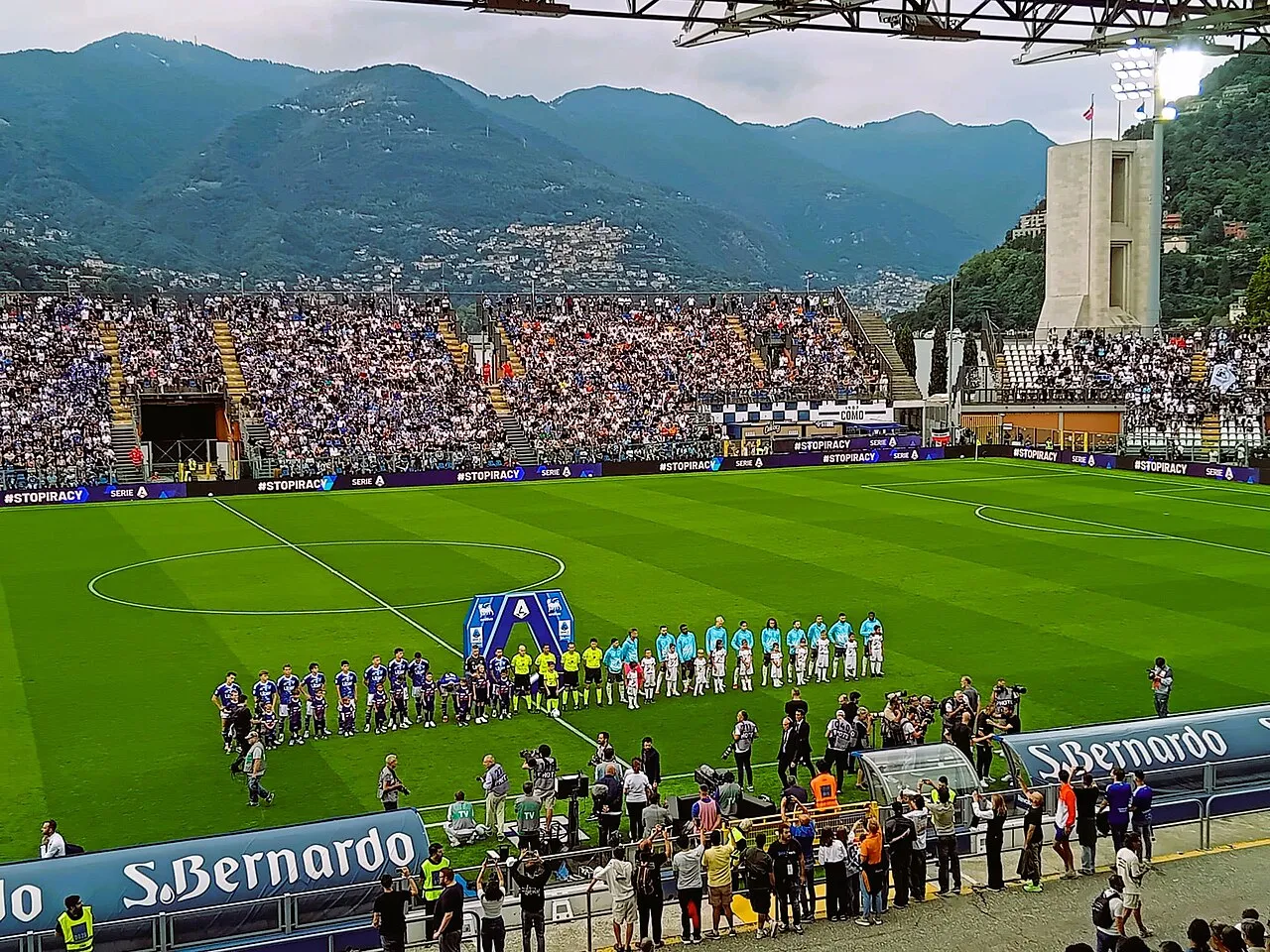
Como playing Lazio on 24 August 2025, shown as historical club context rather than the November 2026 match against Lens.
Stoppage time is not another period of play
The notation 90+1 identifies an event in added time associated with the second half. It is not a decimal minute and does not mean that a separate extra-time period began. Extra time in a knockout setting is a different concept from time added for interruptions during normal play.
That distinction matters when a goal log uses 91 while another uses 90+1. The entries may be two presentations of the same minute rather than conflicting events. Match the scorer and sequence before declaring the records inconsistent. A format change can look like a factual difference when the underlying event is identical.
Students can practise by converting a short fictional event list into a consistent display. Keep added-time notation visible where it adds clarity. Do not infer exact seconds from a minute label; a record showing the minute does not necessarily give the precise timestamp within that minute.
A goal is not the same as every attacking attempt
The score records successful goals. It does not provide the number of shots, shots on target, entries into the penalty area or expected goals. Those are separate measures with their own definitions. A nine-goal total cannot be used to reverse-engineer an exact shot count.
For an invented example, two teams might each score twice while taking different numbers of attempts. Their conversion rates would differ, but the score alone cannot tell us by how much. To calculate conversion, obtain the actual attempts and state which category of attempts is being used.
This article does not supply an expected-goals figure because no matching model output has been verified here. Expected goals is not another name for the final score. If a model is cited in later analysis, name the provider and retain its definitions rather than present a guessed decimal as an official match fact.
Tactical explanations need evidence beyond a large number
A result of this size naturally invites questions about defensive structure, transitions and individual execution. Those are worthwhile questions. Answering them requires footage, detailed data or a documented account, not simply a list of familiar football phrases attached to the final score.
Avoid claims that a team quit, ignored its coach or deliberately stopped competing without evidence. A poor result does not reveal private motives. Likewise, praise of the winner should describe what can be observed rather than inventing a perfect tactical plan that supposedly explains every event.
A disciplined analysis can separate three levels: the confirmed event, the visible pattern and the proposed explanation. For example, the timeline confirms repeated scoring; footage might support a pattern in how chances developed; an analyst can then explain a possible mechanism. Each step should be identifiable and open to checking.
Why this is not automatically an all-time record
An exceptional score does not establish the precise historical category in which it is a record. Club, competition, away wins, league phase and all European competition are different scopes. A claim that is true for one scope can be false when broadened to another.
Before printing record-breaking, identify the dataset and compare the relevant matches. A news recap need not do that historical study to report the result accurately. It can describe the scale in ordinary terms and leave unsupported record claims out. Restraint here improves accuracy without reducing the importance of the game.
For learners, write the proposed record as a complete question: largest away win for this club in this competition during which period? That question makes the necessary evidence visible. The vague phrase biggest ever hides those requirements and is therefore easier to repeat than to substantiate.
What comes next should be checked separately
A completed result and the next fixture are different records. The result does not establish a future lineup, injury status or match outcome. Use the official schedule and later team information for upcoming games rather than assume that the same players and conditions will recur.
The same applies to standings and qualification. A valuable win can improve a position without mathematically securing a final place. Check the whole competition context before announcing that a club has qualified or been eliminated. A current ranking and a guaranteed final outcome are not identical statements.
Readers can use the Matchday 4 results guide for the wider round. That broader guide and this individual result serve different purposes: one summarises the programme, while this page explains the detailed scoring record of a particular fixture.
Images and identity checks
A historical photograph of Lens's stadium or Como's club environment can place the fixture in context. It should not be described as action from this match unless the source establishes that date. A recognisable ground is not proof that a particular event happened in the photograph.
Club names can also have alternate spellings across services. Match the competition, date and opponent rather than rely on one abbreviated label. An accurate search result may use a shortened club name while a different page includes the full official form. The identifying combination matters more than a single spelling variation.
When sharing the recap, keep the home-first ordering clear. A caption saying Lens versus Como 9-1 would reverse the result if read as a home-first score. Write Como won 9-1 or Lens 1-9 Como so the winner remains unambiguous without requiring readers to infer your convention.
Questions about Lens 1-9 Como
Did Douvikas score all nine?
No. The recorded sequence gives him three goals, with the other six scored by teammates listed in the table. A hat-trick is a major individual contribution, but the final team total should not be attached entirely to one player.
Does the score award Como nine league points?
No. Goals and league points are separate measurements. The win contributes under the competition's points system, while the goals alter goals for, goals against and goal difference. Read the official table headings before turning a score into a points claim.
Is this a complete tactical review?
No. It is a verified result, scoring timeline and statistical-reading guide. It does not invent unverified shot data or private reactions. Explore class resources for more work with tables and other sports explainers for context that separates evidence, calculation and interpretation.
Sources
- Source: UEFA Matchday 4 results
- Source: LaLiga detailed Lens versus Como match record
- Source: UEFA official league-phase standings
Image credits: cover: Liondartois, source, CC BY-SA 4.0. Resized and converted to WebP. inline: Fra Casa, source, CC BY 4.0. Resized and converted to WebP.
Found an error or an outdated detail? Report a correction with the article URL and original source.