
Lewis Hamilton Explained: Seven Titles, Team Changes and Race Results
Read Lewis Hamilton’s seven championship years, McLaren, Mercedes and Ferrari timeline, and learn how qualifying, race results and lap times differ.
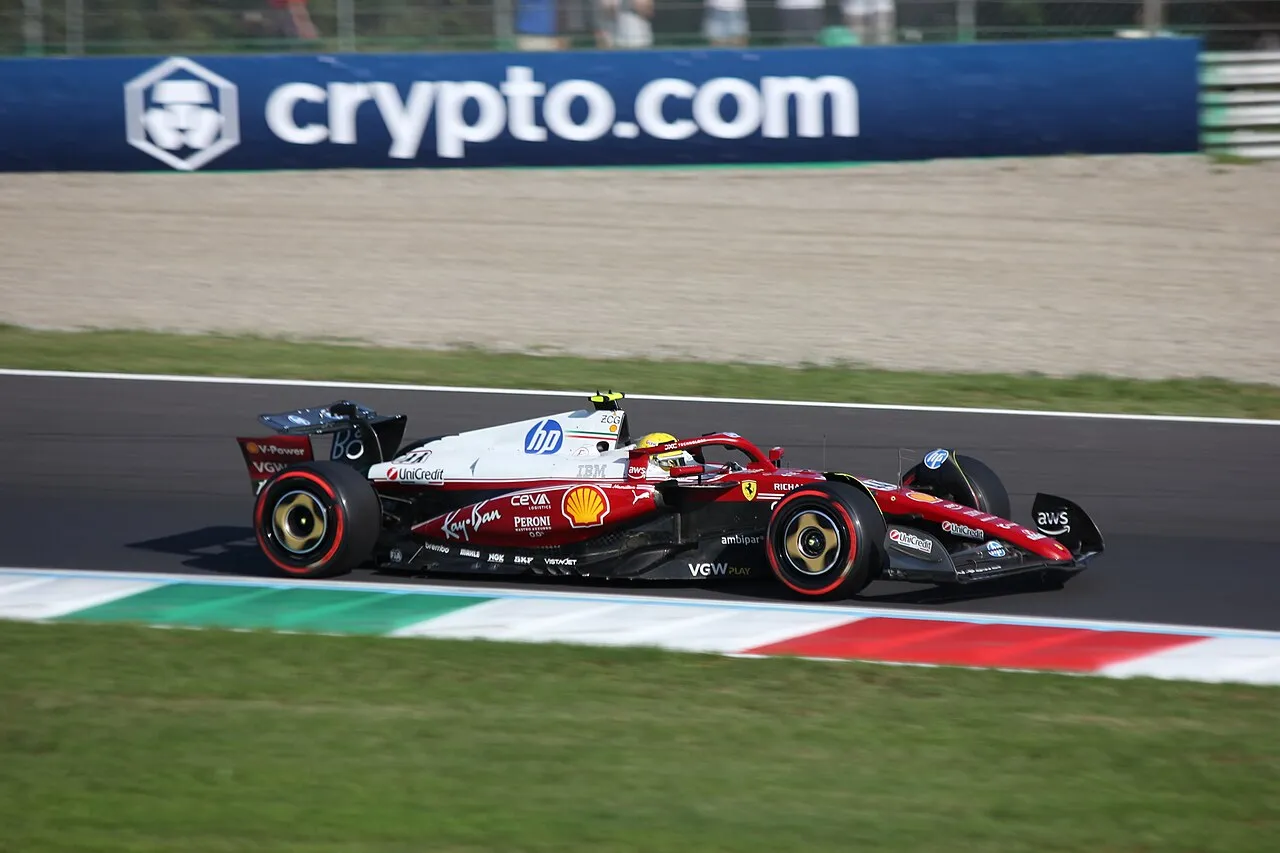
Lewis Hamilton is a British Formula 1 driver whose career includes seven World Drivers' Championships and spells with McLaren, Mercedes and Ferrari. His story is not one uninterrupted season or one car: it spans different teams, regulations and competitive circumstances. Understanding that timeline makes a race report more informative than simply counting the most recent finishing position.
This profile was reviewed on 6 November 2026 using Formula 1's official driver and historical information. It explains established career milestones and how to read racing results. It does not publish an unverified live championship position, speculate about a future contract or treat an old photograph as evidence of a new team announcement.
What are Hamilton's seven championship years?
Hamilton won the drivers' title in 2008, 2014, 2015, 2017, 2018, 2019 and 2020. The first came with McLaren; the other six came with Mercedes. Formula 1's official historical profile lists those championship years, making them a stronger reference than a reposted graphic without an identifiable source.
| Championship period | Team | Titles in that period |
|---|---|---|
| 2008 | McLaren | One |
| 2014 and 2015 | Mercedes | Two |
| 2017 through 2020 | Mercedes | Four |
Together those entries total seven. A drivers' championship is a season achievement, not another name for a Grand Prix victory. Several race wins can contribute to a championship campaign, while a race winner and the eventual season champion need not be the same person.
Why did his 2007 debut attract so much attention?
Hamilton entered Formula 1 with McLaren in 2007. Formula 1's historical account identifies his debut campaign as unusually strong, and his first world championship followed in 2008. Keeping the two years separate prevents the mistake of describing him as champion in his rookie season.
A rookie year is a transition into a particular level of competition, not the beginning of all sporting experience. Professional drivers arrive with earlier racing development. A profile should not turn an F1 debut into a claim that someone had never raced before or learned the entire sport within a few months.
For a learning timeline, mark debut season, first race victory and first championship as different categories. They can be connected without being identical milestones. The exercise helps explain why a promising start is noteworthy while still leaving the outcome of each subsequent season to actual results.
What changed with the Mercedes move?
Hamilton's Mercedes period began in 2013, and the first of his Mercedes titles came in 2014. That sequence matters because joining a team and immediately becoming its champion are not the same event. A careful career summary gives the transition enough context instead of compressing several seasons into a single sentence.
The six championship years with Mercedes included different competitive battles. The title list itself shows that 2016 was not one of Hamilton's championship seasons, followed by four consecutive titles from 2017 to 2020. This is more precise than calling the entire Mercedes spell an unbroken run of individual championships.
When discussing a team's successful era, separate the driver and constructor competitions. Formula 1 records the two championships independently. A team result involves its participating cars and the applicable scoring rules, while a driver's points concern that individual's campaign. The categories should stay labelled in any comparison.
What does the Ferrari chapter mean?
Hamilton moved to Ferrari for the 2025 season, and Formula 1's current driver profile identifies him with Ferrari at this review date. Historical photographs in Mercedes or McLaren clothing remain valid career illustrations, but they should not be used to imply that a current team affiliation has changed again.
A team change raises questions about the car, working relationships and competitive adaptation. Those are appropriate topics for documented analysis. They are not permission to invent garage conversations, private disagreements or precise technical explanations that the available public evidence does not establish.
For readers encountering a new headline, ask whether it reports a completed event, a current result, a public statement or speculation. A photograph of an older car cannot answer that question. The source date and the actual announcement matter more than the colour of a familiar racing suit.
Why distinguish a Grand Prix, a Sprint and a championship?
A Grand Prix is a race within the season's programme. A Sprint is a separate competitive format at relevant events. The championship aggregates results according to the regulations. They are related, but success in one should not be relabelled automatically as success in the others.
Before comparing statistics, read which sessions the source includes. A count of Grand Prix wins and a count that includes other race formats can answer different questions. Likewise, a qualifying result is not the same as a race result. The session label belongs beside the number.
Use an invented weekend with practice, qualifying and a race. Ask students to put three fictional results under the correct session. Someone fastest in one practice session has not thereby won qualifying or the race. This simple distinction prevents many misleading summaries of motorsport headlines.
What does pole position tell a reader?
Pole position identifies the leading starting position under the applicable event procedure. It is an important achievement, but it does not guarantee the race result. Strategy, starts, reliability, conditions and the performance of others can affect what happens after the grid has been established.
In an invented example, one driver starts first and finishes third while another starts fifth and wins. Neither result makes the qualifying record incorrect. They describe different stages of the event. A good report explains the changes rather than treating the final result as proof that the earlier session never mattered.
Hamilton's official profile identifies his standing in Formula 1's historical pole-position records. For an exact current total, consult the updated record instead of assuming a number from an old article is still current. This profile deliberately distinguishes the established career significance from a live statistical counter.
How should lap times be compared?
A lap time is an elapsed duration for a particular lap under particular conditions. Different tyre states, fuel levels, traffic and weather can make a raw comparison incomplete. Two numbers may be measured correctly while still failing to establish a fair comparison of driver performance.
Imagine fictional laps of ninety seconds and ninety-one seconds. The first is one second quicker, but interpreting why requires context. If the laps were run in different sessions or conditions, the one-second gap cannot automatically be assigned entirely to driving skill or one component of the car.
For an exercise, record session, lap, conditions and any documented limitation beside each time. Mark missing information rather than filling it with a confident explanation. This turns a stopwatch comparison into a disciplined piece of evidence-reading and helps readers understand why detailed race analysis needs more than one headline lap.
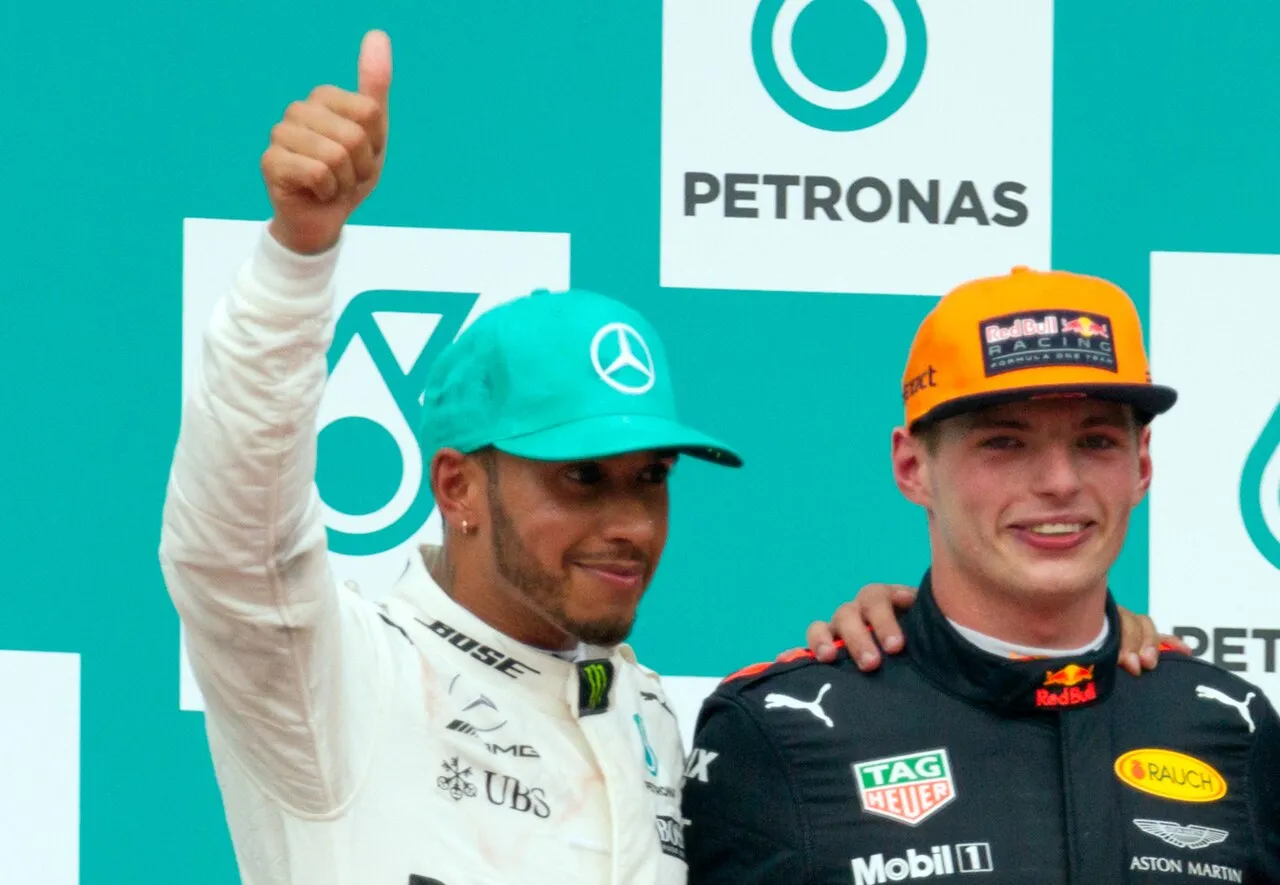
Hamilton and Max Verstappen on the 2017 Malaysian Grand Prix podium; Hamilton was runner-up in that race.
Why do tyres and pit stops matter to race interpretation?
Race strategy involves managing performance across the event, not simply recording the fastest isolated lap. Tyres change in condition during use, and a pit stop involves time as well as a change in equipment. The applicable regulations and race circumstances determine the choices available to a team.
For a fictional model, compare staying out on slower laps with spending time in a pit stop and then running quicker laps. The model needs a remaining-lap count and stated assumptions before it can compare totals. A single quicker lap does not prove that a stop was beneficial overall.
Do not present the invented exercise as Hamilton's strategy in an actual race. Real analysis needs the race timeline and reliable evidence. The example explains the trade-off and gives readers a better question to ask when a commentator describes an undercut, tyre advantage or delayed stop.
Can a finishing position explain the whole performance?
A finishing position is the official classification outcome under the event's rules. It is indispensable, but it does not contain the entire sequence of the race. Starting position, incidents, penalties, reliability and strategic decisions can provide relevant context when they are supported by the official record or reliable reporting.
The opposite mistake is using context to erase the result. A professional report can acknowledge difficult circumstances while still stating where the driver was classified. Facts and interpretation should support each other rather than competing for whichever version makes a favourite driver look strongest.
Create two summaries of a fictional race: one containing only the result, and another adding verified context. Ask which statements in the second version are actually established. This teaches readers to improve a thin report without replacing it with speculation or an invented explanation for every position gained or lost.
What makes Hamilton's championship record historically significant?
Formula 1's official profile places Hamilton alongside Michael Schumacher on seven drivers' titles. That is a defined comparison about championship count. It does not make every era, regulation set or competitive circumstance identical, and it should not be used as an automatic mathematical answer to every greatest-driver debate.
Historical comparison becomes more useful when the criterion is explicit. Is the question about championships, race wins, qualifying achievements, longevity or performance in a particular period? Different questions can produce different comparisons. A clearly stated criterion is more informative than a ranking whose rules are never explained.
Students can build a small table using verified championship years and team names. Count the entries and check that the total agrees with the text. This is a simple example of using structured data to detect mistakes in a narrative before sharing it as a polished sports profile.
How should current standings be checked?
Use the official Formula 1 results for the relevant season and confirm which events have been included. A standings screenshot taken before a race and another taken afterwards can differ without either being fraudulent. The missing date is often the reason a seemingly clear comparison becomes misleading.
Also distinguish a provisional result from a final classification where the event's process makes that relevant. Do not invent an appeal outcome or a points adjustment from a rumour. A later update should identify what changed and the source supporting the corrected result.
This guide avoids giving a live 2026 points position because that is a separate, changing record. Readers can find dated sports updates for event coverage while using this profile to understand the career background and the terms appearing in those reports.
How can photographs and quotations stay trustworthy?
An archival photograph should retain its historical setting. A Mercedes-era image can illustrate that chapter, while a Ferrari-era image can illustrate a later one. Neither should be described as a picture from today's event unless the source establishes that date and event.
Quotations need the same care. Do not invent a motivational sentence and attribute it to Hamilton simply because it suits the story. Use documented public statements when needed and keep their context. This article relies on sourced facts and original explanation rather than fabricated interviews or private dialogue.
Racing photographs are also not road-driving instructions. Formula 1 takes place in a specialised competitive setting with professional procedures. A student can analyse timing and decision-making from public information without attempting to imitate racing manoeuvres on ordinary roads.
A practical race-reading activity
Make a fictional table with starting position, finishing position, selected lap times and a stated pit-stop assumption. Ask which questions each column can answer. A position change measures something different from a fastest-lap comparison, and neither directly describes a whole championship campaign.
Then write a short report containing three established observations and one clearly labelled interpretation. Check that the interpretation does not smuggle in an unsupported cause. This activity helps learners move from cheering for a result to understanding how a defensible sporting explanation is assembled.
Our study resources support numeracy, while programming courses can help students create a fictional results table. The important design choice is to keep season, session and units visible, so the interface does not invite an invalid comparison between different events.
Questions readers commonly ask
How many drivers' titles are covered here? Seven: 2008, 2014, 2015, 2017, 2018, 2019 and 2020. They comprise one with McLaren and six with Mercedes. The dated historical list is different from a changing season-points table.
Is an old Mercedes photograph evidence that Hamilton is still at Mercedes? No. It can be a correct historical illustration while his current official profile identifies Ferrari. A caption should explain the chapter rather than relying on the reader to guess when the image was made.
Does winning qualifying mean winning the race? No. Qualifying, starting position and final classification are distinct records. A strong analysis preserves all three and uses documented context to explain the relationship without inventing unseen team decisions.
Sources
- Formula 1: Lewis Hamilton driver profile
- Formula 1: Hamilton's championship history
- Formula 1: official results
- FIA: Formula 1 regulations and official information
Image credits: cover: Eustace Bagge, source, CC BY 4.0. Resized and converted to WebP. inline: Morio, source, CC BY-SA 4.0. Resized and converted to WebP.
Found an error or an outdated detail? Report a correction with the article URL and original source.