
Liverpool vs Arsenal: 0-1 Result and the Meaning of a One-Goal Win
Read Liverpool vs Arsenal’s 0-1 result and learn about goal margins, score states, woodwork attempts and the limits of short match summaries.
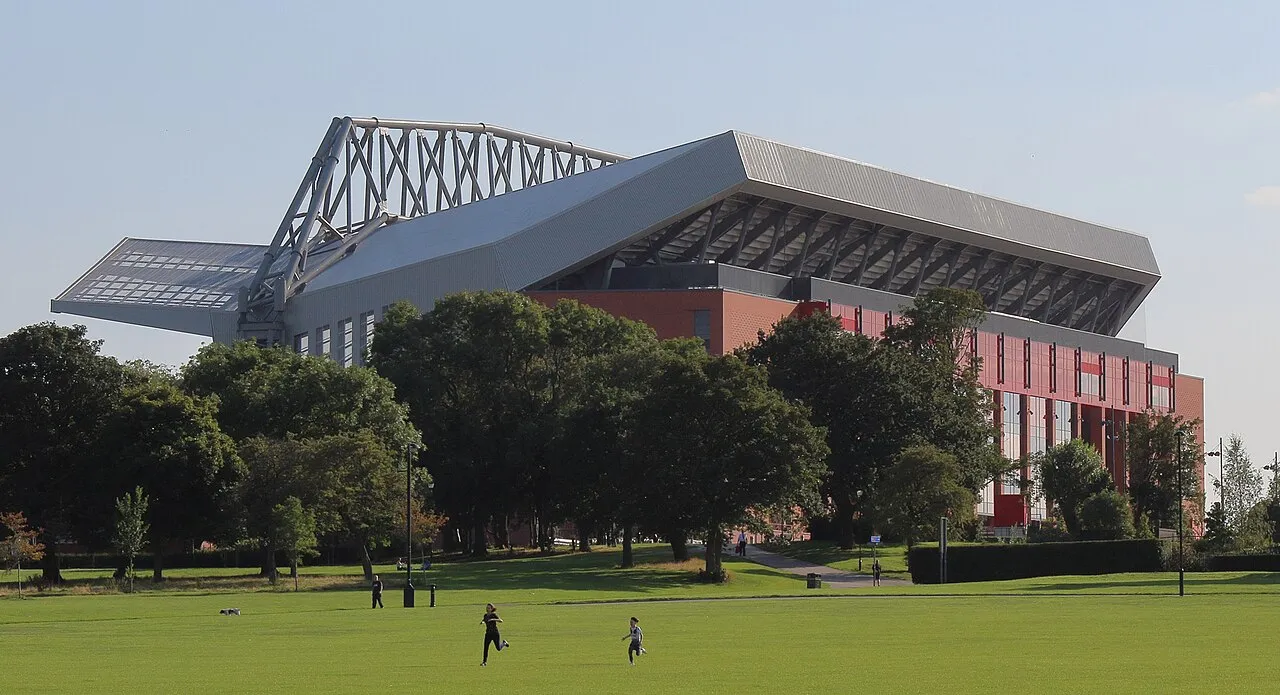
Arsenal defeated Liverpool 1-0 at Anfield on 1 November 2026, with Kai Havertz scoring in the 16th minute. Liverpool’s official report records the result and describes Florian Wirtz striking the woodwork as the hosts sought an equaliser. A one-goal match is a useful starting point for understanding score states, different kinds of attempts and the limits of a short highlight package.
This completed-match guide was reviewed on 2 November 2026. It does not claim firsthand attendance, supply an invented expected-goals figure or turn disputed incidents into an official refereeing ruling. The exercises below are original classroom examples, clearly separated from the small set of verified match facts.
What was the Liverpool vs Arsenal result?
The home-away result was Liverpool 0, Arsenal 1. Arsenal’s single goal was enough to win because Liverpool did not record a goal in reply. The final margin was one, but the total number of goals in the match was also one. Those values happen to match here; they do not always match in football.
Compare two fictional results: 1-0 and 3-2. Both have a one-goal margin, while their total goals are one and five. This distinction helps learners read claims about a narrow win without assuming the match was low-scoring. Margin and total measure different things even when a particular result gives them the same value.
Write the two calculations explicitly: subtract the smaller team score from the larger for the margin, and add both team scores for the total. Keep the home-away labels visible. A simple explanation lets a learner check the result instead of memorising a phrase such as “close contest” without understanding what the number describes.
What does the 16th-minute goal tell us?
The official Liverpool account places Havertz’s goal in the 16th minute. It identifies the scoring event that changed the match from level to an Arsenal lead. That time label does not supply an exact second, a complete possession sequence or a measurement of how much territory either side controlled before the goal.
For an original timeline, mark kickoff, the goal, half-time and full-time. Show the score state on each section rather than drawing a line that suggests the score increased continuously. Goals are discrete events. A team does not gradually earn fractions of a goal between the markers on a chart.
Ask students what an unchanged line means. It means the recorded score did not change during that interval, not that all players stood still or that nothing important happened. This small distinction helps prevent a visualisation from making claims that the underlying event data cannot support.
How does a team’s objective change when it falls behind?
At a basic score-state level, the trailing team needs a goal to draw level, while the leading team can preserve its advantage by preventing an equaliser. That arithmetic does not reveal the manager’s full tactical plan. Decisions about risk, substitutions and positioning require evidence from the match rather than assumptions based solely on the score.
Imagine a fictional team trailing 0-1 with several minutes left. It might commit more players forward, but that choice can leave space elsewhere. Another team might continue building patiently. Both are possible approaches. The example introduces a trade-off without claiming that Liverpool made either exact decision in a particular passage of this fixture.
In a classroom discussion, ask learners to name the objective and then list evidence they would need to describe the approach. A score establishes the objective’s numerical context. Video, event data and reliable reporting help explain how the team tried to achieve it. Keeping those levels separate produces better analysis.
Is hitting the woodwork the same as scoring?
No. A shot contacting the goal frame is not automatically a goal. The recorded outcome matters. Liverpool’s report describes Wirtz striking the crossbar, while the final score remained 0-1. The incident can be important to the narrative without changing the scoreboard or being relabelled as an equaliser.
Do not infer how a statistics provider classified the attempt unless its definitions and record are available. Categories such as blocked attempts, shots on target and woodwork can be presented differently across datasets. The safest description of an observed event may be more precise than forcing it into an unverified statistical total.
Create fictional attempt cards with a written outcome for each. Sort them first by what visibly happened, then by a supplied provider definition. Students will see why a category needs a rule. An attractive dashboard should not mix definitions from several providers and present the combined total as a consistent measurement.
Why can highlights change the impression of a game?
A highlights package selects moments. It can show important chances and still leave out long periods of play. A viewer should not calculate possession or infer every tactical pattern from the duration of clips devoted to each team. The editor’s selection is not the same thing as the full match timeline.
For an original media exercise, write ten fictional events on cards and select three for a short recap. Ask another group to choose a different three. The resulting stories may feel different while drawing from the same list. Discuss which important context each selection omits and whether its title overstates what the clips establish.
This does not make highlights useless. They can help examine a specific action if its context is clear. The useful habit is to describe what you actually watched. “In this clip, the pass reaches the right channel” is narrower and more defensible than claiming to have analysed an entire team’s approach from a few seconds.
How should disputed incidents be described?
A penalty appeal, a commentator’s opinion and an official decision are different things. A report can accurately state that players appealed without proving that an offence occurred. Likewise, a writer’s view that an incident should have been penalised should be attributed rather than presented as an official correction of the result.
If the relevant governing body publishes a review or explanation, identify the exact incident and the document date. Do not substitute a slowed-down social-media clip for the complete record while claiming certainty about every rule application. This article does not issue a refereeing verdict on the match’s disputed moments.
For a learning exercise, provide a fictional incident description and three statements: what a player requested, what the referee decided and what an analyst thought. Ask students to keep the statements separate in a summary. Disagreement can be reported honestly without allowing one person’s interpretation to masquerade as all three.
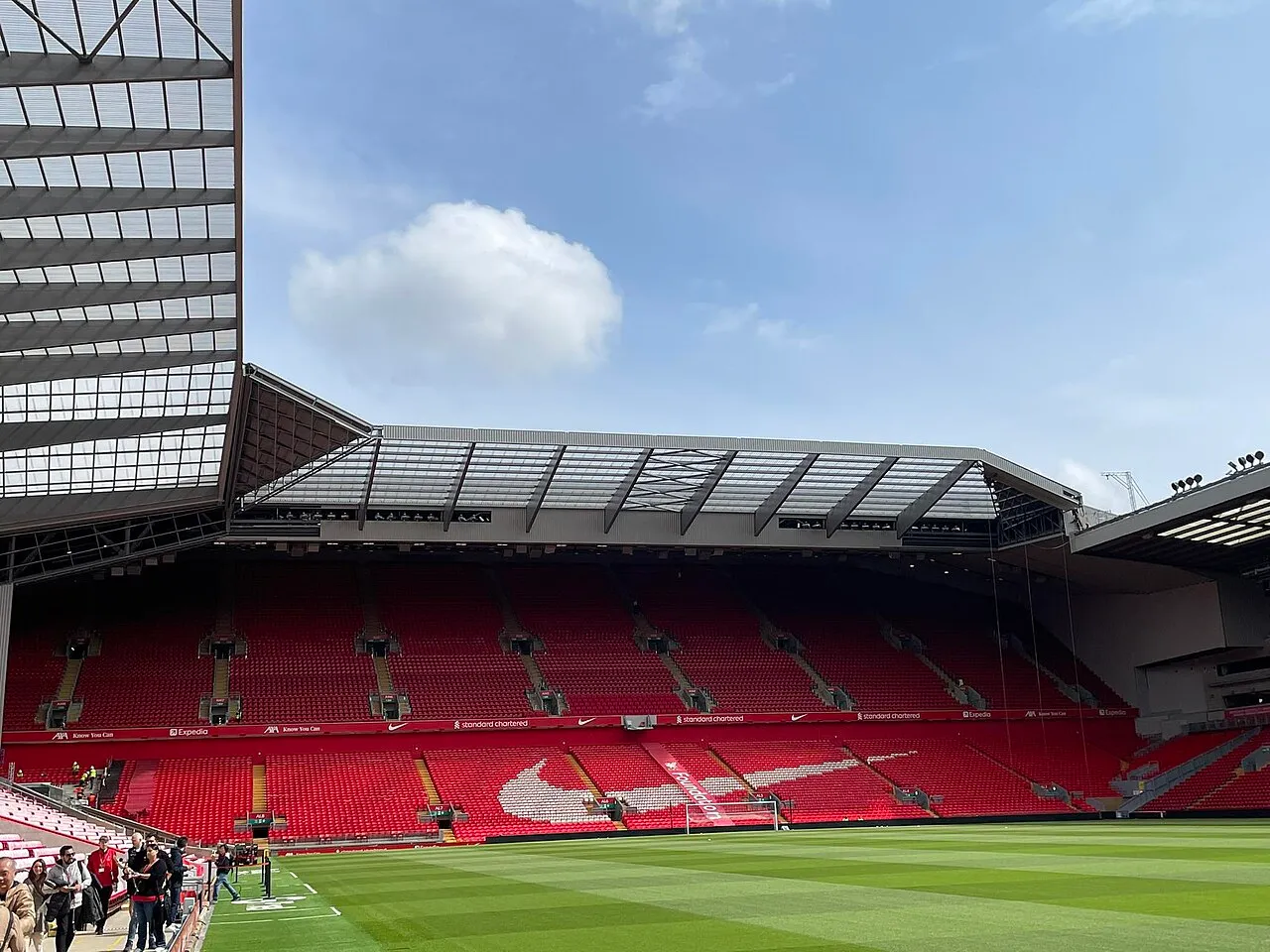
Historical Anfield venue photograph from May 2024, not the November 2026 Arsenal fixture.
What can you calculate from the score alone?
You can identify the winner, the one-goal margin and the total goals. With a supplied competition points rule, you can also calculate the points awarded for the result. You cannot calculate an accurate expected-goals total, passing accuracy or possession share from those two score numbers alone.
This is an important distinction for coding projects. A function can return a value for almost any input, but that does not mean the calculation is justified. If a dataset lacks the variables a metric needs, display that the metric is unavailable rather than inventing a plausible-looking number.
Make a worksheet with two columns: “available inputs” and “supported outputs.” Put the score in the first and the three simple outputs in the second. Then ask what extra data a more complex metric would require. This teaches data sufficiency, a skill that applies well beyond football.
Why is a league position not contained in a match score?
A league table depends on accumulated results and applicable ranking rules. A one-match report can describe a win without establishing the final position after other fixtures. This article does not reconstruct the current Premier League table from the Liverpool-Arsenal score or copy a position without a verified timestamp.
Use a fictional example with three teams. Update the winner’s points, then play another fixture involving a nearby rival. The first team’s position can change even though its own points do not change again. This demonstrates why a table needs the full relevant snapshot, not only the result that attracted your attention.
When reading standings, check games played as well as points. If teams have played different numbers of fixtures, a gap does not describe equal remaining opportunity. Avoid treating a temporary place as a prediction. A dated table is a record of a situation, not a guarantee about the season’s ending.
Build a match-summary component
Start with home team, away team, scores, venue, fixture date and status. Add the source link and the time the record was checked. Keep the goal event list as a separate structure. This makes the display easier to verify and avoids burying important fields inside a paragraph that a program cannot reliably interpret.
For an original exercise, show the final result and generate a plain-English sentence. Test a draw, a home win and an away win. Then test missing scores. The component should not declare a result when the status is only scheduled or when a numeric field is unknown.
Our programming courses can help learners build a small version. Add a timeline only after the basic labels work. Test that changing the home score changes the outcome consistently, and that a historical fixture date does not become today’s date simply because the page was refreshed. These are practical correctness checks, not decorative features.
What should a useful match image show?
An Anfield photograph can establish visual context for the venue without depicting the November 2026 game. A historical Arsenal-related photograph can identify club context without showing the winner’s celebration from this fixture. Its caption should explain that role. Do not attach a new match date to an old image without evidence.
Choose images whose source and reuse licence can be recorded. Keep attribution small but readable and include meaningful alternative text. A photograph’s value is not increased by pretending it is more current than it is. Honest contextual imagery can support a useful article while leaving the match facts to the appropriate report.
For a classroom activity, write two captions for the same fictional stadium image. One incorrectly claims a current event; the other describes the visible setting and historical context. Ask which can be supported by the image record. This makes visual accuracy a testable part of publishing rather than a final cosmetic step.
Questions for the reader
Can you explain why margin and total goals match in this result but not in every one-goal win? Can you identify what the goal time establishes and what it does not? Can you explain why a crossbar incident belongs in the narrative without changing the recorded score? These questions go beyond remembering a player’s name.
Next, choose one unsupported claim you might encounter online, such as a possession figure with no source or a certainty about tactical intent. State what evidence would be needed to evaluate it. The aim is not cynicism. It is making a clear distinction between a well-supported explanation and an appealing guess.
The Liverpool-Arsenal fixture offers a compact lesson in discrete events, score states and careful interpretation. Keep the verified 0-1 result and Havertz’s listed goal separate from fictional examples. A good football guide leaves readers able to describe the outcome accurately and recognise the additional information needed for a deeper account of the game.
Review the summary from a reader’s perspective
Give your finished card to someone who has not read the article. Ask them for the fixture date, home team, winner and source. If they must guess one of those, improve the labels. Then ask whether the card claims to contain the full match story. It should not imply that a short list of events is a complete tactical analysis. This review is especially useful on mobile, where a cropped image or cramped text can remove the very detail that made the desktop version clear. Correct interpretation is a better success measure than the number of decorative statistics displayed.
Sources
- Liverpool official match report, for the 0-1 result, Havertz’s listed scoring minute and Wirtz’s crossbar attempt.
- Liverpool official fixture page, 1 November 2026, for fixture identity. The invented matches, worksheets and interface examples above are original educational activities, not additional match statistics.
Image credits: cover: Original photo by: Rodhullandemu
Cropped & edited by: TurboGUY, source, CC BY-SA 4.0. Resized and converted to WebP. inline: FYI2023, source, CC0. Resized and converted to WebP.
Found an error or an outdated detail? Report a correction with the article URL and original source.