
Maria Sakkari: Major Semifinals, Guadalajara and Competitive Consistency
Explore Maria Sakkari’s 2021 major semifinals and 2023 Guadalajara title. Learn consistency, return pressure and careful tennis-statistics analysis.
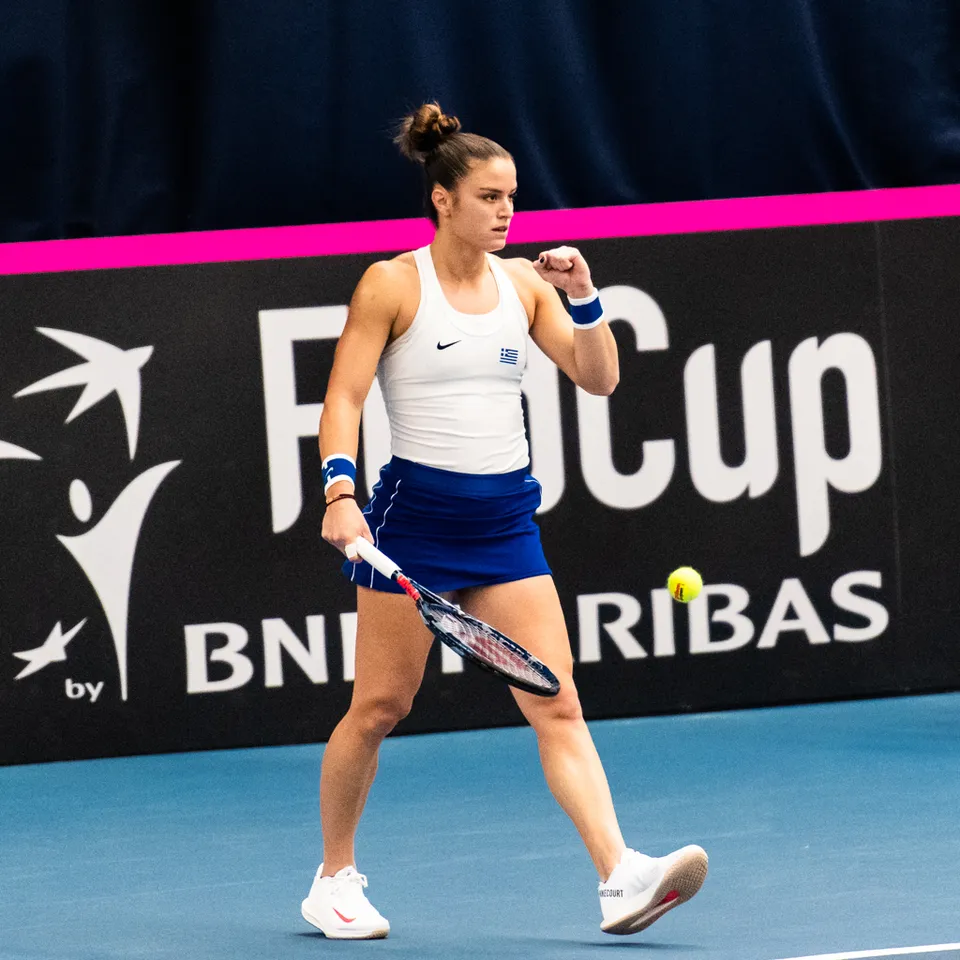
Maria Sakkari's career is a useful reminder that progress has several forms. A first title, a major semi-final and a later victory at a different tournament each answer a different question. Her 2021 Roland Garros and US Open semi-finals, followed by the 2023 Guadalajara title, provide clear historical points from which to explore competitive tennis without reducing a career to one dramatic result.
This guide explains those milestones and introduces a practical approach to consistency, return pressure and evidence-based match analysis. It does not present an older ranking as current or infer a player's health from a photograph. Numerical examples are fictional teaching datasets unless explicitly tied to a named official record. Current participation should be checked against the relevant dated entry list.
Who is Maria Sakkari?
Maria Sakkari is a Greek professional tennis player whose WTA record includes semi-final appearances at Roland Garros and the US Open in 2021. She won her first tour singles title at Rabat in 2019 and her second at Guadalajara in 2023. Event names and years matter because a title total without its historical context can quickly become misleading.
A tour title and a major semi-final differ
The word title means winning an event, while semi-finalist identifies a stage reached in another draw. Neither should be silently converted into the other. A reader can value both the Rabat and Guadalajara victories and the 2021 major runs while keeping their categories distinct. Precise descriptions make a career easier to follow rather than less impressive.
Identity is not a complete technical explanation
Knowing that Sakkari represents Greece identifies a national association, not a universal playing style. Her actual decisions must be studied through matches and reliable records. Descriptions such as powerful or athletic can be useful starting impressions, but they need specific observations. What changed in the return, court position or rally pattern is more informative than a broad label.
What happened at Roland Garros in 2021?
Sakkari defeated defending champion Iga Swiatek 6-4, 6-4 in the 2021 Roland Garros quarter-final. WTA's official report documents that result and her advance to the semi-finals. Reaching the last four did not mean winning the tournament. The next match was a separate challenge, so the quarter-final victory and final event finish should be reported separately.
A score should retain the correct viewpoint
The 6-4, 6-4 score is written from Sakkari's winning perspective in that report. If a table lists players on separate rows, the figures align with those names. Always establish whose row you are reading before interpreting the numbers. Reversing the perspective can turn a correct score into an incorrect claim even though the digits remain unchanged.
A defending champion is a dated description
Swiatek was the defending champion in the context of that 2021 event. That phrase should not be carried into an unrelated later tournament without checking the relevant year. Sports reporting often uses relative descriptions that are accurate at publication but become confusing when detached from their original date. A historical guide should restore the event context.
What does the 2021 US Open semi-final add?
WTA's career record also lists a US Open semi-final in 2021. Reaching the same stage at two major events in one season shows two distinct runs, not one result counted twice. The surfaces, opponents and match sequences differ. A comparison should preserve those differences rather than assuming the same round label means the tennis unfolded identically.
Repeated depth is not the same as identical conditions
A player can reach the last four through different combinations of strengths and challenges. One draw may contain more close sets; another may involve different tactical problems. The round reached is a compact outcome, not a complete description of performance. Use it to orient the reader, then consult match records before explaining how the run developed.
Do not turn a near miss into a psychological diagnosis
A lost semi-final can be discussed through the documented score and visible point patterns. It does not automatically prove a permanent mental weakness. Public analysis should avoid diagnosing a player's character from a small number of high-pressure moments. A narrower account of what happened is both fairer and more useful to students learning how to interpret evidence.
Why was Guadalajara 2023 significant?
Sakkari won the Guadalajara title in 2023, defeating Caroline Dolehide in the final. WTA's report identifies it as her second career tour singles title, following Rabat in May 2019. The time between those victories makes the later result a meaningful career marker, but it does not mean there were no important performances during the intervening years.
A title drought is not an empty career
The absence of a trophy over a period does not erase finals, semi-finals or strong matches. Those outcomes contribute different evidence about competitive performance. A balanced profile can describe a gap between titles without using it as shorthand for total failure. Equally, one later victory should not be used to pretend that every earlier challenge was trivial.
Match format belongs with the result
A final is decided under the applicable event rules, and the official result is the authority for what occurred. Avoid importing scoring conventions from a different competition or discipline. If a compact score contains bracketed tie-break information, read the display carefully. The visible total of games is not the same as the number of points played.
What does consistency mean in tennis?
Consistency can refer to keeping the ball in play, repeating a useful shot pattern or producing results across events. Those meanings should be separated. A player can be consistent in rally depth during one match without having identical tournament outcomes all season. Define the question before deciding which statistic or observation would provide a meaningful answer.
Consistency is not the absence of risk
A controlled aggressive shot may carry more immediate risk than a neutral rally ball while being appropriate for the situation. Simply counting errors can therefore miss the reason for the choice. Evaluate the available time, target and opponent position. The aim is to understand whether the decision suited the point, not to insist that avoiding every error is possible.
Repetition should have a purpose
Sending several balls to the same area can test a pattern or create space elsewhere. It can also become predictable if the opponent adapts. A viewer should watch how the sequence changes over time. Repetition is neither automatically intelligent nor automatically unimaginative; its value depends on the problem it is trying to solve and the response it produces.
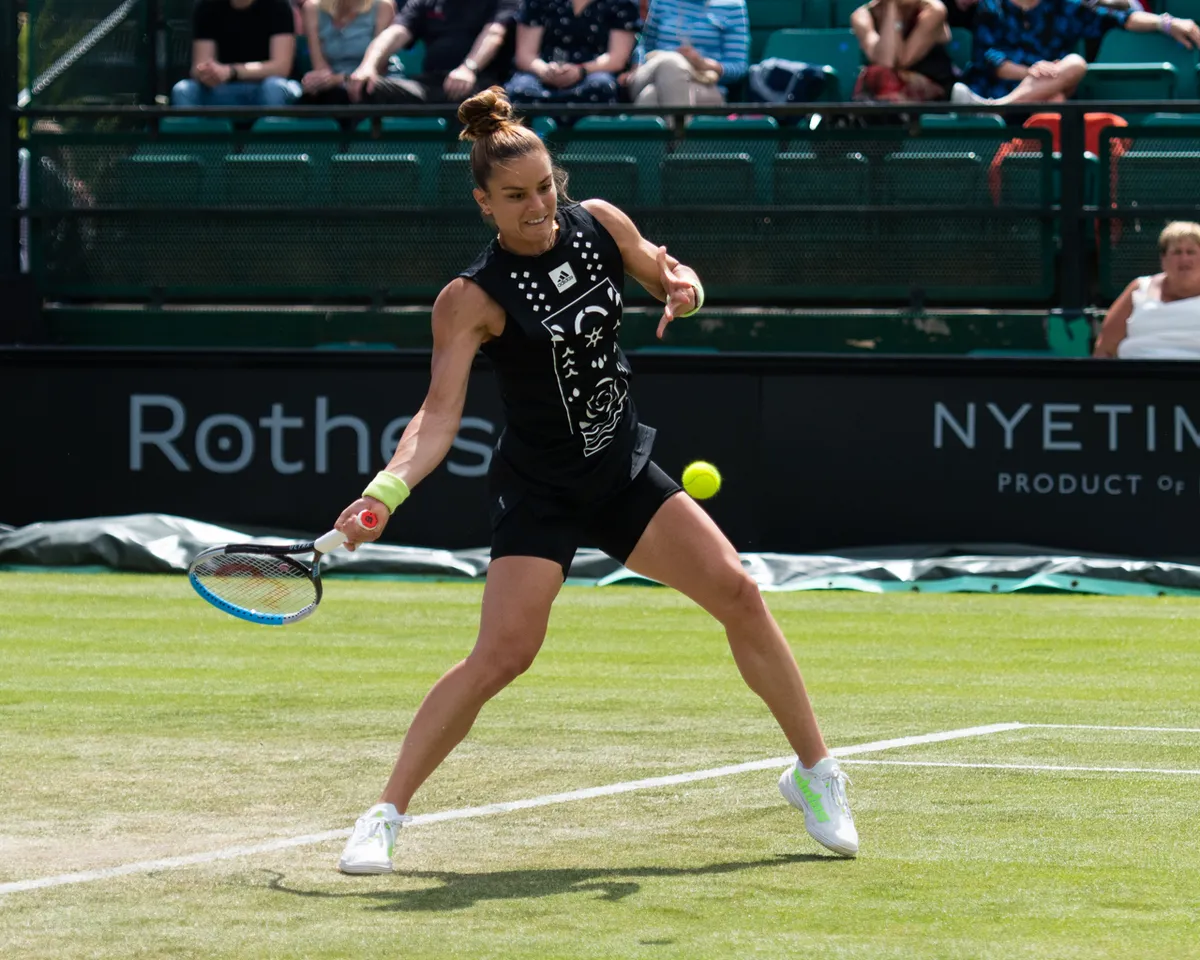
Maria Sakkari photographed in June 2022, shown as a separate historical career image rather than her 2023 title ceremony.
How does return pressure build?
A receiver can pressure the server through depth, direction and repeated involvement in service games. Not every effective return needs to be a winner. A controlled ball that prevents an easy next shot may be valuable. When watching a Sakkari match, distinguish the return's immediate result from the quality of the rally position it creates.
Look beyond the break-point total
A receiver can win many points but create relatively few break opportunities if the points are spread across games. Another can cluster successful returns and produce several chances. Break-point counts therefore describe part of the score structure rather than every aspect of returning. Combine them with receiving-point data and the actual game sequence where available.
A second serve is still a competitive ball
It is tempting to assume a receiver should attack every second serve. The arriving spin, bounce and placement may make that unrealistic. A sensible return can prioritise neutralising the server's next action. Observe the ball and resulting position instead of judging the decision from the label second serve alone. Tactical categories need contact-level context.
How can students measure a small sample?
Suppose a fictional receiver wins 22 of 50 receiving points. The return-points-won rate is 44 percent. That does not mean winning 44 percent of the opponent's service games or converting 44 percent of break points. Each statistic uses a different denominator. The raw counts should appear beside the percentage so the reader knows what was measured.
Distinguish a rate from an amount
Winning four of five opportunities gives a higher rate than winning eight of twelve, but the second sample contains more successful outcomes. Neither number alone settles which performance was stronger. The surrounding match and the number of opportunities matter. This distinction between proportion and quantity appears in many subjects beyond tennis, including classroom assessment and survey analysis.
A small difference needs careful language
If one sample contains 21 wins from 50 points and another contains 22, the difference is one point. Calling it overwhelming superiority would exaggerate the evidence. Report the counts and explain the limited scope. Precision in arithmetic should be matched by restraint in interpretation; a correct percentage can still be used to tell an overstated story.
What should a performance comparison include?
Begin with the surface, event date, opponent and stage. Add the definitions of the statistics being compared. A single-match result and a season aggregate should not occupy the same unlabelled column. The purpose is to make differences visible rather than hide them inside an attractive graphic that suggests all numbers were collected under identical conditions.
Rankings and seeds answer different questions
A ranking is a position in an official table at a stated time. A seed is a tournament designation based on its applicable process. They are related but not interchangeable, and the relevant dates can differ. A player identified as a particular seed in an old report should not automatically be assigned that number as a current world ranking.
Avoid reading fitness from appearances
A photograph can show a player stretching or resting without establishing an injury or explaining a result. Medical status requires appropriate reliable information, not speculation about posture. Keep historical images as identification and event context. Their captions should not claim a diagnosis, current availability or a private reason for a competitive decision.
A practical viewing worksheet
Choose a defined passage of play and record return depth, rally length category and the first clear change in court position. Explain your category definitions before collecting the observations. Include routine points as well as memorable ones. A consecutive sample helps reduce the temptation to select only evidence that supports a favourite interpretation of the player.
Make the explanation teach one clear idea
After the table, write a short conclusion such as deeper returns more often led to neutral rallies in this sample. Do not claim that the finding describes every match in Sakkari's career. A limited but reproducible result is a sound learning outcome. It encourages better questions for a larger study rather than pretending the analysis is already complete.
Build a simple calculation tool
Use the class resources for supporting mathematics and the programming courses to turn the worksheet into a small application. Validate that counts are nonnegative and successes do not exceed attempts. Show no sample when the denominator is zero. Add a source and match date to real records so another student can understand and verify the output.
Preserve missing information explicitly
An unavailable statistic is not a zero. If a historical match source does not provide a count, leave the field empty and explain the omission. Entering zero would falsely claim the event never occurred. This small distinction protects a chart from making a confident comparison with information that was never actually collected.
Questions about Maria Sakkari
Did Sakkari win Roland Garros in 2021?
No. She reached the semi-finals after beating Swiatek in the quarter-finals. Her later Guadalajara title in 2023 belongs to a different event. A clear profile can explain both without mixing their outcomes. The distinction matters because a major semi-final and a tournament title communicate different achievements, each with its own documented context.
Does consistency mean playing every point the same way?
No. Reliable tennis often requires adapting to different balls and opponents. The consistent element can be sound decision-making rather than repeating one target regardless of the situation. When studying a match, ask whether the choice matched the available time and position. That question produces a richer understanding than assuming that variation and consistency are opposites.
Sources
- WTA: Sakkari's 2023 Guadalajara title
- WTA: the 2021 Roland Garros quarter-final against Swiatek
- WTA: Sakkari's major-event record
Image credits: cover: Peter Menzel, source, CC BY-SA 2.0. Resized and converted to WebP. inline: Peter Menzel, source, CC BY-SA 2.0. Resized and converted to WebP.
Found an error or an outdated detail? Report a correction with the article URL and original source.