
MCX Shares: Commodity Contracts, Trading Activity and Exchange Revenue
Distinguish MCX shares from commodity contracts. Learn how turnover, open interest, product mix, technology costs and cash flow relate to the exchange.
MCX share-price searches concern equity in Multi Commodity Exchange of India Limited. They should not be confused with a gold contract, a crude-oil futures price or the value of all commodities traded on the exchange. Owning a share in an exchange operator and entering a derivative contract are different activities with different financial relationships.
MCX's official business and investor pages provide the starting records. This article explains transaction measures, exchange revenue, product mix, open interest, infrastructure costs and financial reporting. It does not supply a trading strategy, an invented current share quote or a guarantee about a commodity price. Numerical examples are hypothetical teaching exercises rather than actual contract specifications.
Identify the exchange operator behind the share
The abbreviation MCX can appear in different contexts. For this article, it refers to Multi Commodity Exchange of India Limited and its disclosed business in commodity derivatives. Confirm the full legal name before matching an exchange-related news story with a company quote.
A share-price screen and a commodity-market screen can both display prices, but the underlying instruments differ. One concerns ownership in the operator; another may concern a contract defined by commodity, expiry and other terms. Copying a number without its instrument label can create a fundamental misunderstanding.
| Item | What it measures |
|---|---|
| MCX equity share | Ownership interest in the listed company |
| Commodity contract | Defined exposure under contract terms |
| Trading volume | Activity under the reported measure |
| Open interest | Outstanding positions under its definition |
| Exchange revenue | Recognised company income |
The exchange business is not a warehouse of all traded value
An exchange provides market infrastructure under its business model. The value of contracts traded is not automatically the exchange operator's own revenue or asset balance. Treating the whole notional value as company income would greatly exaggerate what the financial statements represent.
Consider a fictional market where contracts with a stated value of 10,000 units change hands. If the platform earns a service amount of ten under the exercise's assumptions, its revenue is not 10,000. The two figures describe activity and income respectively.
Actual revenue categories and charging arrangements should be read from MCX's disclosures. This article uses the example only to separate concepts. It does not assert a real fee rate or imply that every product and transaction produces income on the same basis.
Futures and options should not be counted as identical products
Different derivative products have different contract features and can be reported using different turnover measures. A futures activity figure and an options premium figure should not be added or compared without understanding the definitions. Similar currency labels can conceal different measurement bases.
For a fictional example, a table presents one product's notional value and another product's premium value. Calling the larger number the more profitable business would be unsupported. The measures first need consistent definitions, and profitability requires revenue and cost information beyond trading value.
Use the exchange's own reporting terminology. When a headline says activity increased, ask which product, which measure and which period it describes. Those three labels determine what the statement actually establishes and whether the comparison is meaningful.
Contract count and contract value are separate measures
The number of contracts traded depends on activity, while their reported value also depends on the relevant contract sizes and prices. A change in one measure does not guarantee the same percentage change in the other. Product mix can make the relationship more complex.
Imagine two fictional products with different contract sizes. Ten contracts of the smaller product and ten of the larger product do not represent equal notional value. If the mix changes, total contract count can remain constant while value changes.
Do not infer MCX's actual contract specifications from the example. Those belong in the official product documents. For company analysis, the lesson is simply to retain the exact metric name rather than calling all measures of trading activity the same thing.
Average daily activity needs the right trading-day count
A daily average and a period total describe different views of activity. Their relationship depends on the number of relevant trading days under the stated definition. Calendar days should not automatically replace trading days in a calculation.
For an invented exchange with 1,000 activity units across 20 stated trading days, the average is 50 per day. Dividing by 30 calendar days instead produces a different figure that does not match the exercise's defined measure. The denominator is part of the meaning.
When comparing quarters, check whether the company reports a daily average, an aggregate total or both. A period with more trading days can have a larger total without a higher average. That distinction can explain an apparent discrepancy between two legitimate headlines.
Open interest differs from turnover
Open interest concerns outstanding positions under the relevant definition. Turnover concerns transactions during a period. A market can have many trades without every trade adding a new outstanding position. The two measures therefore should not be substituted for one another.
Think of a fictional ledger in which some trades open positions while others close them. Counting every trade measures activity; calculating the remaining positions requires the opening and closing changes. This is an explanation of the distinction, not instructions for a real trading strategy.
For reported data, use the exchange's definitions and dates. Open interest at the end of a session and turnover over a month have different time bases. Combining them in a ratio without stating those bases can create an apparently technical but unclear claim.
Commodity-price volatility is not a revenue formula
Sharp market movement can influence participant activity, but a company's revenue cannot be calculated from volatility alone. The actual product mix, transaction activity, charging structure and other income categories matter. A dramatic commodity chart does not complete that analysis.
A fictional market can experience a price jump on limited trading, or smaller price changes during heavy activity. Price movement and transaction volume are distinct. Neither example establishes how MCX performed during a particular quarter.
Read the actual operating statistics and financial statements together. A useful article separates a possible business driver from a demonstrated company result. It avoids turning a plausible market narrative into a guaranteed forecast of exchange earnings or share-price appreciation.

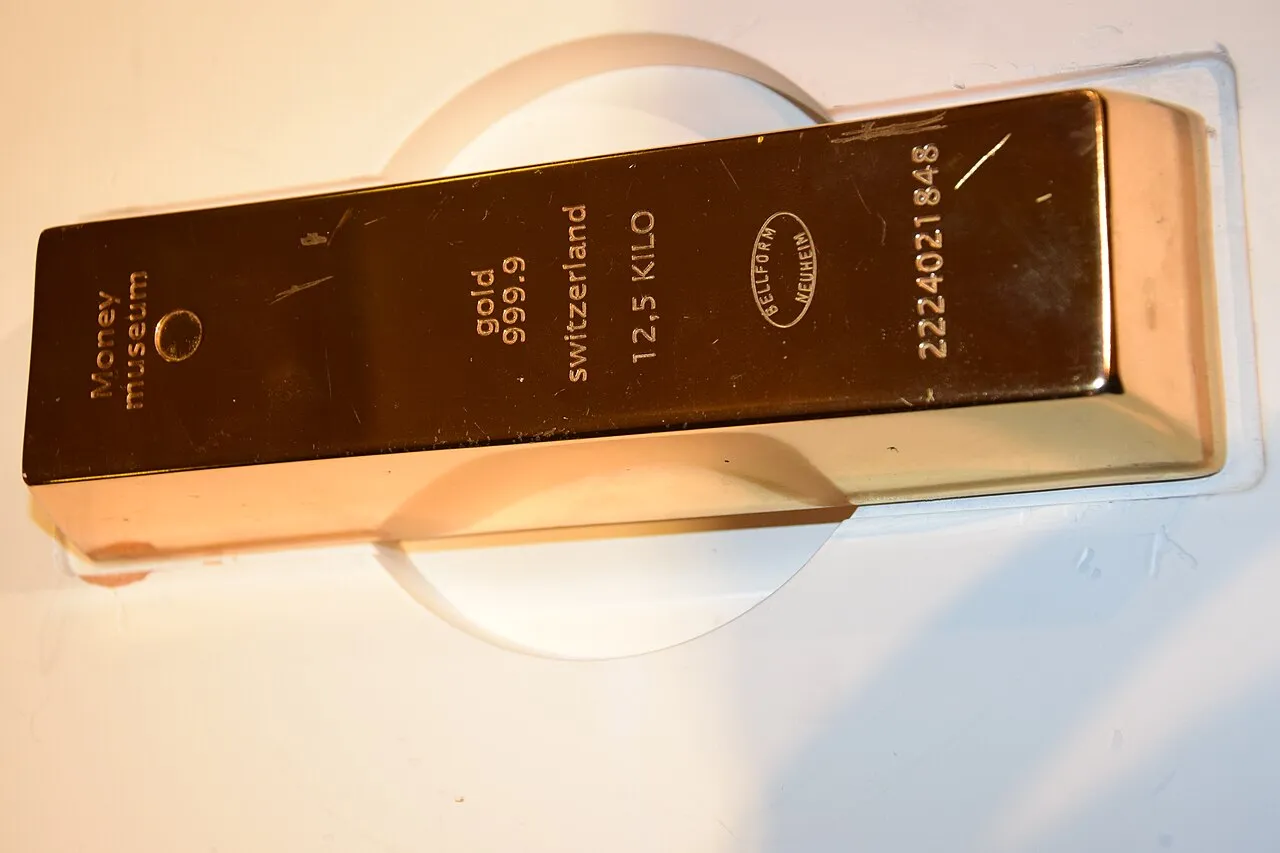
A gold bar cooling during a Gold Reef City demonstration, used as commodity context rather than evidence of an MCX transaction.
Transaction income needs the disclosed fee basis
An exchange's income from activity depends on its actual arrangements. A headline turnover total multiplied by an invented universal rate is not a verified revenue calculation. Different products, periods and other factors can affect the relationship.
For a fictional classroom model, state the rate explicitly: 2,000 eligible units multiplied by a hypothetical 0.1 percent produces two units of gross income before other items. The example is transparent because its assumptions are visible and it is not labelled as a real fee schedule.
For MCX's actual performance, use the recognised income in the report. If creating a sensitivity model, label it as hypothetical and keep it separate from reported data. A reader should never have to guess whether a number came from a filing or a spreadsheet assumption.
Product concentration can influence company comparisons
Activity may be distributed unevenly across product categories. A change in one important category can therefore affect aggregate measures differently from a smaller category. The actual distribution should come from the exchange's disclosures rather than assumptions based on popular search terms.
In a fictional exchange, one category supplies 70 percent of a defined activity measure. If it changes, the aggregate can move considerably even when smaller categories remain stable. That does not establish the company's actual concentration or the revenue share of the category.
Keep activity concentration and income concentration separate unless the report establishes their relationship. Different fee bases and product measures can prevent a simple one-for-one correspondence. The useful question is which disclosed mix changed and what the statements show about its financial effect.
Technology and resilience have financial costs
Market infrastructure requires systems, operations and controls. Spending on technology can appear in different accounting categories depending on the nature of the expenditure. It should not be assumed that every technology payment is either an immediate expense or a long-lived asset.
For a fictional business, an equipment purchase and a monthly service subscription can have different accounting treatment. Both use cash, but their income-statement timing may differ under the stated rules. The company notes provide the actual classification.
A public article should discuss disclosed business implications without exposing or speculating about sensitive system details. An operational announcement is not permission to infer weaknesses or publish unsupported claims about the security of the exchange. The focus here is financial understanding.
Clearing and settlement are not the same as company profit
Trading infrastructure involves processes and entities whose exact responsibilities are defined in official documents. Participant funds, margins and settlement flows should not automatically be treated as the exchange operator's own income. Ownership and accounting boundaries matter.
Imagine a fictional service holding an amount on behalf of a participant. The fact that money passes through a system does not prove it is revenue belonging to the operator. The relevant contractual and accounting role determines its treatment.
For an actual investor comparison, read the consolidated scope and the notes describing relevant entities. Do not infer a balance-sheet relationship merely from a common market term. This article explains the need to distinguish roles without prescribing a participant's trading or margin-management decisions.
Other income can change a headline profit figure
Financial statements can include income beyond the central transaction-related business. The actual categories should be read from the report. A rise in total profit does not independently prove that transaction activity or core operating margins rose by the same proportion.
For an invented company, operating income contributes 30 and other income contributes ten. The total is 40 before the remaining stated items. If the components change next period, the total alone cannot identify which business driver moved.
Present the bridge clearly and preserve the company's definitions. Do not dismiss other income automatically or describe it as recurring without evidence. The objective is to explain what generated the result rather than select the most exciting narrative available.
Cash flow and capital spending complete the picture
Accounting earnings and cash movements can differ because of timing and classifications. A technology investment, receivable movement or other disclosed item can affect the cash-flow record without matching a single profit-statement line in the same period.
A fictional operator generates 25 in operating cash and spends 12 on long-lived assets. The remaining arithmetic concerns cash after that spending, not a replacement definition for statutory profit. Actual statements may include further financing and investment flows.
Read the cash-flow statement alongside the income statement and balance sheet. A company can be profitable while investing, and a strong cash balance does not independently establish a future growth rate. Each measure answers a particular question and needs its date.
Build an exchange-results worksheet
Create separate sections for activity, recognised income, costs and cash. Record product, measure definition, period and source before entering any number. Keep futures measures, options measures and open interest distinct so that formulas cannot silently combine incompatible inputs.
Next, calculate comparable changes and explain them in words. A larger total may reflect more trading days, a different mix, price changes or higher activity under a particular measure. Use the actual disclosure to distinguish those causes rather than attributing all growth to one commodity headline.
Learners can practise ratios through class resources. A project in programming courses could require each market statistic to carry a metric type and reject calculations that treat client transaction value as company revenue. That is a useful data-literacy exercise without real-money trading.
Questions about MCX shares
Does buying an MCX share mean buying gold?
No. An equity interest in the exchange operator differs from a commodity holding or derivative contract. Confirm the instrument and its official description. Shared references to commodity markets do not make the ownership, risks or financial outcomes of these transactions identical.
Is turnover the same as exchange revenue?
No. Turnover measures defined market activity, while revenue is recognised company income. The charging basis, product mix and other categories matter. Use the financial statements for actual revenue rather than treating the entire traded value as money earned by the operator.
Does open interest measure all trading during the day?
No. It concerns outstanding positions under the relevant definition, while trading activity records transactions over a period. Keep the time basis and measurement method clear. An end-of-day position measure and a daily transaction total answer different questions.
Where should current contract specifications be checked?
Use the official exchange product documents for the exact instrument and date. The fictional examples here explain concepts and do not replace contract specifications, trading requirements or a timestamped equity quote. Keeping that boundary clear prevents an educational illustration from becoming misleading practical instruction.
Sources
- MCX official business overview
- MCX official investor relations and annual reports
- BSE published MCX business announcement
Image credits: cover: Ank Kumar, source, CC BY-SA 4.0. Resized and converted to WebP. inline: Dan Brown from London, UK, source, CC BY 2.0. Resized and converted to WebP.
Found an error or an outdated detail? Report a correction with the article URL and original source.