
Michael Carrick: Playing Career, Passing Lanes and Midfield Control
Explore Michael Carrick’s 2006-2018 United playing career. Learn passing lanes, support, tempo and careful comparisons of midfield statistics.
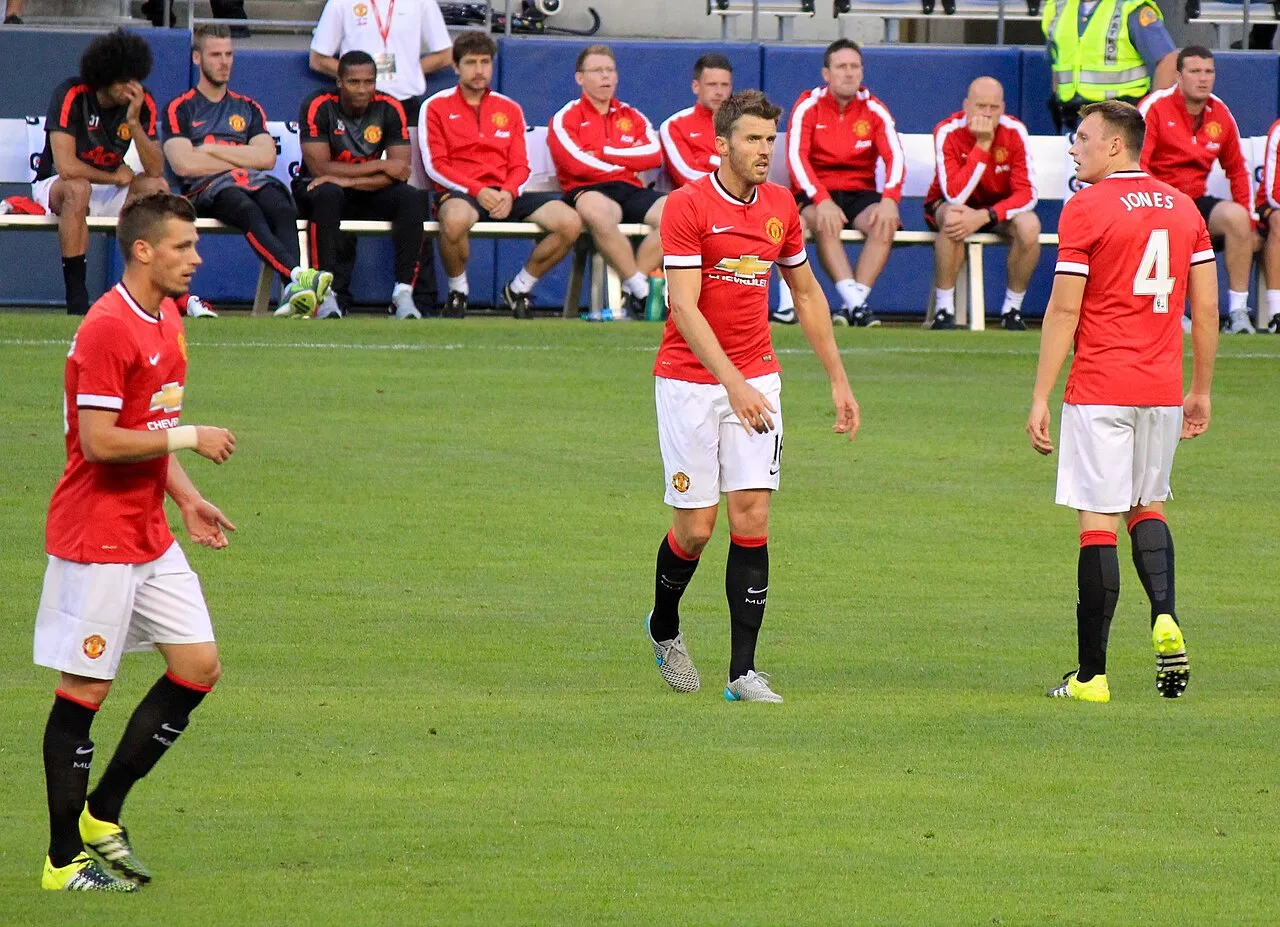
Michael Carrick's playing career is a useful starting point for understanding midfield work that can be easy to miss. A pass does not need to travel a long distance to change an attack, and a player does not need to chase the ball constantly to influence the opposition's options. Position, timing and the next receiving angle can matter as much as the final highlight.
This guide follows his documented Manchester United playing period, from the 2006 move from Tottenham to his final appearance in May 2018. It then explains passing lanes, support and careful statistical comparison. It is a playing-career and football-learning article, not an assumption about his current coaching position or a claim to know private dressing-room instructions.
Who is Michael Carrick?
Michael Carrick is an English former professional midfielder whose Manchester United playing career included 464 appearances. United's dated retrospective records the August 2006 transfer from Tottenham and the final appearance against Watford on 13 May 2018. The Premier League's retirement report independently places the arrival in 2006. Those dated records provide the historical foundation used here.
Resolve a conflicting date before repeating it
A current profile snippet can contain an error or refer to another stage in a career. If it conflicts with a dated signing history and an independent competition record, investigate the event attached to each date. Do not average the dates or choose whichever appeared first in search. For Carrick's United arrival, the dated sources cited here support 2006.
Playing and coaching roles are separate records
A player's retirement, appointment to coaching staff and later managerial role are different events. A biography should not treat them as one continuous playing position. This guide focuses on the established playing timeline. A present-tense coaching claim would require its own current confirmation rather than a familiar name or an old photograph beside a new headline.
What does the United career record establish?
Carrick made his 464th and final United appearance in the 1-0 win over Watford on 13 May 2018. The club retrospective describes his involvement in the move for Marcus Rashford's winner. The Premier League also records five league titles during his United career. These facts describe a long playing period, not proof that he started every match or performed the same task in every season.
Appearances are not all starts
A total appearance count can include substitute appearances as well as starts. It should not be relabelled as full matches without checking the underlying record. Minutes provide another measure of participation. A clear career table keeps those fields separate so a reader can distinguish experience, selection and time on the pitch rather than assuming every entry has equal duration.
Team honours need their competition labels
A league title, a domestic cup and a European trophy are distinct categories. When counting honours, identify the event rather than adding nearby numbers from different tables. The five league titles in the cited retirement account refer to specific seasons. They are not a claim that the team won every competition during each of those years.
What does a deep midfielder connect?
A deeper midfielder can help link defenders with players farther forward, offer an outlet under pressure and protect useful space when possession changes. The exact responsibilities depend on the team and match. Calling Carrick a passing midfielder is only a starting description. To explain a particular sequence, look at his position, the available lanes and the receiver's next options.
A passing lane is a relationship
The route between passer and receiver can be blocked even when the receiver appears to stand in open space. A small movement by either player can change that route. The ball carrier's angle matters as well. Watching only the intended receiver can therefore produce an unfair judgement that an obvious pass was ignored when the route was not actually available.
A support position can make pressure easier to escape
A midfielder who offers a clear angle can give a defender another option. The movement may be only a few steps, but it changes the problem. Do not assume that useful work must involve a dramatic run. Explain which lane opened and what the team could do next. A modest visible adjustment can be more informative than a broad claim about controlling everything.
The next receiver determines the value
A pass completed into a trapped teammate can preserve an event count while creating a difficult situation. Another pass may help the team turn and advance. Completion alone does not capture that difference. Follow the sequence after the ball arrives rather than judging distribution only by whether the pass reached someone wearing the same shirt.
Why can a simple pass be tactically important?
A short pass can move an opponent, improve an angle or keep the ball away from pressure. Its value depends on the arrangement around it. Simple is not automatically safe or useful, just as long is not automatically ambitious. The relevant question is how the action changes the team's options and risks at that moment.
Changing the point of attack takes preparation
Moving possession from one area to another can draw the opposition across and create space. The final switch may depend on earlier short passes that established the angle. Giving all credit to the longest delivery misses the construction. A useful analysis describes the sequence rather than selecting only the most photogenic contact.
Tempo is more than passing quickly
A team can move the ball rapidly without making progress, or pause briefly to allow a teammate to become available. Tempo concerns timing in relation to the problem, not a permanent requirement to play at maximum speed. When discussing a midfielder's influence, identify the moment when quicker or slower circulation changed the options instead of treating calm appearance as evidence by itself.
A backward pass can move the attack forward later
Returning the ball can draw pressure and create a new route through another teammate. It can also be a poor choice if it needlessly traps the team. Direction alone does not settle the question. Follow what happened next and compare realistic alternatives. This helps students avoid the assumption that every forward pass is positive and every backward pass is a failure.

Manchester United against Watford on 13 May 2018, the date of Michael Carrick’s final appearance for the club.
What happens when possession is lost?
A deep midfielder's position can influence whether the team can respond quickly or leaves a dangerous lane open. The moment before the turnover matters, not only the reaction afterward. Good analysis looks at where teammates were and which options the opponent gained. It should not automatically blame the nearest player for a problem created by the whole team's spacing.
Pressure and cover must fit together
One teammate may approach the ball while another protects a route behind him. If both attack the same point, a gap can open. If neither applies pressure, the opponent may have time to choose a difficult pass to defend. The balance depends on the situation. This is a general football principle, not a claim about one private tactical rule used throughout Carrick's career.
An interception can begin with anticipation
A player who recognises a likely route may need only a small movement to reach the pass. The final contact can look less dramatic than a recovery sprint, yet it may prevent the same danger earlier. Describe the available routes and visible adjustment. Avoid claiming that every intercepted ball proves perfect anticipation when an inaccurate opposition pass may also have contributed.
How should passing percentages be read?
A passing percentage divides completed passes by attempts within a defined sample. It does not measure every aspect of creativity, control or risk. A player circulating possession in one area may have different opportunities from someone attempting difficult final passes. Compare roles and locations alongside the numbers before turning a higher completion rate into an overall quality ranking.
Use a fictional example
Imagine one midfielder completes 72 of 80 passes, a 90 percent rate. Another completes 40 of 50, or 80 percent. These invented totals do not show pressure, distance or what the receivers could do afterward. The calculation is correct, but a claim about which player controlled the match would require additional evidence and a clearer definition of control.
Progressive does not mean merely long
Different providers define progressive actions using their own criteria. A long pass can travel sideways or reach a difficult receiving situation, while a short pass can remove several opponents from the play. Read the metric's definition and avoid replacing it with an everyday assumption. A labelled statistic is useful only when the label preserves what was actually measured.
Per-90 rates need the time played
A fictional player making 120 completed passes across 180 minutes averages 60 per 90. Another making 30 in 30 minutes averages 90 per 90, but the smaller sample is more sensitive to match context. Show counts and minutes together. Adjusting for time does not erase differences in role, score state or opposition pressure.
What should a career comparison leave open?
Different eras and teams create different demands. A present-day data category may not be available for all of Carrick's playing years, and definitions can vary between providers. A fair comparison should state those limits. It is better to make a narrower supported observation than invent a complete dataset simply because a graphic would look better with every cell filled.
Missing information is not a poor performance
If an older match lacks a particular statistic, mark it unavailable rather than zero. Zero would assert that the action never occurred. This matters when comparing historical players with modern records. Data coverage can create an apparent difference that is really a difference in measurement, not a difference in what happened on the pitch.
A highlight collection is a selected sample
A video of successful passes can demonstrate that certain actions occurred, but it does not establish how often attempts failed. To estimate frequency, use a defined consecutive sample or a reliable full record. The same caution applies to compilations of mistakes. Selection changes the impression, so the method belongs beside the conclusion.
A midfield-angle project for students
Choose a short passage from a historical match and draw the positions of the ball carrier, midfielder and nearest opponents before a pass. Then show what changes after the pass. Keep the diagram simple and label the viewpoint. The aim is to explain one useful connection rather than reconstruct every movement that the camera does not show.
Ask a question the evidence can answer
You might ask whether the midfielder repeatedly offered a clear outlet in the selected passage. That is more manageable than asking whether he was the greatest controller of his generation. A small supported finding can still be interesting. It gives students a method they can repeat on another match without needing to defend an exaggerated claim.
Build a clear event log
Use the class resources for supporting mathematics and the programming courses to create a passing log. Store match date, source, minutes and category definitions. Validate attempts and completions, show unavailable data honestly and keep playing records separate from coaching roles. Good software helps preserve distinctions rather than hide them behind an unexplained rating.
Questions about Michael Carrick
When did Carrick join Manchester United as a player?
The dated club retrospective and Premier League retirement account support 2006, following his period at Tottenham. A conflicting snippet should not override those event-specific records without investigation. Naming the transfer and its date makes the timeline clear. His later retirement and coaching work are separate milestones that require their own descriptions.
Does a high passing percentage prove complete midfield control?
No. It measures completion within a defined sample. The targets, pressure, receiving situations and team responsibilities still matter. A useful assessment combines the rate with visible sequences and a clear question. It does not ask one percentage to describe creativity, defensive cover, tempo and every other part of a midfielder's performance at once.
Sources
- Manchester United: dated retrospective covering Carrick's arrival and final appearance
- Premier League: Carrick's retirement and league-title record
Image credits: cover: Matt Janzer from Missoula, USA, source, CC BY-SA 2.0. Resized and converted to WebP. inline: Ardfern, source, CC BY-SA 4.0. Resized and converted to WebP.
Found an error or an outdated detail? Report a correction with the article URL and original source.