
Milan vs Inter 3-1: Derby Goals, Moreira and Match Guide
Read the confirmed October derby result and scoring sequence, then explore the difference between goals, assists, set pieces and league-table changes.
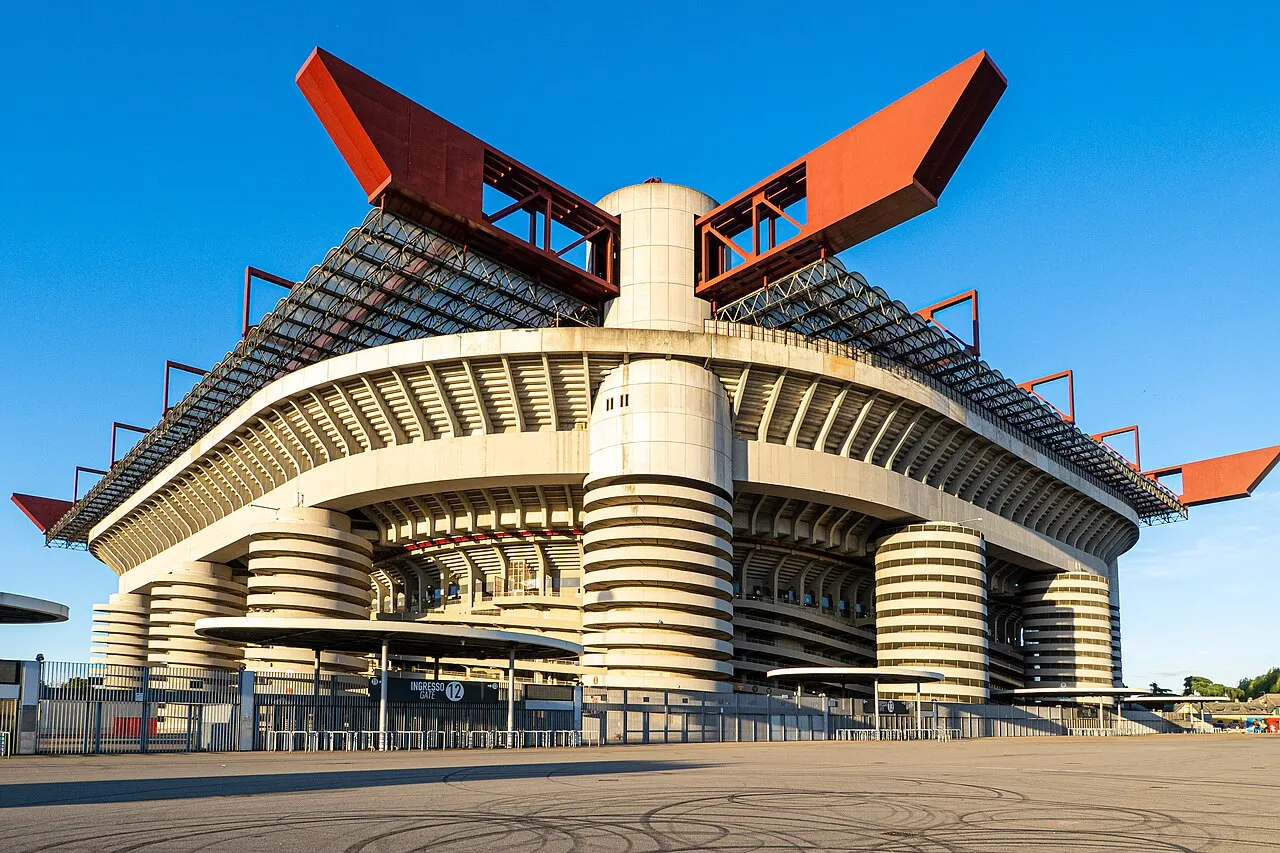
AC Milan beat Inter 3-1 in the Derby della Madonnina on 31 October 2026. All four goals arrived before half-time at San Siro. For a reader arriving through a derby search, that is the confirmed result; the next task is to understand the sequence without confusing the match with an older meeting or a future fixture.
This guide combines a short verified match record with original explanations of assists, set pieces and football notation. It does not reproduce a live commentary feed, claim access to private tactical instructions or promise viewing rights in Pakistan.
What happened in Milan vs Inter on 31 October?
Milan won the Serie A Matchday 10 fixture 3-1. Christian Pulisic scored after four minutes and Adrien Rabiot after ten. Alessandro Bastoni replied in the 22nd minute before Diego Moreira scored in the 43rd. The score was therefore 3-1 at the interval and remained unchanged through the second half.
| Match stage | Recorded score | Reading the state |
|---|---|---|
| Opening | Milan 0-0 Inter | Neither side had scored |
| Fourth minute | Milan 1-0 Inter | Milan took the lead |
| Tenth minute | Milan 2-0 Inter | Milan held a two-goal advantage |
| Twenty-second minute | Milan 2-1 Inter | Inter reduced the deficit |
| Forty-third minute | Milan 3-1 Inter | Milan restored a two-goal advantage |
| Full-time | Milan 3-1 Inter | Milan took the league victory |
The event sequence comes from the official club and league reports checked on 1 November. The table is an aid to reading that record, rather than an additional set of goals. Adding the half-time score to the full-time score would double-count events that are already included.
An unchanged second-half score does not mean no football happened. It means no further goals were added to the confirmed total. Saves, substitutions, chances and defensive actions can still matter, but they belong in their own categories rather than being converted into imaginary goals.
Why is the derby called Milan versus Inter?
In this fixture, Milan refers to AC Milan, while Inter refers to FC Internazionale Milano. Both club names are associated with the same city. Calling the game simply "Milan versus Milan" removes the distinction a reader needs, while treating Milan as a different city from Inter misunderstands the names.
The derby is commonly called the Derby della Madonnina. You will also encounter San Siro and Giuseppe Meazza in venue references. Those names can refer to the same stadium, rather than proving that two reports describe separate grounds. Always compare the date, teams and competition before deciding two records conflict.
For this meeting, AC Milan was the designated home side. Do not assume that a ground shared in a rivalry makes the home-and-away label meaningless. It remains part of the fixture record and can affect practical matters such as which club supplies match information to its supporters.
If you are building a football database, give the two clubs different identifiers. A city field is not a safe unique key. Several clubs may share a city, and one club's stadium arrangements can change over time. Store club identity and venue identity separately so your records remain understandable.
Moreira's role: distinguish scoring from creating
The official league account credits Moreira with supplying the opening cross and the corner for Milan's second goal, before scoring the later free kick himself. That is a useful starting point for understanding how one player can affect several scoring moves through different actions.
A goal records the player credited with putting the ball into the net. An assist records a contribution recognised under the relevant statistics provider's definitions. A dangerous pass that does not produce a goal can still be valuable football, but it is not automatically an assist in a match's statistical record.
This difference matters when comparing clips with tables. A highlights reel may show several attractive passes without telling you which were counted as assists. Conversely, an official event row may identify an assist without showing the movement that created the passing lane. Use the table and video for their different strengths.
Try a fictional example. Player A carries the ball, Player B passes across the area and Player C finishes. C is the scorer. Whether B receives the assist depends on the recorded action and the provider's rules; A's earlier work may deserve discussion without receiving the same label. Do not award everybody an assist simply because they participated.
For an observation exercise, trace a scoring move backwards by two passes. Write down who received, who released and where the next option appeared. You are looking for the structure of the move, not trying to invent an official metric from your own enthusiasm.
Crosses, corners and free kicks are different situations
A cross is a delivery towards a dangerous area, usually from a wider position. A corner is a particular restart. A free kick is another kind of restart with its own circumstances. The same player can deliver all three, but the labels tell a viewer different things about how the action began.
The distinction creates a practical viewing question: was the defence already organised before the delivery, or was it still moving after open play? Do not answer that question by looking only at a photograph of the ball in the air. Watch the seconds before the delivery and identify the restart or preceding pass.
In your notebook, make three columns headed origin, delivery and finish. For a fictional move, origin might be a corner; delivery might be an inswinging ball; finish might be a header. Those labels give a fuller description than repeating "good attack" while still leaving room for an accurate explanation.
Avoid making instructions more specific than your evidence. From an official report you can identify a recorded cross or free kick. You cannot automatically establish the coach's exact rehearsal plan, the intended target on every attempt or an instruction shouted out of the camera's range.
When studying a set piece, follow one defender and one attacker through the action. Mark their starting positions and the direction of movement. Then check whether the camera actually shows the complete sequence. An obscured player is a gap in the evidence, not permission to fill the gap with a confident story.
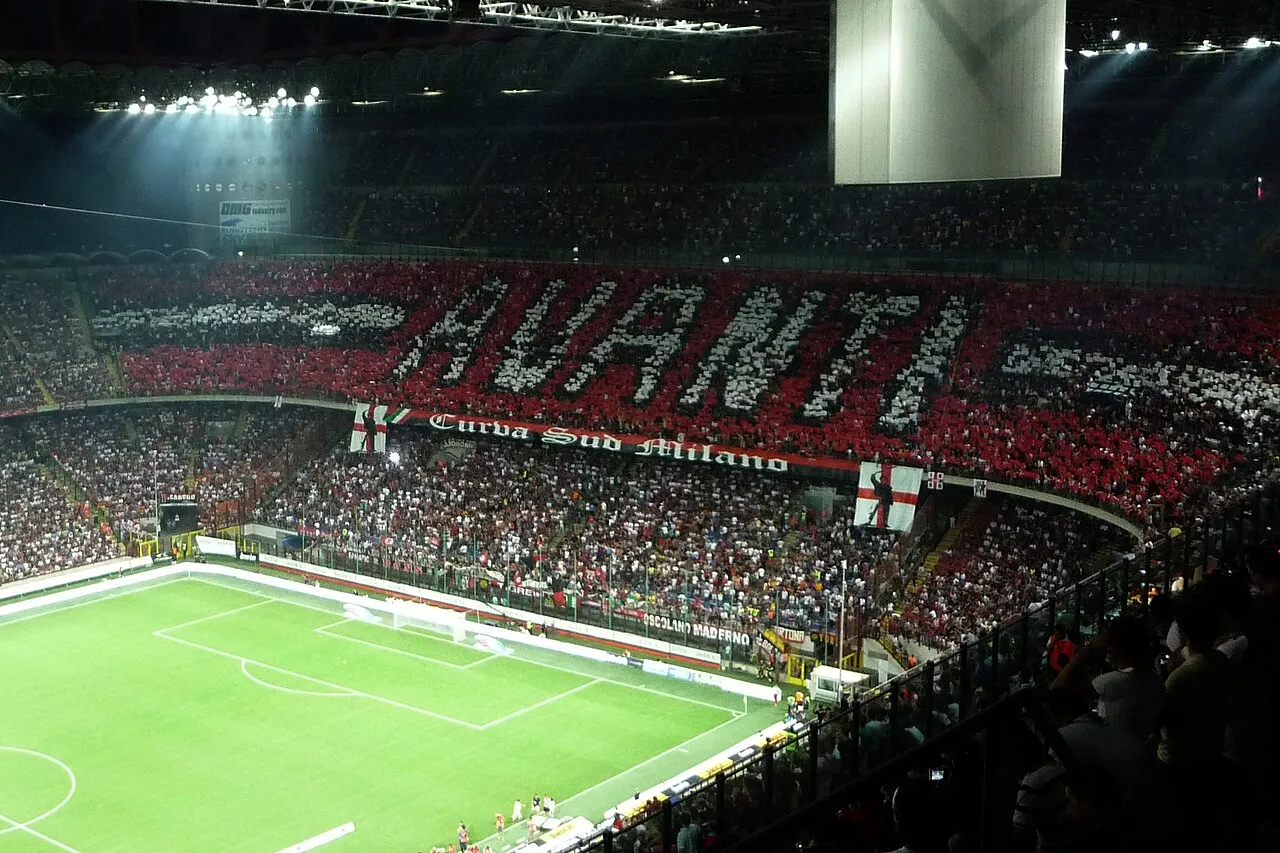
Supporters before the 29 August 2009 derby, a different match from the 2026 fixture discussed here. The historical crowd image is included for rivalry context.
What does a 3-1 league win change?
Milan earned three points from the victory, while Inter earned none from this fixture. Milan's goals-for column increased by three and goals-against by one, producing a plus-two change in goal difference. Inter experienced the opposite changes: one scored, three conceded and a minus-two change in goal difference.
These changes are consequences of this match, not complete season totals. You need the previous league record to calculate the updated totals. If a page provides only this result, it cannot tell you every club's current position without additional information from the full table.
AC Milan's dated report placed the club provisionally fourth on 21 points, four behind the top, with other weekend games still outstanding. The word "provisionally" matters. This article preserves that match-night context rather than advertising the snapshot as a permanently current ranking.
For a fictional calculation, a side beginning on 17 points would move to 20 after a win. If it began with 12 goals for and 9 against, a 3-1 victory would take those figures to 15 and 10, changing goal difference from plus three to plus five. These practice totals are not Milan's actual table row.
That exercise shows why points, goals scored and goal difference should be separate fields. They answer different questions. Winning by a larger margin does not normally increase the league points awarded for the win, although it changes the goals columns.
What can a derby report tell you about tactics?
It can establish recorded events and provide a writer's account of the action. A starting formation can offer an initial map of player roles. It does not mean every player stood in that shape throughout every phase, nor does it prove the next match will use the same arrangement.
Start with one narrow question, such as how a wide player received support. Identify an actual passage of play, note the surrounding positions and look for the next available pass. A narrow question is easier to test than a sweeping statement that one side "wanted it more" across an entire evening.
Also distinguish outcome from execution. A shot can miss after a well-constructed attack. A goal can arrive after a defensive mistake rather than a long passing combination. The final score matters, but it does not describe every action's quality by itself.
For a discussion group, let one person track restarts, another track recoveries and a third track attacking entries. Compare the actual examples afterwards. If the observations disagree, return to the footage or record the uncertainty. Do not force a unanimous conclusion just to make the discussion sound decisive.
Make a short match summary without copying a report
Begin with the verified result and date. Add the turning points you can support, then state one clearly identified interpretation. A reader should be able to distinguish the historical record from your analysis without having to guess where the boundary lies.
A useful writing task is to produce a 100-word summary, not a minute-by-minute reconstruction. Choose the few facts needed to explain the outcome. Then produce a second paragraph answering one question about a specific football idea, such as why an early two-goal lead changes the score state.
Keep the language proportional. "Milan led by two goals after ten minutes" is specific and testable. "The title race was decided" would require much stronger evidence and would be especially misleading early in a season. Rivalry does not remove the need to distinguish a large occasion from a mathematically decisive result.
If you are learning to organise information, build a small match log through our programming courses. Use the match date and club identifiers to avoid mixing fixtures. Keep a source URL beside each result and store your personal observations separately from the confirmed event fields.
For a contrasting league outcome, our Bayern–Dortmund draw guide explains how a level score affects points and goal difference. This derby provides the winning-case example; the two records should remain distinct.
Questions readers ask after a derby
Was the final score the same as the half-time score?
Yes. The official record gives 3-1 at both stages. That does not mean the total was six goals to two. The full-time score includes the first half; it is the cumulative score at the end of the match.
Did Inter's goal count as a comeback win?
No. It reduced a two-goal deficit to one, but Milan later restored its two-goal lead and won. A comeback attempt, an equaliser and a comeback victory are different outcomes. Choose the label that matches the confirmed sequence.
Does a three-goal score mean three league points for every goal?
No. In the ordinary league-points calculation, the victory produces three points in total. Goals are recorded separately. A 1-0 victory and a 3-1 victory both award the same points for winning, while affecting goal difference differently.
Are the photographs from the October 2026 game?
No. The cover is a historical stadium photograph, and the inline image shows a much earlier derby crowd display. Both are labelled with their context. Neither is being used to prove a particular goal, lineup or crowd arrangement in this 2026 fixture.
Can viewers in Pakistan use an overseas broadcast listing?
Not as a guarantee of local access. Rights, subscriptions and regional availability differ. Check the service available in your own territory, identify the specific fixture and avoid treating an Italian television listing as a Pakistan viewing promise.
Where should the next fixture be checked?
Use the official league or club schedule. Confirm the competition and timezone as well as the calendar date. A derby article remains useful history after publication, but it does not automatically update when another meeting is scheduled.
Sources
Image credits: cover: Prelvini, source, CC BY-SA 4.0. Resized and converted to WebP. inline: nobbiwan, source, CC BY 2.0. Resized and converted to WebP.
Found an error or an outdated detail? Report a correction with the article URL and original source.