
Mitchell Starc Returns to No.1: Test Bowling, Cape Town and Ranking Context
Understand Starc’s return to the top of the 4 November Test bowling rankings, nine-wicket match context and why individual success can accompany defeat.
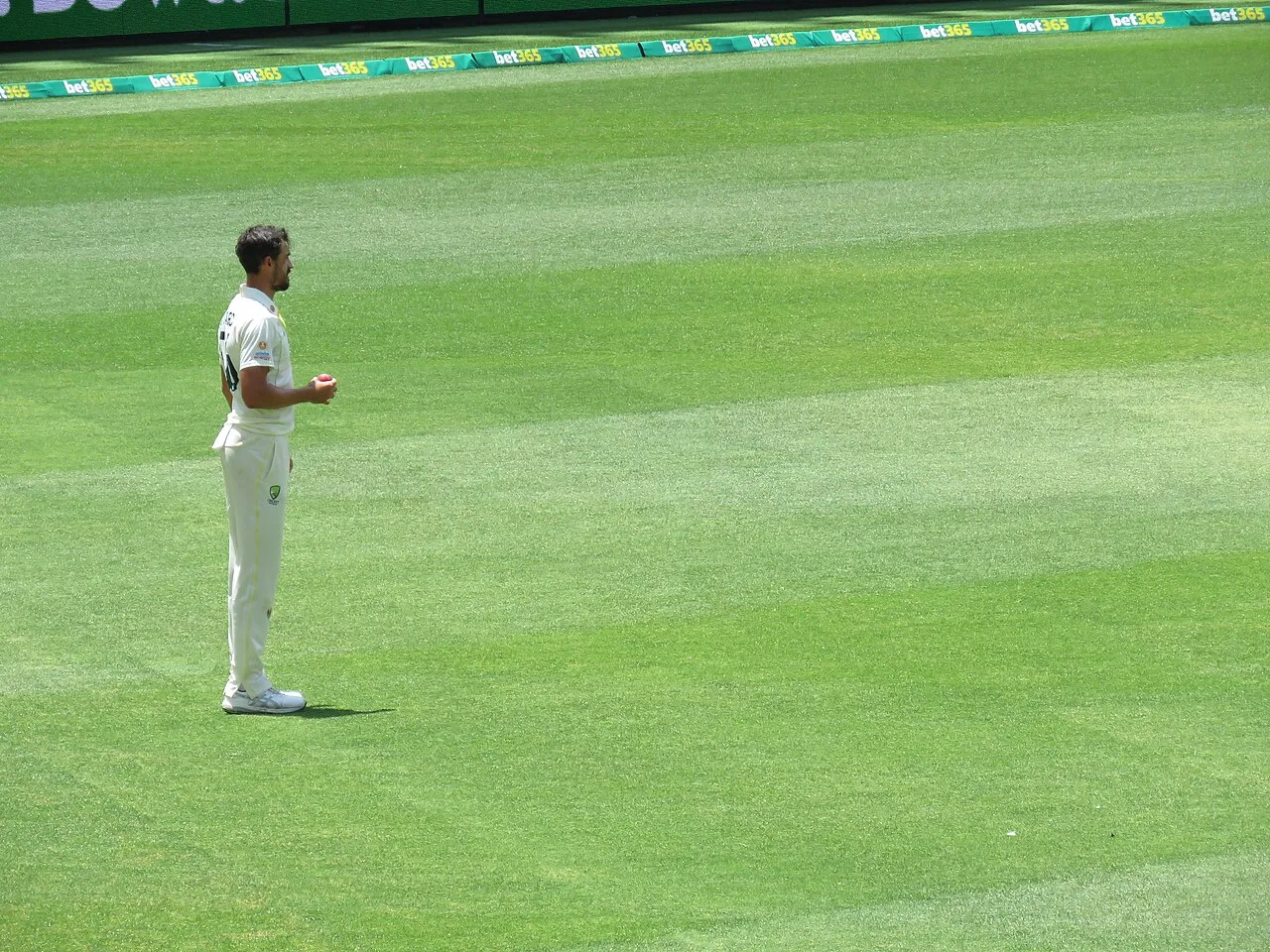
Mitchell Starc reclaimed first place in the ICC men's Test bowling rankings in the update dated 4 November 2026. The ICC linked his return to a nine-wicket match in Cape Town against South Africa. The ranking is an individual Test-bowling position, not a statement that Australia won the match or the series.
That distinction is the most interesting part of this story. A bowler can perform exceptionally while his side loses. A team result includes batting, bowling, fielding and the opposition's response; a player's ranking measures a narrower record. Reading both together produces a more useful account than treating one as proof of the other.
What does the ICC update confirm?
The dated release says Starc moved ahead of South Africa's Marco Jansen to regain the leading Test-bowling position. It identifies nine wickets in the Cape Town Test as the immediate performance context. The release also discusses South Africa's victory and series success, so individual ranking progress and a team defeat coexist in the same report.
| Item | Meaning |
|---|---|
| Player | Mitchell Starc |
| Category | Men's Test bowling |
| Position in the release | Number one |
| Reference date | 4 November 2026 |
| Recent performance cited | Nine match wickets in Cape Town |
| What is not implied | An Australian match or series victory |
The table deliberately omits a rating-points total. A precise points figure should come from the matching dated ranking table, not a social graphic from another week. The first-place claim is sufficient to explain the news without adding numerical detail that has not been independently established here.
Why nine wickets is a match figure
In a Test, a bowler may have opportunities in two opposition innings. A match wicket total combines those innings; an innings figure belongs to one of them. Nine wickets in a match must not be printed as a nine-wicket innings unless the separate scorecard actually records that achievement.
For a fictional example, a bowler taking five wickets in one innings and four in the other has nine in the match. A different split of six and three also totals nine. Knowing only the match total does not tell us the split. This article therefore avoids manufacturing innings figures from the combined number.
The same caution applies to runs conceded. A bowling average for a match needs the combined runs and wickets. Wickets alone cannot supply the average, economy or strike rate. Those calculations need the correct denominators, and the detailed scorecard is the place to retrieve them.
How can a leading bowler finish on the losing side?
Cricket is a team game in which individual contributions interact. Taking wickets can restrict an opponent, but the team's batters still need enough runs. A strong first innings may be followed by a weak second innings. The opposition can also produce an outstanding spell or partnership at a decisive moment.
Consider a fictional match in which a bowler takes eight wickets but his team is dismissed cheaply twice. Those wickets remain genuine achievements, while the team may still lose comfortably. Conversely, a bowler can take only a few wickets in a winning team because teammates supplied the decisive contributions. Personal and collective records should not be collapsed into one judgement.
For students learning analysis, write two columns: individual evidence and team evidence. Put Starc's ranking movement and match wicket total in the first. Put the final match outcome in the second. Explain their relationship without pretending one cancels the other. This creates a clearer argument than declaring that rankings are meaningless whenever a player loses.
What does a return to number one tell us?
It tells us that the player occupied the highest position in that category at the stated update. The word return indicates an earlier period at the top followed by a change. It does not mean the player has continuously held first place, and it does not announce the final ranking of the season.
A ranking is a dated comparison. Other players' performances can change the order as well as the subject's own results. A place gained is not necessarily a fixed number of rating points earned. For readers, the sensible question is which table and which date, rather than how long a headline can remain attached to a player.
Avoid turning a current ranking into an all-time verdict. Being first in a contemporary Test table and being judged the greatest bowler in cricket history are different claims. The second involves a definition of greatness, historical comparison and many more records. This report establishes the former and does not pretend to settle the latter.
Test bowling and white-ball bowling should not be merged
Test, ODI and T20I competitions operate under different time and innings constraints. Their player rankings are separate. A paragraph about an ODI bowler elsewhere in the same roundup does not change Starc's category here. Likewise, his Test position cannot be used as a substitute for checking his position in an ODI table.
This is especially important when comparing left-arm fast bowlers from different teams. A shared bowling style does not create a shared ranking category across formats. If the question is current Test standing, choose the Test table for both players. If the question is recent ODI performance, use the relevant ODI records instead.
An instructive exercise is to take three blank cards labelled Test, ODI and T20I. Place each reported figure under its correct heading. Then add separate cards for batting, bowling and all-round performance. The activity exposes category errors before they become confident but incorrect claims in a match discussion.
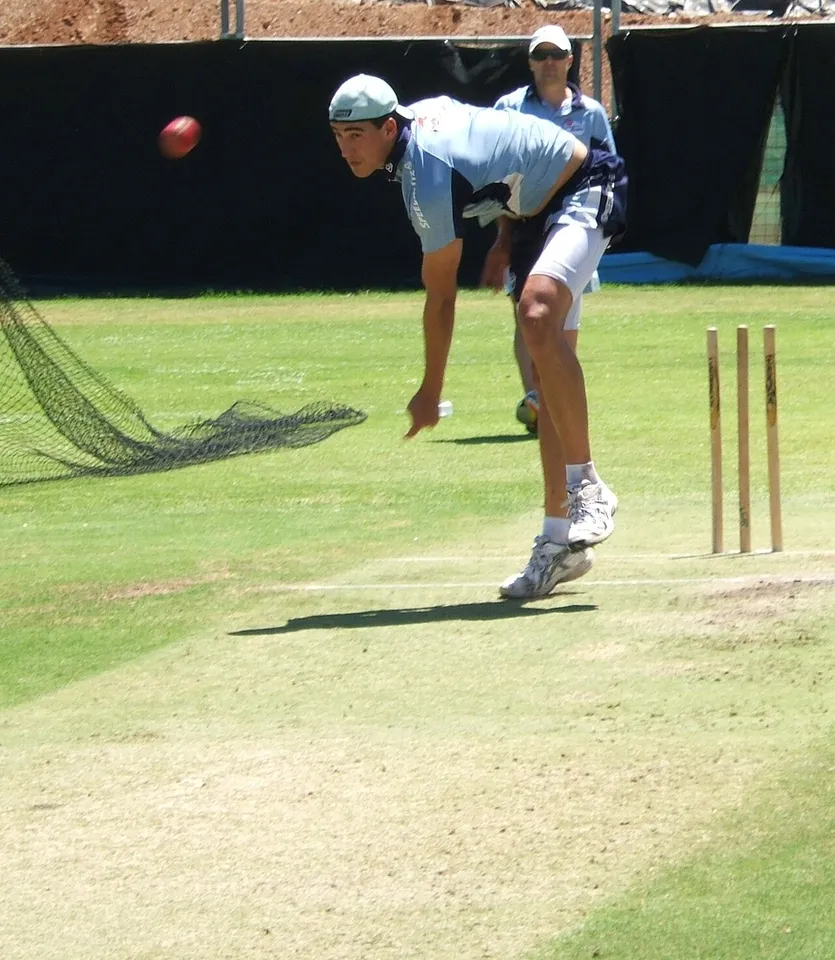
A historical photograph of Mitchell Starc bowling in February 2010, shown for career context rather than the 2026 ranking update.
What makes long-format bowling analysis different?
In a long match, time and repeated spells are central to the contest. A bowler's work may be spread across several days and different stages of the ball's life. The scoreboard at the start of a spell can change what the batting side is trying to do. These are analytical dimensions to investigate, not assumed descriptions of Starc's Cape Town deliveries.
Do not infer a specific technical explanation from the ranking headline. Statements about swing direction, release position, seam movement or a tactical plan need video, tracking data or reliable reporting. A large wicket total does not by itself establish which mechanism produced it. Several dismissal types can contribute to the same aggregate.
A good long-format analysis therefore uses layers. Begin with the verified scorecard, add the innings situation, and then examine footage or a documented explanation. Keep those layers distinguishable. That approach respects the performance while resisting the temptation to write an imaginary technical masterclass around an attractive number.
A worked example: compare two invented match records
Suppose Bowler A concedes 150 runs for ten match wickets and Bowler B concedes 90 for six. Both have a runs-per-wicket figure of 15 in those invented records. The equal average does not mean they bowled the same number of deliveries, created the same chances or played identical roles. It answers only the calculation stated.
Now suppose A bowls 50 overs and B bowls 20. Their economy rates are three and 4.5 runs per over respectively. Their wicket-taking frequency also differs. These examples show why several measures can point in different directions without any calculation being wrong. The analyst must explain what each measure captures.
None of those figures belongs to Starc's match. They are deliberately labelled teaching examples so that readers can learn the method without confusing an exercise with news. When practising with real scorecards, record the match and source alongside the numbers. That habit protects both accuracy and later comparisons.
What ranking movement cannot tell us about fitness
A high position does not disclose a player's medical condition, recovery needs or availability for a future fixture. Those are separate matters requiring an appropriate team announcement or direct public statement. It would be misleading to use a successful match as evidence that every physical concern has disappeared.
The same principle applies to workload. Counting deliveries can describe participation, but it does not provide a personal medical assessment. Training, recovery and selection decisions involve information unavailable to a reader of the ranking table. Sports coverage can discuss publicly confirmed availability while leaving private health speculation alone.
For a young reader, this is a useful boundary between observing sport and diagnosing an athlete. Admire the performance, study the publicly available technique and recognise that an official ranking is not a health report. An educational article should not invent private information to make a profile feel more complete.
How to keep a useful ranking timeline
Use one row per dated update and one column per field: player, format, discipline, rank and rating. Preserve previous rows when the table changes. Replacing yesterday's entry with today's number destroys the history and makes it harder to understand the meaning of words such as regained, climbed or slipped.
If a rating was not recorded, leave the cell blank and note that limitation. Entering zero would create a false data point. When drawing a chart of rank, remember that a lower number means a higher position. A downward line on an ordinary numerical axis can therefore represent improvement, which needs a clear chart label.
This is a practical spreadsheet exercise for students. It combines date handling, categories and visual interpretation. It also demonstrates why a chart can mislead without any fabricated number: an unlabeled axis, mixed formats or missing dates can distort a record that was accurate when first collected.
Reading the Cape Town context responsibly
The source describes a South African success alongside Starc's individual progress. It is reasonable to examine that contrast because it is in the dated report. It would not be reasonable to add a captain's reaction, a dressing-room conversation or a tactical dispute that has not been established by a source.
Historical photographs need the same care. An image of Starc bowling in an earlier season can identify the athlete and illustrate his action. It should carry its real date and opponent where known. It must not be captioned as the Cape Town match merely because it fits the visual theme of the story.
Readers should apply that standard when sharing posts. A correct headline attached to a wrongly identified picture can still misinform. Text, scorecard, image and date are parts of the same factual package. Keeping them aligned makes the story more credible than adding dramatic but unverified detail.
Questions about Starc's number-one position
Is the number-one claim current forever?
No. It belongs to the update dated 4 November 2026. Future international performances and ranking releases may change the order. A later article should state its own reference date rather than repeat this position as a timeless fact. Historical accuracy depends on retaining that date.
Did nine wickets automatically produce a team win?
No. An individual wicket haul and a match result are separate records. The ICC report discusses South Africa's victory while reporting Starc's rise. That contrast is a reminder to read beyond a player's headline and examine the complete match before describing a winning performance.
Can this story be used for a statistics lesson?
Yes. Compare match totals with innings totals, distinguish rank from rating, and practise averages with the clearly fictional examples above. Keep the real and invented figures in separate columns. Students gain more from a reproducible method than from memorising a ranking number without understanding what it measures.
Find more learning resources and sports explainers on RayTech Institute. For this story, the essential combination is a player, a category and a date: Mitchell Starc, men's Test bowling, first place in the 4 November 2026 ICC update.
One final exercise is to ask what evidence would change a conclusion. A new ranking release can change a current-position statement, while a corrected scorecard can change a match statistic. An opinion about technique needs a different kind of supporting material. Writing down the required evidence before searching helps students avoid collecting only the examples that favour a preferred player. It turns a fan discussion into a testable research question without taking away the enjoyment of following cricket.
Sources
Image credits: cover: Calistemon, source, CC BY-SA 4.0. Resized and converted to WebP. inline: YellowMonkey, source, CC BY-SA 3.0. Resized and converted to WebP.
Found an error or an outdated detail? Report a correction with the article URL and original source.